Madison Cole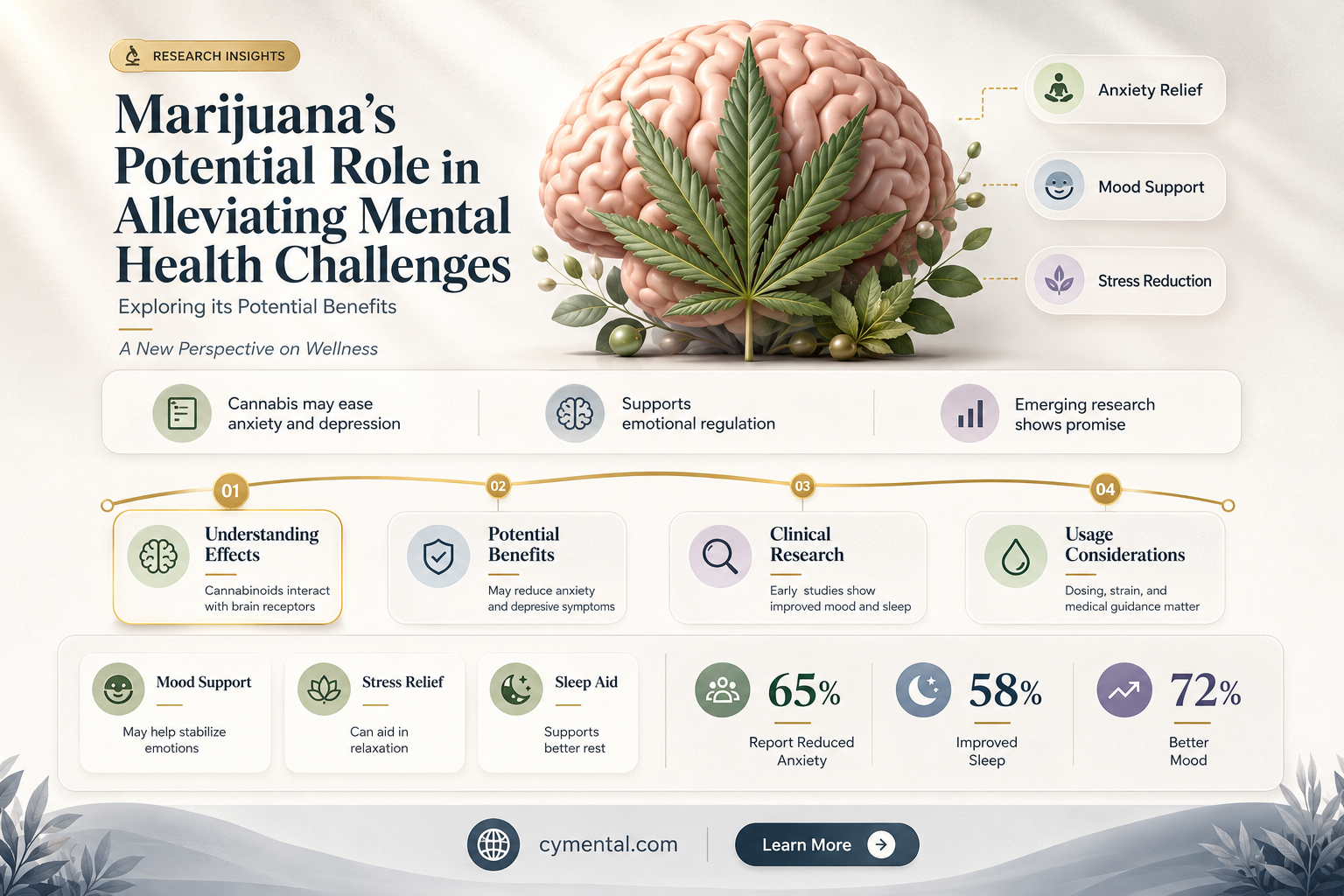
Marijuana has gained significant attention for its potential therapeutic benefits in addressing various mental health issues, including anxiety, depression, PTSD, and insomnia. Compounds like THC and CBD, found in cannabis, interact with the body’s endocannabinoid system, which plays a role in regulating mood, stress, and emotional responses. Research suggests that marijuana may alleviate symptoms of anxiety by promoting relaxation, while CBD has shown promise in reducing stress and improving sleep quality. For individuals with PTSD, cannabis may help manage flashbacks and hyperarousal, though its effectiveness varies. Additionally, some studies indicate that marijuana can act as a mood stabilizer for those with depression, offering temporary relief from persistent sadness. However, its use must be approached cautiously, as high THC levels or excessive consumption can exacerbate anxiety or psychotic symptoms in certain individuals. As mental health treatment becomes more personalized, marijuana’s role as a complementary therapy is being explored, though further research is needed to fully understand its risks and benefits.
Explore related products


What You'll Learn
- Anxiety Relief: THC and CBD may reduce anxiety symptoms by interacting with brain receptors
- Depression Management: Cannabis can boost serotonin levels, potentially alleviating depressive moods
- PTSD Symptoms: Marijuana may help regulate fear responses and improve sleep in PTSD patients
- Stress Reduction: Cannabinoids promote relaxation by lowering cortisol levels in the body
- Bipolar Stabilization: Some strains may help balance mood swings in bipolar disorder cases

Anxiety Relief: THC and CBD may reduce anxiety symptoms by interacting with brain receptors
THC and CBD, the primary compounds in marijuana, have shown potential in alleviating anxiety symptoms by modulating the brain’s receptor systems. While THC interacts with CB1 receptors in the endocannabinoid system to influence mood and stress responses, CBD acts indirectly to enhance serotonin signaling, a neurotransmitter critical for emotional regulation. This dual mechanism suggests a nuanced approach to anxiety relief, but effectiveness depends on dosage, consumption method, and individual physiology.
Consider this: a low dose of THC (2.5–5 mg) combined with a moderate dose of CBD (10–20 mg) may provide anxiety relief without the psychoactive effects often associated with higher THC levels. For instance, a 2020 study published in *The Journal of Alternative and Complementary Medicine* found that patients using CBD-dominant cannabis products reported a 58% reduction in anxiety and stress. However, high THC doses (above 10 mg) can paradoxically increase anxiety in some users, particularly those with low tolerance or pre-existing anxiety disorders.
To maximize benefits, start with a microdose and titrate gradually. Sublingual tinctures or vaporizers offer faster onset (5–15 minutes) compared to edibles (30–90 minutes), making them more suitable for acute anxiety episodes. For sustained relief, consider incorporating CBD-rich strains like ACDC or Harlequin, which have a THC:CBD ratio of 1:20 or lower. Avoid strains high in THC, such as OG Kush or Gorilla Glue, as they may exacerbate symptoms in sensitive individuals.
Age and medical history play a critical role in determining suitability. Younger users (under 25) should exercise caution, as the developing brain is more susceptible to THC’s potential adverse effects. Pregnant or breastfeeding individuals should avoid cannabis altogether due to unknown risks. Always consult a healthcare provider before starting any regimen, especially if taking medications like benzodiazepines or antidepressants, as interactions can occur.
In practice, combining cannabis with mindfulness techniques, such as deep breathing or meditation, can enhance its anxiolytic effects. Keep a journal to track dosage, strain, and symptom changes, allowing for informed adjustments. While not a cure-all, THC and CBD offer a promising adjunctive option for anxiety management when used thoughtfully and responsibly.
Metabolic Screening: A New Tool for Mental Health Diagnosis?
You may want to see also
Explore related products


Depression Management: Cannabis can boost serotonin levels, potentially alleviating depressive moods
Cannabis has been increasingly recognized for its potential to influence mood and mental health, particularly through its interaction with the brain's serotonin system. Serotonin, often referred to as the "feel-good" neurotransmitter, plays a critical role in regulating mood, appetite, and sleep. Depression, a pervasive mental health condition, is frequently associated with serotonin imbalances. Emerging research suggests that certain compounds in cannabis, such as THC and CBD, may modulate serotonin receptors, offering a novel approach to managing depressive symptoms. This interaction could provide a natural alternative or complement to traditional antidepressants, which often come with side effects or limited efficacy for some individuals.
To harness cannabis’s potential in depression management, understanding dosage and strain selection is crucial. THC, the psychoactive component, can stimulate serotonin release in low to moderate doses (typically 5–10 mg), potentially lifting mood without inducing anxiety. However, higher doses (above 20 mg) may have the opposite effect, exacerbating anxiety or paranoia. CBD, on the other hand, is non-psychoactive and has shown promise in stabilizing mood by indirectly influencing serotonin receptors. A balanced approach, such as a 1:1 THC-to-CBD ratio, is often recommended for depressive symptoms. For instance, a 5 mg THC and 5 mg CBD combination could be a starting point, with adjustments based on individual tolerance and response.
While the potential benefits are compelling, caution is warranted. Cannabis affects individuals differently, and factors like age, metabolism, and pre-existing conditions can influence outcomes. Younger users (under 25) should approach cannabis with particular care, as the brain is still developing, and THC may disrupt neural pathways. Additionally, those with a history of psychosis or bipolar disorder should consult a healthcare professional, as THC could trigger adverse reactions. Keeping a mood journal to track effects can help fine-tune dosage and identify patterns, ensuring a personalized and safe approach to using cannabis for depression management.
Comparatively, cannabis offers a unique advantage over traditional antidepressants in its rapid onset of action. While SSRIs (selective serotonin reuptake inhibitors) can take weeks to show effects, cannabis may provide immediate relief for some users. However, this does not imply it is a cure-all. Cannabis should be viewed as part of a holistic treatment plan, incorporating therapy, lifestyle changes, and, if necessary, conventional medication. Its role is particularly promising for treatment-resistant depression, where other options have failed. For example, microdosing THC (1–3 mg) daily, combined with mindfulness practices, could create a synergistic effect in managing depressive moods.
In conclusion, cannabis’s ability to boost serotonin levels presents a promising avenue for depression management, especially for those seeking alternatives to traditional treatments. By starting with low doses, selecting balanced strains, and monitoring individual responses, users can explore its potential benefits while minimizing risks. However, it is essential to approach this method with informed caution, considering age, medical history, and the need for a comprehensive treatment strategy. As research evolves, cannabis may become a more mainstream tool in the mental health toolkit, offering hope to those grappling with depression.
Love's Healing Power: Can Emotional Support Ease Mental Illness?
You may want to see also
Explore related products


PTSD Symptoms: Marijuana may help regulate fear responses and improve sleep in PTSD patients
Post-traumatic stress disorder (PTSD) often manifests as hyperarousal, where the brain’s fear circuitry remains perpetually activated, triggering flashbacks, nightmares, and severe anxiety. Marijuana’s interaction with the endocannabinoid system (ECS) offers a potential mechanism to recalibrate this dysregulation. The ECS plays a critical role in emotional processing and memory consolidation, and THC, the psychoactive compound in cannabis, binds to CB1 receptors in the amygdala—the brain’s fear center—to modulate fear responses. Studies suggest that controlled doses of THC (5–10 mg) may blunt the intensity of traumatic memories by interfering with their retrieval and reconsolidation, providing temporary relief from intrusive symptoms.
Sleep disturbances, a hallmark of PTSD, exacerbate emotional instability and cognitive impairment. Marijuana’s sedative properties, particularly strains high in myrcene and linalool terpenes, can improve sleep onset and duration. Indica-dominant strains or products with a 1:1 THC-to-CBD ratio (e.g., 10 mg THC + 10 mg CBD) are often recommended for nighttime use. However, caution is advised: high-THC strains may worsen anxiety or induce vivid dreams in some users. Microdosing (2.5–5 mg THC) before bed can mitigate these risks while promoting deeper sleep cycles, as observed in a 2021 study published in *Sleep Medicine*.
While marijuana shows promise, its use in PTSD treatment is not without caveats. Chronic high-THC consumption may lead to tolerance or cannabinoid hyperemesis syndrome, particularly in individuals under 25, whose brains are still developing. CBD, a non-psychoactive cannabinoid, offers an alternative by reducing anxiety and improving sleep without intoxication. A daily regimen of 30–60 mg CBD oil, combined with therapy, has shown synergistic benefits in clinical trials. Patients should consult a healthcare provider to tailor dosage and strain selection to their specific symptoms and medical history.
Practical integration of marijuana into PTSD management requires a structured approach. Start with low doses and gradually titrate upward, monitoring effects over 2–4 weeks. Keep a symptom journal to track improvements in sleep quality, nightmare frequency, and daytime anxiety. Avoid self-medicating with unregulated products; instead, opt for lab-tested formulations from licensed dispensaries. Pair cannabis use with evidence-based therapies like cognitive behavioral therapy (CBT) or eye movement desensitization and reprocessing (EMDR) for comprehensive symptom relief.
In summary, marijuana’s ability to regulate fear responses and enhance sleep positions it as a complementary tool in PTSD care. Its efficacy hinges on precise dosing, strain selection, and integration with traditional treatments. While not a panacea, when used thoughtfully, cannabis can offer meaningful symptom alleviation, improving quality of life for those grappling with PTSD’s relentless grip.
Hospitalization for Mental Health: Impact on SSDI Case Approval
You may want to see also
Explore related products


Stress Reduction: Cannabinoids promote relaxation by lowering cortisol levels in the body
Cortisol, often dubbed the "stress hormone," surges in response to pressure, anxiety, and fear, triggering the body’s fight-or-flight response. Chronically elevated cortisol levels contribute to insomnia, weight gain, and weakened immunity, exacerbating mental health struggles like depression and anxiety. Research indicates that cannabinoids, particularly THC and CBD, interact with the endocannabinoid system to modulate cortisol production. A 2018 study published in *Psychopharmacology* found that controlled doses of THC reduced cortisol levels in participants exposed to stressful tasks, promoting a calmer physiological state. This biochemical mechanism underscores marijuana’s potential as a tool for stress reduction.
To harness cannabinoids for stress relief, start with low doses to gauge sensitivity. For instance, a 5–10 mg THC edible or 20–40 mg CBD oil tincture taken 30–60 minutes before a stressful event can help blunt cortisol spikes. Pairing cannabis with mindfulness practices, such as deep breathing or meditation, amplifies its relaxing effects. Caution: high THC doses (20+ mg) may paradoxically increase anxiety in some individuals, particularly those with pre-existing anxiety disorders. Always consult a healthcare provider, especially if you’re under 25, as the brain is still developing and more susceptible to cannabis-induced stress responses.
Comparatively, traditional stress relievers like benzodiazepines (e.g., Xanax) offer rapid relief but carry risks of dependency and cognitive impairment. Cannabinoids, while not a panacea, provide a more nuanced approach by addressing both physical and emotional stress symptoms. For example, CBD’s non-intoxicating nature makes it suitable for daytime use, while THC’s mild euphoria can aid evening relaxation. Combining 1:1 THC:CBD ratios (e.g., 5 mg each) balances relaxation without sedation, ideal for those needing stress relief without impairment.
Practical tips for optimizing cannabinoid use include tracking dosage and effects in a journal to identify your optimal balance. Avoid consuming cannabis on an empty stomach, as food enhances absorption and reduces the risk of overstimulation. For long-term stress management, incorporate lifestyle changes like regular exercise and adequate sleep, as these synergize with cannabinoids to stabilize cortisol levels. While marijuana isn’t a cure-all, its cortisol-lowering properties make it a valuable adjunct for those seeking natural stress relief.
Music's Healing Power: Boosting Mental Health and Well-being
You may want to see also
Explore related products


Bipolar Stabilization: Some strains may help balance mood swings in bipolar disorder cases
Bipolar disorder, characterized by extreme mood swings from manic highs to depressive lows, often resists conventional treatment. Some cannabis strains, however, show promise in stabilizing these fluctuations. Indica-dominant varieties, like Granddaddy Purple or Northern Lights, are frequently cited for their calming effects, potentially mitigating manic episodes. Sativa strains, such as Harlequin or Jack Herer, with higher CBD content, may alleviate depressive symptoms without inducing anxiety. While research is preliminary, anecdotal evidence and small studies suggest that cannabinoids interact with the endocannabinoid system to regulate mood and stress responses, offering a complementary approach for those seeking balance.
Selecting the right strain and dosage is critical for bipolar stabilization. Start with low THC, high CBD strains to minimize psychoactive effects, which can exacerbate anxiety or paranoia during manic phases. A 1:1 THC-to-CBD ratio, as found in strains like ACDC, is often recommended. Begin with 5–10 mg of THC and 10–20 mg of CBD daily, adjusting based on tolerance and symptom response. Consistency is key; irregular use may disrupt mood regulation. Consult a healthcare provider, especially if combining with medications like mood stabilizers, as cannabis can interact with certain drugs.
The mechanism behind cannabis’s potential in bipolar stabilization lies in its interaction with neurotransmitters and the endocannabinoid system. CBD, for instance, modulates serotonin receptors, which play a pivotal role in mood regulation. THC, in controlled doses, may reduce hyperactivity during manic episodes by activating CB1 receptors in the brain. However, high THC levels can trigger psychosis or worsen depression in susceptible individuals. Strains with terpenes like linalool (found in Lavender) or myrcene (found in Mango Kush) may enhance calming effects, offering a more nuanced approach to symptom management.
Despite its potential, using cannabis for bipolar disorder is not without risks. Manic phases can lead to impulsive behavior, including excessive consumption, which may worsen symptoms. Long-term use requires monitoring for dependency or cognitive impairment. For younger patients (under 25), whose brains are still developing, cannabis use may increase the risk of psychotic episodes. Always prioritize strains with lab-verified cannabinoid profiles to ensure consistency and avoid contaminants. While not a cure, cannabis, when used thoughtfully, may serve as a tool in a comprehensive bipolar management plan.
Sex and Mental Health: Exploring the Surprising Benefits and Connections
You may want to see also
Frequently asked questions
Marijuana may provide temporary relief for some individuals with anxiety and depression due to its interaction with the endocannabinoid system. However, its effects vary widely, and long-term use can potentially worsen symptoms or lead to dependency.
Some studies suggest that marijuana, particularly strains high in CBD, may help reduce PTSD symptoms like nightmares and hyperarousal. However, research is still limited, and it’s not considered a first-line treatment.
Some users report improved focus and reduced hyperactivity with marijuana use, but scientific evidence is inconclusive. It may work for some individuals, but risks like impaired cognition and dependency are concerns.
Marijuana, especially indica strains or those high in THC, can help some people fall asleep faster. However, it may disrupt REM sleep, leading to less restful sleep over time.
Marijuana use in bipolar disorder is controversial. While some report mood stabilization, it can also trigger manic or depressive episodes. Professional medical advice is strongly recommended before use.