Caleb Wright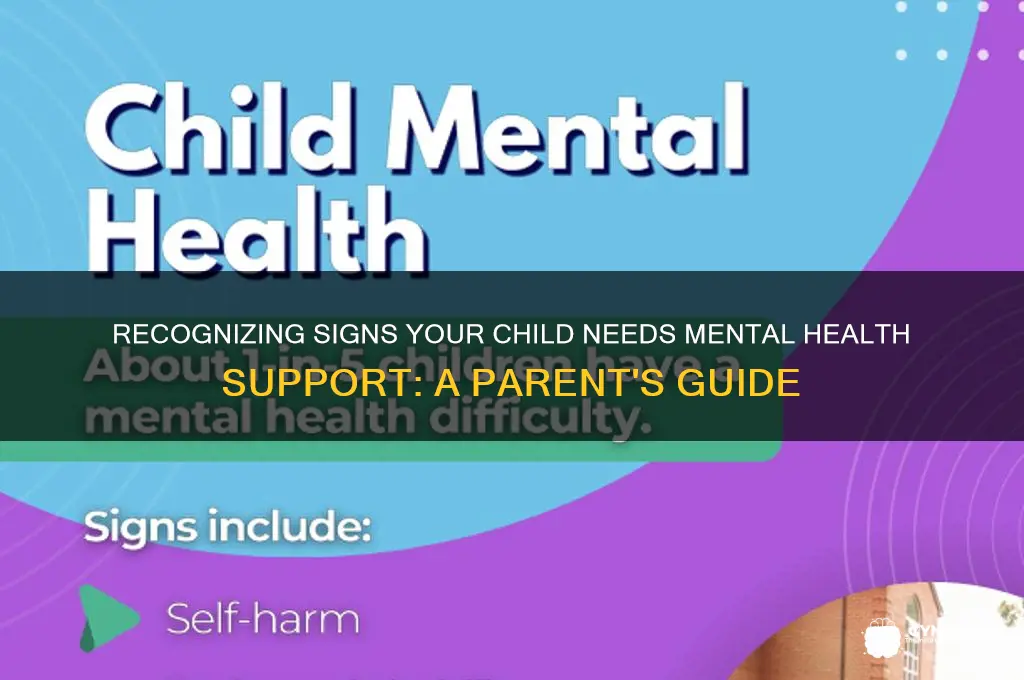
Recognizing whether your child may be in need of mental health support can be a challenging and emotional process for any parent. Children and adolescents often struggle to express their feelings or may not even fully understand what they are experiencing, making it crucial for caregivers to remain vigilant for subtle signs of distress. These signs can manifest in various ways, such as changes in behavior, mood swings, withdrawal from social activities, declining academic performance, or physical symptoms like headaches or sleep disturbances. While some of these behaviors can be part of normal developmental stages, persistent or severe changes may indicate an underlying mental health issue. Early intervention is key to addressing these concerns effectively, so it’s important to trust your instincts, maintain open communication with your child, and consult with a healthcare professional if you have concerns about their well-being.
Explore related products


What You'll Learn
- Recognizing warning signs (e.g., mood changes, withdrawal, aggression, declining grades, sleep disturbances)
- Common childhood mental health issues (anxiety, depression, ADHD, trauma, behavioral disorders)
- When to seek professional help (persistent symptoms, safety concerns, impact on daily life)?
- Supporting your child emotionally (active listening, validation, maintaining routines, seeking resources)
- Finding the right mental health provider (therapists, psychologists, psychiatrists, school counselors, support groups)

Recognizing warning signs (e.g., mood changes, withdrawal, aggression, declining grades, sleep disturbances)
Children often struggle to articulate their emotional pain, making it crucial for parents to recognize subtle warning signs of mental distress. Mood changes, for instance, can manifest as sudden irritability, persistent sadness, or unexplained outbursts. While occasional mood swings are typical during adolescence, a consistent pattern over weeks or months warrants attention. Track these shifts by noting their frequency, intensity, and triggers. For example, does your child become unusually agitated after school, or do they seem despondent during family gatherings? Documenting these observations can help you identify whether the changes are situational or indicative of a deeper issue.
Withdrawal from social activities or relationships is another red flag that parents should not overlook. If your once outgoing child now avoids friends, skips extracurriculars, or spends excessive time alone, it may signal anxiety, depression, or bullying. Compare their current behavior to past patterns; a child who previously thrived in group settings may be silently struggling. Encourage open conversations without forcing them, and consider involving a trusted teacher or counselor to gain additional perspective. Practical steps include setting aside dedicated time for check-ins and creating a safe, non-judgmental space for them to share their feelings.
Aggression, whether verbal or physical, can also indicate underlying mental health challenges. While occasional anger is normal, frequent outbursts, hostility, or violent behavior require intervention. For younger children (ages 6–12), aggression may stem from frustration or difficulty regulating emotions, whereas in teenagers, it could reflect stress, trauma, or substance use. Address this by establishing clear boundaries and consequences while exploring the root cause. For instance, a sudden drop in grades might correlate with increased aggression, suggesting school-related stress. Collaborate with educators to identify stressors and implement strategies like structured routines or anger management techniques.
Declining academic performance often serves as a tangible marker of a child’s mental well-being. If your child, who previously excelled, is now failing tests or neglecting homework, investigate further. Talk to their teachers to rule out external factors like learning difficulties or classroom dynamics. For adolescents (ages 13–18), declining grades may coincide with other signs like sleep disturbances or social withdrawal, pointing to issues like depression or ADHD. Practical tips include helping them organize their workload, setting realistic goals, and praising effort over outcomes to rebuild their confidence.
Sleep disturbances—insomnia, oversleeping, or nightmares—are frequently linked to mental health struggles. Children aged 6–13 need 9–11 hours of sleep, while teenagers require 8–10 hours. If your child consistently falls short or overshoots these ranges, it could exacerbate mood instability or cognitive difficulties. Establish a consistent bedtime routine, limit screen time before sleep, and monitor their sleep environment for disruptions. If issues persist, consult a pediatrician to rule out medical causes and consider mental health evaluations. Recognizing these interconnected warning signs early can pave the way for timely support and intervention.
DSM-5-TR: Empowering Mental Health Providers with Updated Diagnostic Tools
You may want to see also
Explore related products




Common childhood mental health issues (anxiety, depression, ADHD, trauma, behavioral disorders)
Childhood anxiety often manifests as more than just fleeting worries. Unlike typical fears, such as monsters under the bed, anxiety disorders persist and interfere with daily life. For instance, a child might refuse to attend school, experience frequent stomachaches, or exhibit excessive clinginess. According to the National Institute of Mental Health, approximately 7.1% of children aged 3–17 have diagnosed anxiety. Early intervention is crucial; cognitive-behavioral therapy (CBT) and mindfulness techniques are evidence-based strategies that can help children manage symptoms. Parents can support their child by maintaining a consistent routine, validating their feelings, and avoiding over-reassurance, which may inadvertently reinforce anxious behaviors.
Depression in children is frequently overlooked, as it presents differently than in adults. Instead of sadness, children may show irritability, anger, or a lack of interest in previously enjoyed activities. The American Academy of Pediatrics reports that 1.9 million children aged 3–17 have been diagnosed with depression. Risk factors include family history, trauma, and chronic illness. Treatment often involves a combination of therapy and, in some cases, medication like selective serotonin reuptake inhibitors (SSRIs), which are FDA-approved for children aged 8 and older. Parents should monitor for warning signs such as changes in sleep or appetite and seek professional help if symptoms persist for more than two weeks.
ADHD is one of the most common neurodevelopmental disorders, affecting approximately 9.4% of U.S. children aged 2–17. Symptoms include inattention, hyperactivity, and impulsivity, which can disrupt academic and social functioning. While stimulant medications like methylphenidate (Ritalin) are effective for 70–80% of children, behavioral interventions are equally important. Parents can implement strategies such as creating structured environments, using visual schedules, and providing frequent positive reinforcement. It’s essential to collaborate with teachers to ensure consistency across settings, as ADHD often impacts school performance.
Trauma in children, whether from abuse, neglect, or a single distressing event, can have long-lasting effects on mental health. Symptoms may include nightmares, regression (e.g., bedwetting), or emotional numbing. Trauma-focused CBT is a gold-standard treatment, helping children process their experiences in a safe space. Parents can foster resilience by offering emotional support, maintaining a stable home environment, and avoiding questions that force the child to relive the trauma. Early intervention is critical, as untreated trauma can lead to more severe issues, such as PTSD, in adolescence or adulthood.
Behavioral disorders, such as oppositional defiant disorder (ODD) and conduct disorder (CD), are characterized by persistent patterns of anger, defiance, and aggression. ODD affects 1–16% of children, while CD is less common but more severe. Parent management training (PMT) is a proven approach, teaching caregivers strategies to set clear boundaries and reinforce positive behaviors. Consistency is key; all adults in the child’s life should use the same techniques. While medication is rarely the first-line treatment, it may be considered for co-occurring conditions like ADHD. Addressing these disorders early can prevent escalation into more serious antisocial behaviors.
Navigating Mental Health Struggles: Finding Support When Work Feels Impossible
You may want to see also
Explore related products


When to seek professional help (persistent symptoms, safety concerns, impact on daily life)
Children often exhibit mood swings, behavioral changes, or occasional withdrawal, which can be part of normal development. However, when these symptoms persist for weeks or months, they may signal an underlying mental health issue. Persistent symptoms like prolonged sadness, frequent anger outbursts, or consistent difficulty concentrating warrant attention. For instance, a teenager who remains irritable for over six weeks or a younger child who avoids social interactions for months could be struggling internally. Tracking these patterns in a journal can help parents distinguish between fleeting phases and chronic concerns, providing concrete evidence to discuss with a professional.
Safety concerns are non-negotiable red flags that demand immediate action. Any mention or hint of self-harm, suicidal thoughts, or aggressive behavior toward others requires urgent intervention. Younger children might express these indirectly through drawings or play, while adolescents may share cryptic messages online. Parents should not dismiss such signs as attention-seeking; instead, they should calmly acknowledge the child’s feelings and seek professional help promptly. Crisis hotlines (e.g., the National Suicide Prevention Lifeline at 988) can offer immediate guidance while arranging long-term support.
Mental health struggles become critical when they disrupt a child’s daily functioning. Key areas to monitor include academic performance, relationships, and self-care routines. For example, a student who suddenly fails classes, a social butterfly who isolates themselves, or a child who neglects hygiene may be overwhelmed by unseen emotional burdens. Parents can assess impact by asking specific questions like, “How often does anxiety prevent you from attending school?” or “Do you feel too tired to spend time with friends?” Practical steps, such as collaborating with teachers or adjusting schedules, can temporarily alleviate pressure, but professional help is essential for lasting solutions.
Comparing a child’s behavior to peers can be misleading, as mental health needs vary widely. Instead, focus on individual baselines—what is normal for your child? A once-outgoing child who becomes withdrawn or a naturally quiet child who becomes agitated may be expressing distress in their own way. Trusting parental instincts is crucial; if something feels “off,” it’s worth investigating. Combining observation with open communication creates a supportive environment where children feel safe to share their struggles, making it easier to determine when professional intervention is necessary.
Healing Paws: How Pets Provide Comfort and Support for Mental Health
You may want to see also
Explore related products


Supporting your child emotionally (active listening, validation, maintaining routines, seeking resources)
Children often struggle to articulate their emotions, making it essential to listen not just to their words but to the unspoken cues they offer. Active listening goes beyond hearing; it involves fully engaging with your child’s perspective without interrupting or immediately offering solutions. For instance, if your child says, “School is terrible,” instead of replying with “It’ll get better,” reflect their feelings by saying, “It sounds like you’re really frustrated. Can you tell me more?” This approach fosters trust and encourages them to open up. Research shows that children who feel heard are more likely to express their emotions, a critical step in identifying mental health concerns.
Validation is the emotional equivalent of giving your child a map when they’re lost in a storm. It doesn’t mean agreeing with their behavior but acknowledging their feelings as real and understandable. For example, if your child is upset about a friend’s betrayal, avoid dismissing it with “It’s not a big deal.” Instead, say, “It’s completely normal to feel hurt when someone lets you down.” Validation reduces shame and helps children process their emotions healthily. Studies indicate that validated children exhibit higher emotional resilience and are better equipped to cope with stress.
Routines act as the scaffolding that supports a child’s emotional stability, especially during turbulent times. Consistent bedtimes, meal schedules, and family activities provide predictability, which is particularly crucial for children experiencing anxiety or depression. For younger children (ages 3–8), visual aids like charts can help them anticipate daily activities. For adolescents, involving them in creating routines fosters a sense of control. However, rigidity can backfire; allow flexibility for unexpected events to prevent added stress. A 2020 study found that children with stable routines showed lower cortisol levels, a marker of reduced stress.
While emotional support at home is vital, recognizing when to seek external resources is equally important. If your child’s emotional struggles persist for more than two weeks, interfere with daily functioning, or include symptoms like withdrawal, aggression, or changes in sleep, consult a mental health professional. Therapists, school counselors, and pediatricians can provide tailored strategies and interventions. Online platforms like TeenCounseling or local support groups can also offer additional guidance. Remember, seeking help isn’t a sign of failure but a proactive step toward your child’s well-being. Early intervention significantly improves outcomes, particularly for conditions like anxiety and ADHD.
Combining active listening, validation, consistent routines, and timely resource-seeking creates a robust framework for supporting your child’s emotional health. Each element complements the others, fostering an environment where your child feels safe, understood, and empowered. By prioritizing these practices, you not only address immediate concerns but also equip your child with lifelong emotional skills. After all, the goal isn’t just to help them through today’s challenges but to prepare them for tomorrow’s.
CBD and Mental Health: Uncovering the Science Behind Its Benefits
You may want to see also
Explore related products





Finding the right mental health provider (therapists, psychologists, psychiatrists, school counselors, support groups)
Recognizing your child might need mental health support is just the first step. The next challenge is navigating the complex landscape of providers. Therapists, psychologists, psychiatrists, school counselors, and support groups all offer distinct approaches, and choosing the right fit requires understanding their roles and limitations.
Therapists, often licensed social workers or counselors, provide talk therapy, helping children process emotions, develop coping mechanisms, and improve communication. They’re ideal for addressing anxiety, depression, behavioral issues, and family conflicts. Psychologists, with doctoral degrees, offer similar talk therapy but can also administer psychological assessments to diagnose conditions like ADHD or learning disabilities. Psychiatrists, medical doctors specializing in mental health, diagnose and treat severe mental illnesses, often prescribing medication alongside therapy. School counselors, while valuable for academic and social support, typically lack specialized mental health training and may not provide in-depth therapeutic interventions. Support groups, led by professionals or peers, offer a sense of community and shared experience, but shouldn’t replace individual therapy for children with complex needs.
Consider your child’s age, the severity of their struggles, and your family’s preferences. For younger children, play therapy, often used by therapists, can be more effective than traditional talk therapy. Adolescents might benefit from cognitive-behavioral therapy (CBT), a structured approach offered by many psychologists. If medication is a possibility, a psychiatrist’s expertise is crucial. Remember, finding the right provider may involve trial and error. Don’t be discouraged if the first match isn’t perfect.
A crucial factor is the provider’s experience with your child’s specific concerns. Look for specialists in childhood anxiety, trauma, or eating disorders, for example. Ask about their therapeutic approach, treatment duration, and involvement of parents in the process. Insurance coverage and location are practical considerations, but prioritize finding a provider your child feels comfortable with.
Finally, remember you’re not alone. Reach out to your pediatrician, school counselor, or local mental health organizations for referrals. Online directories like Psychology Today allow you to filter by specialization, location, and insurance acceptance. Trust your instincts and advocate for your child’s needs. Finding the right mental health provider is an investment in your child’s well-being, and the right support can make a world of difference.
Supporting Someone Through a Mental Breakdown: Compassionate Steps to Help
You may want to see also
Frequently asked questions
Look for persistent changes in behavior, mood, or performance, such as increased irritability, withdrawal from social activities, declining grades, or difficulty sleeping. Trust your instincts—if something feels off, it’s worth addressing.
Mental health issues can appear at any age, even in early childhood. Toddlers may show signs of anxiety, while older children might exhibit symptoms of depression or ADHD. Early intervention is key, regardless of age.
Occasional anxiety or sadness is normal, but if these feelings are intense, frequent, or interfere with daily life, it may indicate a need for professional help. Persistent symptoms warrant attention.
Use open, non-judgmental communication. Let them know you’ve noticed they’re struggling and that it’s okay to ask for help. Frame therapy or counseling as a positive step toward feeling better.
Be patient and validate their feelings. Explain that seeking help is a sign of strength, not weakness. Involve a trusted adult or professional to gently encourage them, and consider starting with small steps, like a single session.