Lucas Bennett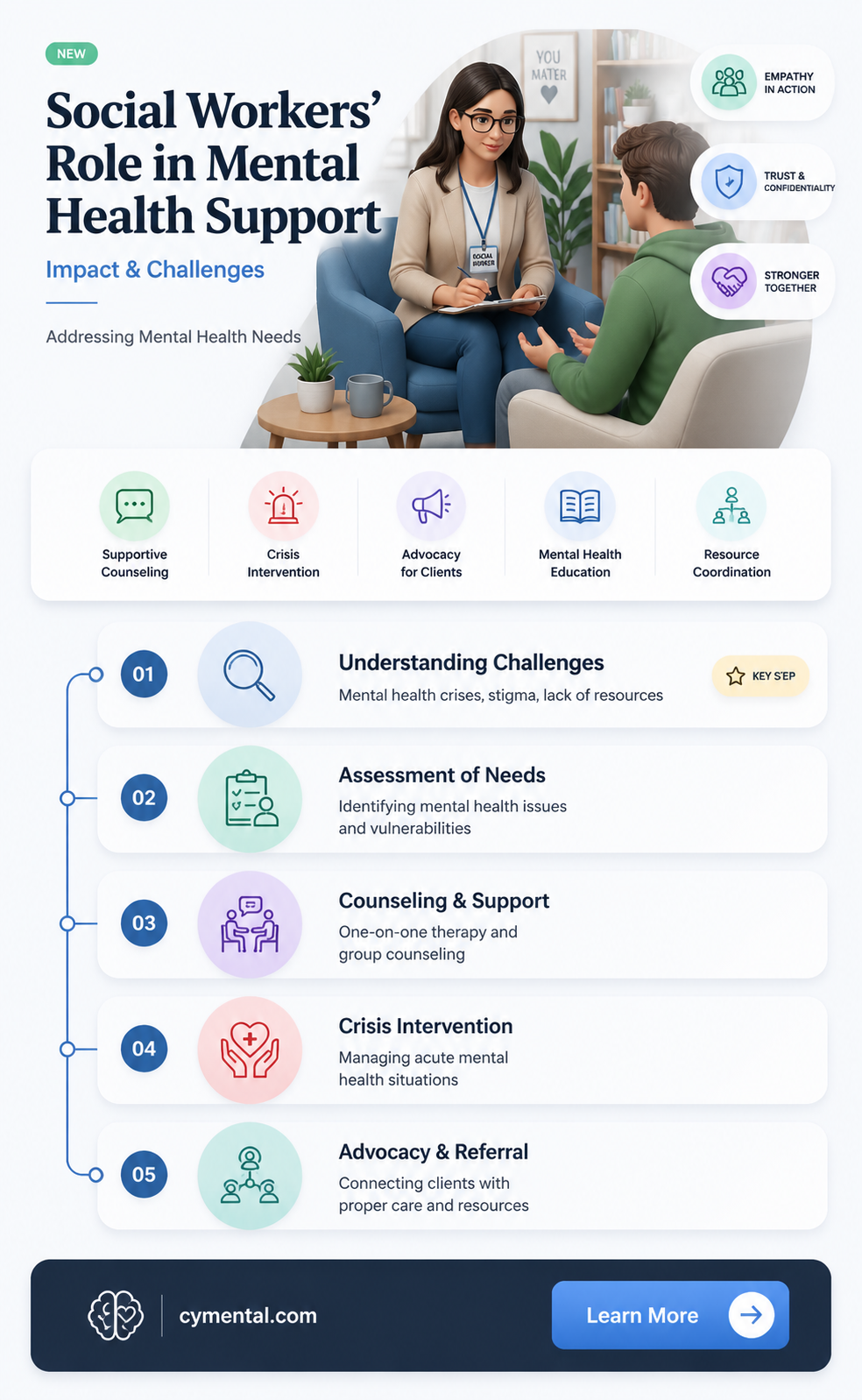
Social workers play a crucial role in addressing mental health issues by providing essential support, advocacy, and resources to individuals and communities in need. Through their holistic approach, they assess and intervene in various aspects of a person's life, including social, economic, and environmental factors, which often contribute to mental health challenges. By offering counseling, connecting clients to services, and promoting mental health awareness, social workers bridge gaps in access to care, particularly for marginalized populations. Their collaborative efforts with healthcare professionals, schools, and community organizations further enhance the effectiveness of mental health interventions. Despite challenges such as limited resources and high caseloads, social workers remain vital in fostering resilience and improving outcomes for those struggling with mental health concerns.
Explore related products


What You'll Learn
- Role in Crisis Intervention: Social workers provide immediate support during mental health crises, stabilizing individuals effectively
- Access to Resources: They connect clients to therapy, medication, and community services for comprehensive care
- Stigma Reduction: Social workers educate communities, reducing mental health stigma and promoting acceptance
- Advocacy for Policy Change: They push for policies improving mental health funding and accessibility
- Holistic Support: Addressing social determinants like housing and employment to enhance mental well-being

Role in Crisis Intervention: Social workers provide immediate support during mental health crises, stabilizing individuals effectively
In moments of acute mental health distress, the presence of a skilled social worker can be a lifeline. Crisis intervention demands a unique blend of empathy, decisiveness, and resourcefulness, qualities that social workers are trained to embody. When an individual is experiencing a mental health crisis—whether it’s suicidal ideation, severe anxiety, or psychotic episodes—social workers step in to assess the situation, de-escalate tension, and connect the person to immediate and long-term support systems. Their role is not just to stabilize but to humanize the crisis, ensuring the individual feels heard, understood, and valued during their most vulnerable moments.
Consider the steps a social worker might take during a crisis: first, they establish safety, both for the individual and those around them. This could involve removing harmful objects, calming the environment, or contacting emergency services if necessary. Next, they employ active listening and reflective techniques to validate the person’s emotions, reducing feelings of isolation. For instance, a social worker might say, “I hear how overwhelmed you feel, and it makes sense given what you’re going through.” This simple acknowledgment can defuse tension and build trust. Finally, they create a safety plan, which might include coping strategies, emergency contacts, and follow-up appointments, ensuring the individual has a roadmap for recovery.
One practical example of this role in action is the use of mobile crisis teams, where social workers collaborate with mental health professionals to respond to emergencies in the community. These teams often operate 24/7, providing on-the-spot assessments and interventions that can prevent hospitalization or more severe outcomes. For instance, a study in *Psychiatric Services* found that mobile crisis services reduced psychiatric hospitalizations by 38% among adults and 42% among youth, demonstrating the tangible impact of social workers in crisis settings. Such teams are particularly effective in reaching marginalized populations, including the homeless or those in rural areas, who might otherwise lack access to immediate care.
However, the effectiveness of social workers in crisis intervention hinges on their ability to navigate complex systems and collaborate with other professionals. They must be adept at coordinating with hospitals, law enforcement, and community organizations to ensure seamless care. For example, a social worker might advocate for a client’s needs during a hospital intake, ensuring they receive trauma-informed care rather than being treated solely as a “behavioral problem.” This advocacy is critical, as it addresses systemic barriers that often exacerbate mental health crises, such as stigma or lack of resources.
In conclusion, social workers are indispensable in crisis intervention, offering a blend of immediate support and long-term stabilization that few other professionals can match. Their ability to humanize crises, create safety plans, and advocate for systemic change makes them a cornerstone of mental health care. As mental health needs continue to rise globally, investing in social workers—through training, funding, and public awareness—is not just beneficial but essential. They are, quite literally, saving lives one intervention at a time.
Finding Support: Where to Seek Help for Depression and Healing
You may want to see also
Explore related products


Access to Resources: They connect clients to therapy, medication, and community services for comprehensive care
Social workers play a pivotal role in bridging the gap between individuals struggling with mental health issues and the resources they need to heal. One of their most critical functions is connecting clients to therapy, medication, and community services, ensuring a holistic approach to care. Without this linkage, many individuals would remain isolated, unaware of available options, or unable to navigate complex systems. For instance, a social worker might assess a client’s needs, refer them to a licensed therapist, and simultaneously help them apply for Medicaid to cover the cost of antidepressants, all while linking them to a local support group for ongoing encouragement.
Consider the practical steps involved in this process. First, social workers conduct thorough assessments to identify the specific needs of their clients—whether it’s cognitive behavioral therapy for anxiety, selective serotonin reuptake inhibitors (SSRIs) for depression, or vocational training programs for those whose mental health impacts their employment. Next, they leverage their knowledge of local and national resources to make appropriate referrals. For example, a social worker might recommend a sliding-scale therapy clinic for low-income clients or assist in scheduling a psychiatric evaluation to determine medication needs, such as a starting dose of 10 mg of Lexapro for adults with moderate depression. This tailored approach ensures clients receive the right interventions at the right time.
However, this work is not without challenges. Navigating the fragmented mental health system can be daunting, even for professionals. Social workers must stay informed about changes in healthcare policies, such as updates to Medicaid coverage or the availability of new community programs. They also need to advocate for clients who face barriers like transportation, language, or stigma. For instance, a social worker might arrange for a translator during therapy sessions or coordinate with a local nonprofit to provide bus passes for clients attending outpatient appointments. These efforts require persistence, creativity, and a deep commitment to client-centered care.
The impact of this resource connection is profound. Studies show that individuals who receive comprehensive care—therapy, medication, and community support—experience better mental health outcomes than those who rely on a single intervention. For example, a 2021 study found that patients with major depressive disorder who combined SSRIs with psychotherapy had a 60% remission rate, compared to 40% for medication alone. Social workers amplify this effect by ensuring clients access all available tools, not just one. Their role is less about providing direct treatment and more about orchestrating a network of support that empowers clients to thrive.
In conclusion, social workers are indispensable in the mental health landscape, serving as navigators, advocates, and connectors. By linking clients to therapy, medication, and community services, they address the multifaceted nature of mental health challenges. Their work not only improves individual outcomes but also strengthens communities by fostering resilience and reducing disparities. For anyone struggling, reaching out to a social worker could be the first step toward accessing the comprehensive care they deserve.
Supporting Mental Health: Practical Ways to Help Someone in Need
You may want to see also
Explore related products


Stigma Reduction: Social workers educate communities, reducing mental health stigma and promoting acceptance
Social workers play a pivotal role in dismantling the barriers of stigma surrounding mental health, a pervasive issue that often prevents individuals from seeking the support they need. Through community education, they challenge misconceptions and foster an environment of understanding and acceptance. This proactive approach is essential in a world where mental health struggles are often met with silence, shame, or discrimination.
The Power of Education: A Social Worker's Toolkit
Imagine a scenario where a social worker organizes a workshop in a local community center. The goal is to dispel myths about depression, a common yet often misunderstood condition. Through interactive activities and personal testimonials, attendees learn that depression is not a sign of weakness but a treatable illness. This educational intervention is a strategic move to empower community members with knowledge, encouraging them to recognize symptoms in themselves or others and seek appropriate help. By providing accurate information, social workers can counteract the harmful stereotypes that contribute to stigma.
A Multi-Pronged Strategy for Stigma Reduction
Stigma reduction is a complex task, requiring a multifaceted approach. Social workers employ various strategies, including one-on-one counseling, group therapy sessions, and community-wide campaigns. For instance, a social worker might facilitate support groups for individuals with anxiety disorders, creating a safe space for sharing experiences and challenging the internalized stigma that often accompanies mental health issues. Simultaneously, they could collaborate with local schools to implement mental health awareness programs, targeting youth—a demographic particularly vulnerable to stigma-related barriers. This dual approach ensures that both those directly affected and the broader community benefit from stigma-reducing initiatives.
Measurable Impact and Long-Term Benefits
The effectiveness of social workers in stigma reduction is evident in various studies. Research shows that community-based mental health education programs led by social workers can significantly improve public attitudes towards mental illness. For example, a study in a rural community demonstrated that after a series of workshops, participants displayed increased empathy and reduced stigmatizing behaviors towards individuals with schizophrenia. This shift in perception can lead to more supportive social networks, encouraging those struggling with mental health to seek treatment without fear of judgment.
Practical Steps for Community Engagement
To maximize the impact of stigma reduction efforts, social workers can employ the following tactics:
- Collaborate with Local Leaders: Engage community influencers, such as religious leaders or teachers, to amplify the reach and credibility of mental health messages.
- Utilize Digital Platforms: Create online resources and social media campaigns to target younger audiences and provide easily accessible information.
- Offer Training Sessions: Conduct workshops for community organizations, equipping them with the skills to identify mental health issues and provide initial support.
- Share Personal Stories: Encourage individuals with lived experience to share their journeys, humanizing mental health struggles and inspiring others to seek help.
By implementing these strategies, social workers can effectively contribute to a cultural shift, where mental health is discussed openly, and seeking support is viewed as a sign of strength rather than weakness. This transformative process is crucial in ensuring that mental health services are accessible and utilized by those who need them most.
Do Mental Hospitals Help: Exploring Effectiveness and Patient Outcomes
You may want to see also
Explore related products





Advocacy for Policy Change: They push for policies improving mental health funding and accessibility
Social workers are not just case managers or counselors; they are systemic change agents. One of their most impactful roles is advocating for policies that address the root causes of mental health disparities. By pushing for increased funding and improved accessibility, they challenge the status quo and create pathways to care for those who need it most. This advocacy is not a sideline activity but a core function of their profession, rooted in their commitment to social justice and equity.
Consider the practical steps social workers take to influence policy. They often start by identifying gaps in mental health services through their direct work with clients. For instance, a social worker might notice that low-income communities lack access to affordable therapy or that school-based mental health programs are underfunded. Armed with this evidence, they engage in grassroots organizing, collaborating with community leaders, policymakers, and advocacy groups to draft and support legislation. This process involves writing op-eds, testifying at hearings, and mobilizing public support—all to ensure that mental health is prioritized in budgetary decisions and legislative agendas.
The impact of such advocacy is measurable. In states where social workers have successfully lobbied for increased mental health funding, there’s often a corresponding rise in the availability of crisis intervention services, telehealth options, and culturally competent care. For example, California’s Mental Health Services Act, championed by social workers and advocates, allocates millions annually to prevention and early intervention programs, particularly for youth and underserved populations. These policy wins demonstrate how advocacy translates into tangible improvements in mental health care delivery.
However, advocacy is not without challenges. Social workers must navigate political resistance, limited resources, and competing priorities. To overcome these hurdles, they employ strategies like coalition-building, data-driven arguments, and storytelling to humanize the issue. For instance, sharing a client’s story (with consent) about the life-changing impact of accessible mental health services can sway even the most skeptical policymakers. Additionally, social workers often emphasize the economic benefits of investing in mental health, such as reduced healthcare costs and increased workforce productivity, to make a compelling case for funding.
In conclusion, social workers’ advocacy for policy change is a critical lever in improving mental health outcomes. By combining on-the-ground insights with strategic action, they not only address immediate client needs but also reshape the systems that perpetuate inequities. Their efforts remind us that mental health is a public issue, not just a personal one, and that systemic change requires persistent, informed, and passionate advocacy.
Supporting Mental Health: Practical Ways to Make a Positive Impact
You may want to see also
Explore related products


Holistic Support: Addressing social determinants like housing and employment to enhance mental well-being
Social workers are increasingly recognizing that mental health cannot be treated in isolation from the social determinants that shape individuals' lives. Housing instability, unemployment, and poverty are not just symptoms of mental health issues—they are often root causes. For instance, a study by the American Journal of Community Psychology found that individuals experiencing homelessness are 15 times more likely to experience severe mental health challenges. Addressing these social determinants is not merely a complementary strategy; it is a fundamental aspect of holistic mental health care.
Consider the case of employment. Securing stable work not only provides financial security but also fosters a sense of purpose and belonging, both of which are critical for mental well-being. Social workers play a pivotal role in this process by connecting clients to vocational training programs, offering resume-building workshops, and advocating for workplace accommodations under the Americans with Disabilities Act (ADA). For example, a social worker might help a client with anxiety disorder negotiate flexible hours or remote work options, ensuring they can maintain employment without exacerbating their condition. Practical steps include assessing clients' skills, identifying local job resources, and providing ongoing support during the job search and onboarding process.
Housing is another cornerstone of holistic support. Without stable housing, individuals struggle to manage mental health conditions effectively. Social workers often collaborate with housing authorities and nonprofits to secure affordable housing options, such as Section 8 vouchers or supportive housing programs. For instance, in New York City, the Scatter Site Housing Program has demonstrated that providing permanent housing to individuals with mental illness reduces hospitalizations by 29% and emergency room visits by 22%. Social workers can also assist clients in navigating the application process, understanding lease agreements, and accessing funds for security deposits or moving expenses.
However, addressing social determinants is not without challenges. Systemic barriers, such as limited affordable housing stock and discriminatory hiring practices, often hinder progress. Social workers must balance direct client support with advocacy efforts to address these broader issues. For example, they can participate in policy campaigns to increase funding for affordable housing or push for legislation that bans employment discrimination based on mental health history. Additionally, social workers should collaborate with interdisciplinary teams, including healthcare providers and legal advocates, to ensure clients receive comprehensive support.
In conclusion, holistic support that addresses social determinants like housing and employment is essential for enhancing mental well-being. By integrating practical interventions with systemic advocacy, social workers can create lasting change for their clients. This approach not only alleviates immediate mental health challenges but also empowers individuals to build stable, fulfilling lives. For those in the field, the takeaway is clear: mental health care must extend beyond therapy sessions to encompass the social structures that shape individuals' daily realities.
Moving Out: A Mental Health Boost or Added Stress?
You may want to see also
Frequently asked questions
Yes, social workers are trained to address mental health issues through education in psychology, counseling, and social work practices, often including specialized coursework in mental health.
Yes, licensed clinical social workers (LCSWs) are qualified to provide therapy, including individual, group, and family counseling, for various mental health conditions.
Social workers support individuals by providing counseling, connecting them to resources, advocating for their needs, and helping them navigate healthcare and social systems.
Yes, social workers often collaborate with psychiatrists, psychologists, nurses, and other professionals to ensure comprehensive care for individuals with mental health needs.
Yes, social workers play a key role in prevention by addressing social determinants of mental health, such as poverty, trauma, and lack of access to care, through community programs and advocacy.