Harper Lewis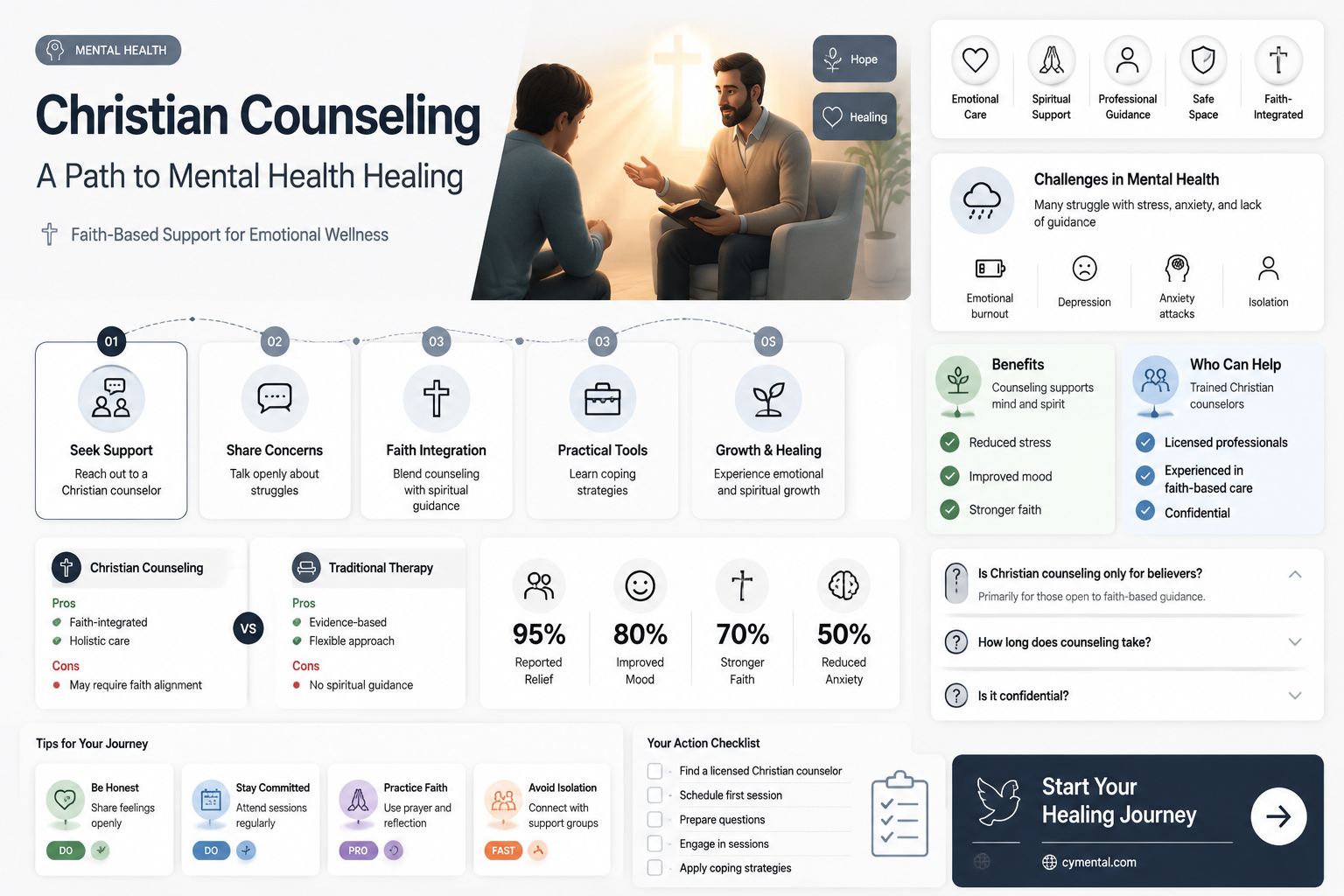
Christian counseling, which integrates psychological principles with biblical teachings, offers a unique approach to addressing mental health challenges by incorporating faith and spirituality into the therapeutic process. For individuals who find meaning and comfort in their Christian beliefs, this form of counseling can provide a supportive framework to explore emotional struggles, such as anxiety, depression, or trauma, while aligning with their spiritual values. By combining evidence-based therapeutic techniques with prayer, scripture, and faith-based guidance, Christian counseling aims to heal both the mind and the spirit, fostering holistic well-being. For many, this integration of faith and mental health care can deepen their sense of purpose, strengthen coping mechanisms, and create a more personalized path to healing, making it a valuable option for those seeking support within their spiritual context.
| Characteristics | Values |
|---|---|
| Integration of Faith and Psychology | Combines biblical principles with evidence-based psychological practices to address mental health issues. |
| Holistic Approach | Addresses spiritual, emotional, and psychological aspects of well-being. |
| Personalized Care | Tailors counseling to individual beliefs, values, and spiritual needs. |
| Supportive Community | Often involves church or faith-based community support alongside counseling. |
| Focus on Forgiveness and Grace | Emphasizes forgiveness, redemption, and God's grace in healing processes. |
| Purpose and Meaning | Helps individuals find purpose and meaning through a Christian worldview. |
| Ethical Framework | Operates within a Christian ethical framework, guiding decision-making and behavior. |
| Prayer and Spiritual Practices | Incorporates prayer, scripture, and spiritual disciplines into therapy sessions. |
| Trauma-Informed Care | Addresses trauma while considering spiritual and faith-related impacts. |
| Effectiveness | Studies suggest it can be effective for those who value faith integration in therapy. |
| Accessibility | May be more accessible to individuals within faith communities. |
| Limitations | May not be suitable for those who do not align with Christian beliefs or prefer secular therapy. |
| Professional Qualifications | Requires counselors to be trained in both theology and mental health practices. |
| Cultural Sensitivity | Can be culturally sensitive for individuals rooted in Christian traditions. |
| Stigma Reduction | May reduce stigma around mental health within faith communities. |
Explore related products

$8.54 $14.99



What You'll Learn

Biblical principles in therapy
Christian counseling integrates Biblical principles into therapeutic practices, offering a faith-based approach to mental health. One foundational principle is the belief in the inherent worth of individuals as creations of God. This perspective fosters self-acceptance and combats negative self-perceptions often rooted in shame or guilt. For instance, a counselor might use Psalm 139:14, which declares humans as "fearfully and wonderfully made," to help clients reframe their self-image. This approach aligns with cognitive-behavioral techniques by challenging distorted beliefs with scriptural truths, providing a unique framework for healing.
Another key principle is the emphasis on forgiveness, both receiving it from God and extending it to others. Unresolved anger and bitterness are frequently linked to anxiety and depression. Christian counselors often guide clients through the process of forgiveness using Biblical examples, such as the parable of the unforgiving servant (Matthew 18:21-35). Practical steps might include writing a letter of forgiveness (without necessarily sending it) or engaging in prayer to release resentment. Research suggests that forgiveness interventions can reduce symptoms of depression by up to 20%, making this principle both spiritually and clinically impactful.
The concept of community, or koinonia, is also central to Biblical therapy. Isolation often exacerbates mental health struggles, while connection fosters resilience. Christian counselors encourage participation in faith communities, such as small groups or church activities, as a form of social support. For example, a client struggling with loneliness might be guided to join a Bible study group, combining spiritual growth with interpersonal interaction. Studies show that social support can reduce the risk of depression by 30%, highlighting the practical benefits of this principle.
Finally, the principle of surrendering to God’s will addresses the anxiety often tied to control. Philippians 4:6-7 encourages prayer and thanksgiving as antidotes to worry, offering a spiritual practice for managing stress. Counselors might teach clients to incorporate prayer or meditation on scripture into their daily routines, replacing anxious thoughts with trust in divine providence. For instance, a 10-minute morning devotion could become a grounding ritual for someone with generalized anxiety disorder. This approach not only calms the mind but also aligns mental health practices with spiritual discipline.
Incorporating Biblical principles into therapy provides a holistic framework that addresses emotional, spiritual, and relational dimensions of well-being. While not a replacement for clinical treatment, these principles offer unique tools for those seeking faith-integrated care. By grounding therapy in scripture, Christian counseling provides hope, purpose, and practical strategies for navigating mental health challenges.
Move Your Body, Boost Your Mind: Physical Activity's Mental Health Benefits
You may want to see also
Explore related products




Faith-based coping strategies
Christian counseling integrates faith-based coping strategies to address mental health challenges, offering a unique blend of spiritual and psychological support. One such strategy is prayer and meditation on Scripture, which fosters a sense of peace and connection to God. Research suggests that regular prayer can reduce anxiety and depression by shifting focus from personal struggles to divine guidance. For instance, a study published in the *Journal of Religion and Health* found that individuals who engaged in daily prayer experienced lower levels of cortisol, the stress hormone. To implement this, set aside 10–15 minutes daily for silent prayer or guided meditation on verses like Philippians 4:6–7, which encourages casting anxieties on God.
Another faith-based coping strategy is community involvement, rooted in the Christian principle of fellowship. Participating in church activities, small groups, or volunteer work provides social support, reducing feelings of isolation. A 2018 study in *Psychology of Religion and Spirituality* highlighted that individuals active in religious communities reported higher levels of resilience during mental health crises. Practical steps include joining a Bible study group, attending weekly worship services, or volunteering at a local ministry. For those hesitant to engage, start small—attend a single event or commit to one monthly activity to build confidence.
Spiritual journaling is a third strategy, combining reflection with faith to process emotions and experiences. Writing down prayers, gratitude lists, or reflections on Bible passages can clarify thoughts and reinforce spiritual truths. A study in *Mental Health, Religion & Culture* found that journaling reduced symptoms of depression by 20% in participants over six weeks. To begin, dedicate a notebook for daily entries, focusing on themes like God’s faithfulness or lessons from trials. Include specific verses or hymns that resonate with your journey for added encouragement.
Lastly, sacramental practices, such as communion or baptism, serve as tangible reminders of God’s grace and presence. These rituals can provide comfort and hope, particularly during times of despair. For example, partaking in communion can symbolize renewal and forgiveness, helping individuals release guilt or shame. While these practices are deeply personal, their regularity—such as monthly communion—can anchor mental health routines. Pairing these rituals with intentional reflection maximizes their emotional and spiritual impact.
Incorporating these faith-based coping strategies into Christian counseling can enhance mental health outcomes by addressing spiritual needs alongside psychological ones. Each strategy offers practical, actionable steps that align with Christian beliefs, fostering holistic healing. However, it’s essential to tailor these approaches to individual needs, ensuring they complement professional mental health treatment when necessary.
Seeking Support: Exploring Resources to Help Navigate Life's Challenges
You may want to see also
Explore related products


Integration of spirituality and psychology
Christian counseling, when integrated with psychological principles, offers a holistic approach to mental health that addresses both spiritual and emotional needs. This integration is particularly effective because it acknowledges the interconnectedness of faith and well-being, allowing individuals to draw strength from their beliefs while engaging in evidence-based therapeutic practices. For example, cognitive-behavioral therapy (CBT) can be adapted to include biblical principles, helping clients reframe negative thoughts through the lens of scripture. A study published in the *Journal of Psychology and Christianity* found that clients who received spiritually integrated counseling reported higher levels of satisfaction and perceived effectiveness compared to those in secular therapy alone. This suggests that combining spirituality and psychology can enhance treatment outcomes, especially for individuals whose faith is central to their identity.
To effectively integrate spirituality and psychology, counselors must first understand the client’s spiritual framework and how it influences their worldview. This involves active listening and asking open-ended questions about their faith practices, beliefs, and how they perceive God’s role in their struggles. For instance, a counselor might explore how a client’s understanding of forgiveness in Christianity could be applied to self-forgiveness for past mistakes. Practical steps include incorporating prayer, scripture reading, or faith-based metaphors into sessions. However, caution must be exercised to avoid imposing beliefs or using spirituality to bypass necessary psychological work. The goal is to create a collaborative space where faith and therapy complement each other, not compete.
One of the challenges in this integration is balancing theological principles with psychological science. For example, while Christian teachings emphasize surrender to God’s will, psychological interventions often focus on personal agency and problem-solving. Counselors can bridge this gap by helping clients see how faith can empower them to take action, rather than fostering passivity. A useful technique is to encourage clients to reflect on biblical figures who faced adversity, such as Joseph or Esther, and how their faith guided their decisions. This approach not only validates the client’s spiritual perspective but also provides actionable insights for coping with mental health challenges.
Finally, the integration of spirituality and psychology requires ongoing education and self-awareness from counselors. They must be familiar with both theological concepts and evidence-based practices to ensure a balanced approach. For instance, a counselor might attend workshops on trauma-informed care and simultaneously study pastoral counseling techniques. Additionally, counselors should be mindful of cultural and denominational differences within Christianity, as these can significantly impact a client’s spiritual experience. By fostering a deep understanding of both domains, counselors can provide a nuanced and effective treatment that honors the whole person—mind, body, and spirit.
Supporting Loved Ones: Strategies to Assist Those Denying Mental Health Struggles
You may want to see also
Explore related products


Addressing stigma in Christian communities
Stigma surrounding mental health in Christian communities often stems from misconceptions that equate psychological struggles with spiritual weakness or sin. This false dichotomy can prevent individuals from seeking help, fearing judgment or rejection from their faith peers. To dismantle this barrier, it’s essential to reframe mental health challenges as part of the human experience, not a failure of faith. Churches can lead by incorporating mental health education into sermons, small groups, and youth programs, emphasizing that seeking counseling is an act of stewardship over one’s well-being, not a lack of trust in God.
One practical step is to train church leaders in mental health first aid, equipping them to recognize signs of distress and respond with compassion rather than platitudes. For instance, instead of advising prayer alone, leaders can encourage professional counseling alongside spiritual practices. Churches can also partner with Christian counselors to host workshops or seminars, normalizing the conversation around mental health. Testimonials from community members who’ve benefited from counseling can further humanize the issue, showing that healing is possible through integrated care.
A cautionary note: addressing stigma requires sensitivity to cultural and theological nuances. Some Christians may resist secular mental health frameworks, so it’s crucial to align counseling with biblical principles. For example, emphasizing the role of community support (Acts 2:44-45) or the importance of renewing the mind (Romans 12:2) can bridge the gap between faith and psychology. Avoid oversimplifying complex issues or promising quick fixes, as this can undermine trust in both counseling and the church.
Finally, fostering a stigma-free environment demands consistent action. Churches can create safe spaces for vulnerable conversations, such as support groups for anxiety, depression, or grief. Leaders should model vulnerability by sharing their own struggles, demonstrating that transparency is a strength, not a shame. By weaving mental health into the fabric of church life, Christian communities can become havens of hope, where faith and counseling work hand in hand to restore wholeness.
Finding Support: Where to Get Mental Health Help and Resources
You may want to see also
Explore related products

$13.24


Effectiveness for anxiety and depression
Christian counseling, when integrated with evidence-based practices, can offer unique benefits for individuals struggling with anxiety and depression. Research suggests that incorporating faith-based elements into therapy can enhance treatment outcomes for those who find meaning and comfort in their religious beliefs. For instance, a study published in the *Journal of Clinical Psychology* found that clients who received Christian counseling reported greater reductions in anxiety symptoms compared to secular counseling alone, particularly when the counselor addressed spiritual concerns alongside psychological ones. This approach leverages the client’s faith as a resource, fostering hope and resilience in the face of mental health challenges.
One practical strategy employed in Christian counseling for anxiety and depression is the use of scripture-based cognitive reframing. For example, a counselor might guide a client to replace anxious thoughts with biblical affirmations, such as Philippians 4:6–7, which encourages prayer and peace. This technique not only aligns with the client’s spiritual values but also mirrors cognitive-behavioral therapy (CBT) principles, making it a dual-purpose tool. However, it’s crucial for counselors to ensure these interventions are tailored to the individual’s specific needs and not imposed dogmatically, as this could alienate clients or undermine therapeutic trust.
A comparative analysis reveals that Christian counseling’s effectiveness often hinges on the counselor’s ability to integrate spiritual and psychological frameworks seamlessly. Unlike secular therapy, which may overlook spiritual distress, Christian counseling explicitly addresses this dimension, providing a more holistic approach. For depression, this might involve exploring themes of forgiveness, purpose, or divine love, which can alleviate feelings of hopelessness. However, this approach may not suit everyone, particularly those with differing or no religious beliefs, underscoring the importance of client-centered care.
For those considering Christian counseling, it’s essential to set realistic expectations. While faith-based interventions can be powerful, they are not a substitute for professional mental health treatment, especially in severe cases. Combining Christian counseling with medication, when prescribed by a psychiatrist, or other evidence-based therapies like mindfulness or CBT, can yield the best results. Additionally, clients should seek counselors who are licensed mental health professionals with specialized training in integrating faith and psychology, ensuring both spiritual and clinical needs are met.
In conclusion, Christian counseling can be highly effective for anxiety and depression when implemented thoughtfully and in conjunction with proven therapeutic techniques. Its strength lies in its ability to tap into a client’s spiritual resources, offering a layer of support that secular therapy may lack. However, success depends on the counselor’s skill in balancing faith-based and psychological approaches, as well as the client’s openness to this integration. For those whose faith is a cornerstone of their identity, this method can provide profound healing and renewed hope.
Sports and Mental Health: Boosting Well-Being Through Physical Activity
You may want to see also
Frequently asked questions
Yes, Christian counseling can effectively address mental health issues by integrating evidence-based therapeutic techniques with faith-based principles, offering a holistic approach that considers spiritual, emotional, and psychological well-being.
Christian counseling differs by incorporating biblical teachings, prayer, and spiritual guidance alongside traditional counseling methods, providing a framework that aligns with the client’s faith and values.
Yes, Christian counseling can be suitable for severe mental health conditions when conducted by trained professionals who combine faith-based support with clinically proven strategies, though severe cases may also require collaboration with psychiatrists or medical professionals.
Absolutely, Christian counseling can help with anxiety and depression by addressing root causes, offering coping strategies, and providing spiritual comfort, often helping individuals find hope and purpose in their struggles.