Harper Lewis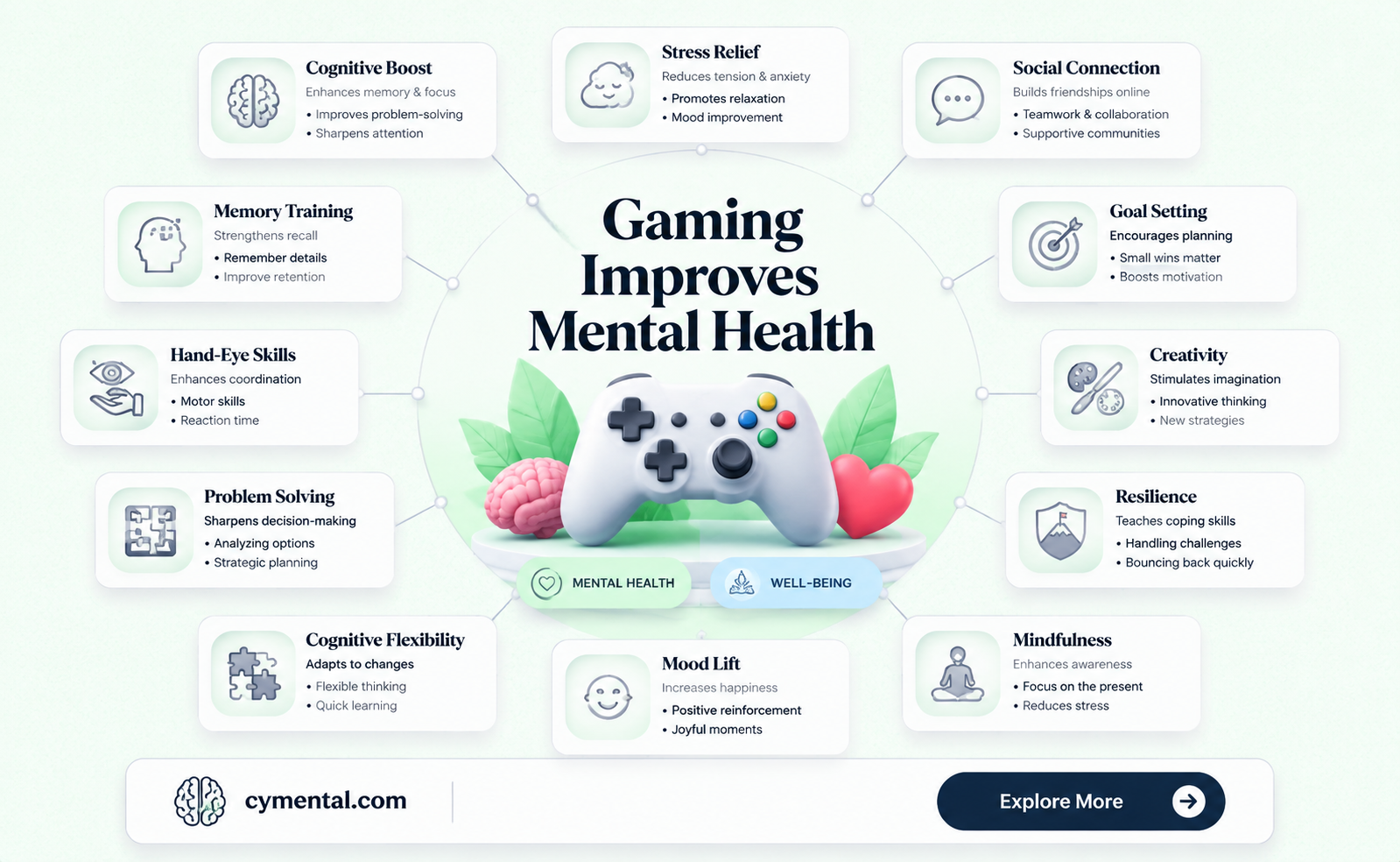
Gaming has increasingly been recognized as a potential tool for supporting mental health, offering benefits such as stress relief, improved mood, and enhanced cognitive function. Engaging in video games can provide a sense of escapism, allowing individuals to temporarily disconnect from real-world stressors and immerse themselves in a virtual environment. Additionally, multiplayer games foster social connections, combating feelings of loneliness and isolation, while problem-solving and strategy-based games can boost mental agility and resilience. However, the impact of gaming on mental health depends on moderation and the type of games played, as excessive or addictive gaming can have adverse effects. When balanced, gaming can serve as a valuable complement to traditional mental health strategies, offering both entertainment and therapeutic benefits.
Explore related products


What You'll Learn
- Stress Relief: Gaming reduces stress by providing immersive experiences that distract from daily pressures
- Social Connection: Multiplayer games foster friendships and combat loneliness through shared virtual experiences
- Cognitive Benefits: Puzzles and strategy games enhance problem-solving, memory, and decision-making skills
- Emotional Regulation: Games teach resilience and coping mechanisms by navigating challenges and setbacks
- Therapeutic Applications: Gamified therapy tools aid in treating anxiety, depression, and PTSD effectively

Stress Relief: Gaming reduces stress by providing immersive experiences that distract from daily pressures
Gaming offers a unique form of stress relief by transporting players into immersive worlds that temporarily disconnect them from real-life pressures. Unlike passive activities like scrolling through social media, gaming demands active engagement, requiring focus on objectives, problem-solving, and strategic thinking. This cognitive shift acts as a mental reset, allowing individuals to step away from stressors like work deadlines, financial worries, or relationship tensions. For instance, a study published in the *Journal of Cyberpsychology, Behavior, and Social Networking* found that participants who played casual video games for 20–30 minutes reported significant reductions in cortisol levels, a key stress hormone.
To maximize stress relief, choose games that align with your preferences and stress levels. For mild stress, casual games like *Animal Crossing* or *Stardew Valley* provide calming, open-ended experiences that encourage creativity and relaxation. For moderate stress, action-adventure games like *The Legend of Zelda: Breath of the Wild* offer a balance of challenge and exploration, allowing players to immerse themselves in a richly detailed world. For intense stress, fast-paced games like *Overwatch* or *Fortnite* can serve as a high-energy outlet, channeling tension into competitive focus. However, avoid overly frustrating games, as they may exacerbate stress rather than alleviate it.
While gaming can be an effective stress reliever, it’s essential to practice moderation. The American Psychological Association suggests that 30–60 minutes of gaming per day can provide mental health benefits without interfering with other responsibilities. Pair gaming with mindfulness techniques, such as deep breathing before or after a session, to enhance its stress-reducing effects. Additionally, consider multiplayer games with friends or family, as social interaction can amplify the positive impact by fostering connection and shared enjoyment.
A cautionary note: gaming should complement, not replace, other stress management strategies like exercise, meditation, or therapy. Over-reliance on gaming as a coping mechanism can lead to neglect of real-world issues or unhealthy habits like sleep deprivation. For younger players (ages 13–18), parental guidance is crucial to ensure gaming remains a balanced part of their routine. By integrating gaming thoughtfully, individuals can harness its immersive power to effectively manage stress and improve overall mental well-being.
Addressing Mental Health: Are Our Efforts Truly Making a Difference?
You may want to see also
Explore related products


Social Connection: Multiplayer games foster friendships and combat loneliness through shared virtual experiences
Multiplayer games are more than just entertainment; they are social platforms where friendships flourish and loneliness dissipates. Consider *World of Warcraft* or *Among Us*, where players collaborate, strategize, and bond over shared goals. These virtual spaces mimic real-world interactions, offering a sense of belonging to those who might feel isolated in their physical lives. For instance, a study by Oxford University found that players who engaged in social gaming reported higher levels of well-being, attributing it to the connections formed during gameplay. This isn’t just anecdotal—it’s backed by data.
To harness this benefit, start by choosing games designed for cooperation rather than competition. Games like *Stardew Valley* or *Animal Crossing* encourage teamwork and shared achievements, fostering positive interactions. Dedicate 30–60 minutes daily to multiplayer sessions, ensuring consistency to build rapport with fellow players. Pro tip: Use voice chat or in-game messaging to deepen connections, but always prioritize safety by avoiding personal details until trust is established. For younger players (ages 13–17), parental oversight can ensure a secure and positive experience.
However, not all multiplayer environments are created equal. Toxic behavior can undermine the mental health benefits, so select communities with active moderation or zero-tolerance policies for harassment. Platforms like *Discord* often have curated gaming groups focused on inclusivity, ideal for those seeking a welcoming space. If you’re new to gaming, begin with beginner-friendly titles like *Overcooked!* or *Fall Guys*, which emphasize fun over skill, reducing anxiety about performance.
The key takeaway? Multiplayer gaming isn’t just about playing—it’s about connecting. For individuals struggling with loneliness, especially in the wake of global events like the pandemic, these virtual spaces can be lifelines. A 2021 survey by *Take This* revealed that 78% of respondents felt gaming helped them maintain social ties during isolation. By intentionally engaging in social gameplay, you’re not just passing time—you’re building relationships that can translate to real-world emotional support. So, grab a controller, join a server, and let the power of shared experiences work its magic.
Exercise and Mental Health: Unlocking the Mind-Body Connection for Wellness
You may want to see also
Explore related products




Cognitive Benefits: Puzzles and strategy games enhance problem-solving, memory, and decision-making skills
Engaging in puzzles and strategy games isn’t just a pastime—it’s a cognitive workout. These activities challenge the brain to navigate complex scenarios, fostering sharper problem-solving abilities. For instance, a study published in *Psychological Science* found that participants who played strategy games like *Civilization* demonstrated improved spatial reasoning and planning skills. The key lies in the games’ demand for resource management, long-term planning, and adapting to dynamic environments, which mirror real-life decision-making challenges.
To maximize cognitive benefits, consistency is crucial. Aim for 30–60 minutes of gameplay daily, focusing on titles that require critical thinking rather than passive interaction. Games like *Chess*, *The Talos Principle*, or *Portal* are excellent choices, as they compel players to analyze patterns, anticipate outcomes, and devise strategies. For younger players (ages 8–12), simpler puzzles or strategy games like *Ticket to Ride* or *Rush Hour* can build foundational skills without overwhelming them.
However, not all games are created equal. Avoid those that rely on repetition or rote memorization, as they offer limited cognitive stimulation. Instead, opt for games that introduce new challenges or increase difficulty progressively. For example, *Lumosity* or *Peak* offer tailored cognitive exercises designed to improve memory, attention, and problem-solving over time. Pairing gameplay with reflective practices—such as journaling about strategies used or mistakes made—can further enhance learning and retention.
One caution: excessive gaming can lead to diminishing returns. Overloading the brain with prolonged sessions may result in fatigue, reducing the effectiveness of the cognitive workout. Balance is key. Incorporate variety by alternating between different types of puzzles or strategy games to keep the brain engaged and avoid plateauing. For older adults, games like *Sudoku* or *Bridge* can help maintain mental acuity while providing social interaction, a dual benefit for cognitive and emotional health.
Incorporating puzzles and strategy games into daily routines isn’t just about entertainment—it’s a proactive step toward cognitive resilience. By selecting the right games, managing playtime, and reflecting on the experience, individuals of all ages can harness these activities to sharpen their minds. The takeaway? Gaming, when done thoughtfully, isn’t just a hobby—it’s a tool for lifelong cognitive enhancement.
Brahmi's Impact: Enhancing Mental Wellbeing and Cognitive Health Naturally
You may want to see also
Explore related products





Emotional Regulation: Games teach resilience and coping mechanisms by navigating challenges and setbacks
Games, by their very nature, are designed to present players with obstacles, puzzles, and adversities that require persistence and problem-solving. Each level, boss fight, or strategic decision offers a microcosm of real-life challenges, where failure is not only possible but often inevitable. This dynamic forces players to develop emotional resilience, as they learn to accept setbacks, regroup, and try again. For instance, in *Dark Souls*, a notoriously difficult game, players face repeated defeats that test their patience and determination. Instead of fostering frustration, many players report a sense of accomplishment and growth, as they adapt their strategies and eventually overcome the challenge. This process mirrors cognitive-behavioral therapy techniques, where individuals learn to reframe failures as opportunities for learning rather than sources of despair.
To harness this benefit, consider incorporating games that emphasize problem-solving and persistence into your routine. Puzzle games like *Portal* or strategy games like *Civilization* require players to think critically and adapt to changing circumstances. For younger players (ages 10–14), games like *Minecraft* encourage creativity and resilience through trial and error in building and survival modes. Adults can benefit from more complex titles like *The Legend of Zelda: Breath of the Wild*, which demands patience and strategic thinking. Aim for 30–60 minutes of gameplay daily, balancing it with other activities to avoid overstimulation. Pairing gameplay with reflective practices, such as journaling about how you handled in-game challenges, can amplify the emotional regulation benefits.
A cautionary note: not all games are created equal in this regard. Fast-paced, competitive multiplayer games like *Call of Duty* or *Fortnite* can sometimes exacerbate stress rather than alleviate it, particularly if players become overly invested in winning. To maximize the emotional regulation benefits, choose games that focus on personal growth and problem-solving rather than external validation. Additionally, be mindful of the emotional state you bring to gaming. If you’re already feeling overwhelmed, opt for a calming game like *Stardew Valley* instead of a high-pressure title. The goal is to use gaming as a tool for building resilience, not as an escape that avoids addressing underlying issues.
The science behind this phenomenon lies in the brain’s response to challenge and reward. When players overcome a difficult task in a game, the brain releases dopamine, a neurotransmitter associated with pleasure and motivation. Over time, this reinforces a mindset of perseverance and optimism. A 2019 study published in *Frontiers in Psychology* found that gamers who played challenging games reported higher levels of emotional resilience compared to those who played simpler, less demanding titles. This suggests that the complexity and difficulty of a game play a crucial role in fostering coping mechanisms. By intentionally selecting games that push your limits, you can train your brain to approach real-life challenges with a similar mindset of adaptability and tenacity.
Incorporating gaming into a mental health toolkit requires intentionality and balance. Start by identifying specific emotional challenges you want to address, such as frustration tolerance or decision-making under pressure. Then, select games that directly target those areas. For example, if you struggle with perfectionism, games that reward experimentation and failure, like *Kerbal Space Program*, can help reframe mistakes as part of the learning process. Track your progress by noting how you respond to in-game setbacks over time—do you feel less discouraged? More willing to try again? By treating gaming as a deliberate practice rather than a passive activity, you can unlock its potential to strengthen emotional regulation and resilience in meaningful ways.
Can You Force Someone to Get Mental Help? Ethical and Legal Considerations
You may want to see also
Explore related products





Therapeutic Applications: Gamified therapy tools aid in treating anxiety, depression, and PTSD effectively
Gamified therapy tools are revolutionizing mental health treatment by making evidence-based interventions more engaging and accessible. Unlike traditional talk therapy, which can feel abstract or intimidating, these tools leverage game mechanics like goal-setting, rewards, and interactive challenges to actively involve users in their healing process. For instance, SPARX, a fantasy-themed game developed in New Zealand, teaches cognitive-behavioral therapy (CBT) techniques to teenagers with depression. Players navigate a 3D world, battling negative thoughts represented as enemies, while learning to reframe their thinking. Studies show that 74% of users who completed SPARX experienced a clinically significant reduction in depression symptoms, comparable to face-to-face therapy outcomes.
The effectiveness of gamified therapy lies in its ability to address the unique needs of specific mental health conditions. For anxiety, apps like Headspace incorporate mindfulness exercises into short, game-like sessions, encouraging daily practice through progress tracking and achievements. PTSD treatment benefits from virtual reality (VR) tools like Bravemind, which exposes users to controlled, immersive environments resembling traumatic triggers. This gradual exposure, combined with therapeutic guidance, helps desensitize individuals to their fears. A 2021 study found that VR exposure therapy reduced PTSD symptoms by 30% over six weeks, with participants reporting increased confidence in managing their condition.
While gamified tools show promise, their success depends on thoughtful design and integration into broader treatment plans. Dosage matters: for depression, 30-minute sessions of SPARX, three times a week, yielded the best results. Age-specific adaptations are crucial; younger users respond well to cartoonish interfaces, while adults may prefer sleek, minimalist designs. Practical tips include setting realistic goals, combining apps with traditional therapy, and monitoring progress through built-in analytics. For example, pairing SuperBetter, a gamified resilience-building tool, with weekly counseling sessions can enhance motivation and accountability.
Critics argue that gamified therapy risks oversimplifying complex mental health issues, but its strengths lie in complementing, not replacing, professional care. Comparatively, while medication provides symptom relief, gamified tools empower users with skills for long-term management. For instance, EndeavorRx, the first FDA-approved video game treatment for ADHD, improves attention in children aged 8–12 through adaptive challenges. Its success highlights the potential of gamification to address neurodevelopmental disorders alongside behavioral therapy.
In conclusion, gamified therapy tools are not just gimmicks but powerful allies in mental health treatment. By blending psychological science with engaging design, they make therapy more accessible, effective, and enjoyable. Whether tackling anxiety, depression, or PTSD, these tools offer a promising pathway to healing—one level at a time.
Exercise and Mental Health: Can Physical Activity Alleviate Psychological Issues?
You may want to see also
Frequently asked questions
Yes, gaming can help reduce stress and anxiety by providing a distraction from daily worries, promoting relaxation, and triggering the release of endorphins, which improve mood.
A: Yes, certain games, especially strategy and puzzle games, can enhance problem-solving skills, memory, and attention to detail, contributing to better cognitive function.
Gaming can be a complementary tool for managing depression by offering a sense of achievement, social connection, and immersion in positive experiences, but it should not replace professional therapy.
Yes, excessive gaming can lead to addiction, social isolation, sleep disturbances, and increased anxiety or depression, especially if it interferes with daily responsibilities and real-life relationships.
Multiplayer games provide opportunities for social interaction, teamwork, and building communities, which can help combat loneliness and improve emotional well-being.