Harper Lewis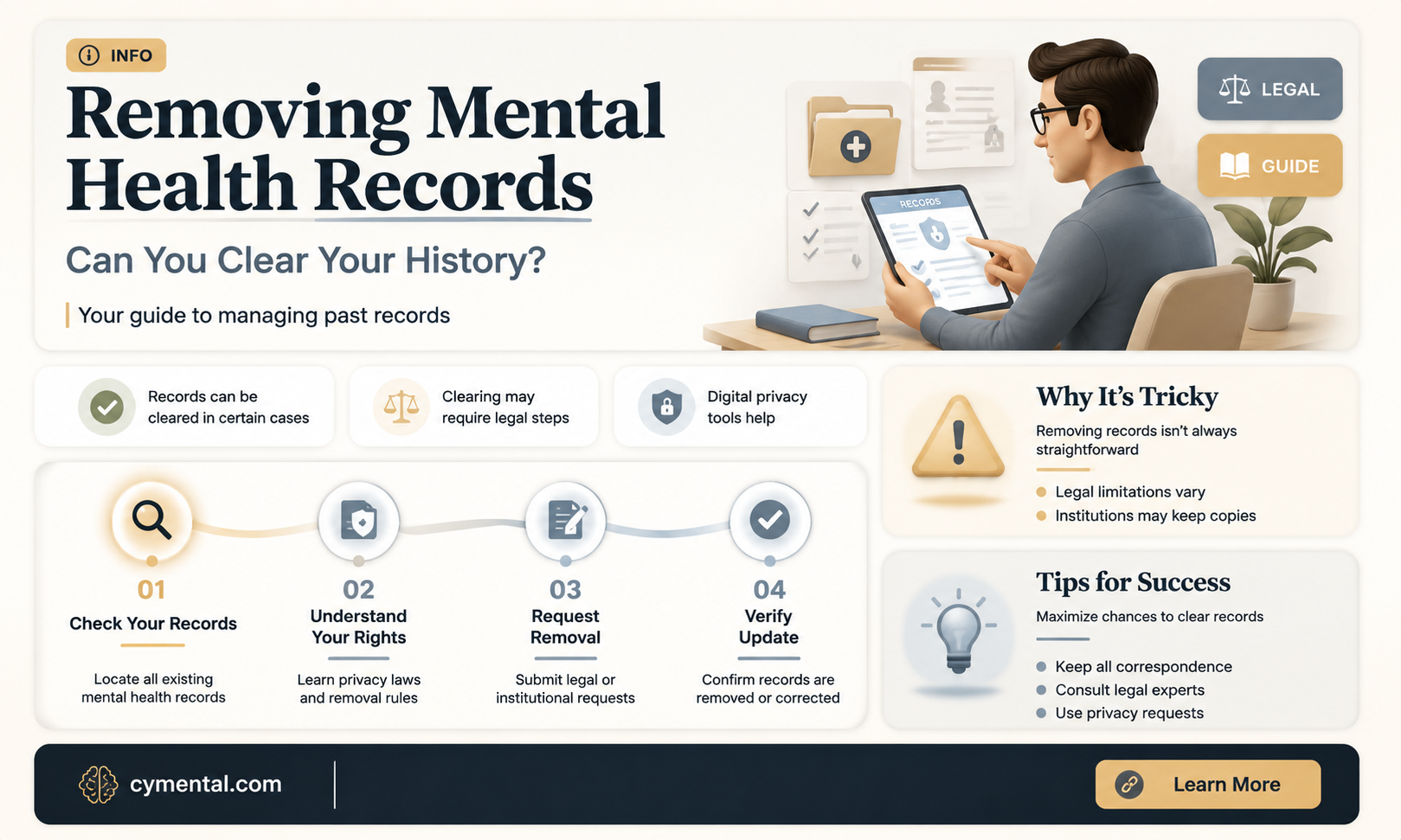
The question of whether mental health treatment can be removed from one's record is a complex and sensitive issue, often tied to concerns about privacy, stigma, and future opportunities. Many individuals seeking mental health support worry about the long-term implications of having their treatment documented, fearing it could impact employment, insurance, or personal relationships. While laws and regulations vary by region, most jurisdictions prioritize confidentiality and limit the disclosure of mental health records without explicit consent. However, certain professions or security clearances may require disclosure, leaving individuals to weigh the benefits of treatment against potential consequences. Understanding the legal protections and options available is crucial for anyone navigating this concern, as it can significantly influence their decision to seek help.
| Characteristics | Values |
|---|---|
| Possibility of Removal | Generally, mental health records cannot be completely erased. However, in some cases, amendments or corrections can be made if information is inaccurate. |
| HIPAA Privacy Rule | Protects the privacy of health information, including mental health records. Patients have the right to access and request amendments to their records. |
| State Laws | Vary widely; some states allow for sealing or expunging certain records under specific conditions (e.g., successful treatment, time elapsed). |
| Employment Background Checks | Mental health records are typically not accessible to employers unless explicitly authorized by the individual or required by law (e.g., certain security clearances). |
| Insurance Records | Mental health treatment may remain in insurance records, but access is limited under HIPAA. |
| Legal Proceedings | Mental health records may be subpoenaed in legal cases, but courts often require a compelling reason for disclosure. |
| Military and Security Clearances | Past mental health treatment may be scrutinized but does not automatically disqualify individuals. Full disclosure is usually required. |
| Time Frame for Access | Records may be retained for years, but access becomes more restricted over time, depending on state laws and provider policies. |
| Patient Rights | Individuals have the right to request copies of their records, correct inaccuracies, and limit disclosures under HIPAA. |
| Stigma Concerns | Fear of stigma often discourages people from seeking mental health help, but confidentiality laws aim to protect privacy. |
| Professional Licensing | Mental health history may be considered for professional licenses, but disclosure requirements vary by profession and jurisdiction. |
| International Variations | Laws and practices regarding mental health records differ significantly across countries. |
Explore related products

$51.35 $78.95


What You'll Learn
- Expunging Mental Health Records: Legal processes to remove mental health treatment history from official records
- Confidentiality Laws: Understanding HIPAA and other laws protecting mental health information privacy
- Employer Access Limits: Restrictions on employers accessing mental health records during hiring or employment
- Insurance Record Impact: How mental health treatment affects insurance policies and future coverage
- Self-Disclosure Control: Strategies to manage when and how to share mental health history

Expunging Mental Health Records: Legal processes to remove mental health treatment history from official records
Mental health records, once entered into official systems, can have lasting implications on an individual’s life, affecting employment, housing, and even personal relationships. However, certain legal processes exist to expunge or seal these records, offering a pathway to privacy and a fresh start. The first step in this journey involves understanding the laws governing mental health records in your jurisdiction, as they vary significantly by country and state. For instance, in the United States, the Health Insurance Portability and Accountability Act (HIPAA) protects the confidentiality of medical records, but expungement is typically governed by state laws. In California, for example, individuals can petition the court to seal records related to involuntary psychiatric holds under Welfare and Institutions Code Section 8104.
Once you’ve identified the applicable laws, the next step is to determine eligibility. Expungement is not automatic and often requires meeting specific criteria. For involuntary commitments, this might include demonstrating that the individual no longer poses a danger to themselves or others, or that the original commitment was unjustified. In cases of voluntary treatment, the process may involve proving that the records are inaccurate, outdated, or no longer relevant. Documentation is key—gather medical records, legal documents, and any evidence supporting your case. Consulting with an attorney specializing in mental health law can streamline this process, ensuring all necessary steps are taken and deadlines are met.
The actual process of expunging records typically involves filing a petition with the court or relevant administrative body. This petition must clearly outline the reasons for the request and provide supporting evidence. In some jurisdictions, a hearing may be required, where a judge will evaluate the case and make a determination. Costs can vary, with filing fees ranging from $50 to $500, depending on the location and complexity of the case. Additionally, attorney fees can add significant expense, though some legal aid organizations offer assistance for low-income individuals. Patience is essential, as the process can take several months to a year or more, depending on the backlog of cases and the specific legal requirements.
It’s important to note that expungement does not guarantee complete erasure of records. In many cases, sealed records may still be accessible to certain entities, such as law enforcement or mental health professionals, under specific circumstances. For example, in the U.S., sealed records may still be considered in future involuntary commitment proceedings. However, expungement does limit the visibility of these records in public databases and can prevent them from being used in background checks for employment or housing. Understanding these limitations is crucial for setting realistic expectations and planning for the future.
Finally, while expungement can provide significant relief, it’s not the only option for managing the impact of mental health records. Advocacy for policy changes, such as limiting the use of mental health history in employment decisions, can create systemic improvements. Additionally, individuals can proactively address concerns by disclosing their history in a controlled manner, emphasizing their recovery and current stability. Expungement is a powerful tool, but it’s one part of a broader strategy for reclaiming privacy and reducing stigma. By combining legal action with personal advocacy, individuals can navigate the complexities of mental health records with greater confidence and control.
Post-Pandemic Mental Health: Are Younger Generations Seeking More Support?
You may want to see also
Explore related products


Confidentiality Laws: Understanding HIPAA and other laws protecting mental health information privacy
Mental health records are shielded by robust confidentiality laws, but understanding their scope is crucial for anyone seeking treatment. The Health Insurance Portability and Accountability Act (HIPAA) stands as the cornerstone of patient privacy in the United States, governing how healthcare providers handle sensitive information. Under HIPAA, mental health records are considered protected health information (PHI), meaning they cannot be disclosed without explicit patient consent, except in specific circumstances like court orders or public health emergencies. This ensures that seeking mental health care doesn’t expose individuals to unwarranted scrutiny or stigma.
Beyond HIPAA, state laws often provide additional layers of protection tailored to mental health. For instance, some states require higher thresholds for disclosing mental health records in legal proceedings or mandate that employers cannot access such information without written consent. California’s Confidentiality of Medical Information Act (CMIA) is one example, offering stricter safeguards than federal law. These state-specific measures reflect a growing recognition of the unique sensitivity surrounding mental health data.
Despite these protections, exceptions exist. Mental health professionals are legally obligated to break confidentiality if a patient poses an imminent threat to themselves or others, such as in cases of suicidal ideation or violent intent. Additionally, certain professions, like pilots or law enforcement officers, may face mandatory reporting requirements that limit privacy. Understanding these nuances is essential for individuals navigating the intersection of mental health care and legal obligations.
Practical steps can further safeguard mental health information. Patients should inquire about their provider’s privacy policies and request written consent forms for any disclosures. Using encrypted communication platforms for telehealth sessions and avoiding public Wi-Fi when discussing sensitive matters can also minimize risks. For those concerned about records being permanently accessible, some states allow individuals to petition for the sealing or expungement of mental health records under specific conditions, though this process varies widely.
In conclusion, while mental health records are protected by stringent laws like HIPAA and state-specific statutes, their confidentiality is not absolute. Patients must proactively engage with these protections, understand their rights, and take practical steps to ensure their privacy. By doing so, they can seek the care they need without fear of their information being misused or exposed.
Can Your GP Support Mental Health? Exploring Primary Care Options
You may want to see also
Explore related products


Employer Access Limits: Restrictions on employers accessing mental health records during hiring or employment
Employers are generally prohibited from accessing an individual’s mental health records during hiring or employment under federal laws like the Americans with Disabilities Act (ADA) and the Health Insurance Portability and Accountability Act (HIPAA). These laws safeguard medical privacy and prevent discrimination based on mental health conditions. However, exceptions exist, such as when an employee voluntarily discloses their records or when a job requires specific mental fitness standards (e.g., pilots or law enforcement). Understanding these boundaries is crucial for both employers and employees to ensure compliance and protect rights.
For job applicants, it’s essential to know that employers cannot ask about mental health history before a job offer is made. Post-offer, inquiries are only permissible if they relate directly to the job’s essential functions. For instance, a role requiring heavy machinery operation might justify questions about conditions affecting focus or judgment. Even then, employers must keep this information confidential and separate from general personnel files. Employees should be aware of their rights to refuse disclosure unless legally required, though doing so might risk disqualification for certain positions.
During employment, employers face stricter limits. They can only access mental health records if an employee requests accommodations under the ADA or if there’s evidence of job-related performance issues tied to a potential disability. For example, an employee seeking flexible hours due to therapy appointments must provide minimal documentation, not a full medical history. Employers must engage in a good-faith dialogue to determine reasonable accommodations without overstepping privacy boundaries. Missteps here can lead to legal consequences, including fines and lawsuits.
Practical tips for employees include reviewing company policies on medical information handling and understanding state-specific laws, which may offer additional protections beyond federal mandates. If an employer violates these limits, employees can file complaints with the Equal Employment Opportunity Commission (EEOC) or consult legal counsel. For employers, training HR staff on ADA and HIPAA compliance is vital, as is maintaining clear protocols for handling sensitive health data. Transparency and respect for privacy foster trust and reduce legal risks.
In summary, employer access to mental health records is tightly restricted by law, balancing workplace safety with individual privacy. Both parties must navigate these rules carefully, ensuring that mental health remains a protected aspect of personal life unless directly relevant to job performance. Awareness of these limits empowers individuals to seek mental health support without fear of unwarranted exposure, while guiding employers to uphold ethical hiring and employment practices.
Supporting Mental Health: Compassionate Ways to Help a Loved One
You may want to see also
Explore related products


Insurance Record Impact: How mental health treatment affects insurance policies and future coverage
Seeking mental health treatment is a courageous step, but many worry about its long-term impact on their insurance record. Unlike physical ailments, mental health diagnoses and treatments can linger in medical records, potentially influencing future coverage and premiums. This concern often deters individuals from seeking the help they need, perpetuating a cycle of untreated conditions. Understanding how mental health treatment affects insurance policies is crucial for making informed decisions about care.
Insurance companies assess risk when determining coverage and premiums, and mental health history is one factor they consider. Under the Health Insurance Portability and Accountability Act (HIPAA), mental health records are protected, but insurers can access this information during underwriting for life, disability, or long-term care policies. For example, a history of severe depression or bipolar disorder might be flagged as a higher risk, leading to increased premiums or even denial of coverage. However, the Affordable Care Act (ACA) prohibits health insurers from denying coverage based on pre-existing conditions, including mental health disorders, for most health insurance plans. This protection is a significant step forward, but it doesn’t apply to all types of insurance.
For those with employer-sponsored health insurance, mental health treatment is typically covered under the ACA’s essential health benefits. Yet, the stigma surrounding mental health can still influence how insurers perceive individuals. Practical steps can mitigate potential negative impacts. First, review your insurance policy to understand what mental health services are covered and whether they require pre-authorization. Second, consider using in-network providers to minimize out-of-pocket costs, as insurers often scrutinize claims for out-of-network care more closely. Third, maintain consistent treatment records; gaps in care might raise red flags during underwriting for other policies.
Comparatively, life and disability insurance policies are more likely to be affected by mental health history. Insurers may request medical records or require a psychiatric evaluation to assess risk. For instance, a 35-year-old applying for a $1 million life insurance policy with a history of schizophrenia might face higher premiums or exclusions related to their condition. To navigate this, work with an insurance broker who specializes in high-risk cases. They can help find insurers more lenient toward mental health histories or negotiate terms that balance coverage and cost.
The takeaway is that while mental health treatment can impact certain insurance policies, proactive steps can minimize adverse effects. Stay informed about your rights under HIPAA and the ACA, and don’t let fear of insurance repercussions deter you from seeking necessary care. Mental health is as vital as physical health, and addressing it now can prevent more significant issues—and insurance complications—down the line.
Exploring CBD Oil's Potential Benefits for Mental Health Disorders
You may want to see also
Explore related products


![MAGIC JOHN 2 Pack for iPhone 17 Pro Max 6.9 inch Privacy Glass Screen Protector-[Anti-Spy] Auto Dust-Elimination, Bubble Free, Easy Installation, Daily Drop Protection](https://m.media-amazon.com/images/I/71P1I7NXMML._AC_UL320_.jpg)
Self-Disclosure Control: Strategies to manage when and how to share mental health history
Sharing your mental health history is a deeply personal decision, one that requires careful consideration of context, relationships, and potential consequences. Self-disclosure control isn’t about hiding or shame—it’s about strategic communication that protects your autonomy while fostering understanding when necessary. Here’s how to navigate this delicate balance.
Assess the Context Before Sharing
Not every situation warrants disclosure. Evaluate the purpose of sharing: Is it to build trust, seek support, or explain behavior? Consider the setting—work, personal relationships, or medical environments have different stakes. For instance, disclosing a history of anxiety to a therapist is expected, but sharing it with a new colleague might be premature. Use a *context checklist*: Is the person trustworthy? Will disclosure benefit you? Are there legal protections in place, such as HIPAA in healthcare settings? If the answer to these questions is unclear, pause and reassess.
Use Gradual Disclosure Techniques
Full transparency isn’t always the best approach. Start with broad statements and gauge reactions before diving into specifics. For example, instead of detailing a bipolar diagnosis immediately, you might say, “I’ve dealt with mood challenges in the past, and I’ve learned a lot about managing them.” This method allows you to control the depth of the conversation based on the other person’s response. Research shows that gradual disclosure fosters trust without overwhelming the listener, making it a practical strategy for both personal and professional relationships.
Leverage Legal Protections and Privacy Tools
In many jurisdictions, mental health records are protected by privacy laws, but these aren’t foolproof. For instance, in the U.S., the Americans with Disabilities Act (ADA) prohibits employers from discriminating based on mental health history, but it doesn’t prevent them from asking about current conditions that affect job performance. To manage digital footprints, request record sealing or expungement where applicable, though this is often limited to legal or criminal records. For online presence, use pseudonyms or privacy settings to control what’s visible to the public.
Frame Your Narrative Proactively
When disclosure is unavoidable, frame your history as a strength rather than a weakness. Highlight how you’ve grown, the coping mechanisms you’ve developed, or the resilience you’ve built. For example, “Dealing with depression taught me the importance of self-care and setting boundaries, which has made me a more empathetic leader.” This approach shifts the focus from your struggles to your progress, reducing stigma and fostering respect.
Set Boundaries and Prepare for Reactions
Even with careful planning, disclosure can lead to unexpected reactions. Establish boundaries beforehand: Let the other person know what topics are off-limits or how much detail you’re comfortable sharing. Prepare responses for common questions or misconceptions, such as, “No, it’s not something I ‘just get over,’ but I’ve found strategies that work for me.” If the conversation veers into uncomfortable territory, it’s okay to say, “I’d rather not discuss that further right now.”
Mastering self-disclosure control is about reclaiming agency over your narrative. By assessing contexts, using gradual techniques, leveraging legal tools, framing your story proactively, and setting boundaries, you can share your mental health history on your terms—when it serves you, not when it exposes you.
Probiotics and Mental Health: Exploring the Gut-Brain Connection for Wellness
You may want to see also
Frequently asked questions
In most cases, mental health records cannot be completely erased due to legal and medical retention policies. However, you may request corrections or amendments if information is inaccurate.
Mental health treatment is protected by privacy laws like HIPAA in the U.S., so employers generally cannot access this information unless you disclose it. However, laws vary by country.
Some jurisdictions allow for sealing or limiting access to mental health records, but this depends on local laws and the specific circumstances of your case.
In some countries, certain mental health diagnoses or involuntary commitments may affect firearm ownership rights. Check local laws for specific restrictions.


![Spigen AluminaCore Tempered Glass Screen Protector [Glas.tR EZ Fit - Privacy] designed for iPhone 17 Pro | iPhone 17 | iPhone 16 Pro [2 Pack] 9H+ Hardness, Aluminum-Enhanced Durability](https://m.media-amazon.com/images/I/61Ec+KwkVTL._AC_UL320_.jpg)
![Ailun Privacy Screen Protector for iPhone 16 / iPhone 15 / iPhone 15 Pro [6.1 Inch] 3 Pack Anti Spy Private Tempered Glass Anti-Scratch Case Friendly [3 Pack][Not for iPhone 16 Pro 6.3 inch]](https://m.media-amazon.com/images/I/71Bc8luCgLL._AC_UL320_.jpg)

![UltraGlass Ultra 9H+ Glass for iPhone 14 Pro Max Privacy Screen Protector [No.1 Military Grade Shatterproof & 100% Anti Spy] Glass Privacy Screen iPhone 14 Pro Max Tempered [Longest Durable], 2 Packs](https://m.media-amazon.com/images/I/81it0vifW6L._AC_UL320_.jpg)




![Spigen AluminaCore Tempered Glass Screen Protector [Glas.tR EZ Fit - Privacy] designed for iPhone 17 Pro Max | iPhone 16 Pro Max [2 Pack] 9H+ Hardness, Aluminum-Enhanced Durability](https://m.media-amazon.com/images/I/61pIouKIMyL._AC_UL320_.jpg)