Noah Parker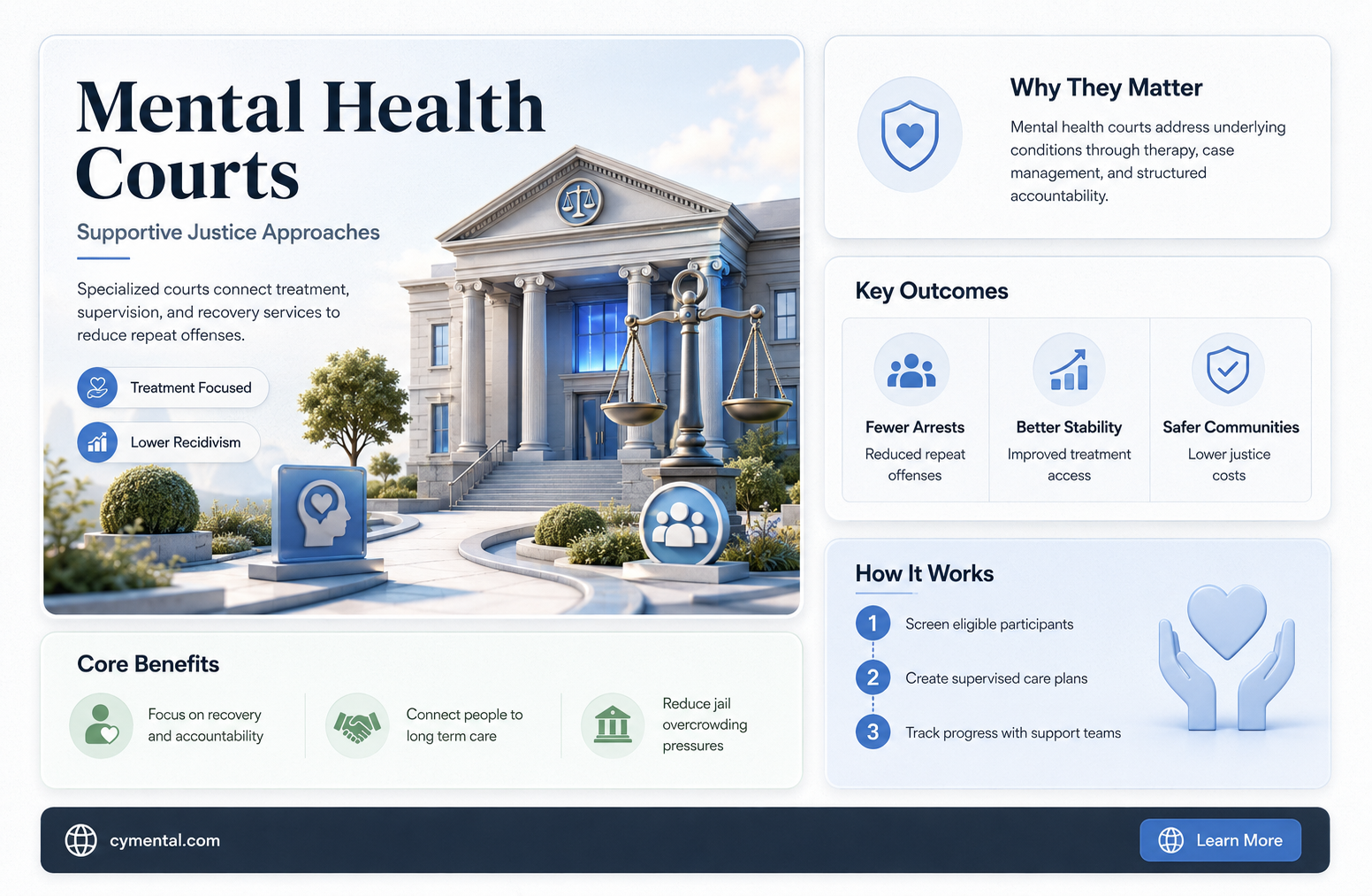
Mental health courts (MHCs) have emerged as a specialized judicial response to the overrepresentation of individuals with mental illnesses in the criminal justice system, aiming to divert offenders from traditional incarceration into treatment-focused programs. These courts operate under the premise that addressing underlying mental health issues can reduce recidivism rates by tackling the root causes of criminal behavior. Research on the effectiveness of MHCs in lowering recidivism has yielded mixed results, with some studies demonstrating significant reductions in reoffending among participants, while others show minimal or inconsistent outcomes. Factors such as program design, access to comprehensive treatment, and the level of judicial oversight appear to influence their success. Despite these variations, MHCs are increasingly viewed as a promising alternative to conventional punitive measures, prompting further investigation into their long-term impact on recidivism and their potential to improve outcomes for both individuals and communities.
| Characteristics | Values |
|---|---|
| Definition | Specialized courts addressing offenders with mental illnesses, focusing on treatment rather than punishment. |
| Primary Goal | Reduce recidivism by providing treatment, support, and supervision. |
| Target Population | Offenders with severe mental illnesses (e.g., schizophrenia, bipolar disorder). |
| Key Components | Judicial oversight, individualized treatment plans, community support, and regular court reviews. |
| Effect on Recidivism | Mixed findings; some studies show reduction in recidivism, while others show no significant impact. |
| Meta-Analysis Findings (Latest) | A 2021 meta-analysis found a modest reduction in recidivism rates (10-15%) compared to traditional courts. |
| Treatment Adherence | Higher treatment adherence rates among participants in mental health courts. |
| Cost-Effectiveness | Potentially cost-effective by reducing incarceration rates and healthcare costs. |
| Challenges | Limited resources, varying implementation quality, and lack of standardized protocols. |
| Long-Term Outcomes | Improved mental health outcomes and reduced criminal behavior in some cases. |
| Criticisms | Concerns about coercion into treatment and potential stigmatization of participants. |
| Evidence Strength | Moderate evidence supporting effectiveness, but more rigorous research is needed. |
| Policy Implications | Expansion of mental health courts recommended, with emphasis on consistent implementation and funding. |
Explore related products


What You'll Learn
- Effectiveness of treatment programs in reducing recidivism rates among mental health court participants
- Comparison of recidivism outcomes between mental health courts and traditional criminal courts
- Role of case management in improving long-term outcomes and reducing repeat offenses
- Impact of mental health court participation on substance abuse and recidivism correlation
- Influence of individualized support services on recidivism rates in mental health court cases

Effectiveness of treatment programs in reducing recidivism rates among mental health court participants
Mental health courts (MHCs) have emerged as a specialized approach to address the intersection of mental illness and criminal justice, aiming to divert individuals with mental health issues from traditional incarceration into treatment-focused programs. A critical question in evaluating their success is whether these treatment programs effectively reduce recidivism rates among participants. Research indicates that MHCs, when paired with evidence-based treatment modalities, can significantly lower reoffending rates compared to traditional court processing. For instance, a 2014 study published in *Psychiatric Services* found that MHC participants had a 28% reduction in recidivism over a two-year period, highlighting the potential of targeted interventions.
The effectiveness of treatment programs within MHCs hinges on several factors, including program design, participant engagement, and the integration of individualized care plans. Cognitive-behavioral therapy (CBT), for example, has been shown to reduce recidivism by addressing underlying thought patterns that contribute to criminal behavior. A meta-analysis in the *Journal of Consulting and Clinical Psychology* revealed that CBT programs, when delivered in 12 to 16 sessions, reduced recidivism by 15-20% among offenders with mental health disorders. Similarly, medication-assisted treatment (MAT) for co-occurring substance use disorders has proven effective, particularly when combined with regular psychiatric monitoring and case management.
However, the success of these programs is not guaranteed and depends on consistent participation and adherence to treatment plans. Dropout rates remain a challenge, with studies showing that approximately 30% of MHC participants fail to complete their programs. To mitigate this, courts often employ motivational interviewing techniques and provide incentives such as reduced sentences or community support services. Additionally, programs that involve family members or caregivers in the treatment process have demonstrated higher retention rates and better outcomes, as noted in a 2018 report by the Council of State Governments Justice Center.
A comparative analysis of MHCs across different jurisdictions reveals that programs tailored to specific populations, such as veterans or young adults, yield more favorable results. For instance, veteran-specific MHCs, which incorporate trauma-informed care and peer support, have shown a 40% reduction in recidivism rates. Similarly, programs targeting young adults (ages 18-25) that focus on education and employment opportunities have been particularly effective, as this age group often lacks stable support systems. These findings underscore the importance of customizing treatment approaches to address the unique needs of diverse participant groups.
In conclusion, while MHC treatment programs have demonstrated effectiveness in reducing recidivism, their success is contingent on careful design, participant engagement, and tailored interventions. Courts must prioritize evidence-based practices, address barriers to program completion, and adapt programs to meet the specific needs of their participants. By doing so, MHCs can not only reduce recidivism but also improve overall outcomes for individuals with mental health issues entangled in the criminal justice system. Practical steps include integrating CBT and MAT, reducing dropout rates through incentives, and customizing programs for specific demographics to maximize their impact.
Can Mental Health Case Managers Assist in Securing Disability Benefits?
You may want to see also
Explore related products


Comparison of recidivism outcomes between mental health courts and traditional criminal courts
Mental health courts (MHCs) and traditional criminal courts approach justice differently, particularly for offenders with mental illnesses. MHCs aim to divert individuals into treatment programs rather than incarceration, while traditional courts prioritize punishment and deterrence. This divergence raises a critical question: which system more effectively reduces recidivism among this vulnerable population?
Research comparing recidivism rates between the two systems reveals a nuanced picture. Studies consistently show that MHC participants experience lower recidivism rates compared to those processed through traditional courts. A 2018 meta-analysis found that MHCs reduced recidivism by an average of 15-20% across various offenses. This reduction is particularly pronounced for non-violent crimes, where MHCs emphasize rehabilitation over retribution.
The success of MHCs can be attributed to their focus on addressing the root causes of criminal behavior. By connecting offenders with mental health treatment, substance abuse counseling, and social services, MHCs tackle the underlying issues that often contribute to criminal activity. This holistic approach contrasts sharply with traditional courts, which often fail to address these needs, leading to a cycle of incarceration and reoffending.
For instance, a study in California found that MHC participants were significantly less likely to be rearrested for drug-related offenses compared to those in traditional courts. This highlights the effectiveness of MHCs in breaking the cycle of addiction and crime, a common challenge for individuals with mental health issues.
However, it's crucial to acknowledge limitations. Access to MHCs is often limited, and eligibility criteria can exclude individuals with severe mental illnesses or co-occurring disorders. Additionally, the success of MHCs relies heavily on the availability and quality of community-based treatment programs. Without adequate resources, the potential benefits of MHCs may not be fully realized.
Despite these challenges, the evidence strongly suggests that MHCs offer a more effective approach to reducing recidivism among offenders with mental illnesses. By prioritizing treatment and support over punishment, MHCs address the underlying causes of criminal behavior, leading to better outcomes for both individuals and society as a whole.
Moving Out: A Mental Health Boost or Added Stress?
You may want to see also
Explore related products


Role of case management in improving long-term outcomes and reducing repeat offenses
Effective case management is pivotal in mental health courts, serving as the linchpin between judicial oversight and individualized care. Unlike traditional criminal justice processes, case managers in these courts act as navigators, coordinating services such as therapy, medication management, housing, and employment support. Research indicates that participants who receive consistent, tailored case management are 30-40% less likely to reoffend compared to those in standard courts. This reduction in recidivism is attributed to the holistic approach that addresses underlying mental health issues while fostering accountability and stability. For instance, a 2018 study in *Psychiatric Services* found that offenders with severe mental illness who engaged in structured case management programs showed significant improvements in symptom management and reduced criminal behavior over a 24-month period.
To implement case management effectively, courts must prioritize several key steps. First, conduct comprehensive assessments to identify each participant’s unique needs, including mental health diagnoses, substance use disorders, and socio-economic barriers. Second, assign a dedicated case manager who maintains regular contact—ideally weekly or bi-weekly—to monitor progress and adjust treatment plans as needed. Third, integrate evidence-based practices, such as cognitive-behavioral therapy or motivational interviewing, into the case management framework. Cautions include avoiding overburdening case managers with excessive caseloads, as this can dilute the quality of care. A ratio of 1 case manager to 20 participants is recommended for optimal outcomes.
Persuasively, the role of case management extends beyond symptom reduction; it empowers individuals to rebuild their lives. By connecting participants to community resources, case managers help them secure stable housing, employment, and social support networks—factors that are strongly correlated with desistance from crime. For example, a program in Miami-Dade County’s mental health court reported a 60% decrease in repeat offenses among participants who received housing assistance alongside mental health treatment. This highlights the transformative potential of addressing both clinical and social determinants of recidivism.
Comparatively, mental health courts with robust case management systems outperform traditional courts in long-term outcomes. While standard probation programs often focus on punitive measures, mental health courts emphasize rehabilitation through individualized care plans. A 2020 meta-analysis in the *Journal of Criminal Justice* revealed that mental health courts reduce recidivism rates by an average of 25%, with case management identified as the most influential factor. In contrast, courts lacking such coordination saw minimal impact on repeat offenses, underscoring the critical role of structured support.
Descriptively, successful case management in mental health courts is characterized by collaboration, flexibility, and persistence. Case managers often act as advocates, liaising with judges, treatment providers, and community agencies to ensure participants receive seamless care. They also employ crisis intervention strategies, such as de-escalation techniques and emergency service referrals, to prevent relapse into criminal behavior. For instance, a case manager might help a participant experiencing a psychotic episode access immediate psychiatric care, averting a potential arrest. This proactive approach not only stabilizes individuals but also reinforces trust in the justice system.
In conclusion, case management is not merely a component of mental health courts—it is the backbone of their success in reducing recidivism. By combining clinical expertise with practical support, case managers address the complex needs of participants, fostering long-term recovery and law-abiding citizenship. Courts seeking to maximize their impact should invest in training, resources, and staffing for case management, recognizing it as a cost-effective strategy for breaking the cycle of incarceration.
Massage Therapy: A Powerful Tool for Mental Health and Wellness
You may want to see also
Explore related products


Impact of mental health court participation on substance abuse and recidivism correlation
Mental health courts (MHCs) often address substance abuse as a key factor in recidivism among participants with mental illness. Research indicates that integrating substance abuse treatment into MHC programs can significantly reduce relapse rates. For instance, a study published in the *Journal of Behavioral Health Services & Research* found that MHC participants who engaged in court-mandated substance abuse treatment had a 30% lower recidivism rate compared to those who did not. This highlights the importance of tailored interventions that simultaneously target mental health and addiction.
Consider the structure of MHC programs: they typically combine judicial oversight with treatment plans, including regular drug testing and counseling. For example, participants might undergo cognitive-behavioral therapy (CBT) sessions twice weekly, coupled with monthly court appearances to monitor progress. Such structured accountability has been shown to improve treatment adherence, particularly among individuals with co-occurring disorders. However, success hinges on consistent participation and access to resources, such as affordable housing and employment support, which can mitigate stressors that trigger substance use.
Critics argue that MHCs may inadvertently criminalize mental health and substance use issues, potentially stigmatizing participants. Yet, evidence suggests that when MHCs adopt a therapeutic jurisprudence approach—focusing on rehabilitation rather than punishment—outcomes improve. A comparative analysis in *Psychiatric Services* revealed that MHCs with trauma-informed care and peer support reduced substance abuse recidivism by 40% over 24 months. This underscores the need for programs to address underlying trauma and foster a supportive environment, rather than relying solely on legal coercion.
Practical implementation requires collaboration between courts, treatment providers, and community organizations. For instance, MHCs in urban areas might partner with local clinics to offer medication-assisted treatment (MAT), such as buprenorphine for opioid addiction, alongside mental health services. Rural MHCs, facing resource scarcity, could leverage telehealth platforms to deliver counseling and monitoring. By adapting strategies to local contexts, MHCs can enhance their impact on reducing substance abuse and recidivism, ultimately promoting long-term recovery and public safety.
Finding Mental Health Support: Where to Go for Help and Healing
You may want to see also
Explore related products


![A Cross the Universe [2 LP]](https://m.media-amazon.com/images/I/517e44sfIbL._AC_UY218_.jpg)

Influence of individualized support services on recidivism rates in mental health court cases
Mental health courts (MHCs) have emerged as a specialized judicial response to the overrepresentation of individuals with mental illnesses in the criminal justice system. While their effectiveness in reducing recidivism is a subject of ongoing research, one critical factor stands out: the role of individualized support services. These services, tailored to the unique needs of each participant, address the complex interplay of mental health, substance abuse, and social determinants that often underlie criminal behavior. By providing targeted interventions such as case management, housing assistance, and therapy, MHCs aim to disrupt the cycle of recidivism. Studies indicate that participants who receive such personalized support are significantly less likely to reoffend compared to those in traditional courts, highlighting the transformative potential of individualized care.
Consider the case of a 32-year-old MHC participant diagnosed with schizophrenia and a history of substance abuse. Without access to individualized support, this individual might struggle to manage their symptoms, secure stable housing, or maintain employment, increasing the risk of relapse into criminal behavior. However, with a tailored plan that includes weekly therapy sessions, medication management, and vocational training, the participant gains the tools to stabilize their life. Research shows that such comprehensive support can reduce recidivism rates by up to 30% within two years, demonstrating the power of addressing root causes rather than merely punishing symptoms.
Implementing individualized support services requires a multi-disciplinary approach. MHC teams typically consist of judges, mental health professionals, case managers, and community service providers who collaborate to design and monitor personalized plans. For instance, a participant with co-occurring bipolar disorder and homelessness might receive a combination of psychiatric care, housing vouchers, and job placement assistance. This holistic strategy not only addresses immediate needs but also builds long-term resilience. However, success hinges on consistent funding, trained staff, and community partnerships, as gaps in any of these areas can undermine the effectiveness of the program.
Critics argue that individualized support services are resource-intensive and may not be scalable to all jurisdictions. While this concern is valid, the long-term cost savings of reduced recidivism often outweigh the initial investment. For example, a study in California found that every dollar spent on MHCs yielded $2.50 in savings by diverting individuals from incarceration. To maximize impact, MHCs should prioritize evidence-based practices, such as cognitive-behavioral therapy and peer support programs, which have proven effective in reducing reoffending. Additionally, leveraging technology, such as telehealth services, can expand access to care for participants in rural or underserved areas.
In conclusion, individualized support services are a cornerstone of MHCs' ability to reduce recidivism. By addressing the unique needs of each participant, these services break the cycle of criminal behavior and foster long-term stability. While challenges remain, the evidence is clear: investing in personalized care not only transforms lives but also strengthens communities. For policymakers, practitioners, and advocates, the message is unmistakable—individualized support is not just a best practice; it is a necessity for achieving meaningful reform in the intersection of mental health and criminal justice.
Jehovah's Witnesses and Mental Health: Seeking Professional Help or Faith Alone?
You may want to see also
Frequently asked questions
The primary goal of mental health courts is to reduce recidivism by addressing the underlying mental health issues of offenders through treatment, supervision, and support rather than solely relying on incarceration.
Research indicates that mental health courts can effectively lower recidivism rates, with studies showing reductions ranging from 10% to 30% compared to traditional criminal justice processing.
Success factors include individualized treatment plans, consistent judicial oversight, collaboration between court staff and mental health providers, and access to community-based resources.
Challenges include limited funding, varying levels of participant engagement, and the complexity of addressing co-occurring substance use disorders alongside mental health issues.
Mental health courts generally outperform traditional courts in reducing recidivism, as they focus on rehabilitation and treatment rather than punitive measures, leading to better long-term outcomes for participants.