Ava Ramirez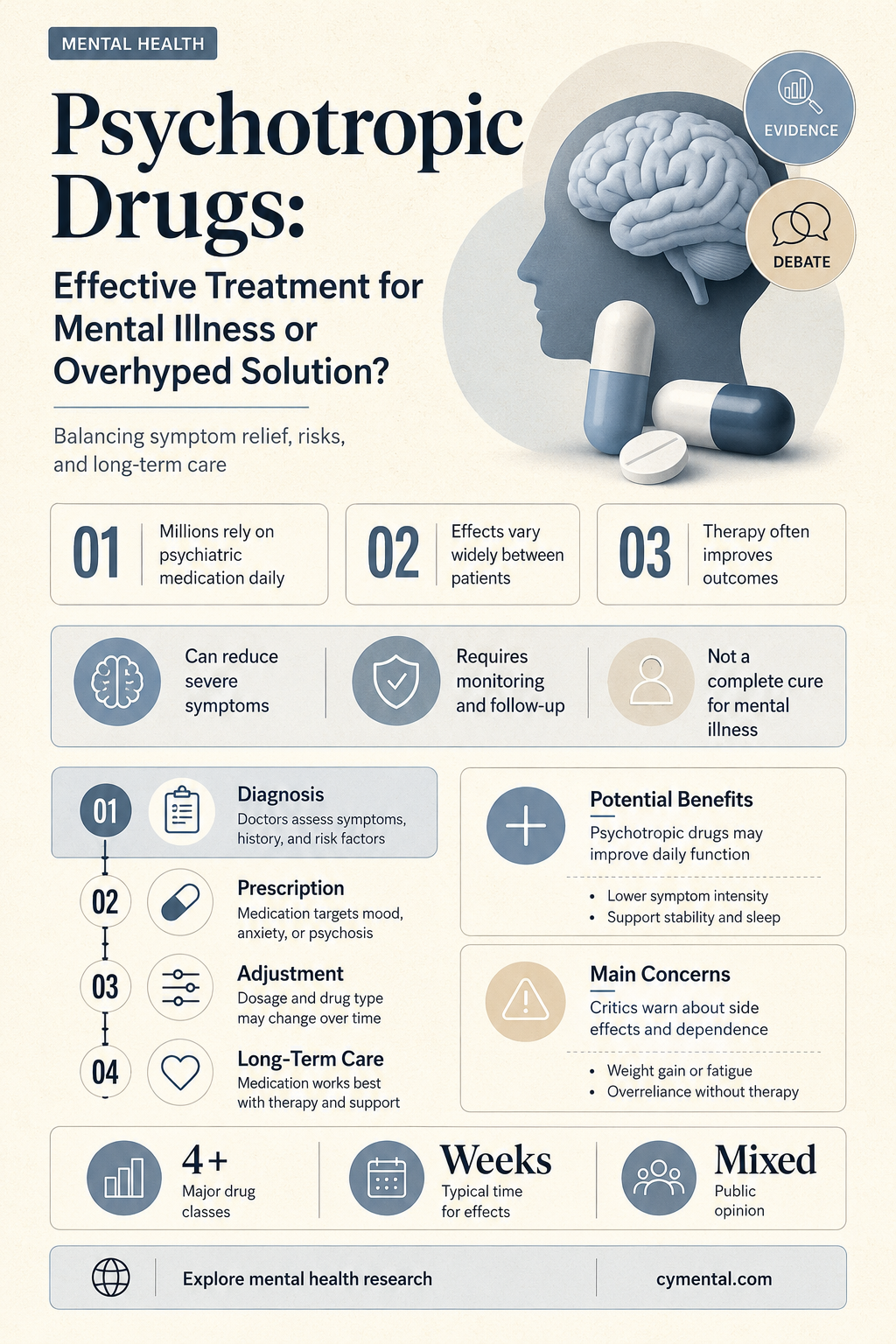
Psychotropic drugs, which include medications like antidepressants, antipsychotics, mood stabilizers, and anxiolytics, are widely prescribed to manage symptoms of mental illness. These medications work by altering brain chemistry to alleviate conditions such as depression, anxiety, bipolar disorder, and schizophrenia. While they are not a cure, they often provide significant relief, enabling individuals to function better in daily life and engage in therapy or other treatments. However, their effectiveness varies from person to person, and they can come with side effects, raising questions about their long-term use and overall impact on mental health. As such, the role of psychotropic drugs in treating mental illness remains a complex and debated topic, balancing their potential benefits against risks and individual needs.
| Characteristics | Values |
|---|---|
| Effectiveness | Psychotropic drugs are generally effective in managing symptoms of mental illness, though effectiveness varies by individual and condition. For example, antidepressants are effective for 40-60% of patients with depression. |
| Types of Drugs | Include antidepressants, antipsychotics, mood stabilizers, anxiolytics, and stimulants, each targeting specific symptoms or disorders. |
| Symptom Relief | Can reduce symptoms such as depression, anxiety, psychosis, and mood swings, improving overall quality of life. |
| Time to Effect | Often take 2-6 weeks to show noticeable effects, with some medications requiring dosage adjustments. |
| Side Effects | Common side effects include weight gain, drowsiness, sexual dysfunction, and gastrointestinal issues. Serious risks like tardive dyskinesia (with antipsychotics) are rare. |
| Long-Term Use | Many patients require long-term or lifelong use to maintain symptom control, especially for chronic conditions like schizophrenia or bipolar disorder. |
| Individual Variability | Response to medication varies widely; personalized treatment plans are often necessary based on genetics, metabolism, and co-occurring conditions. |
| Combination Therapy | Often used alongside psychotherapy (e.g., cognitive-behavioral therapy) for better outcomes, particularly in depression and anxiety disorders. |
| Withdrawal Risks | Abrupt discontinuation can lead to withdrawal symptoms or relapse, requiring supervised tapering for some medications (e.g., benzodiazepines, antidepressants). |
| Evidence Base | Supported by extensive clinical trials and meta-analyses, though placebo effects and publication bias are considerations in research. |
| Access and Cost | Access varies globally, with cost barriers in some regions. Generic versions are often more affordable but may not be available for newer drugs. |
| Stigma | Stigma around psychotropic medication use persists, potentially affecting adherence and willingness to seek treatment. |
| Alternative Treatments | Alternatives like transcranial magnetic stimulation (TMS), electroconvulsive therapy (ECT), and lifestyle changes are options for treatment-resistant cases. |
| Latest Research | Emerging research focuses on personalized medicine, novel drug targets (e.g., glutamate system), and digital monitoring tools to optimize treatment. |
Explore related products


What You'll Learn

Effectiveness of antidepressants in treating depression
Antidepressants are among the most prescribed medications globally, yet their effectiveness in treating depression remains a subject of debate and scrutiny. Clinical trials consistently show that antidepressants outperform placebos, but the magnitude of this effect is often modest. For instance, a meta-analysis published in *The Lancet* found that antidepressants provided a small to moderate benefit over placebo, with a standardized mean difference of 0.3. This means that while they do help, the improvement may not be dramatic for everyone. Factors such as the severity of depression, individual biology, and concurrent therapy play critical roles in determining outcomes.
Consider the practicalities of starting antidepressant treatment. Most antidepressants, such as selective serotonin reuptake inhibitors (SSRIs), require 4 to 6 weeks to take full effect, and dosage adjustments are common. For example, a starting dose of 20 mg of fluoxetine might be increased to 40–60 mg if symptoms persist. Adherence is crucial; discontinuing medication prematurely can lead to relapse or withdrawal symptoms. Patients should be advised to report side effects like nausea, insomnia, or sexual dysfunction promptly, as these can often be managed with dose modifications or additional medications.
A comparative analysis reveals that antidepressants are most effective for moderate to severe depression, while their utility in mild cases is less clear. For mild depression, psychotherapy, lifestyle changes, and watchful waiting may be equally or more beneficial. For severe or treatment-resistant cases, combination therapy—such as pairing an SSRI with a second-generation antipsychotic like aripiprazole—can enhance efficacy. Age is another critical factor; antidepressants are generally less effective in older adults due to metabolic changes and polypharmacy risks, while in adolescents, they must be used cautiously due to potential risks like increased suicidal ideation.
Persuasively, the evidence supports the use of antidepressants as a valuable tool in the treatment of depression, but they are not a panacea. Their effectiveness hinges on proper diagnosis, patient-specific factors, and integrated care approaches. For instance, combining medication with cognitive-behavioral therapy (CBT) has been shown to improve outcomes significantly. Patients should be educated about realistic expectations—antidepressants reduce symptoms rather than eliminate them entirely—and encouraged to maintain open communication with their healthcare provider.
In conclusion, while antidepressants can be highly effective for many individuals, their success depends on a nuanced understanding of their limitations and optimal use. Tailoring treatment to the individual, monitoring progress closely, and integrating pharmacotherapy with other interventions are key to maximizing their benefits. As with any medical treatment, the goal is not just symptom relief but improved quality of life, and antidepressants, when used judiciously, can play a pivotal role in achieving this.
Should You Seek Mental Health Support? Signs and Guidance
You may want to see also
Explore related products


Role of antipsychotics in managing schizophrenia symptoms
Antipsychotics are the cornerstone of schizophrenia treatment, targeting the debilitating symptoms that disrupt daily life. These medications primarily act on dopamine receptors in the brain, reducing hallucinations, delusions, and disorganized thinking. First-generation antipsychotics, like haloperidol, are potent but often cause extrapyramidal side effects, such as tremors and rigidity. Second-generation antipsychotics, including olanzapine and risperidone, are preferred for their improved side effect profile, though they may lead to weight gain and metabolic issues. Dosage varies widely—for instance, risperidone is typically started at 1–2 mg/day for adults, titrated up to 6 mg/day based on response and tolerance. Adherence is critical, as discontinuation can trigger symptom relapse, often more severe than the initial episode.
Consider the case of a 28-year-old diagnosed with schizophrenia experiencing auditory hallucinations and paranoia. After initiating quetiapine at 50 mg/day, gradually increased to 300 mg/day, their hallucinations subsided within six weeks, and social functioning improved. This example underscores the transformative potential of antipsychotics when tailored to individual needs. However, treatment is not one-size-fits-all. Factors like age, comorbidities, and medication history must be considered. For instance, older adults may require lower doses due to reduced metabolism, while adolescents may benefit from early intervention with aripiprazole, known for its milder side effects in younger populations.
Despite their efficacy, antipsychotics are not without risks. Long-term use can lead to tardive dyskinesia, a movement disorder characterized by involuntary tics. To mitigate this, clinicians often prescribe the lowest effective dose and monitor for early signs of side effects. Combining pharmacotherapy with psychosocial interventions, such as cognitive-behavioral therapy, enhances outcomes. Patients should be educated about the importance of consistent medication use and the gradual nature of symptom improvement, which typically takes 4–6 weeks. Practical tips include using pill organizers to track doses and maintaining open communication with healthcare providers to address concerns promptly.
A comparative analysis reveals that while antipsychotics are indispensable for managing schizophrenia, they are not a cure. They suppress symptoms rather than address the underlying neurobiological causes. This distinction highlights the need for ongoing research into adjunctive therapies, such as transcranial magnetic stimulation, which may offer additional benefits. In the interim, antipsychotics remain the most effective tool available, significantly improving quality of life for many. However, their role must be balanced with a holistic approach that considers the patient’s physical health, social support, and personal goals.
In conclusion, antipsychotics play a pivotal role in managing schizophrenia symptoms, offering relief from distressing experiences and enabling functional recovery. Their use requires careful consideration of dosage, side effects, and individual patient factors. While challenges exist, the benefits often outweigh the risks, making these medications a vital component of schizophrenia care. By combining pharmacotherapy with education and support, clinicians can help patients navigate their condition and achieve meaningful improvements in their lives.
Sleep's Healing Power: Repairing Emotional and Mental Health Naturally
You may want to see also
Explore related products

$7.35 $11.79

$11.6 $19.99


Anxiety disorders and benzodiazepines: benefits vs. risks
Benzodiazepines, commonly known as benzos, are among the most prescribed medications for anxiety disorders, offering rapid relief from symptoms like panic attacks, excessive worry, and insomnia. These drugs, including alprazolam (Xanax), diazepam (Valium), and lorazepam (Ativan), work by enhancing the effect of gamma-aminobutyric acid (GABA), a neurotransmitter that calms the nervous system. For individuals experiencing acute anxiety, benzos can be a lifeline, providing immediate symptom control within 30 minutes to an hour. However, their effectiveness comes with a caveat: they are typically recommended for short-term use, usually no longer than 2–4 weeks, due to the risk of dependence and tolerance.
The benefits of benzodiazepines are undeniable for certain populations. For instance, someone with generalized anxiety disorder (GAD) or panic disorder may find that a low dose of alprazolam (0.25–0.5 mg) taken as needed can halt a panic attack in its tracks. Similarly, older adults with anxiety-related insomnia may benefit from a small dose of temazepam (7.5–15 mg) at bedtime, though caution is advised due to increased sensitivity to side effects like dizziness and confusion in this age group. These medications can restore functionality, allowing individuals to engage in therapy or daily activities without being paralyzed by anxiety. Yet, the relief is temporary, and long-term use can lead to physical dependence, making discontinuation challenging.
The risks of benzodiazepines cannot be overlooked, particularly when used beyond their intended short-term scope. Prolonged use can result in tolerance, requiring higher doses to achieve the same effect, and withdrawal symptoms such as rebound anxiety, insomnia, and even seizures upon abrupt cessation. For example, a patient prescribed lorazepam (1 mg daily) for more than 4 weeks may experience withdrawal symptoms if the medication is stopped suddenly. Additionally, benzos carry cognitive and motor side effects, including memory impairment and increased fall risk, especially in older adults. Studies also suggest a potential link between long-term benzo use and cognitive decline, though more research is needed to establish causality.
Balancing the benefits and risks of benzodiazepines requires careful prescribing practices and patient education. Clinicians should start with the lowest effective dose, such as 0.25 mg of alprazolam for anxiety, and monitor closely for signs of dependence or misuse. Patients should be informed about the short-term nature of these medications and encouraged to explore alternative treatments, such as cognitive-behavioral therapy (CBT) or selective serotonin reuptake inhibitors (SSRIs), for long-term management. Tapering strategies, such as gradually reducing the dose over several weeks, can minimize withdrawal symptoms when discontinuing benzos. Ultimately, while benzodiazepines can provide immediate relief for anxiety disorders, their use must be strategic and limited to avoid the pitfalls of dependence and long-term harm.
Helping Families in Mental Health Crisis Act: Did It Pass?
You may want to see also
Explore related products



$13.1


Mood stabilizers for bipolar disorder: long-term outcomes
Bipolar disorder, characterized by extreme mood swings from manic highs to depressive lows, often requires long-term management with mood stabilizers. These medications, such as lithium, valproate, and carbamazepine, are cornerstone treatments aimed at preventing relapse and stabilizing mood over years, not just weeks. Unlike antidepressants or antipsychotics, mood stabilizers are specifically designed to address the cyclical nature of bipolar disorder, making them a critical component of long-term care.
Consider lithium, the gold standard mood stabilizer. Studies show that consistent lithium use reduces the risk of manic and depressive episodes by up to 40%, with optimal blood levels typically maintained between 0.6 to 1.2 mEq/L. However, long-term adherence is challenging due to side effects like weight gain, tremors, and thyroid dysfunction. Patients often require regular monitoring, including kidney function tests and thyroid panels, to mitigate risks. For those who tolerate it, lithium not only stabilizes mood but also demonstrates a unique anti-suicidal effect, reducing mortality rates in bipolar patients by 60%.
Valproate and carbamazepine are alternatives for individuals who cannot tolerate lithium. Valproate, often prescribed at doses of 500–2000 mg/day, is particularly effective for rapid-cycling bipolar disorder but carries risks like liver toxicity and teratogenicity, making it less suitable for women of childbearing age. Carbamazepine, dosed at 400–1600 mg/day, is another option, though it requires monitoring for blood dyscrasias. Both medications are less studied than lithium for long-term outcomes, but they remain viable options when tailored to individual needs.
A critical takeaway is that mood stabilizers are not one-size-fits-all. Long-term success depends on personalized treatment plans, regular psychiatric follow-ups, and patient education. For instance, combining mood stabilizers with psychotherapy, such as cognitive-behavioral therapy, enhances adherence and improves outcomes. Additionally, lifestyle modifications—maintaining a consistent sleep schedule, avoiding alcohol, and managing stress—complement pharmacotherapy. While mood stabilizers are not a cure, they provide a foundation for managing bipolar disorder, enabling individuals to lead stable, productive lives over decades.
Reading the Bible: A Path to Mental Health and Healing?
You may want to see also
Explore related products



ADHD treatment with stimulants: efficacy and side effects
Stimulant medications are the cornerstone of ADHD treatment, with methylphenidate (Ritalin) and amphetamines (Adderall) being the most commonly prescribed. These drugs increase dopamine and norepinephrine levels in the brain, improving focus, impulse control, and hyperactivity in 70-80% of patients. For children aged 6 and older, starting doses typically range from 5 to 10 mg of methylphenidate or 2.5 to 5 mg of amphetamine, titrated upward based on response and tolerance. Adults may require higher doses, often starting at 10-20 mg, but individual variability is significant, emphasizing the need for personalized treatment plans.
While stimulants are highly effective, their side effects cannot be overlooked. Common issues include decreased appetite, sleep disturbances, and mild increases in heart rate or blood pressure. In children, appetite suppression can lead to weight loss, necessitating nutritional monitoring and sometimes scheduled meal reminders. Sleep problems can often be mitigated by adjusting dosage timing—administering the last dose before 2 PM, for instance. Less frequently, stimulants may exacerbate anxiety or mood instability, particularly in individuals with comorbid conditions, requiring careful psychiatric evaluation before initiation.
The long-term use of stimulants raises concerns about potential risks, including cardiovascular effects and the theoretical risk of substance misuse. Studies show that therapeutic doses of stimulants do not typically lead to addiction in ADHD patients, as they normalize rather than elevate dopamine function. However, individuals with a history of substance abuse may require alternative treatments. Cardiovascular monitoring is recommended for patients with pre-existing heart conditions, though the absolute risk remains low in most cases. Regular follow-ups with a healthcare provider are essential to assess both efficacy and safety over time.
Practical strategies can enhance the benefits of stimulant treatment while minimizing side effects. Combining medication with behavioral interventions, such as organizational tools or time-management techniques, often yields better outcomes than medication alone. Parents and patients should maintain open communication with prescribers, reporting any adverse effects promptly. For those hesitant about stimulants, non-stimulant options like atomoxetine (Strattera) or guanfacine (Intuniv) may be considered, though their onset of action is slower and efficacy generally lower. Ultimately, the decision to use stimulants should balance their proven benefits against individual risk factors and preferences.
Can You Force Someone to Seek Mental Health Treatment?
You may want to see also
Frequently asked questions
Yes, psychotropic drugs can be highly effective in managing symptoms of mental illness for many individuals. They work by balancing brain chemicals (neurotransmitters) and can reduce symptoms like depression, anxiety, hallucinations, and mood swings. However, their effectiveness varies from person to person, and they are often most beneficial when combined with therapy.
No, psychotropic drugs are not a cure for mental illness. They primarily manage symptoms and improve quality of life but do not address the underlying causes of mental health conditions. Long-term recovery often requires a combination of medication, therapy, lifestyle changes, and support systems.
Side effects vary depending on the type of medication and the individual. Common side effects include drowsiness, weight gain, nausea, sexual dysfunction, and mood changes. Some medications may also have more serious risks, such as increased suicidal thoughts or long-term health issues. It’s important to discuss potential risks and benefits with a healthcare provider.
While psychotropic drugs can be used alone, they are often more effective when paired with therapy, such as cognitive-behavioral therapy (CBT) or psychotherapy. Therapy helps address the root causes of mental illness, teaches coping skills, and supports long-term recovery, while medication manages symptoms. Combining both approaches is typically recommended for optimal outcomes.