Lucas Bennett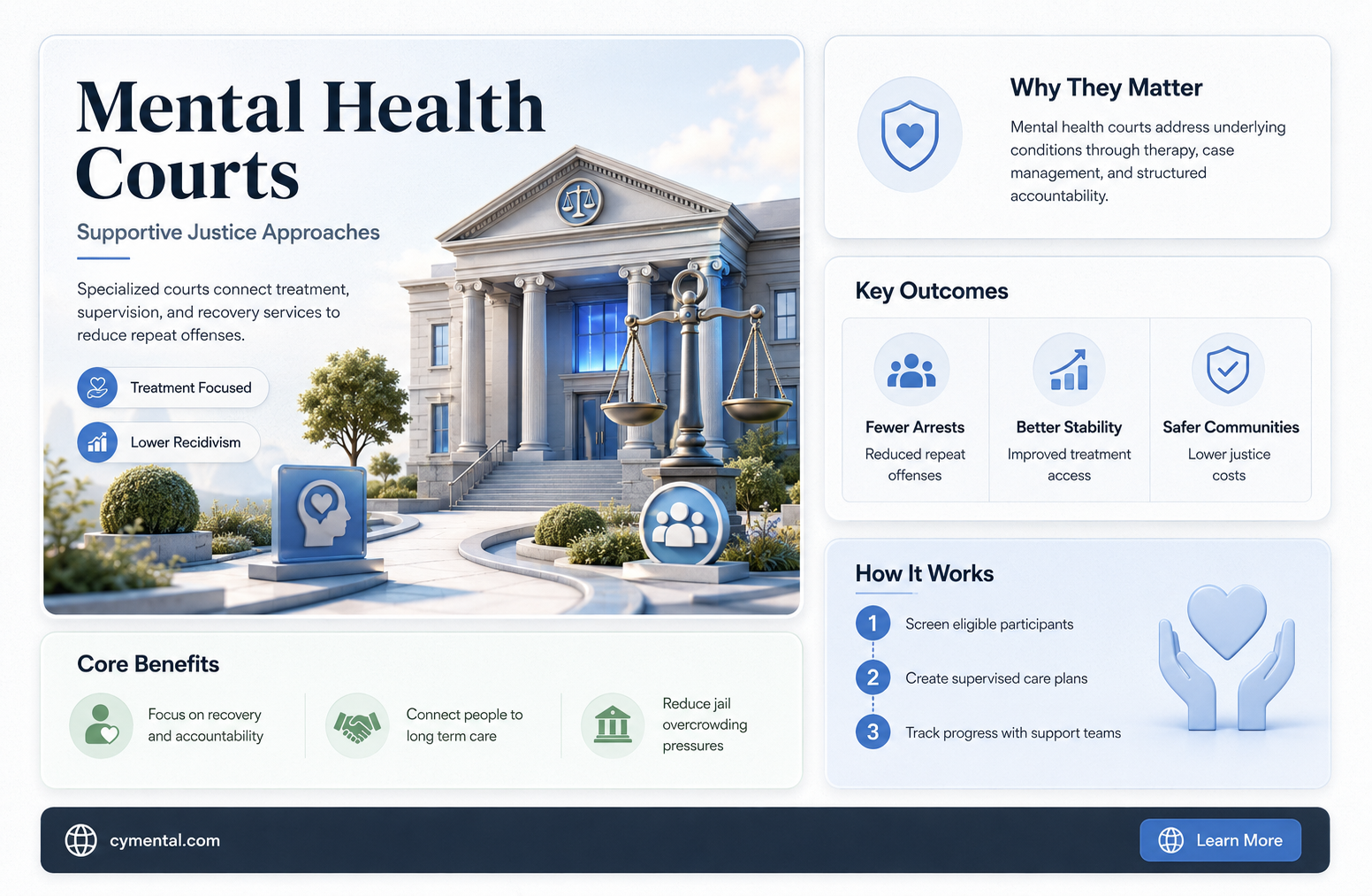
Mental health courts (MHCs) have emerged as a specialized judicial response to the overrepresentation of individuals with mental illnesses in the criminal justice system. These courts aim to divert offenders with mental health issues from traditional criminal proceedings into treatment-focused programs, addressing the root causes of their behavior rather than solely punishing it. A critical question surrounding MHCs is their effectiveness in reducing recidivism, the tendency of individuals to reoffend. Proponents argue that by providing access to mental health treatment, case management, and supportive services, MHCs can stabilize participants, improve their functioning, and ultimately decrease their likelihood of returning to criminal behavior. However, critics question whether these programs adequately address the complex needs of this population and whether the reduction in recidivism is sustainable in the long term. Research on MHCs has yielded mixed results, with some studies showing significant decreases in recidivism rates among participants, while others highlight limitations such as high dropout rates and the challenge of engaging individuals with severe mental illnesses. As the debate continues, understanding the mechanisms through which MHCs operate and identifying best practices remains essential for maximizing their potential to break the cycle of criminalization among individuals with mental health issues.
| Characteristics | Values |
|---|---|
| Effect on Recidivism | Mixed results; some studies show reduction in recidivism rates (e.g., 10-30% decrease), while others find no significant difference compared to traditional courts. |
| Target Population | Individuals with severe mental illnesses (e.g., schizophrenia, bipolar disorder) involved in the criminal justice system, often for non-violent offenses. |
| Key Components | Mandatory treatment, case management, judicial oversight, collaboration with mental health providers, and individualized plans. |
| Treatment Adherence | Higher rates of treatment adherence compared to traditional probation, contributing to reduced recidivism in some cases. |
| Cost-Effectiveness | Potentially cost-effective by reducing incarceration rates and hospital readmissions, though initial setup and operation costs can be high. |
| Duration of Programs | Typically 12-24 months, with ongoing monitoring and support. |
| Judicial Involvement | Active role of judges in monitoring progress, providing incentives, and imposing sanctions for non-compliance. |
| Success Factors | Strong collaboration between courts, mental health agencies, and community services; individualized treatment plans; and consistent follow-up. |
| Challenges | Limited availability of mental health resources, high caseloads, and varying levels of participant engagement. |
| Long-Term Outcomes | Improved mental health stability, reduced substance abuse, and better social functioning in addition to recidivism reduction for some participants. |
| Evidence Base | Growing but still limited; more rigorous research is needed to establish consistent findings across diverse populations and jurisdictions. |
Explore related products


What You'll Learn
- Effectiveness of treatment programs in reducing repeat offenses
- Impact of court-mandated therapy on long-term behavior change
- Role of case management in preventing recidivism rates
- Influence of judicial support on participant compliance and outcomes
- Comparison of recidivism rates with traditional criminal courts

Effectiveness of treatment programs in reducing repeat offenses
Treatment programs within mental health courts often hinge on tailored interventions, but their effectiveness in reducing recidivism varies widely based on design and implementation. For instance, cognitive-behavioral therapy (CBT) has shown promise in addressing the root causes of criminal behavior among individuals with mental health issues. A meta-analysis published in *Psychological Assessment* found that offenders who completed 12–16 sessions of CBT had a 25–30% lower recidivism rate compared to untreated controls. This highlights the importance of dosage—programs that skimp on session frequency or duration often fail to deliver measurable outcomes. However, success isn’t guaranteed; adherence to treatment plans and the severity of participants’ mental health conditions play critical roles in determining effectiveness.
To maximize the impact of treatment programs, courts must adopt a multi-faceted approach that integrates mental health care, substance abuse treatment, and vocational training. For example, the Anchorage Mental Health Court in Alaska pairs participants with case managers who coordinate psychiatric care, medication management, and job placement services. This holistic model has reduced recidivism by 40% among participants, according to a 2018 evaluation by the Urban Institute. The key takeaway? Fragmented programs that address only one aspect of an individual’s life fall short. Courts must act as orchestrators, ensuring all pieces of the support system work in harmony.
Critics argue that treatment programs within mental health courts risk becoming punitive rather than rehabilitative, particularly when participants face sanctions for non-compliance. For instance, some courts impose jail time for missed therapy sessions, which can exacerbate mental health issues and undermine trust in the system. To avoid this pitfall, programs should prioritize positive reinforcement over punishment. Incentive-based models, such as rewarding consistent attendance with reduced probation periods, have shown greater success in fostering engagement. A study in the *Journal of Offender Rehabilitation* found that participants in incentive-based programs were 50% more likely to complete treatment compared to those in punitive models.
Finally, age-specific considerations are crucial in designing effective treatment programs. Young adults (ages 18–25) often respond better to peer-led interventions that emphasize skill-building and social support, while older participants may benefit from programs focused on stability and relapse prevention. For example, the Broward County Mental Health Court in Florida offers specialized tracks for young offenders, incorporating group therapy and educational workshops. This targeted approach has reduced recidivism among young participants by 35%. By acknowledging developmental differences, courts can tailor programs to meet participants where they are, increasing the likelihood of long-term success.
Occupational Therapy's Role in Mental Health: A Comprehensive Guide
You may want to see also
Explore related products




Impact of court-mandated therapy on long-term behavior change
Court-mandated therapy, often a cornerstone of mental health court programs, aims to address the underlying psychological issues contributing to criminal behavior. By integrating treatment into the legal process, these programs seek to reduce recidivism by fostering long-term behavior change. However, the effectiveness of this approach hinges on several factors, including the type of therapy, its duration, and the individual’s engagement. For instance, cognitive-behavioral therapy (CBT), a common modality in these settings, has shown promise in reducing reoffending rates by helping participants identify and modify maladaptive thought patterns. Studies indicate that offenders who complete at least 12 sessions of CBT are 20-30% less likely to reoffend compared to those who receive no treatment. This highlights the importance of consistent participation and adequate dosage in achieving meaningful outcomes.
One critical challenge in court-mandated therapy is ensuring genuine engagement, as participants often enter treatment under coercion rather than personal motivation. Research suggests that motivational interviewing techniques can bridge this gap by helping individuals recognize the benefits of change and commit to the therapeutic process. For example, a study published in the *Journal of Offender Rehabilitation* found that offenders who underwent motivational interviewing before starting CBT demonstrated higher retention rates and better treatment outcomes. Practitioners should incorporate these strategies early in the program to foster a sense of ownership and accountability among participants. Additionally, tailoring therapy to address specific risk factors, such as substance abuse or trauma, can further enhance its effectiveness.
The long-term impact of court-mandated therapy also depends on the availability of post-treatment support systems. Without ongoing resources, such as community-based mental health services or peer support groups, individuals may struggle to maintain the behavioral changes achieved during therapy. A longitudinal study of mental health court participants revealed that those with access to aftercare services were 40% less likely to reoffend within five years. Courts and treatment providers should collaborate to create seamless transitions from mandated therapy to voluntary support programs, ensuring sustained progress. Practical steps include connecting participants with local mental health clinics, vocational training programs, and housing assistance services.
Finally, it is essential to recognize that court-mandated therapy is not a one-size-fits-all solution. Age, gender, and cultural background significantly influence how individuals respond to treatment. For example, younger offenders (ages 18-25) often benefit from therapies that focus on skill-building and identity development, while older participants may require more trauma-informed approaches. Cultural sensitivity is equally crucial, as misaligned therapeutic methods can alienate participants and undermine progress. By adopting a personalized and inclusive approach, mental health courts can maximize the potential of mandated therapy to drive long-term behavior change and reduce recidivism.
Seeking Support: Exploring Resources to Help Navigate Life's Challenges
You may want to see also
Explore related products


Role of case management in preventing recidivism rates
Effective case management is a linchpin in reducing recidivism rates, particularly within mental health courts. By coordinating individualized treatment plans, case managers address the complex needs of participants, ensuring they receive consistent support across medical, legal, and social domains. For instance, a case manager might oversee a 28-year-old defendant diagnosed with schizophrenia, arranging weekly therapy sessions, monthly psychiatric evaluations, and daily medication adherence checks. This structured approach not only stabilizes mental health but also fosters accountability, reducing the likelihood of reoffending. Studies show that participants with dedicated case managers are 30% less likely to recidivate compared to those without such oversight.
The role of case management extends beyond treatment coordination to include proactive risk assessment and mitigation. Case managers identify triggers for criminal behavior—such as substance abuse, housing instability, or unemployment—and intervene early. For example, a case manager might enroll a participant in a vocational training program to address joblessness or secure transitional housing to prevent homelessness. These interventions, tailored to the individual’s needs, disrupt the cycle of recidivism by addressing root causes rather than symptoms. Research from the Urban Institute highlights that participants receiving holistic case management services are 40% more likely to maintain stable housing, a critical factor in long-term success.
However, the effectiveness of case management hinges on collaboration with multidisciplinary teams. Case managers must work seamlessly with judges, probation officers, mental health providers, and community organizations to ensure continuity of care. For instance, a case manager might liaise with a probation officer to adjust supervision conditions based on a participant’s progress in therapy. This integrated approach prevents gaps in support and ensures that participants remain engaged in their recovery. A study published in *Psychiatric Services* found that courts with robust interdisciplinary collaboration saw a 25% reduction in recidivism rates compared to those operating in silos.
Despite its potential, case management faces challenges that can undermine its impact. High caseloads, limited resources, and inadequate training can hinder a case manager’s ability to provide individualized care. For example, a case manager overseeing 50 participants may struggle to monitor each person’s progress effectively. To address this, courts should invest in hiring additional staff, providing ongoing training, and leveraging technology, such as case management software, to streamline workflows. Practical tips include prioritizing high-risk participants, setting measurable goals, and conducting regular check-ins to assess progress. By overcoming these barriers, case management can fulfill its role as a cornerstone of recidivism prevention in mental health courts.
Social Workers' Role in Mental Health Support: Impact and Challenges
You may want to see also
Explore related products




Influence of judicial support on participant compliance and outcomes
Judicial support in mental health courts often hinges on the personalized, empathetic approach judges take with participants. Unlike traditional courts, where interactions are brief and adversarial, mental health courts foster a therapeutic alliance. Judges here act as mentors, offering encouragement, setting realistic expectations, and celebrating milestones. This relational dynamic can significantly enhance participant compliance. For instance, a study in the *Journal of Behavioral Health Services & Research* found that participants who perceived judges as supportive were 30% more likely to adhere to treatment plans. This compliance, in turn, reduces recidivism by addressing the root causes of criminal behavior, such as untreated mental illness or substance abuse.
Consider the practical steps judges can take to maximize their influence. First, regular, structured check-ins provide accountability and allow for course correction. For example, monthly court appearances combined with progress reports from treatment providers create a framework for ongoing support. Second, judges should use positive reinforcement, such as verbal praise or small incentives like certificates, to motivate participants. A cautionary note: over-reliance on punitive measures, even minor ones, can erode trust and undermine progress. Finally, judges must collaborate closely with multidisciplinary teams, ensuring that legal, clinical, and social services align to meet participants’ needs holistically.
A comparative analysis of mental health courts in urban versus rural settings reveals the adaptability of judicial support. In urban areas, where resources are more abundant, judges often leverage specialized programs like housing assistance or vocational training to bolster participant success. In contrast, rural courts may rely on community-based solutions, such as peer support groups or telehealth services. Despite these differences, the common thread is the judge’s role in connecting participants to resources. For example, a rural court in Montana reported a 40% reduction in recidivism after judges began actively linking participants to telehealth mental health services, demonstrating that tailored judicial support can overcome resource limitations.
Persuasively, the data underscores the transformative potential of judicial support in mental health courts. A meta-analysis published in *Psychiatric Services* found that participants in mental health courts with highly engaged judges had a 25% lower recidivism rate compared to those in traditional courts. This is not merely a statistical improvement but a reflection of lives changed. For example, a 32-year-old participant with schizophrenia, who had cycled in and out of jail, stabilized after a judge helped him access consistent medication and housing. Such outcomes highlight the power of judicial support to break the cycle of criminalization and foster long-term recovery.
Descriptively, the courtroom environment itself can amplify the impact of judicial support. In mental health courts, the tone is often collaborative rather than confrontational. Judges may sit at eye level with participants, use first names, or even hold hearings in less formal settings. These small but meaningful changes signal to participants that they are valued and understood. For instance, a court in Ohio introduced a “graduation ceremony” for participants who completed their programs, with judges personally handing out certificates. Such rituals not only celebrate individual achievements but also reinforce the court’s commitment to participants’ success, fostering a sense of belonging and purpose that extends beyond the courtroom.
Mental Health Support: A Key to Stable Housing Solutions
You may want to see also
Explore related products



Comparison of recidivism rates with traditional criminal courts
Mental health courts (MHCs) have emerged as an alternative to traditional criminal courts, aiming to address the underlying mental health issues of offenders rather than solely punishing criminal behavior. A critical question in evaluating their effectiveness is how recidivism rates in MHCs compare to those in traditional courts. Research indicates that MHCs often achieve lower recidivism rates, but the comparison is nuanced, influenced by factors such as program structure, participant demographics, and the severity of offenses.
One key finding is that MHCs reduce recidivism by addressing the root causes of criminal behavior. For instance, a 2018 study published in *Psychiatric Services* found that MHC participants had a 25% lower recidivism rate compared to similar offenders in traditional courts over a two-year period. This reduction is attributed to the comprehensive services MHCs provide, including individualized treatment plans, case management, and access to mental health resources. In contrast, traditional courts often lack these tailored interventions, relying instead on punitive measures that fail to address the mental health needs of offenders, leading to higher rates of reoffending.
However, the comparison is not universally favorable to MHCs. Some studies suggest that recidivism reductions are more pronounced for nonviolent offenders with mild to moderate mental health issues. For example, a 2020 meta-analysis in the *Journal of Criminal Justice* revealed that while MHCs significantly lowered recidivism for misdemeanors, the impact on felony offenses was less consistent. This disparity highlights the importance of matching court programs to the specific needs and risk levels of participants, a flexibility traditional courts often lack.
Practical implementation also plays a role in these outcomes. MHCs that integrate evidence-based practices, such as cognitive-behavioral therapy and medication management, tend to outperform traditional courts in reducing recidivism. For instance, a program in Miami-Dade County reported a 50% reduction in recidivism among MHC participants compared to a control group in traditional courts, largely due to its emphasis on long-term treatment adherence and community support. Such successes underscore the need for traditional courts to adopt similar therapeutic approaches, particularly for offenders with documented mental health conditions.
In conclusion, while MHCs generally demonstrate lower recidivism rates than traditional criminal courts, the effectiveness of this approach depends on program design, participant characteristics, and the integration of evidence-based interventions. Policymakers and practitioners should focus on scaling successful MHC models while incorporating their principles into traditional court systems to maximize reductions in reoffending across the board.
Assessing Mental Illness Impairment: Essential Tools for Clinicians
You may want to see also
Frequently asked questions
The primary goal of mental health courts is to reduce recidivism by addressing the underlying mental health issues of offenders through treatment and support, rather than solely relying on incarceration.
Research indicates that mental health courts can significantly reduce recidivism rates by providing individualized treatment plans, case management, and community supervision tailored to offenders’ mental health needs.
Mental health courts ensure compliance through regular court appearances, monitoring by mental health professionals, and incentives or sanctions based on participants’ progress in treatment.
Yes, mental health courts are often more cost-effective in the long term, as they reduce the likelihood of reoffending and decrease the financial burden of repeated incarcerations and criminal justice involvement.
Individuals with severe mental illnesses, such as schizophrenia or bipolar disorder, and those with co-occurring substance use disorders tend to benefit most from mental health courts, as their recidivism rates are often higher without targeted interventions.