Caleb Wright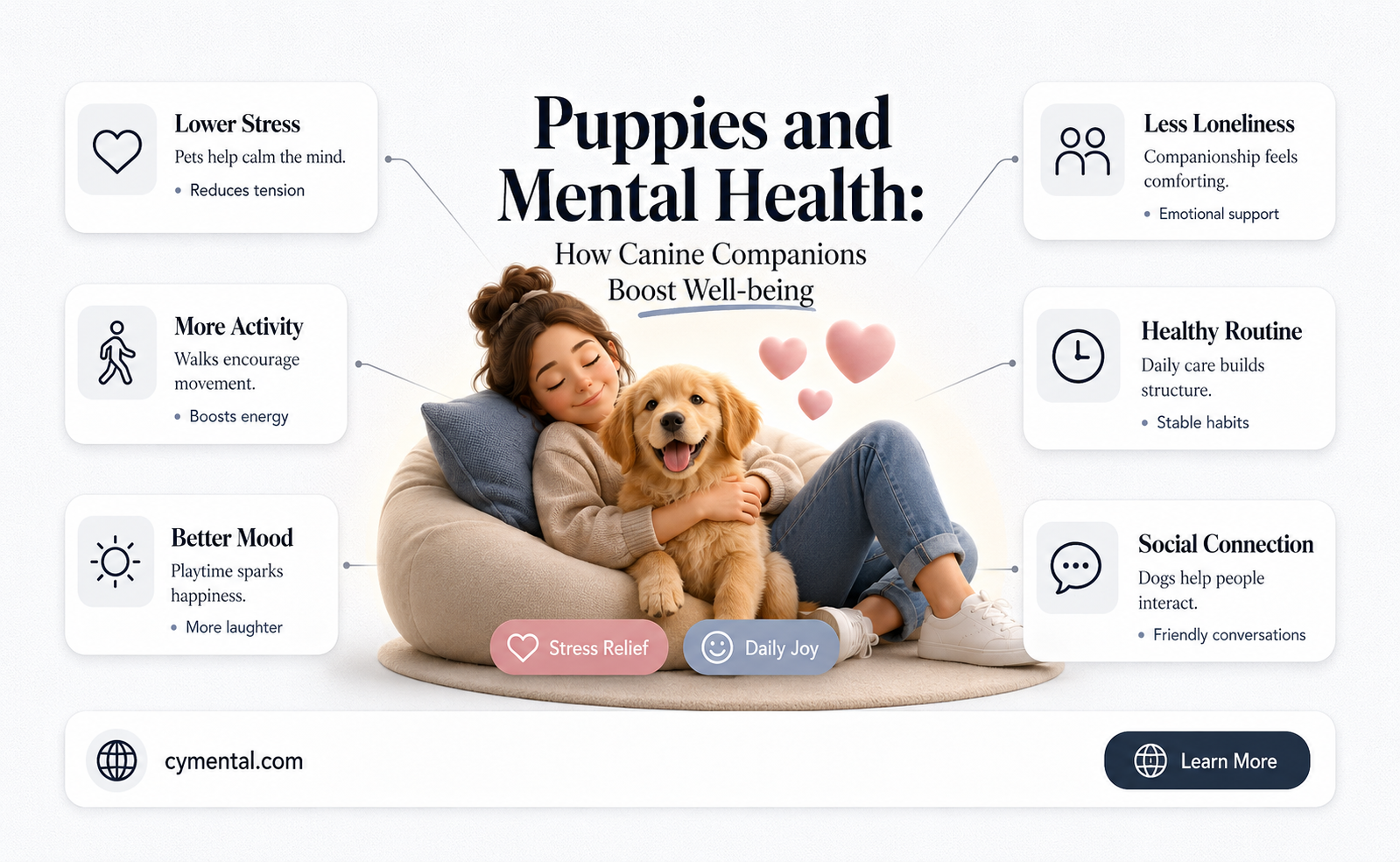
Puppies have long been celebrated as loyal companions, but their role in supporting mental health is gaining increasing attention. Research suggests that the presence of puppies can significantly reduce stress, anxiety, and feelings of loneliness by promoting the release of oxytocin, often referred to as the love hormone, while decreasing cortisol levels. Their playful and affectionate nature encourages physical activity, social interaction, and a sense of responsibility, all of which contribute to improved emotional well-being. Additionally, puppies provide unconditional love and companionship, offering a comforting presence for individuals struggling with mental health challenges. As such, they are increasingly being incorporated into therapeutic settings, such as animal-assisted therapy, to help individuals manage conditions like depression, PTSD, and anxiety.
| Characteristics | Values |
|---|---|
| Stress Reduction | Interacting with puppies lowers cortisol (stress hormone) levels and increases oxytocin, promoting relaxation. |
| Anxiety Relief | Petting puppies has been shown to reduce symptoms of anxiety and panic disorders. |
| Depression Alleviation | Puppies provide companionship, routine, and purpose, which can combat feelings of loneliness and depression. |
| Emotional Support | Puppies offer unconditional love and emotional comfort, helping individuals cope with emotional distress. |
| Social Interaction | Owning a puppy encourages social engagement, as people are more likely to interact with others while walking or playing with their pet. |
| Physical Activity | Caring for a puppy promotes regular exercise, such as walking, which improves mood and overall mental health. |
| Routine & Structure | Puppies require a consistent schedule, which can help individuals with mental health issues establish a daily routine. |
| Mindfulness | Interacting with puppies can promote mindfulness, as it encourages being present in the moment. |
| Reduced Loneliness | Puppies provide companionship, reducing feelings of isolation and loneliness. |
| Improved Sleep | The presence of a puppy can create a sense of security, leading to better sleep quality for some individuals. |
| Therapeutic Benefits | Puppies are increasingly used in animal-assisted therapy to support mental health treatment. |
| Increased Happiness | Playing with puppies stimulates the release of dopamine and serotonin, neurotransmitters associated with happiness and well-being. |
| Responsibility | Caring for a puppy fosters a sense of responsibility and accomplishment, boosting self-esteem. |
| Non-Judgmental Support | Puppies provide a safe and non-judgmental source of emotional support, which can be particularly beneficial for individuals with mental health struggles. |
| Sensory Stimulation | The tactile experience of petting a puppy can be soothing and grounding for individuals with anxiety or sensory processing issues. |
Explore related products


What You'll Learn
- Emotional Support: Puppies provide comfort, reduce loneliness, and foster emotional bonding, aiding mental well-being
- Stress Reduction: Interacting with puppies lowers cortisol levels, promoting relaxation and stress relief
- Routine & Purpose: Caring for puppies establishes daily routines, enhancing structure and a sense of purpose
- Social Interaction: Puppies encourage socialization, helping combat isolation and improve interpersonal connections
- Physical Activity: Walking and playing with puppies boosts endorphins, reducing anxiety and depression symptoms

Emotional Support: Puppies provide comfort, reduce loneliness, and foster emotional bonding, aiding mental well-being
Puppies have an innate ability to sense human emotions, often providing comfort simply through their presence. Studies show that petting a dog for just 15 minutes can reduce cortisol levels, the stress hormone, by up to 24%. This physiological response is coupled with the psychological reassurance of having a non-judgmental companion. For individuals struggling with anxiety or depression, a puppy’s unwavering attention can act as a grounding force, pulling them out of spiraling thoughts and into the present moment. This immediate comfort is particularly valuable during acute episodes of distress, offering a tangible way to manage overwhelming emotions.
Loneliness is a silent epidemic, affecting millions worldwide, but puppies can bridge this emotional gap. Unlike human relationships, which may come with expectations or complexities, a puppy’s companionship is consistent and unconditional. For older adults living alone or individuals isolated due to mental health challenges, a puppy’s daily routines—feeding, walking, and playtime—create a sense of purpose and structure. Research indicates that dog owners are 36% less likely to report feelings of loneliness compared to non-owners. This reduction in isolation is not just about having a living being around; it’s about the emotional connection that forms through shared experiences and mutual care.
Emotional bonding with a puppy is a two-way street, fostering empathy and responsibility in the owner. Training a puppy, for instance, requires patience and consistency, skills that can translate into better emotional regulation for the owner. A study published in the *Journal of Personality and Social Psychology* found that individuals who bonded strongly with their pets exhibited higher levels of self-esteem and lower levels of depression. This bond is particularly impactful for children and adolescents, as it teaches them to recognize and respond to emotional cues, both in the puppy and in themselves. For families, a puppy can become a shared focus, strengthening interpersonal relationships and creating a supportive environment.
To maximize the emotional support a puppy provides, consider integrating them into daily mental health practices. For example, incorporating a 20-minute walk with your puppy into your morning routine can boost serotonin levels, improving mood and energy. For those in therapy, puppies can be included in sessions as part of animal-assisted interventions, which have been shown to enhance treatment outcomes. However, it’s crucial to ensure the puppy’s needs are met as well—adequate exercise, socialization, and veterinary care are essential for their well-being, which in turn supports their ability to provide emotional support. By nurturing this reciprocal relationship, both owner and puppy can thrive emotionally.
Finding Support: Where to Get Mental Health Help and Resources
You may want to see also
Explore related products





Stress Reduction: Interacting with puppies lowers cortisol levels, promoting relaxation and stress relief
Cortisol, often dubbed the "stress hormone," spikes in response to pressure, anxiety, or fear, triggering the body’s fight-or-flight response. Chronic elevation of cortisol is linked to mental health issues like depression, anxiety, and burnout. Studies show that interacting with puppies—whether through petting, playing, or simply being in their presence—significantly lowers cortisol levels. A 2019 study published in *AACE Clinical Case Reports* found that employees who spent just 15–30 minutes with therapy dogs during their workday experienced a 10–20% reduction in cortisol compared to those who did not. This physiological shift underscores why puppies are increasingly recognized as natural stress relievers.
To harness the stress-reducing benefits of puppies, consistency is key. Incorporate short, daily interactions into your routine—for instance, 10–15 minutes of petting or playtime. For those with busy schedules, even brief moments of engagement, like a quick cuddle or a short walk, can yield measurable results. If you don’t own a puppy, consider volunteering at a local shelter or arranging visits with a friend’s pet. For children and teens, structured puppy interactions, such as training sessions or grooming activities, can teach responsibility while providing stress relief. Always ensure the environment is calm and safe for both the puppy and the individual to maximize the relaxation effect.
While the benefits are clear, it’s important to approach puppy interactions mindfully. Not everyone responds the same way—some may feel overwhelmed by the energy of a young puppy. For those with anxiety or sensory sensitivities, start with shorter, supervised sessions. Additionally, hygiene is crucial; wash hands before and after handling puppies, especially for individuals with weakened immune systems. Avoid forcing interactions if the puppy seems stressed or uninterested, as this can negate the calming effect. By respecting both human and animal boundaries, the stress-relieving potential of puppy interactions can be fully realized.
The science behind puppies as stress relievers lies in their ability to trigger the release of oxytocin, often called the "love hormone," which counteracts cortisol’s effects. This hormonal shift promotes feelings of calmness and well-being. For older adults, interacting with puppies can also reduce loneliness, a common stressor in later life. Practical tips include creating a designated "puppy corner" at home with soft lighting and comfortable seating to enhance relaxation during interactions. Whether you’re a student prepping for exams, a professional navigating deadlines, or a senior seeking companionship, puppies offer a simple yet powerful tool for stress management.
Exploring the Role of Medication in Mental Health Treatment
You may want to see also
Explore related products





Routine & Purpose: Caring for puppies establishes daily routines, enhancing structure and a sense of purpose
Puppies demand consistency, and their care naturally imposes a daily structure that can be a lifeline for those struggling with mental health. Feeding, walking, and playtime become non-negotiable anchors in the day, forcing a rhythm where chaos might otherwise reign. For individuals battling depression or anxiety, this externally imposed routine can counteract the inertia or overwhelming uncertainty that often accompanies these conditions. A study published in the *Journal of Psychiatric Research* found that pet owners, particularly dog owners, reported higher levels of daily routine adherence, which correlated with reduced symptoms of depression. The act of caring for another living being shifts the focus outward, breaking the cycle of rumination and providing a tangible sense of order.
Consider the practicalities: a puppy’s bladder control dictates a morning walk, often before 7 a.m., regardless of your mood. This early activity not only exposes you to natural light, proven to regulate circadian rhythms, but also ensures you start the day with a sense of accomplishment. By midday, a second walk or training session reinforces the routine, while evening feeding and grooming rituals signal the day’s close. Over time, this predictability becomes a scaffold for stability, particularly for those with conditions like bipolar disorder or ADHD, where structure is often lacking. Experts recommend leveraging this routine by pairing puppy care tasks with self-care activities—for instance, using the post-walk calm to practice mindfulness or journaling.
However, establishing this routine isn’t without challenges. Puppies require time, energy, and patience, resources that may feel scarce during mental health episodes. For instance, a 12-week-old puppy needs feeding every 4–6 hours and potty breaks every 1–2 hours, a demand that can feel overwhelming if you’re already fatigued. To mitigate this, start small: use alarms or apps to remind you of feeding times, and enlist a support system—a partner, friend, or dog walker—to share responsibilities during low periods. Gradually, as the puppy’s needs become more predictable (around 6–9 months), the routine will feel less burdensome and more beneficial.
The sense of purpose derived from puppy care is equally transformative. Unlike human relationships, which can feel conditional or complex, a puppy’s dependence is straightforward and unwavering. This clarity can be particularly grounding for individuals grappling with feelings of worthlessness or existential dread. A 2018 study in *BMC Psychiatry* highlighted that pet ownership was associated with a stronger sense of identity and meaning, especially among participants with severe mental health diagnoses. The act of nurturing another life fosters a sense of competence and value, counteracting the self-doubt often perpetuated by mental illness.
To maximize this benefit, incorporate purposeful interactions into your routine. Training sessions, for example, not only stimulate the puppy’s mind but also reinforce your role as a capable caregiver. Start with basic commands like “sit” and “stay,” progressing to more complex tasks as both of you gain confidence. Even 10–15 minutes of focused training daily can yield measurable improvements in your mood and the puppy’s behavior. Additionally, involve your puppy in activities that align with your interests—whether it’s hiking, agility courses, or simply cuddling during a movie—to deepen the bond and amplify the sense of shared purpose.
In conclusion, while puppies are not a cure-all, their care offers a unique pathway to routine and purpose, two pillars essential for mental health stability. By embracing the structure they demand and the unconditional reliance they place on us, individuals can cultivate a sense of order and meaning that extends beyond the puppy itself. The key lies in balancing their needs with self-care, leveraging their presence as a tool for healing rather than a source of stress. For those willing to commit, the rewards are profound: a life punctuated by wagging tails, wet noses, and the quiet strength of a routine built on love.
Encouraging Mental Health Support for Your Husband: Options and Limits
You may want to see also
Explore related products


Social Interaction: Puppies encourage socialization, helping combat isolation and improve interpersonal connections
Puppies, with their boundless energy and innate charm, serve as natural catalysts for social interaction. Their presence often prompts conversations, whether it’s a stranger stopping to admire their playful antics or a neighbor asking about their breed. These seemingly small exchanges can be the first step in breaking down social barriers, particularly for individuals who struggle with initiating contact. For someone experiencing isolation, a puppy can act as a social bridge, fostering connections that might otherwise remain unexplored.
Consider the mechanics of this interaction: when you walk a puppy, you’re not just exercising the dog—you’re entering a social ecosystem. Dog parks, neighborhood streets, and even pet stores become arenas for spontaneous encounters. Research suggests that dog owners are more likely to engage in conversations with others, with one study finding that they experience up to 60% more social interactions during walks compared to non-dog owners. This increased socialization can be particularly beneficial for older adults or those with anxiety, as it provides a low-stakes, natural context for human connection.
However, leveraging a puppy’s social potential requires intentionality. For instance, joining a puppy training class or a local dog meetup group can amplify these opportunities. These structured environments not only help your puppy develop essential skills but also place you in a community of like-minded individuals. For those with social anxiety, starting with shared activities centered around the puppy can reduce the pressure of traditional social settings. Over time, these interactions can build confidence and pave the way for deeper interpersonal connections.
A cautionary note: while puppies can facilitate socialization, they are not a one-size-fits-all solution. The responsibility of pet ownership can sometimes feel overwhelming, particularly for individuals already grappling with mental health challenges. It’s crucial to assess your capacity for caregiving and consider alternatives like volunteering at a shelter or fostering if full-time ownership seems daunting. The goal is to harness the social benefits without adding undue stress.
In conclusion, puppies possess a unique ability to draw people out of isolation and into the fabric of community life. By strategically engaging in puppy-centered activities and being mindful of personal limitations, individuals can use this relationship to foster meaningful social connections. Whether through a casual chat at the park or a structured training class, the bond between human and puppy can serve as a powerful tool for enhancing mental well-being through socialization.
Happiness Boosts Mental Health: Doctors Reveal Surprising Benefits
You may want to see also
Explore related products




Physical Activity: Walking and playing with puppies boosts endorphins, reducing anxiety and depression symptoms
Engaging in physical activity with puppies isn't just about burning calories—it’s a powerful tool for mental health. Walking and playing with a puppy triggers the release of endorphins, often referred to as "feel-good" hormones, which act as natural painkillers and mood elevators. Studies show that even 30 minutes of moderate exercise, such as a brisk walk with your pup, can significantly reduce symptoms of anxiety and depression. This isn’t just anecdotal; research published in the *Journal of Psychiatric Research* highlights that regular physical activity can be as effective as medication or therapy for some individuals.
To maximize these benefits, aim for consistency. Start with 20–30 minutes of daily activity, whether it’s a walk around the neighborhood or a game of fetch in the park. For older adults or those with mobility issues, even shorter, gentler sessions can yield results. Pairing this routine with a puppy’s playful energy amplifies the effect—their enthusiasm keeps you moving longer than you might alone. Pro tip: Use a fitness tracker or app to monitor your progress and stay motivated.
Comparing this approach to traditional mental health interventions reveals its unique advantages. Unlike therapy or medication, which often require time to take effect, the endorphin boost from physical activity with a puppy is nearly immediate. Plus, the bond formed with your pet adds an emotional layer, fostering a sense of purpose and companionship. For instance, a study in *BMC Psychiatry* found that dog owners experienced a 22% reduction in depressive symptoms after just six weeks of regular walking with their pets.
However, it’s not without caution. Over-exercising, especially in younger or high-energy breeds, can lead to exhaustion or injury for both you and the puppy. Always tailor activities to your pet’s age, breed, and health. For example, a 3-month-old Labrador retriever needs shorter, more frequent play sessions, while a senior dog may prefer leisurely strolls. Hydration and rest are key—carry water for both of you, and avoid peak heat hours.
In conclusion, walking and playing with puppies isn’t just fun—it’s a science-backed strategy to combat anxiety and depression. By committing to a manageable routine and adapting it to your needs and your pet’s, you can harness the power of endorphins while strengthening your bond. It’s a win-win: better mental health for you and a happy, healthy pup.
Music as Therapy: How Curating Playlists Boosts Mental Well-Being
You may want to see also
Frequently asked questions
Yes, puppies can help reduce stress and anxiety by promoting the release of oxytocin, a hormone associated with bonding and relaxation, while lowering cortisol, the stress hormone.
A: Puppies often improve mood through companionship, unconditional love, and increased physical activity, which can help alleviate symptoms of depression.
Yes, puppies provide emotional support and encourage social interaction, as they often lead to conversations with others during walks or outings.
Puppies, especially trained emotional support dogs, can help individuals with PTSD by providing comfort, reducing hypervigilance, and creating a sense of safety.