Noah Parker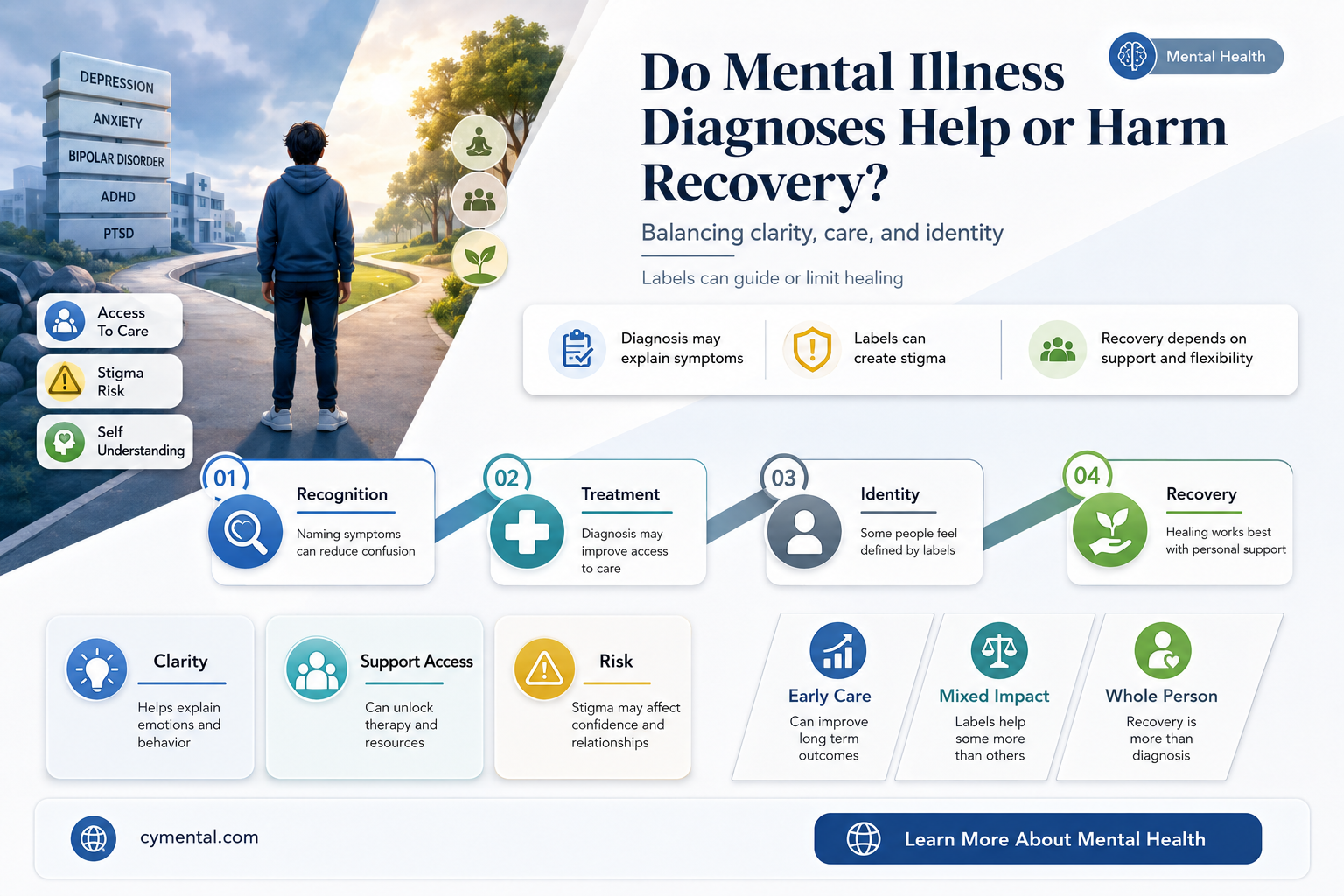
The question of whether mental illness diagnoses help is a complex and multifaceted one, sparking debates among professionals, patients, and advocates alike. On one hand, diagnoses can provide a framework for understanding symptoms, guiding treatment plans, and offering validation to individuals who may feel isolated or misunderstood. They can also facilitate access to resources, support networks, and evidence-based interventions. However, critics argue that diagnoses may oversimplify the nuanced experiences of mental health, potentially leading to stigma, mislabeling, or over-reliance on medication. Additionally, the subjective nature of diagnostic criteria raises concerns about consistency and cultural biases. Ultimately, the value of a mental illness diagnosis depends on how it is used—whether it empowers individuals to seek help and fosters healing, or whether it becomes a limiting label that overshadows their identity and potential for recovery.
Explore related products


What You'll Learn

Accuracy of Diagnoses
The accuracy of mental illness diagnoses is a critical factor in determining whether they ultimately help or hinder individuals. Misdiagnosis can lead to inappropriate treatment, unnecessary medication, and prolonged suffering. For instance, a study published in the *Journal of Clinical Psychiatry* found that up to 20% of patients initially diagnosed with bipolar disorder were later reclassified as having major depressive disorder, highlighting the challenges in distinguishing between these conditions. Such errors underscore the need for rigorous diagnostic processes that rely on comprehensive assessments, including detailed patient histories, symptom tracking, and, where applicable, biological markers.
To improve accuracy, clinicians should adopt a multi-faceted approach. First, standardize the use of diagnostic tools like the *Diagnostic and Statistical Manual of Mental Disorders* (DSM-5) or the *International Classification of Diseases* (ICD-11), ensuring consistency across practitioners. Second, incorporate longitudinal data; mental health symptoms often evolve over time, and a single snapshot may not capture the full picture. For example, a patient presenting with anxiety symptoms might later exhibit depressive episodes, pointing to a more complex diagnosis like generalized anxiety disorder with comorbid depression. Third, leverage technology, such as AI-driven symptom tracking apps, to monitor patterns and provide data-driven insights that supplement clinical judgment.
However, reliance on standardized criteria alone is not without pitfalls. The DSM-5, while widely used, has been criticized for its categorical approach, which can oversimplify the nuanced spectrum of mental health conditions. For instance, autism spectrum disorder (ASD) encompasses a wide range of presentations, yet the DSM-5 groups them under a single diagnosis, potentially leading to generalized treatment plans that fail to address individual needs. Clinicians must balance structured guidelines with personalized assessments, considering factors like cultural background, socioeconomic status, and co-occurring conditions that may influence symptom expression.
A practical tip for both practitioners and patients is to maintain open communication throughout the diagnostic process. Patients should feel empowered to ask questions, share concerns, and provide feedback on their symptoms. For example, a patient diagnosed with ADHD might notice that stimulant medication exacerbates anxiety, prompting a reevaluation of the diagnosis or treatment plan. Similarly, clinicians should remain transparent about the limitations of diagnostic tools and the possibility of revision as more information becomes available. This collaborative approach fosters trust and ensures that diagnoses remain dynamic and responsive to the individual’s evolving needs.
Ultimately, the accuracy of mental illness diagnoses hinges on a combination of scientific rigor, clinical expertise, and patient engagement. While no system is infallible, continuous refinement of diagnostic practices—informed by research, technology, and feedback—can minimize errors and maximize the benefits of diagnosis. Accurate identification of mental health conditions not only guides appropriate treatment but also validates the patient’s experience, offering a crucial first step toward recovery and improved quality of life.
Reading for Resilience: How Books Boost Mental Health and Well-Being
You may want to see also
Explore related products


$32.99 $32.99


Impact on Treatment Plans
A precise mental illness diagnosis acts as a compass for clinicians, guiding the creation of tailored treatment plans. Consider depression: a diagnosis of major depressive disorder (MDD) with melancholic features may prioritize antidepressants like SSRIs (e.g., sertraline 50–200 mg/day) paired with cognitive-behavioral therapy (CBT), while seasonal affective disorder (SAD) might respond better to light therapy and vitamin D supplementation. Without diagnostic clarity, treatment risks becoming a trial-and-error process, delaying relief and increasing patient frustration.
However, diagnoses are not infallible blueprints. Comorbidities complicate treatment planning—for instance, a patient with both generalized anxiety disorder (GAD) and insomnia requires a nuanced approach, as benzodiazepines (e.g., lorazepam 0.5–2 mg/night) may alleviate anxiety but worsen sleep dependence over time. Clinicians must balance diagnostic guidelines with individual patient factors, such as age (e.g., avoiding stimulants in elderly patients with ADHD due to cardiovascular risks) or medication interactions, to avoid counterproductive outcomes.
The diagnostic process also influences treatment adherence. A clear explanation of a condition, such as bipolar II disorder, empowers patients to understand the rationale behind mood stabilizers (e.g., lithium 300–900 mg/day) and psychotherapy. This transparency fosters trust and motivation, reducing the likelihood of treatment abandonment. Conversely, a vague or disputed diagnosis can leave patients skeptical of proposed interventions, hindering progress.
Yet, overreliance on diagnoses can lead to rigid, one-size-fits-all treatment plans. For example, diagnosing a child with ADHD often defaults to methylphenidate (10–60 mg/day) prescriptions, overlooking non-pharmacological strategies like behavioral interventions or environmental modifications. Clinicians must use diagnoses as starting points, not endpoints, adapting treatments based on real-world responses rather than textbook protocols.
Ultimately, the impact of a mental illness diagnosis on treatment plans is dual-edged: it provides direction but demands flexibility. Practical tips include starting medications at lower doses (e.g., fluoxetine 10 mg/day for anxiety) and titrating upward, monitoring side effects, and integrating patient preferences. By leveraging diagnostic insights while remaining adaptable, clinicians can craft treatment plans that are both evidence-based and individualized, maximizing the chances of meaningful recovery.
The Power of Friendship: How Friends Support Mental Health
You may want to see also
Explore related products




Stigma and Labeling Effects
Mental illness diagnoses, while intended to provide clarity and access to treatment, often carry unintended consequences. The act of labeling someone with a specific condition can inadvertently reinforce stigma, shaping how individuals perceive themselves and are perceived by others. This phenomenon, known as the labeling effect, can lead to social isolation, reduced self-esteem, and even avoidance of seeking help. For instance, a person diagnosed with schizophrenia might internalize societal stereotypes, believing they are inherently dangerous or incapable, despite their individual strengths and capabilities.
Consider the process of labeling through a comparative lens: a diagnosis can function similarly to a double-edged sword. On one side, it offers a framework for understanding symptoms and accessing targeted interventions. On the other, it risks reducing a complex human experience to a single category, stripping away nuance and individuality. For example, a teenager diagnosed with depression may find relief in knowing their feelings have a name, but they might also face assumptions from peers or teachers that they are perpetually "broken" or "unreliable." This oversimplification can limit opportunities and foster a self-fulfilling prophecy, where the label becomes a barrier rather than a tool for growth.
To mitigate the negative impacts of labeling, it’s essential to adopt a person-first approach. Instead of saying "a schizophrenic," use "a person experiencing schizophrenia." This small linguistic shift emphasizes the individual’s humanity over their diagnosis. Additionally, mental health professionals should provide context alongside diagnoses, explaining that conditions exist on a spectrum and do not define a person’s potential. For parents or caregivers, encouraging open conversations about mental health can help normalize diagnoses and reduce shame. For instance, framing therapy as a proactive step toward well-being, rather than a response to "being sick," can empower individuals to seek support without fear of judgment.
Practical strategies can further counteract stigma. Employers can implement policies that prioritize mental health, such as flexible work hours or access to counseling services, to create an inclusive environment. Schools can integrate mental health education into curricula, teaching students to recognize symptoms in themselves and others without resorting to harmful stereotypes. For individuals, journaling or joining support groups can provide a safe space to process the emotional weight of a diagnosis. For example, a study found that peer support groups reduced feelings of isolation in 75% of participants with anxiety disorders, demonstrating the power of community in challenging stigma.
Ultimately, the goal is to reframe diagnoses as starting points for healing rather than endpoints of identity. By acknowledging the risks of labeling while leveraging its benefits, we can foster a society that treats mental illness with compassion and understanding. This requires collective effort—from healthcare providers to policymakers to everyday individuals—to dismantle stigma and prioritize the person behind the label. After all, a diagnosis should open doors, not close them.
Supporting Mental Health: Effective Ways to Help Someone in Need
You may want to see also
Explore related products





Patient Empowerment or Disempowerment
Mental illness diagnoses can serve as both a beacon of clarity and a burden of labels, depending on how they are wielded. For some patients, a diagnosis provides a framework to understand their struggles, access targeted treatments, and connect with a community of shared experiences. For others, it becomes a limiting identity, overshadowing their individuality and perpetuating stigma. The line between empowerment and disempowerment often hinges on the context in which the diagnosis is delivered and received.
Consider the case of a 28-year-old diagnosed with generalized anxiety disorder. With this label, they gain access to evidence-based therapies like cognitive-behavioral therapy (CBT) and medications such as SSRIs (e.g., sertraline 50–200 mg/day). Armed with this knowledge, they can advocate for themselves in healthcare settings, track symptom patterns, and set realistic goals for recovery. Here, the diagnosis acts as a tool for empowerment, transforming abstract suffering into actionable steps. However, if the same diagnosis is communicated without nuance—say, as a lifelong, unchangeable condition—it could foster a sense of helplessness, discouraging the patient from exploring coping strategies beyond medication.
Contrast this with a 45-year-old diagnosed with bipolar disorder, a label often laden with societal misconceptions. While the diagnosis may explain years of erratic mood swings and guide treatment with mood stabilizers (e.g., lithium 900–1200 mg/day), it can also lead to social isolation or discrimination in employment. In this scenario, empowerment requires not just medical intervention but also psychoeducation to challenge internalized stigma and practical strategies to navigate systemic barriers. Without these supports, the diagnosis risks becoming a disempowering stereotype rather than a pathway to healing.
The role of the clinician is critical in tipping the scales toward empowerment. A diagnosis should be presented as a starting point for collaboration, not a final verdict. For instance, a therapist might say, "Based on your symptoms, we’re considering a diagnosis of depression. This means we can explore therapies like interpersonal psychotherapy or mindfulness-based cognitive therapy, and you can decide which approach feels right for you." This framing emphasizes agency, inviting the patient to co-create their treatment plan. Conversely, a dismissive or authoritarian delivery—e.g., "You have borderline personality disorder, so you’ll always struggle with relationships"—can strip patients of hope and motivation.
Ultimately, the impact of a mental illness diagnosis rests on its integration into the patient’s life narrative. Is it a chapter in their story, or the entire plot? To foster empowerment, healthcare providers must offer not just diagnoses but also resources for self-advocacy, peer support, and holistic well-being. Patients, in turn, can reclaim their narratives by questioning labels that feel restrictive, seeking second opinions, and prioritizing treatments aligned with their values. In this delicate balance, a diagnosis becomes not a cage but a compass, guiding individuals toward understanding, resilience, and self-determination.
Probiotics and Mental Health: Exploring the Gut-Brain Connection for Wellness
You may want to see also
Explore related products


Diagnostic Criteria Evolution
The evolution of diagnostic criteria for mental illnesses reflects a dynamic interplay between scientific progress and societal understanding. Early classifications, such as those in the first edition of the *Diagnostic and Statistical Manual of Mental Disorders* (DSM-I, 1952), relied heavily on psychoanalytic theories, categorizing conditions like schizophrenia with vague descriptors. By contrast, the DSM-III (1980) introduced a checklist-style approach, emphasizing observable symptoms over theoretical constructs. This shift aimed to improve reliability, but it also reduced the complexity of individual experiences to a set of criteria, sometimes at the expense of validity. For instance, a patient meeting four out of seven criteria for major depressive disorder could receive the diagnosis, regardless of symptom severity or context.
Consider the case of attention-deficit/hyperactivity disorder (ADHD), whose diagnostic criteria have expanded significantly since the DSM-III. Initially viewed as a childhood disorder characterized by hyperactivity, the DSM-5 (2013) now recognizes ADHD in adults and includes symptoms like disorganization and time management difficulties. This evolution reflects growing awareness of ADHD’s lifelong impact, but it also raises questions about overdiagnosis. For example, a 30-year-old struggling with work deadlines might meet criteria for ADHD, yet their symptoms could equally stem from burnout or poor sleep hygiene. Clinicians must now balance broader criteria with careful differential diagnosis, often incorporating tools like the Adult ADHD Self-Report Scale (ASRS-v1.1) to enhance accuracy.
The inclusion of cultural considerations in diagnostic criteria marks another critical evolution. Earlier editions of the DSM often pathologized behaviors rooted in cultural norms, such as bereavement practices or spiritual experiences. The DSM-5 introduced cultural formulation interview guides to help clinicians contextualize symptoms within a patient’s cultural background. For instance, a Haitian immigrant experiencing dissociative episodes might be misdiagnosed with a psychotic disorder if their clinician fails to recognize the cultural significance of such states. By integrating cultural nuances, modern criteria aim to reduce misdiagnosis and improve treatment relevance, though implementation remains inconsistent.
Looking ahead, the push toward dimensional assessments challenges traditional categorical diagnoses. The DSM-5’s introduction of severity ratings for conditions like autism spectrum disorder acknowledges that mental illnesses exist on continua rather than as discrete entities. This approach aligns with research showing that symptoms like anxiety or depression vary in intensity across populations. For example, a patient with mild depressive symptoms might benefit from cognitive-behavioral therapy alone, while another with severe symptoms may require a combination of antidepressants (e.g., 20 mg of fluoxetine daily) and psychotherapy. As diagnostic criteria continue to evolve, they must strike a balance between precision and flexibility, ensuring that they serve as tools for understanding rather than rigid labels.
Social Workers' Role in Mental Health Support: Impact and Challenges
You may want to see also
Frequently asked questions
Yes, diagnoses often help individuals understand their symptoms, validate their experiences, and provide a framework for seeking appropriate treatment and support.
Absolutely, a formal diagnosis can open doors to specialized therapies, medications, insurance coverage, and community resources tailored to the specific condition.
While stigma exists, a diagnosis can also empower individuals by giving them a language to communicate their struggles and connect with others who share similar experiences.
Not necessarily; a diagnosis can serve as a starting point for healing, offering guidance and hope while encouraging individuals to take proactive steps toward managing their mental health.