Madison Cole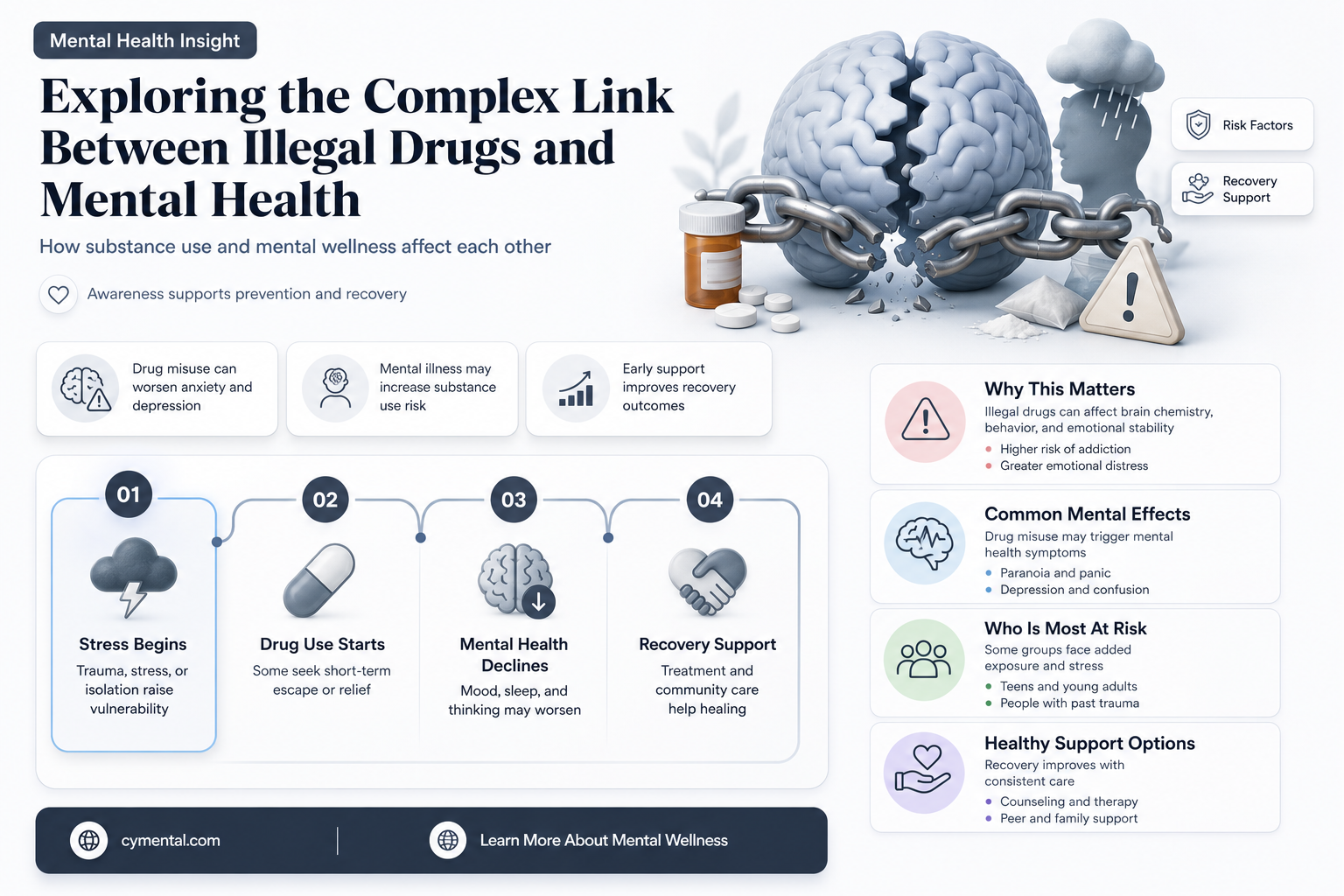
The question of whether illegal drugs can help with mental illness is complex and highly controversial. While some individuals anecdotally report temporary relief from symptoms like depression, anxiety, or PTSD through the use of substances like psychedelics or cannabis, there is no scientific consensus supporting their efficacy as legitimate treatments. In fact, the risks often outweigh any perceived benefits, as illegal drugs can exacerbate mental health issues, lead to dependency, and cause long-term harm to brain function. Instead, evidence-based treatments such as therapy, medication, and lifestyle changes remain the safest and most effective approaches for managing mental health conditions.
| Characteristics | Values |
|---|---|
| Therapeutic Potential | Some illegal drugs (e.g., psilocybin, MDMA, ketamine) have shown promise in clinical trials for treating mental health conditions like depression, PTSD, and anxiety when used in controlled, therapeutic settings. |
| Self-Medication | Many individuals with mental health disorders use illegal drugs as a form of self-medication to alleviate symptoms, though this often leads to dependence and worsening of the condition. |
| Risks and Side Effects | Illegal drugs can exacerbate mental health issues, cause psychosis, increase anxiety, and lead to addiction, making long-term mental health outcomes worse. |
| Legal and Ethical Concerns | The use of illegal drugs for mental health treatment is largely unregulated, posing risks of contamination, unpredictable dosages, and legal consequences. |
| Research Status | Ongoing research into psychedelics and other substances is exploring their potential therapeutic benefits, but most illegal drugs remain unapproved for medical use due to insufficient evidence and safety concerns. |
| Public Perception | Public opinion varies; some view illegal drugs as harmful, while others advocate for their decriminalization and therapeutic use based on emerging research. |
| Alternative Treatments | Legal and evidence-based treatments (e.g., therapy, medication) are generally recommended over illegal drugs due to their safety and efficacy profiles. |
| Cultural and Historical Use | Some cultures have historically used psychoactive substances for mental and spiritual healing, though modern scientific understanding is still evolving. |
| Addiction Potential | Most illegal drugs have a high potential for addiction, which can complicate mental health treatment and recovery. |
| Accessibility | Illegal drugs are often more accessible than mental health services in some regions, leading to their misuse as a coping mechanism. |
Explore related products


What You'll Learn
- Self-Medication Hypothesis: Exploring if individuals use illegal drugs to cope with untreated mental health symptoms
- Psychoactive Effects: How substances like psychedelics or cannabis temporarily alter mood or perception
- Risks vs. Benefits: Potential short-term relief versus long-term harm to mental health from drug use
- Research on Psychedelics: Studies investigating therapeutic uses of substances like LSD or psilocybin
- Dual Diagnosis Challenges: Addressing co-occurring substance abuse and mental health disorders simultaneously

Self-Medication Hypothesis: Exploring if individuals use illegal drugs to cope with untreated mental health symptoms
The self-medication hypothesis posits that individuals may turn to illegal drugs as a way to alleviate untreated mental health symptoms. This theory suggests that when formal treatment or support is inaccessible, people might seek alternative methods to manage conditions like depression, anxiety, or PTSD. For instance, someone with chronic insomnia might use cannabis to induce sleep, while another with social anxiety might rely on alcohol to reduce inhibitions in social settings. These behaviors, though often effective in the short term, can lead to dependency and exacerbate underlying issues.
Consider the case of a 25-year-old with undiagnosed ADHD who uses stimulants like cocaine to enhance focus and productivity. While the drug may temporarily improve concentration, its long-term effects include heightened anxiety, paranoia, and potential cardiovascular damage. Similarly, individuals with untreated depression might turn to opioids for their euphoric effects, only to find themselves trapped in a cycle of tolerance and withdrawal. The key takeaway here is that while illegal drugs may provide temporary relief, they are not a sustainable or safe solution for managing mental health symptoms.
To explore this hypothesis further, let’s examine the role of dopamine and serotonin, neurotransmitters often dysregulated in mental health disorders. Drugs like MDMA or cocaine flood the brain with these chemicals, offering immediate mood elevation. However, repeated use depletes natural neurotransmitter levels, worsening symptoms over time. For example, a study found that individuals using MDMA to self-medicate for PTSD experienced temporary symptom relief but later reported increased anxiety and depression. This highlights the paradox: drugs may mimic treatment but ultimately hinder recovery.
Practical steps to address self-medication behaviors include increasing access to mental health screenings, particularly for at-risk age groups like adolescents and young adults. Therapies such as Cognitive Behavioral Therapy (CBT) can help individuals identify triggers and develop healthier coping mechanisms. For those already dependent on substances, medically supervised tapering and dual diagnosis treatment programs are essential. For instance, a 30-year-old with bipolar disorder and a history of methamphetamine use would benefit from a program addressing both conditions simultaneously.
In conclusion, while the self-medication hypothesis explains why some turn to illegal drugs, it underscores the need for comprehensive mental health care. Recognizing the signs—such as consistent drug use in response to stress or emotional pain—is crucial. Instead of relying on harmful substances, individuals should be guided toward evidence-based treatments, support groups, and lifestyle changes. The goal is not to criminalize self-medication but to replace it with strategies that heal rather than harm.
Gaming for Mental Health: A New Era Under the Presidency
You may want to see also
Explore related products


Psychoactive Effects: How substances like psychedelics or cannabis temporarily alter mood or perception
Psychedelics like LSD, psilocybin, and DMT are renowned for their profound, often surreal alterations of perception. Users frequently report visual distortions—colors intensify, patterns breathe, and objects morph. These effects stem from the substances' interaction with serotonin receptors in the brain, particularly the 5-HT2A receptor. A typical dose of psilocybin (10-20 mg) can induce a 4-6 hour "trip," during which users may experience ego dissolution, a sense of interconnectedness, or even mystical-type experiences. While these effects are temporary, studies suggest they can catalyze long-term changes in mood and perspective, particularly in controlled therapeutic settings. For instance, a single high-dose psilocybin session has shown promise in reducing symptoms of treatment-resistant depression for weeks or months. However, the unpredictability of these experiences underscores the importance of set (mindset) and setting (environment) to minimize the risk of anxiety or panic.
Cannabis, with its primary psychoactive compound THC, offers a more subtle yet equally transformative alteration of mood and perception. At low doses (2.5-5 mg THC), users often report enhanced creativity, relaxation, and heightened sensory awareness—music sounds richer, food tastes more vibrant. However, higher doses (20-30 mg or more) can lead to paranoia, time distortion, or short-term memory impairment. The biphasic nature of cannabis—where low and high doses produce opposite effects—highlights the need for precise dosing, especially for those using it to manage anxiety or PTSD. CBD, another cannabis compound, can mitigate THC's psychoactive effects, making products with balanced THC:CBD ratios (1:1) a safer option for those prone to anxiety. Unlike psychedelics, cannabis effects are short-lived (2-6 hours), making it a more accessible but less profound tool for mood modulation.
The temporary nature of these psychoactive effects raises questions about their therapeutic utility. While psychedelics can induce profound insights, their intensity limits frequent use—most clinical trials administer them once or twice under supervision. Cannabis, on the other hand, can be used daily but risks tolerance and dependence. Both substances bypass traditional symptom management, instead offering a "reset" of sorts for the brain's default mode network, which is often hyperactive in conditions like depression or OCD. For example, a microdose of LSD (10-20 µg) or psilocybin (0.1-0.5 g) taken every few days has anecdotal support for enhancing focus and mood without full psychedelic effects. However, the lack of standardized dosing and long-term studies means these practices remain experimental, emphasizing the need for professional guidance.
A comparative analysis reveals that while psychedelics and cannabis share the ability to alter perception and mood, their mechanisms and applications differ. Psychedelics act as a sledgehammer, disrupting entrenched thought patterns and fostering neuroplasticity, whereas cannabis acts more like a dimmer switch, modulating mood and perception in real-time. For instance, a PTSD patient might use cannabis to blunt hyperarousal in daily life but undergo psilocybin therapy to address trauma roots. Combining these substances requires caution—THC can amplify psychedelic intensity, increasing the risk of adverse reactions. Practical tips include starting with minimal doses, maintaining a calm environment, and having a sober "trip sitter" for psychedelic use. Ultimately, these substances offer unique windows into the mind, but their therapeutic potential hinges on responsible, informed use.
Finding Support: Where to Go for Mental Health Help and Guidance
You may want to see also
Explore related products


Risks vs. Benefits: Potential short-term relief versus long-term harm to mental health from drug use
The allure of illegal drugs as a quick fix for mental health struggles is undeniable. For someone grappling with anxiety, depression, or PTSD, the promise of immediate relief can be irresistible. Substances like cannabis, psychedelics, or even opioids can temporarily dampen emotional pain, numb overwhelming thoughts, or induce a sense of euphoria. A single dose of MDMA, for instance, has been anecdotally reported to provide hours of emotional openness and reduced fear in individuals with trauma. This short-term respite, however, comes at a steep price.
The Illusion of Control: Short-Term Relief and Its Pitfalls
While the initial effects might seem beneficial, the brain quickly adapts to these substances. Tolerance builds, requiring higher doses for the same effect. A person using cannabis to manage anxiety might find themselves needing more and more to achieve the same calming sensation. This cycle can lead to dependence, where the drug becomes necessary just to feel "normal," exacerbating the very issues it was meant to alleviate.
The Long Shadow: Chronic Use and Mental Health Deterioration
Long-term drug use can significantly worsen mental health. Studies show a strong link between chronic cannabis use, especially in adolescents, and an increased risk of psychosis and schizophrenia. Stimulants like methamphetamine can induce paranoia and severe anxiety, while opioids can deepen depression and increase suicidal ideation. The brain, constantly bombarded by these chemicals, struggles to regulate mood and emotions naturally, leading to a vicious cycle of self-medication and worsening symptoms.
Weighing the Scales: A Delicate Balance
It's crucial to understand that the potential benefits of illegal drugs for mental health are largely anecdotal and short-lived. While research into psychedelics like psilocybin shows promise in controlled therapeutic settings, recreational use lacks the necessary safeguards and can lead to unpredictable and harmful outcomes. The risks of addiction, cognitive impairment, and exacerbated mental health issues far outweigh any temporary relief.
Breaking the Cycle: Seeking Sustainable Solutions
Instead of turning to illegal drugs, individuals struggling with mental health should prioritize evidence-based treatments. Therapy, medication prescribed by a qualified professional, and lifestyle changes like exercise and mindfulness practices offer sustainable solutions for managing mental health conditions. While the path to recovery may be longer, it leads to genuine healing and long-term well-being, free from the dangers and uncertainties of illicit substances.
Therapy's Impact: Unlocking Mental Health Healing and Personal Growth
You may want to see also
Explore related products


Research on Psychedelics: Studies investigating therapeutic uses of substances like LSD or psilocybin
Recent studies have revealed a paradox: substances once vilified as dangerous may hold the key to treating mental health disorders. Research on psychedelics like LSD and psilocybin has shifted from counterculture experimentation to rigorous scientific inquiry, with promising results for conditions like depression, PTSD, and anxiety. These substances, when administered in controlled settings, appear to facilitate profound psychological experiences that traditional therapies often struggle to achieve.
Consider the process: patients receive a single, carefully measured dose (e.g., 20–30 mg of psilocybin or 100–200 µg of LSD) in a clinical environment, accompanied by trained therapists. The experience typically lasts 6–8 hours, during which individuals often report encountering deeply personal insights or emotional breakthroughs. For instance, a 2021 study published in *JAMA Psychiatry* found that two doses of psilocybin, combined with therapy, led to significant reductions in depression symptoms for up to 12 months in 75% of participants.
However, this approach is not without risks. Psychedelics can induce intense psychological distress, such as anxiety or paranoia, particularly in individuals with a history of psychosis or untreated mental health conditions. Screening and preparation are critical. Patients must undergo thorough psychological evaluation, and the setting must be calm, supportive, and free from external stressors. Integration sessions post-experience are equally vital, as they help individuals process and apply their insights to daily life.
The mechanism behind these effects remains partially understood but appears linked to the substances’ ability to disrupt default neural pathways, fostering increased connectivity between brain regions. This "reset" effect may allow individuals to break free from entrenched thought patterns, such as those seen in treatment-resistant depression. For example, fMRI studies have shown that psilocybin reduces activity in the default mode network, a brain system associated with self-referential thinking and rumination.
While the potential is immense, widespread adoption faces regulatory and cultural hurdles. Currently, psilocybin is approved for therapeutic use only in a few jurisdictions, such as Oregon, and LSD remains a Schedule I substance in most countries. Advocates argue that reclassification is necessary to expand access for research and treatment, but critics caution against premature normalization without robust safety data.
In practice, this research offers a glimpse into a future where mental health treatment could be revolutionized. For those considering participation in clinical trials, key steps include verifying the study’s legitimacy, understanding the commitment (e.g., multiple therapy sessions), and preparing mentally for a potentially life-altering experience. As the field evolves, it challenges us to rethink not just treatment modalities, but also societal perceptions of substances long stigmatized as harmful.
Supporting Mental Health: Practical Ways to Help Loved Ones Heal
You may want to see also
Explore related products

$15.25 $16.99



Dual Diagnosis Challenges: Addressing co-occurring substance abuse and mental health disorders simultaneously
Substance abuse and mental health disorders often intertwine in a complex dance, creating a dual diagnosis that complicates treatment and recovery. For instance, individuals with anxiety or depression might turn to illegal drugs like cannabis or opioids as a form of self-medication, seeking temporary relief from their symptoms. While these substances may provide fleeting respite, they frequently exacerbate underlying mental health issues over time. Cannabis, for example, can increase anxiety and paranoia in some users, particularly at higher doses (e.g., THC concentrations above 10%), while opioids can deepen depressive episodes once the initial euphoria wears off. This cyclical pattern highlights the urgent need for integrated treatment approaches that address both conditions simultaneously.
Addressing dual diagnosis requires a multifaceted strategy, beginning with accurate assessment and diagnosis. Clinicians must differentiate between substance-induced symptoms and pre-existing mental health disorders, a task complicated by overlapping symptoms. For example, stimulant use can mimic symptoms of bipolar disorder, while prolonged alcohol abuse can resemble major depressive disorder. A thorough evaluation, including detailed patient history and standardized screening tools like the Substance Abuse Subtle Screening Inventory (SASSI), is essential. Once diagnosed, treatment should be tailored to the individual, often combining pharmacotherapy, psychotherapy, and behavioral interventions. Medications such as buprenorphine for opioid addiction or selective serotonin reuptake inhibitors (SSRIs) for depression may be prescribed, but dosages must be carefully monitored to avoid adverse interactions.
One of the most significant challenges in dual diagnosis treatment is patient engagement and adherence. Individuals with co-occurring disorders often face stigma, lack of social support, and ambivalence about recovery, making it difficult to commit to long-term treatment plans. Motivational interviewing (MI) can be a powerful tool in this context, helping patients explore their ambivalence and build intrinsic motivation for change. For example, a therapist might help a patient recognize how substance abuse is hindering their ability to manage anxiety effectively, fostering a desire to seek healthier coping mechanisms. Additionally, peer support groups, such as Dual Recovery Anonymous, can provide a sense of community and accountability, reducing feelings of isolation.
Practical tips for managing dual diagnosis include establishing a structured daily routine to reduce stress and triggers, incorporating mindfulness or meditation practices to improve emotional regulation, and limiting exposure to environments where substance use is prevalent. For adolescents and young adults, family involvement is crucial; parents and caregivers can support recovery by learning about both substance abuse and mental health disorders, setting clear boundaries, and encouraging healthy habits. Technology can also play a role, with apps like Calm or Sober Grid offering tools for stress management and recovery tracking. Ultimately, successful treatment hinges on a collaborative, patient-centered approach that acknowledges the intricate relationship between substance abuse and mental health, offering hope and healing for those navigating this challenging terrain.
Psychology's Role in Healing: Can Studying the Mind Aid Mental Health Recovery?
You may want to see also
Frequently asked questions
No, illegal drugs are not a safe or effective treatment for mental health disorders. While some individuals may report temporary relief from symptoms, these substances often worsen mental health over time, leading to addiction, increased anxiety, depression, and psychosis.
Some substances, such as certain psychedelics or marijuana, are being studied in controlled, clinical settings for potential therapeutic uses. However, recreational or self-medicated use of these drugs is risky and not recommended, as it lacks medical supervision and can lead to harmful outcomes.
No, illegal drugs should never replace prescribed medications or evidence-based treatments for mental health conditions. Prescribed medications are regulated, dosed appropriately, and monitored by healthcare professionals, whereas illegal drugs are unpredictable and can cause severe harm.
Using illegal drugs to cope with mental health issues is unsafe and counterproductive. These substances can exacerbate symptoms, create dependency, and interfere with proper treatment. Healthier coping mechanisms, such as therapy, medication, exercise, and support networks, are recommended.