Lucas Bennett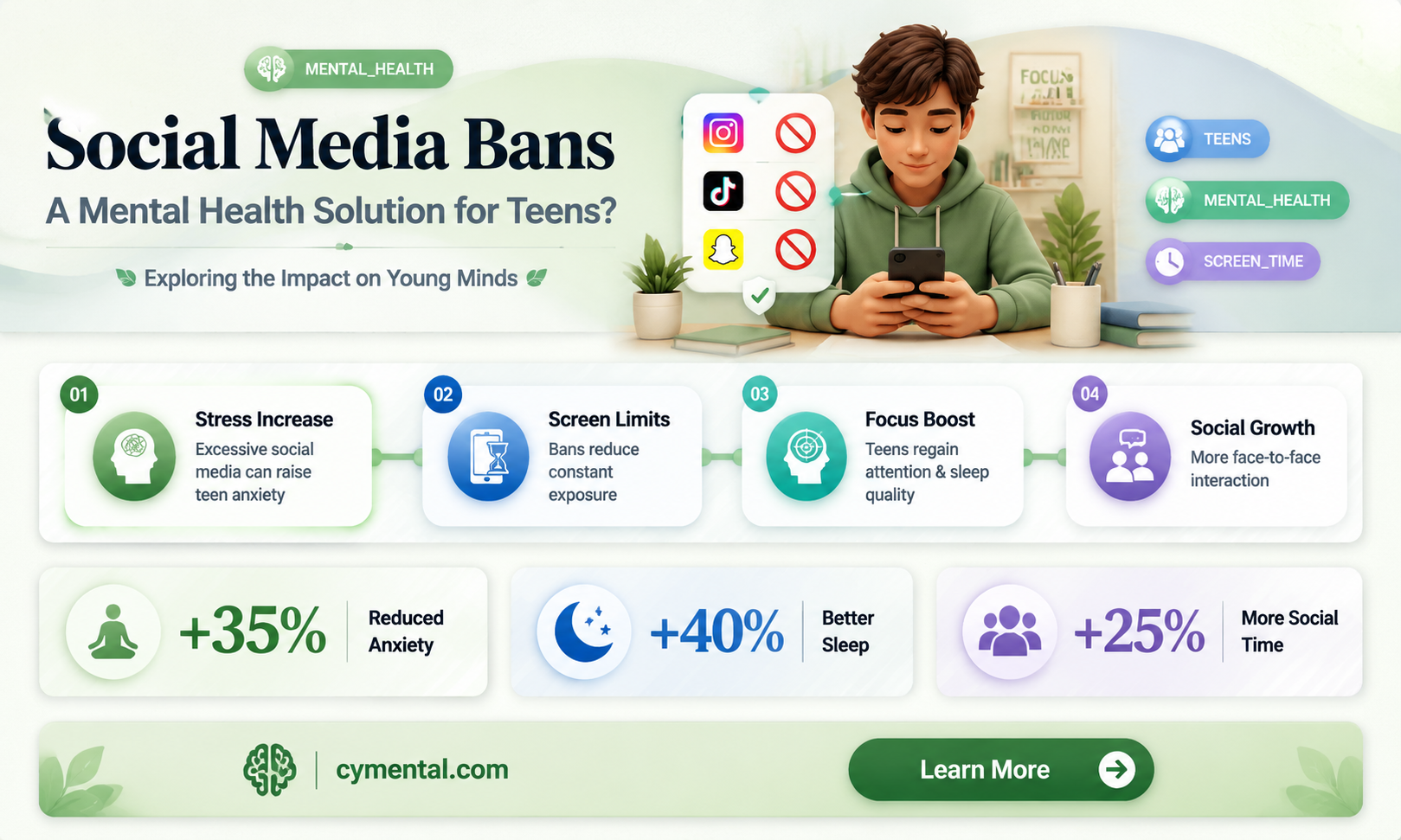
The debate over whether banning social media can improve teens' mental health has gained significant traction in recent years, as studies increasingly link excessive social media use to issues like anxiety, depression, and low self-esteem among adolescents. Proponents argue that removing these platforms could reduce exposure to cyberbullying, unrealistic comparisons, and addictive behaviors, fostering healthier habits and emotional well-being. However, critics contend that outright bans may alienate teens, hinder their social connections, and fail to address the root causes of mental health challenges, suggesting that education, moderation, and parental guidance might be more effective solutions. As society grapples with this complex issue, understanding the nuances of social media's impact on teens remains crucial for shaping informed policies and interventions.
| Characteristics | Values |
|---|---|
| Impact on Mental Health | Mixed results; some studies show improvement, others show no significant change or worsening. |
| Reduction in Anxiety/Depression | Partial evidence suggests reduced symptoms in some teens after banning social media. |
| Increased Face-to-Face Interaction | Likely increase in offline social interactions, which can positively impact mental health. |
| Improved Sleep Quality | Strong evidence indicates better sleep patterns due to reduced screen time. |
| Decreased Cyberbullying Exposure | Significant reduction in cyberbullying incidents, contributing to better mental well-being. |
| FOMO (Fear of Missing Out) | Initial increase in FOMO, but may decrease over time as teens adapt. |
| Academic Performance | Potential improvement due to reduced distractions and increased focus. |
| Long-Term Effects | Limited data; long-term benefits or drawbacks are not yet fully understood. |
| Individual Variability | Effects vary widely based on personality, existing mental health, and social media usage patterns. |
| Alternative Activities | Increased engagement in hobbies, sports, or creative activities, which can boost mental health. |
| Parental Involvement | Success often depends on parental support and alternative activity encouragement. |
| Digital Literacy | Banning may hinder development of digital skills and online resilience. |
| Social Exclusion Risk | Potential risk of feeling excluded from peer groups if not handled carefully. |
| Policy Effectiveness | Varies; school or household bans may be more effective than national policies. |
| Latest Research (2023) | Studies highlight the need for balanced approaches rather than complete bans. |
Explore related products





What You'll Learn
- Impact of social media usage on teen anxiety and depression levels
- Role of cyberbullying in mental health deterioration among teenagers
- Effects of screen time reduction on sleep quality and mood
- Influence of social comparison on self-esteem and body image issues
- Benefits of offline activities in improving emotional well-being and focus

Impact of social media usage on teen anxiety and depression levels
Excessive social media use among teens has been linked to a 13% increase in depressive symptoms and a 27% rise in anxiety levels, according to a 2021 study published in *JAMA Pediatrics*. These statistics underscore a critical relationship between screen time and mental health, prompting questions about the mechanisms driving this correlation. The constant exposure to curated, idealized versions of peers’ lives fosters unhealthy comparisons, while the addictive nature of likes and comments triggers dopamine-driven feedback loops that can disrupt emotional regulation. Limiting social media usage, therefore, emerges as a potential intervention—but its effectiveness hinges on understanding the nuances of this impact.
Consider the role of cyberbullying, which affects nearly 37% of teens online, as reported by the Cyberbullying Research Center. Unlike traditional bullying, cyberbullying invades safe spaces, with notifications delivering harm directly to a teen’s pocket. This pervasive threat amplifies anxiety, as victims remain in a constant state of vigilance. For instance, a 16-year-old who spends 4+ hours daily on platforms like Instagram or TikTok is twice as likely to experience sleep disturbances, a known precursor to depression. Banning social media could eliminate this exposure, but it risks isolating teens from their primary social ecosystem, highlighting the need for balanced solutions like time limits or content filters.
From a developmental perspective, the adolescent brain is particularly vulnerable to social media’s effects due to its ongoing maturation of the prefrontal cortex, which governs impulse control and emotional processing. A study in *Nature Communications* found that teens who reduced social media use by 50% over three weeks reported a 21% decrease in loneliness and a 15% improvement in self-esteem. This suggests that moderation, rather than a blanket ban, may yield better outcomes. Practical steps include setting device-free zones (e.g., bedrooms, dinner tables) and encouraging offline activities like sports or art, which foster real-world connections and reduce reliance on digital validation.
However, banning social media outright overlooks its benefits, such as community building and access to mental health resources. For LGBTQ+ teens, for example, platforms like TikTok provide vital support networks, with 68% reporting they feel more accepted online than offline, per a 2022 GLAAD survey. Instead of prohibition, educators and parents should focus on digital literacy—teaching teens to critically evaluate content, recognize algorithmic manipulation, and prioritize privacy. Pairing this education with screen time tracking apps (e.g., Screen Time, Freedom) empowers teens to self-regulate, addressing anxiety and depression at their roots without severing digital ties.
Ultimately, the impact of social media on teen mental health is contextual, not categorical. While excessive use exacerbates anxiety and depression, mindful engagement can be neutral or even beneficial. A one-size-fits-all ban ignores individual differences in resilience and dependency, making it a blunt tool for a complex problem. Instead, tailored strategies—combining usage limits, content curation, and offline alternatives—offer a more sustainable path to mitigating harm while preserving the social connections teens crave. The goal should not be elimination but education, transforming social media from a liability into a tool for empowerment.
Move Your Body, Boost Your Mind: Physical Activity's Mental Health Benefits
You may want to see also
Explore related products


Role of cyberbullying in mental health deterioration among teenagers
Cyberbullying, a pervasive issue in the digital age, has become a significant contributor to the mental health deterioration of teenagers. Unlike traditional bullying, cyberbullying transcends physical boundaries, allowing perpetrators to harass victims 24/7 through social media, messaging apps, and online forums. This constant exposure to negativity can lead to severe psychological consequences, including anxiety, depression, and even suicidal ideation. For instance, a 2021 study published in *JAMA Pediatrics* found that adolescents who experienced cyberbullying were twice as likely to report symptoms of depression compared to their peers who were not targeted.
To address this issue, it’s essential to recognize the signs of cyberbullying early. Parents and educators should look for behavioral changes such as increased irritability, withdrawal from social activities, or a sudden disinterest in using devices that were once cherished. Encouraging open communication is key; teenagers often hesitate to report cyberbullying due to fear of losing their digital privileges or being labeled as weak. Implementing a family or school policy that ensures support without punishment can foster trust and encourage victims to speak up.
One practical strategy to mitigate the impact of cyberbullying is to educate teenagers on digital literacy and online safety. Teach them to use privacy settings effectively, block or report abusive users, and think critically about the content they consume and share. Schools can integrate cyberbullying prevention into their curricula, emphasizing empathy and the long-term consequences of online actions. For example, programs like *Common Sense Media’s* digital citizenship courses provide age-appropriate resources for students aged 11–18, equipping them with tools to navigate the digital world responsibly.
While banning social media might seem like a straightforward solution, it overlooks the root cause of the problem. Cyberbullying is a symptom of deeper societal issues, such as a lack of empathy and the misuse of technology. Instead of imposing blanket bans, focus on creating a supportive environment where teenagers feel empowered to address bullying and seek help. For parents, setting boundaries on screen time and monitoring online activity without invading privacy can strike a balance between safety and independence. Ultimately, addressing cyberbullying requires a multifaceted approach that combines education, awareness, and proactive intervention to protect teenagers’ mental well-being.
Gym and Mind: How Physical Fitness Boosts Mental Well-Being
You may want to see also
Explore related products


Effects of screen time reduction on sleep quality and mood
Excessive screen time, particularly before bed, disrupts the body's natural circadian rhythm by suppressing melatonin production. Blue light emitted from devices like smartphones and laptops is the primary culprit, tricking the brain into thinking it’s still daytime. A study published in *Sleep Medicine Reviews* found that adolescents who reduced evening screen time by just one hour experienced a 10-15 minute improvement in sleep onset latency. For teens aged 13-18, capping screen use to 30 minutes before bedtime can significantly enhance sleep quality, allowing for deeper REM cycles and more restorative rest.
Consider this practical strategy: implement a "digital sunset" rule, where all screens are turned off 60 minutes before the intended bedtime. Replace this time with calming activities like reading, journaling, or gentle stretching. Parents can model this behavior by enforcing a household-wide device curfew, ensuring consistency. For teens resistant to change, start with smaller increments—15 minutes initially—and gradually increase the screen-free window. Pairing this with dimming house lights and avoiding bright screens altogether can amplify the benefits, as even brief exposure to blue light can reset the internal clock.
The link between reduced screen time and improved mood is equally compelling. A 2021 study in *JAMA Pediatrics* revealed that teens who cut daily screen time by 50% reported lower levels of anxiety and depression after just two weeks. This improvement is partly due to increased melatonin allowing for better sleep, but also because less time on social media reduces exposure to stressors like cyberbullying, unrealistic comparisons, and information overload. Limiting social media to 30-60 minutes daily, particularly during vulnerable hours like early morning or late evening, can create mental breathing room, fostering a more stable emotional state.
However, abrupt screen time reduction can backfire if not managed thoughtfully. Teens may experience withdrawal symptoms like restlessness or irritability, especially if social media is their primary mode of connection. To mitigate this, encourage alternative social activities like face-to-face hangouts, group sports, or shared hobbies. Apps that track screen time and provide gentle reminders can also help teens stay accountable without feeling policed. The goal isn’t to eliminate screens entirely but to recalibrate their role in daily life, prioritizing mental and physical well-being.
In conclusion, reducing screen time—especially in the evening—is a powerful tool for improving both sleep quality and mood in teens. By understanding the science behind blue light’s impact on circadian rhythms and implementing practical, gradual changes, families can create healthier digital habits. The key is balance: mindful use of technology, paired with intentional offline activities, can lead to measurable improvements in mental health. For teens struggling with sleep or mood disorders, consulting a healthcare professional alongside these adjustments can provide additional tailored support.
Vitamin D and Omega-3: Natural Allies for Mental Health?
You may want to see also
Explore related products


Influence of social comparison on self-esteem and body image issues
Social media platforms are rife with curated images and highlight reels, making them fertile ground for social comparison. Teens, whose identities are still forming, are particularly susceptible. A study published in the *Journal of Adolescent Health* found that adolescents who spent more than three hours daily on social media were at a higher risk of developing body image issues. The constant exposure to idealized bodies and lifestyles fosters an environment where self-worth becomes tethered to external validation, often measured in likes, comments, or followers.
Consider the mechanics of this phenomenon. When a teen scrolls through Instagram and sees peers with seemingly perfect bodies, academic achievements, or social lives, their brain unconsciously compares these images to their own reality. This process, known as upward social comparison, can erode self-esteem over time. For instance, a 14-year-old girl might feel inadequate after seeing a classmate’s vacation photos, even if her own life is objectively fulfilling. The disparity between perception and reality amplifies feelings of inadequacy, creating a cycle of self-doubt.
To mitigate these effects, practical steps can be taken. First, encourage teens to curate their feeds intentionally. Unfollow accounts that trigger negative emotions and replace them with content that promotes diversity and authenticity. Second, set boundaries on screen time. The American Psychological Association recommends limiting social media use to 30 minutes per day for teens struggling with self-esteem issues. Third, foster offline activities that build confidence, such as sports, art, or community service. These activities provide tangible accomplishments that counterbalance the intangible metrics of social media.
However, banning social media outright may not be the solution. A 2021 study in *Computers in Human Behavior* found that forced abstinence from social media can lead to feelings of isolation and FOMO (fear of missing out), exacerbating mental health issues. Instead, focus on teaching media literacy. Help teens understand the manipulation behind filtered photos and sponsored content. By empowering them to critically analyze what they see, you reduce the impact of social comparison on their self-esteem and body image.
Ultimately, the influence of social comparison on teens’ mental health is a nuanced issue. While social media can be a source of inspiration and connection, its darker side lies in the constant pressure to measure up. By combining mindful usage, critical thinking, and offline engagement, teens can navigate this digital landscape without sacrificing their self-worth. The goal isn’t to eliminate social media but to transform it from a tool of comparison into a platform for self-expression and genuine connection.
Supporting Loved Ones: A Guide to Accessing Mental Health Care for Family
You may want to see also
Explore related products


Benefits of offline activities in improving emotional well-being and focus
Excessive screen time has been linked to increased anxiety, depression, and sleep disturbances in teens, but the solution isn’t necessarily a blanket ban on social media. Instead, shifting focus toward offline activities can offer tangible benefits for emotional well-being and focus. Research shows that teens who engage in at least 1–2 hours of structured offline activities daily—such as sports, art, or reading—report lower stress levels and improved mood. These activities provide a break from the constant stimulation of digital platforms, allowing the brain to reset and process emotions more effectively.
Consider the instructive approach: start by replacing one hour of daily screen time with a physical activity like hiking, yoga, or team sports. Physical exertion releases endorphins, which act as natural mood lifters, while the absence of notifications fosters mindfulness. For younger teens (ages 12–14), group activities like community sports or club meetings can enhance social skills and reduce feelings of isolation. Older teens (ages 15–18) might benefit from solitary pursuits like journaling or gardening, which encourage introspection and self-expression without the pressure of online validation.
A comparative analysis reveals that offline activities provide a sense of accomplishment that social media often lacks. For instance, completing a painting or mastering a musical piece offers immediate, tangible results, boosting self-esteem in ways that likes and shares cannot. Unlike the endless scroll of curated content, these activities require focus and patience, training the brain to sustain attention for longer periods. Studies indicate that teens who engage in creative or skill-based hobbies show a 20% improvement in concentration within three months.
To maximize these benefits, create a balanced schedule. Allocate specific times for offline activities, such as 30 minutes of reading before bed or an hour of outdoor play after school. Caution against overloading teens with too many commitments, as this can negate the stress-relieving effects. Instead, encourage them to choose activities they genuinely enjoy, ensuring the experience remains positive and sustainable. By prioritizing offline engagement, teens can cultivate emotional resilience and focus, addressing the root causes of mental health issues rather than merely avoiding social media.
Supporting Loved Ones: Strategies to Assist Those Denying Mental Health Struggles
You may want to see also
Frequently asked questions
Banning social media can have mixed effects. While it may reduce exposure to cyberbullying, unrealistic comparisons, and screen time, it can also lead to feelings of isolation or exclusion if peers remain active online. The impact depends on individual circumstances and the availability of alternative activities.
Yes, setting boundaries, encouraging mindful usage, and promoting offline activities are often more effective than a complete ban. Parental guidance, digital literacy education, and open conversations about online behavior can help teens navigate social media healthily.
No, mental health issues are complex and influenced by multiple factors, including genetics, environment, and social interactions. While reducing social media use may alleviate certain stressors, it is not a comprehensive solution and should be paired with other supportive measures like therapy or counseling.