Madison Cole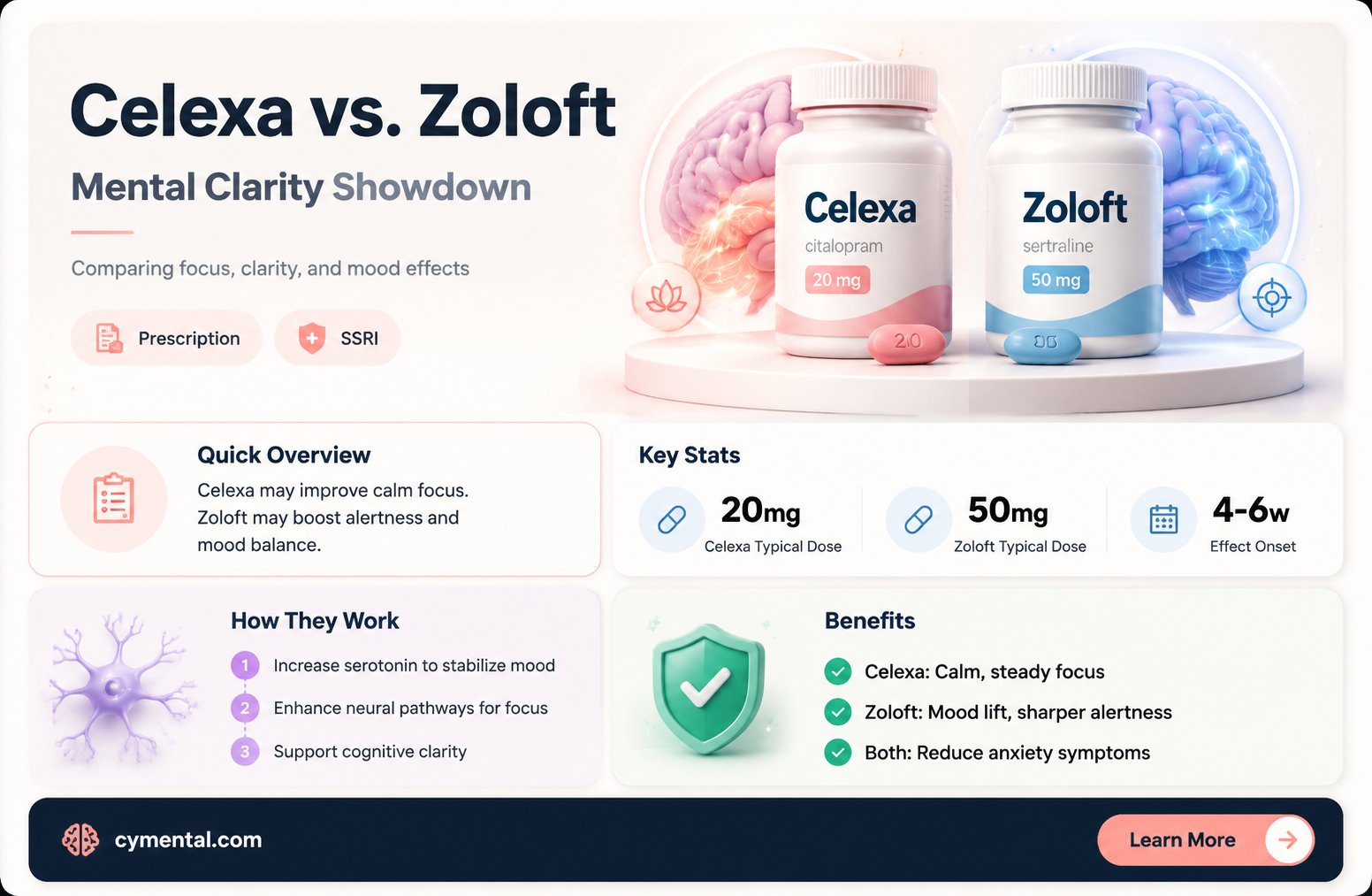
When considering the impact of Celexa (citalopram) and Zoloft (sertraline) on mental clarity, it’s important to understand that both are selective serotonin reuptake inhibitors (SSRIs) primarily prescribed to treat depression and anxiety disorders. While their primary goal is to alleviate symptoms of mood disorders, many users report improvements in focus, concentration, and overall cognitive function as secondary benefits. Celexa is often noted for its calming effects, which can reduce mental fog associated with anxiety, while Zoloft is frequently praised for its ability to enhance motivation and mental sharpness. However, individual responses vary, and factors such as dosage, duration of use, and personal biochemistry play significant roles in determining whether either medication will improve mental clarity. Consulting a healthcare provider is essential to weigh the potential benefits against side effects, such as drowsiness or initial cognitive haze, which can temporarily impair clarity in some users.
| Characteristics | Values |
|---|---|
| Medication Type | Both Celexa (Citalopram) and Zoloft (Sertraline) are selective serotonin reuptake inhibitors (SSRIs). |
| Primary Use | Treatment of depression, anxiety disorders, and other mood disorders. |
| Effect on Mental Clarity | Both medications may improve mental clarity by reducing symptoms of depression and anxiety, which can cloud thinking. However, individual responses vary. |
| Onset of Action | Effects on mental clarity may take 2-4 weeks to become noticeable, as SSRIs require time to build up in the system. |
| Side Effects Impacting Clarity | Common side effects like drowsiness, dizziness, or confusion may temporarily worsen mental clarity, especially during the initial weeks of treatment. |
| Individual Variability | Responses differ; some users report improved focus and clarity, while others may experience no change or initial cognitive fog. |
| Dosage Influence | Higher doses may increase side effects that impair clarity, while optimal dosing can enhance cognitive function by alleviating mood symptoms. |
| Long-Term Effects | Long-term use may lead to sustained improvements in mental clarity for some, but others may develop tolerance or side effects requiring dosage adjustments. |
| Comparison Between Celexa and Zoloft | Zoloft is often considered more activating and may improve energy and focus, while Celexa is generally more sedating, which could impact clarity differently depending on the individual. |
| Medical Consultation | Always consult a healthcare provider to determine which medication is better suited for improving mental clarity based on individual health conditions and symptoms. |
| Latest Research (as of 2023) | Studies suggest SSRIs can improve cognitive function in depressed patients, but direct comparisons between Celexa and Zoloft for mental clarity are limited, emphasizing personalized treatment plans. |
Explore related products


What You'll Learn

Celexa vs. Zoloft: Cognitive Effects
Both Celexa (citalopram) and Zoloft (sertraline) are selective serotonin reuptake inhibitors (SSRIs) commonly prescribed for depression and anxiety disorders. While their primary goal is to alleviate mood symptoms, patients and clinicians often wonder about their impact on cognitive function, particularly mental clarity. The question of whether these medications enhance or hinder focus, concentration, and overall cognitive performance is nuanced, influenced by individual responses, dosage, and the specific condition being treated.
Analyzing the Cognitive Landscape
Celexa and Zoloft primarily target serotonin regulation, a neurotransmitter linked to mood, but serotonin also plays a role in cognitive processes like memory and attention. Studies suggest that SSRIs may improve cognitive function in individuals with depression by alleviating symptoms like rumination and fatigue, which often cloud mental clarity. However, some users report initial side effects such as brain fog or drowsiness, particularly during the first few weeks of treatment. These effects are typically dose-dependent, with higher doses (e.g., Celexa 40 mg or Zoloft 100 mg) more likely to cause cognitive blunting in sensitive individuals.
Practical Considerations for Optimal Clarity
To minimize cognitive side effects, clinicians often start with lower doses—Celexa 10–20 mg or Zoloft 25–50 mg—and gradually titrate upward. Patients should monitor their cognitive response during this period, noting changes in focus, memory, or mental sharpness. For those over 65, lower doses are typically recommended due to increased sensitivity to SSRIs. Pairing medication with cognitive-behavioral therapy (CBT) can also enhance mental clarity by addressing underlying thought patterns that contribute to cognitive fog.
Comparative Insights: Celexa vs. Zoloft
While both medications have similar efficacy in treating depression, Zoloft’s broader range of approved uses (e.g., OCD, PTSD) may make it a preferred choice for patients with comorbid conditions affecting cognition. Celexa, with its more linear pharmacokinetics, may offer a simpler dosing regimen for some individuals. However, Zoloft’s shorter half-life allows for more flexible dosing, which can be advantageous for managing side effects. Anecdotal reports suggest Zoloft may be less likely to cause cognitive dullness, but individual responses vary widely.
Maximizing Mental Clarity: A Tailored Approach
To optimize cognitive effects, patients should communicate openly with their provider about their goals and experiences. Lifestyle factors—adequate sleep, regular exercise, and a balanced diet—can synergize with medication to enhance mental clarity. For those experiencing persistent cognitive side effects, switching between Celexa and Zoloft or exploring alternative SSRIs (e.g., Lexapro) may yield better results. Ultimately, the choice between Celexa and Zoloft should be guided by a personalized assessment of symptoms, side effects, and cognitive priorities.
Mental Health Classes: Empowering Students for Emotional Resilience and Success
You may want to see also
Explore related products




Mental Clarity Improvements with SSRIs
SSRIs like Celexa (citalopram) and Zoloft (sertraline) are primarily prescribed for depression and anxiety, but their impact on mental clarity is a nuanced topic. While not their primary function, these medications can indirectly enhance focus and cognitive function by alleviating symptoms of mood disorders. For instance, reducing anxiety or obsessive thoughts can free up mental bandwidth, allowing for clearer thinking. However, individual responses vary, and some users report initial cognitive side effects, such as brain fog, which often subside within weeks.
To maximize mental clarity improvements, dosage optimization is critical. Celexa is typically started at 10–20 mg daily, while Zoloft begins at 25–50 mg. Adjustments should be made gradually under medical supervision, as higher doses may increase side effects without proportional benefits. Combining SSRIs with cognitive-behavioral therapy (CBT) can further enhance clarity by addressing thought patterns that contribute to mental fog. Patients over 65 may require lower doses due to slower metabolism, while younger adults often tolerate standard ranges well.
A comparative analysis reveals subtle differences between Celexa and Zoloft. Celexa’s shorter half-life (36 hours) may lead to more consistent blood levels but requires stricter adherence to dosing schedules. Zoloft, with a longer half-life (26 hours), offers more flexibility but can cause more pronounced withdrawal symptoms if missed. Anecdotal reports suggest Zoloft may have a slight edge in improving energy and focus, though clinical evidence is limited. Both medications require 4–6 weeks to show full effects, so patience is essential.
Practical tips can amplify SSRIs’ positive impact on mental clarity. Maintaining a consistent sleep schedule, staying hydrated, and reducing caffeine intake can minimize side effects like jitteriness or insomnia. Incorporating mindfulness practices, such as meditation or journaling, can complement the medication’s effects by fostering mental organization. Regular exercise, even 20–30 minutes daily, boosts serotonin production and enhances cognitive function. Tracking mood and focus levels in a journal can help identify patterns and inform dosage adjustments.
Ultimately, while SSRIs like Celexa and Zoloft are not cognitive enhancers per se, they can significantly improve mental clarity by addressing underlying mood disorders. Success hinges on personalized treatment plans, careful dosage management, and lifestyle modifications. Patients should communicate openly with their providers about cognitive changes, as fine-tuning the approach can yield substantial improvements in focus and mental sharpness.
CBD and Mental Health: Exploring Its Potential Benefits and Effects
You may want to see also
Explore related products



Side Effects Impacting Focus
While both Celexa (citalopram) and Zoloft (sertraline) are prescribed to enhance mental clarity by alleviating symptoms of depression and anxiety, their side effects can paradoxically impair focus, particularly during the initial weeks of treatment. For instance, up to 20% of users report drowsiness or fatigue, especially with Celexa, which has a stronger sedative effect at doses above 20 mg/day. This can make concentration difficult, particularly for tasks requiring sustained attention, such as driving or complex problem-solving. To mitigate this, clinicians often recommend taking the medication at bedtime or adjusting the dosage after monitoring the patient’s response for 2–4 weeks.
Another side effect that disrupts focus is cognitive blunting, a phenomenon where emotional numbness or mental fog occurs, particularly with SSRIs like Zoloft. This is more common in younger adults (ages 18–30) and those on higher doses (e.g., 100–200 mg/day). Patients describe feeling "detached" or "mentally slowed," which can hinder productivity and decision-making. Combining these medications with cognitive-behavioral therapy (CBT) or mindfulness practices may help counteract this effect, as these interventions actively engage mental processes rather than relying solely on pharmacological adjustment.
Gastrointestinal side effects, such as nausea or diarrhea, are often overlooked but can significantly distract from mental tasks. Both Celexa and Zoloft can cause these symptoms in the first 1–2 weeks of treatment, particularly if taken on an empty stomach. To minimize this, patients are advised to take the medication with food and stay hydrated. For persistent issues, switching to a different SSRI or adding a probiotic may alleviate discomfort, allowing better focus on daily activities.
Finally, insomnia or vivid dreams, more common with Zoloft, can impair focus by disrupting sleep quality. Studies show that fragmented sleep reduces working memory and attention span by up to 30%. If sleep disturbances persist beyond the initial adjustment period, clinicians may recommend a lower evening dose or adjunctive sleep aids like melatonin (3–5 mg) under supervision. Prioritizing sleep hygiene—such as maintaining a consistent sleep schedule and limiting screen time before bed—can further support mental clarity during treatment.
Seeking Mental Health Support: When and Why It's Essential for You
You may want to see also
Explore related products


User Experiences: Clarity on Medication
User experiences with Celexa (citalopram) and Zoloft (sertraline) often highlight a nuanced journey toward mental clarity, with outcomes varying widely based on individual factors like dosage, age, and pre-existing conditions. For instance, a 30-year-old user on 20 mg of Celexa reported improved focus within 4 weeks, attributing the clarity to reduced anxiety rather than a direct cognitive boost. Conversely, a 45-year-old on 50 mg of Zoloft noted initial brain fog that dissipated after 6 weeks, leading to sustained mental sharpness. These anecdotes suggest that clarity may emerge as a secondary benefit of symptom relief, not as a primary effect of the medication.
Analyzing dosage trends reveals a critical insight: lower doses (e.g., 10–20 mg for Celexa, 25–50 mg for Zoloft) are more frequently associated with mental clarity, particularly in younger adults (ages 18–35). Higher doses, while effective for severe depression or anxiety, sometimes exacerbate cognitive side effects like fatigue or confusion. For example, a 25-year-old on 40 mg of Celexa described feeling "mentally sluggish," whereas a peer on 10 mg praised enhanced productivity. This pattern underscores the importance of titration—starting low and adjusting gradually—to balance symptom management and cognitive function.
Practical tips from users emphasize lifestyle integration for maximizing clarity on these medications. Hydration, consistent sleep, and a balanced diet are frequently cited as complements to treatment. One user shared a routine of taking Zoloft in the morning with breakfast to minimize nausea and pairing it with a 10-minute mindfulness exercise to enhance focus. Another Celexa user recommended tracking mood and cognition daily to identify patterns and discuss adjustments with a provider. Such strategies illustrate how active participation in treatment can amplify the potential for mental clarity.
Comparing the two medications, Zoloft users more often report immediate side effects that temporarily hinder clarity, such as dizziness or headaches, whereas Celexa users tend to experience a smoother onset but slower overall improvement. However, long-term clarity appears comparable between the two, with individual tolerance playing a decisive role. A 50-year-old with generalized anxiety disorder found Zoloft superior for sustained focus, while a 28-year-old with OCD preferred Celexa for its subtler impact on daily functioning. This comparison highlights the need for personalized prescribing based on symptom profile and lifestyle.
In conclusion, achieving mental clarity on Celexa or Zoloft is less about the medication itself and more about the interplay of dosage, age, and proactive self-care. Users who collaborate closely with providers to fine-tune treatment and adopt supportive habits are more likely to experience cognitive benefits. While neither drug guarantees clarity for everyone, the right approach can transform these medications from symptom managers to tools for enhanced mental acuity.
Microdosing Acid: A Potential Ally in Mental Health Treatment?
You may want to see also
Explore related products



Dosage and Clarity Outcomes
The relationship between dosage and mental clarity when using Celexa (citalopram) or Zoloft (sertraline) is nuanced, as individual responses to these SSRIs vary significantly. Generally, both medications are started at lower doses to minimize side effects and gradually adjusted to achieve therapeutic benefits. For Celexa, the initial dose is often 10–20 mg daily, while Zoloft typically begins at 25–50 mg daily. Mental clarity improvements are not immediate; they may take 4–6 weeks to manifest as the brain adjusts to the medication. However, higher doses do not always equate to better clarity—in fact, excessive dosages can exacerbate symptoms like fatigue or confusion, counteracting the desired cognitive benefits.
For optimal clarity outcomes, dosage adjustments should be guided by a healthcare provider, who will consider factors like age, weight, and severity of symptoms. For instance, older adults may require lower doses due to slower metabolism, while younger adults with severe anxiety might need higher doses to achieve stability. A common strategy is to start low and titrate upward in 10–25 mg increments every 1–2 weeks, monitoring for side effects and cognitive improvements. Patients should communicate any changes in mental clarity—whether positive or negative—to their provider, as this feedback is critical for fine-tuning the dosage.
Comparing the two, Zoloft’s dosage flexibility (up to 200 mg daily) allows for more incremental adjustments, which can be advantageous for finding the "sweet spot" that enhances clarity without side effects. Celexa, with a maximum recommended dose of 40 mg daily, may offer fewer options for titration but is often preferred for its lower risk of drug interactions. For example, a 35-year-old with moderate depression might start on 20 mg of Celexa and increase to 30 mg after 4 weeks if clarity remains suboptimal, whereas a 25-year-old with anxiety might begin on 50 mg of Zoloft and stay at that dose if it provides both emotional and cognitive relief.
Practical tips for maximizing clarity outcomes include taking the medication at the same time daily to maintain stable blood levels, avoiding alcohol (which can dull cognitive effects), and pairing medication with cognitive-behavioral therapy for synergistic benefits. Patients should also track their symptoms using a journal or app to identify patterns between dosage changes and mental clarity. For instance, noting whether a 50 mg dose of Zoloft improves focus during work tasks but causes evening drowsiness can help providers make informed adjustments. Ultimately, the goal is not just symptom reduction but achieving a dosage that enhances daily functioning and cognitive sharpness.
Supporting Veterans: Strategies to Address Mental Health Challenges Effectively
You may want to see also
Frequently asked questions
Celexa (citalopram) is primarily an antidepressant that works by increasing serotonin levels. While it can improve mood and reduce anxiety, its direct impact on mental clarity varies among individuals. Some users report better focus, while others may experience initial cognitive side effects like drowsiness.
Zoloft (sertraline) is another SSRI that targets serotonin. It often helps with symptoms of depression and anxiety, which can indirectly improve mental clarity by reducing mental fog. However, individual responses differ, and some may experience temporary cognitive side effects.
Neither Celexa nor Zoloft is specifically designed to enhance mental clarity, but both can improve it by alleviating symptoms of depression or anxiety. The choice depends on individual tolerance and response, as some may find one works better than the other.
Yes, both medications can cause side effects like drowsiness, dizziness, or difficulty concentrating, especially when starting treatment. These effects are usually temporary, but if they persist, consult a healthcare provider for adjustments.