Ava Ramirez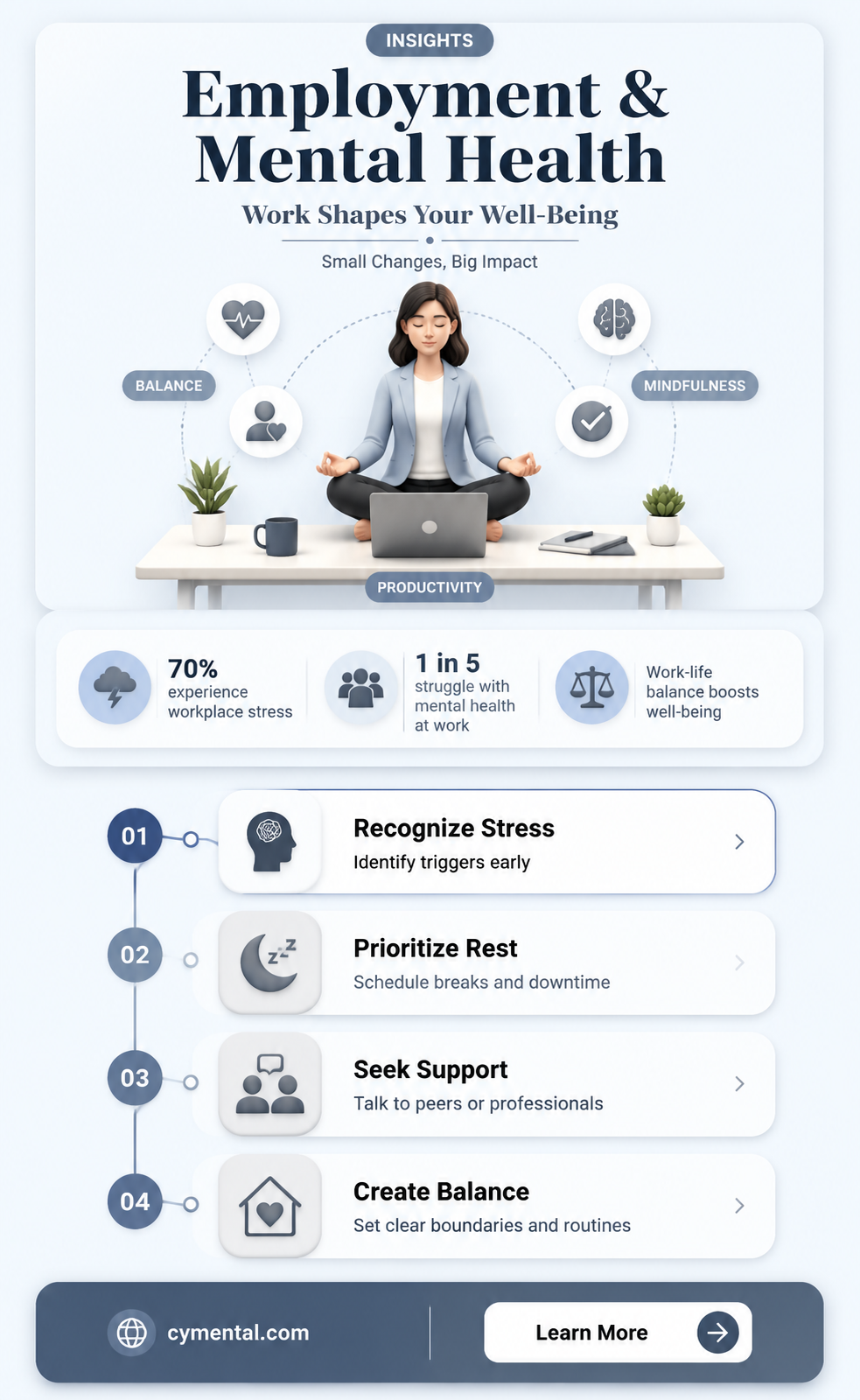
Having a job can significantly impact mental health, often serving as a double-edged sword. On one hand, employment provides structure, purpose, and financial stability, which can boost self-esteem and reduce feelings of worthlessness or anxiety. Social interactions at work can also combat loneliness and foster a sense of belonging. On the other hand, high-stress environments, long hours, or toxic workplace cultures can exacerbate mental health issues like burnout, depression, or anxiety. Ultimately, the relationship between work and mental health depends on factors such as job satisfaction, work-life balance, and individual resilience, making it essential to prioritize mental well-being in professional settings.
Explore related products


What You'll Learn
- Structure & Routine: Jobs provide daily schedules, reducing anxiety and giving a sense of purpose
- Social Interaction: Work fosters connections, combating loneliness and promoting emotional well-being
- Financial Stability: Earning income reduces stress, improving mental health through security
- Achievement & Growth: Job accomplishments boost self-esteem and confidence, positively impacting mental health
- Distraction & Focus: Work shifts focus from negative thoughts, offering mental relief

Structure & Routine: Jobs provide daily schedules, reducing anxiety and giving a sense of purpose
Human brains thrive on predictability, a fact backed by neuroscience. Our brains are pattern-seeking machines, constantly trying to anticipate and prepare for what's next. A job, with its inherent structure and routine, provides this predictability. Knowing what tasks need to be done, when meetings are scheduled, and what deadlines loom offers a sense of control, a powerful antidote to the anxiety that stems from uncertainty.
Imagine a day without structure: waking up without an alarm, aimlessly scrolling through social media, and wondering how to fill the endless hours. This lack of routine can lead to a sense of aimlessness and heightened anxiety, as the brain struggles to find its footing in a seemingly chaotic world.
The power of routine extends beyond mere predictability. It fosters a sense of purpose, a fundamental human need. Having a job, regardless of its nature, provides a reason to get out of bed in the morning, a contribution to make, and a role to fulfill. This sense of purpose is a cornerstone of mental well-being, combating feelings of worthlessness and existential dread. Studies have shown that individuals with a strong sense of purpose exhibit lower levels of stress, depression, and anxiety.
For example, consider a barista. While the job may seem mundane to some, the routine of crafting beverages, interacting with customers, and contributing to a bustling cafe environment provides a sense of structure and purpose. The simple act of mastering latte art or remembering a regular customer's order can instill a sense of accomplishment and belonging.
However, it's crucial to acknowledge that not all jobs are created equal in terms of their impact on mental health. A rigid, overly demanding schedule can become a source of stress rather than a source of stability. The key lies in finding a balance between structure and flexibility. Jobs that offer some degree of autonomy, allowing individuals to manage their time and tasks within the framework of a routine, tend to be the most beneficial for mental well-being.
To maximize the positive impact of job-related structure on mental health, consider these practical tips:
- Negotiate flexible hours: If possible, discuss options for flexible start and end times or compressed workweeks to better align your schedule with your natural rhythm.
- Prioritize self-care within your routine: Incorporate activities like exercise, meditation, or hobbies into your daily or weekly schedule.
- Set boundaries: Establish clear boundaries between work and personal time to prevent burnout and maintain a sense of control.
- Seek support: If job-related stress becomes overwhelming, don't hesitate to seek professional help or utilize employee assistance programs.
Running for Mental Health: How Lacing Up Boosts Your Mind
You may want to see also
Explore related products


$19.99 $19.99


Social Interaction: Work fosters connections, combating loneliness and promoting emotional well-being
Human beings are inherently social creatures, and our mental health thrives on meaningful connections. Work, often seen as a necessity for financial stability, also serves as a powerful platform for social interaction, combating loneliness, and fostering emotional well-being.
Consider the daily interactions at work: casual conversations by the coffee machine, collaborative meetings, or even shared complaints about a challenging project. These seemingly mundane exchanges contribute to a sense of belonging and community, crucial for mental health. Research consistently shows that social isolation and loneliness are significant risk factors for depression, anxiety, and even cognitive decline. Conversely, strong social connections are linked to increased happiness, resilience, and overall well-being.
A study published in the *Journal of Occupational Health Psychology* found that employees who reported higher levels of social support at work experienced lower levels of stress and burnout. This support can come from colleagues, supervisors, or even informal mentorship relationships. For example, a new employee feeling overwhelmed by a complex task might find solace and guidance from a more experienced coworker, reducing anxiety and boosting confidence.
However, it's important to note that not all work environments are created equal. Toxic workplaces characterized by bullying, harassment, or excessive competition can have the opposite effect, exacerbating feelings of isolation and negatively impacting mental health. Therefore, fostering a positive and supportive work culture is essential for maximizing the mental health benefits of social interaction in the workplace. This includes encouraging open communication, promoting teamwork, and providing resources for conflict resolution.
Additionally, the nature of work itself can influence the quality of social interactions. Jobs that involve teamwork, customer service, or community engagement naturally provide more opportunities for social connection. Even in more solitary roles, creating opportunities for interaction, such as regular team lunches or virtual coffee breaks, can make a significant difference.
Ultimately, recognizing the role of work as a social hub allows us to leverage it as a tool for improving mental health. By fostering positive work environments and encouraging meaningful interactions, we can create workplaces that not only contribute to our financial well-being but also nurture our emotional health and sense of belonging.
Medications for Mental Illness: A Helpful Treatment or Not?
You may want to see also
Explore related products


Financial Stability: Earning income reduces stress, improving mental health through security
Financial stability, achieved through consistent income, acts as a buffer against the corrosive effects of stress. Research from the American Psychological Association highlights that financial stress is a leading cause of anxiety and depression, with 72% of Americans reporting feeling stressed about money at least once in the past month. When individuals secure a steady paycheck, they gain the ability to meet basic needs—housing, food, healthcare—without the constant worry of scarcity. This predictability reduces the body’s stress response, lowering cortisol levels and fostering a sense of control over one’s life. For example, a study published in *Social Science & Medicine* found that individuals with stable incomes reported 30% lower stress levels compared to those living paycheck to paycheck.
To harness the mental health benefits of financial stability, start by creating a budget that aligns income with expenses. Allocate 50% of earnings to necessities, 30% to discretionary spending, and 20% to savings or debt repayment—a framework known as the 50/30/20 rule. This structured approach not only ensures financial security but also provides a psychological safety net. For instance, having an emergency fund equivalent to three to six months’ worth of living expenses can significantly reduce anxiety during unexpected financial setbacks. Practical tools like budgeting apps (e.g., Mint or YNAB) can simplify this process, making it easier to track progress and maintain stability.
Compare the mental health outcomes of individuals with and without financial stability to underscore its impact. A person earning a modest but consistent income often reports higher life satisfaction than someone earning more but living in financial uncertainty. This is because stability, not just the amount of income, is the key factor in reducing stress. For example, a teacher with a predictable salary may experience less mental strain than a freelancer earning twice as much but facing irregular cash flow. The takeaway? Prioritize jobs that offer steady income over those with higher earning potential but greater volatility.
Persuasively, employers and policymakers can play a role in enhancing mental health through financial stability initiatives. Companies that offer living wages, benefits, and financial wellness programs contribute to employees’ mental well-being. For instance, a study by the Harvard Business Review found that employees with access to financial planning resources reported 25% lower stress levels. Governments can also intervene by implementing policies like minimum wage increases or affordable housing programs, which directly address financial stressors. By advocating for such measures, individuals can amplify the mental health benefits of financial stability beyond personal efforts.
In conclusion, earning income isn’t just about affording life’s necessities—it’s about building a foundation of security that shields mental health from the relentless pressures of uncertainty. By adopting practical financial strategies, prioritizing stability over volatility, and supporting systemic changes, individuals can transform their economic situation into a powerful tool for mental well-being. The link between financial stability and reduced stress is clear; the challenge lies in making it a reality for all.
Daily Exercise: A Powerful Tool to Prevent Mental Illness?
You may want to see also
Explore related products


Achievement & Growth: Job accomplishments boost self-esteem and confidence, positively impacting mental health
Accomplishments at work act as tangible proof of one's abilities, serving as milestones that reinforce self-worth. Completing a challenging project, mastering a new skill, or receiving recognition from peers or superiors triggers the brain's reward system, releasing dopamine—a neurotransmitter linked to pleasure and motivation. This biochemical response not only enhances mood but also fosters a sense of competence. For instance, a study published in the *Journal of Occupational Health Psychology* found that employees who experienced regular task-related achievements reported higher levels of self-esteem and lower levels of anxiety compared to those who did not. Such achievements create a positive feedback loop: success breeds confidence, which in turn fuels further effort and ambition.
Consider the case of a software developer who spends months debugging a complex code. When the issue is finally resolved, the sense of accomplishment is immediate and profound. This victory not only validates their technical skills but also strengthens their belief in their problem-solving abilities. Over time, these small wins accumulate, shaping a resilient mindset that views challenges as opportunities rather than threats. Practical tip: Keep a "success journal" to document work achievements, no matter how minor. Reflecting on these entries during moments of self-doubt can serve as a powerful reminder of one's capabilities.
However, the link between job accomplishments and mental health is not automatic; it requires intentionality. For maximum benefit, individuals must internalize their successes rather than attributing them to external factors like luck or assistance. Cognitive reframing techniques can help here. For example, instead of thinking, "I finished this report because my colleague helped me," reframe it as, "I successfully collaborated with my team to complete this report." This shift in perspective ensures that achievements are perceived as personal victories, bolstering self-esteem. Caution: Avoid setting perfectionist standards, as this can undermine the positive impact of accomplishments by creating unattainable goals.
Comparatively, individuals without structured opportunities for achievement—such as the unemployed or those in unfulfilling roles—often report higher levels of depression and lower self-worth. A 2018 study by the American Psychological Association highlighted that 63% of unemployed participants experienced significant declines in self-esteem within six months of job loss. This underscores the importance of roles that offer measurable goals and recognition. For those in jobs with limited growth opportunities, creating personal benchmarks—such as learning a new tool or mentoring a colleague—can simulate the achievement dynamic, providing similar mental health benefits.
In conclusion, job accomplishments are not merely career advancements; they are vital nutrients for mental well-being. By setting realistic goals, celebrating progress, and internalizing successes, individuals can harness the esteem-building power of work. For optimal results, aim for at least one measurable achievement per week, whether it’s completing a task ahead of schedule or receiving positive feedback. Over time, this practice cultivates a robust sense of self-efficacy, transforming professional growth into a cornerstone of mental resilience.
Transgender Surgery: Impact on Mental Health and Well-Being Explored
You may want to see also
Explore related products




Distraction & Focus: Work shifts focus from negative thoughts, offering mental relief
Work demands attention, and this very act of focusing on tasks can act as a powerful distraction from negative thought patterns. When absorbed in a project, solving a problem, or simply completing routine duties, the mind is less likely to wander into anxious rumination or depressive loops. This cognitive shift is not merely a temporary escape; it’s a therapeutic mechanism. Studies suggest that structured activities, like those found in a job, can reduce symptoms of anxiety and depression by up to 30% in individuals who engage consistently. The key lies in the balance: enough challenge to hold interest, but not so much as to overwhelm. For instance, a graphic designer might find solace in the meticulous process of aligning elements, while a teacher could focus on lesson planning, both tasks redirecting mental energy away from stressors.
However, not all work provides equal mental relief. The type of focus required matters. Jobs that encourage *flow state*—a mental state of complete immersion—are particularly effective. This occurs when the challenge level of a task matches one’s skill level, creating a sense of control and accomplishment. For example, a programmer debugging code or a gardener pruning plants can enter this state, where time seems to disappear and worries fade into the background. To maximize this benefit, assess your daily tasks: which activities allow you to lose yourself in the process? Prioritize these, even if they’re smaller components of your role. A practical tip: break larger tasks into manageable steps, each with a clear goal, to increase the likelihood of achieving flow.
Contrast this with jobs that demand attention but offer little satisfaction, such as repetitive, low-autonomy tasks. These can feel draining rather than distracting, exacerbating mental fatigue. For instance, a customer service representative handling endless complaints might find their focus shifts from the task to their own frustration, amplifying negative thoughts. If this is your situation, introduce micro-distractions within the workday: a 5-minute stretch, a quick journal entry, or a brief walk. These act as mental resets, preventing the accumulation of stress. Additionally, advocate for task variety if possible, or seek out extracurricular activities that provide the focus-shifting benefits your job lacks.
The timing and duration of work also play a role. For individuals aged 18–35, who often report higher levels of anxiety, a structured 6–8 hour workday can provide a healthy rhythm, breaking up periods of isolation or overthinking. However, overworking negates this benefit; studies show that exceeding 55 hours per week increases the risk of mental health decline by 33%. For older adults, part-time work or volunteer roles can offer similar focus-shifting advantages without burnout. The takeaway: treat work as a tool, not a cure-all. Pair it with other mental health strategies, like mindfulness or therapy, for a holistic approach. By understanding how work interacts with your mind, you can harness its potential to provide not just income, but mental respite.
Canine Companions: How Dogs Support Mental Health and Well-being
You may want to see also
Frequently asked questions
Yes, having a job can improve mental health by providing structure, purpose, and social interaction, which are key factors in reducing feelings of loneliness and increasing self-esteem.
Yes, excessive work-related stress can negatively impact mental health, leading to anxiety, burnout, or depression if not managed properly.
A job provides a sense of purpose by giving individuals goals to work toward and accomplishments to be proud of, which can boost self-worth and confidence.
Jobs that align with personal interests, offer work-life balance, and provide supportive environments tend to be better for mental health, as they reduce stress and increase satisfaction.
Yes, unemployment can worsen mental health by increasing feelings of hopelessness, financial stress, and social isolation, which may contribute to anxiety or depression.