Harper Lewis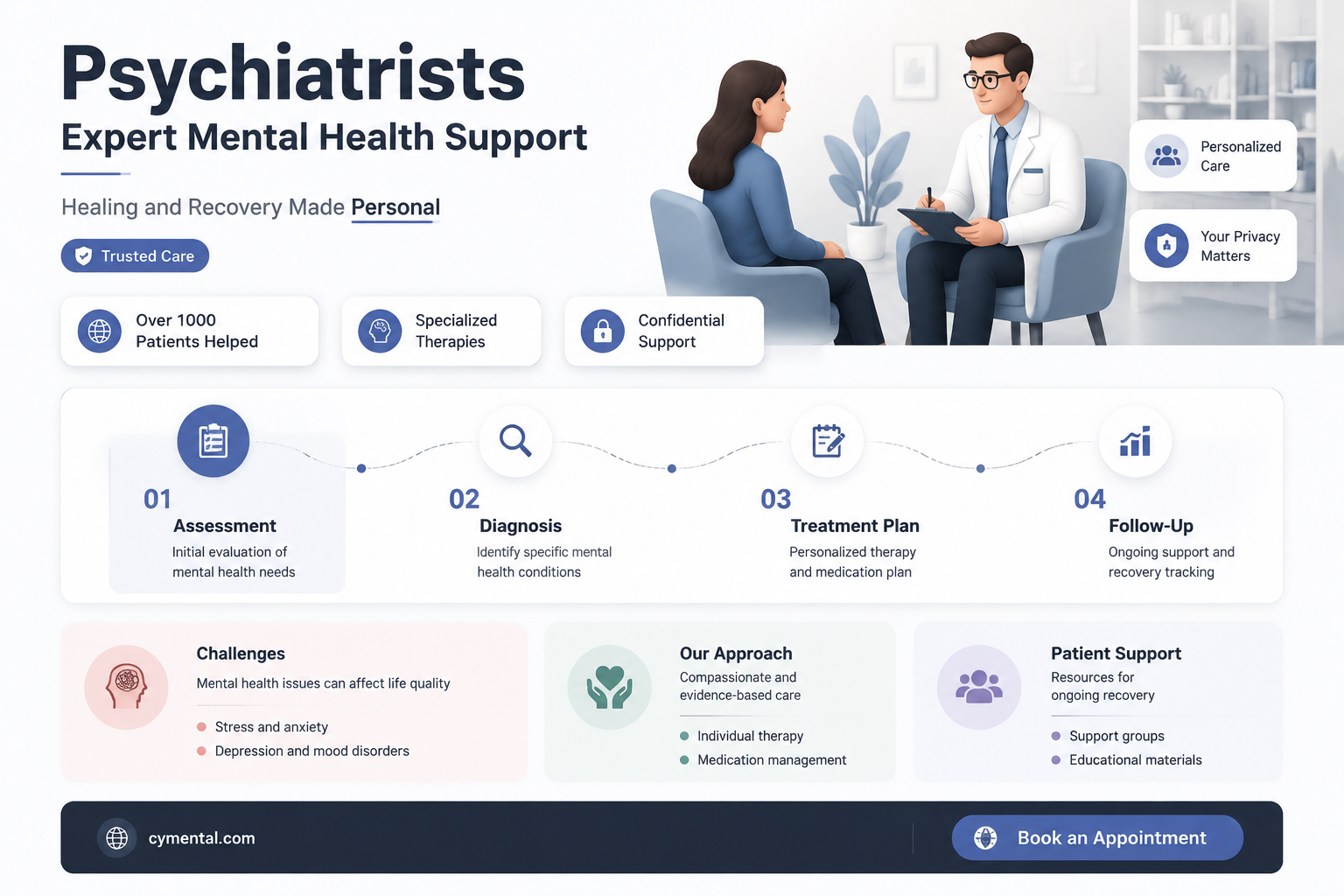
A psychiatrist plays a crucial role in addressing and improving mental health by offering specialized expertise in diagnosing, treating, and managing a wide range of mental health conditions. Unlike therapists or counselors, psychiatrists are medical doctors who can prescribe medications, making them uniquely equipped to handle complex cases that may require a combination of pharmacological and therapeutic interventions. They assess patients through comprehensive evaluations, considering biological, psychological, and social factors to develop personalized treatment plans. Beyond medication, psychiatrists often provide psychotherapy, collaborate with other healthcare professionals, and educate patients about their conditions, empowering them to achieve better mental well-being and overall quality of life. Their holistic approach ensures that individuals receive tailored care to navigate challenges such as depression, anxiety, bipolar disorder, and more, fostering long-term recovery and resilience.
| Characteristics | Values |
|---|---|
| Diagnosis | Psychiatrists assess and diagnose mental health conditions using clinical interviews and tools. |
| Medication Management | Prescribe and monitor medications to treat mental health disorders (e.g., antidepressants, antipsychotics). |
| Therapy | Provide evidence-based therapies like Cognitive Behavioral Therapy (CBT) or psychodynamic therapy. |
| Crisis Intervention | Offer immediate support during mental health crises, such as suicidal ideation or severe anxiety. |
| Long-Term Treatment Planning | Develop personalized treatment plans for chronic mental health conditions. |
| Collaboration with Other Professionals | Work with psychologists, social workers, and primary care physicians for comprehensive care. |
| Education and Support | Educate patients and families about mental health conditions and coping strategies. |
| Hospitalization and Inpatient Care | Admit and manage patients requiring intensive treatment in psychiatric hospitals. |
| Preventive Care | Identify risk factors and implement strategies to prevent mental health issues. |
| Research and Innovation | Stay updated on the latest treatments and contribute to mental health research. |
| Legal and Ethical Guidance | Provide expert opinions in legal cases involving mental health and ensure ethical practice. |
| Telepsychiatry | Offer remote mental health services via video or phone consultations. |
| Cultural Sensitivity | Tailor treatment to consider cultural, social, and personal backgrounds of patients. |
| Rehabilitation | Assist in recovery and reintegration into daily life for patients with severe mental illness. |
Explore related products


What You'll Learn
- Diagnosis and Assessment: Identifying mental health conditions through evaluations and diagnostic tools
- Therapy and Counseling: Providing talk therapy to address emotional and psychological issues
- Medication Management: Prescribing and monitoring medications to treat mental health disorders
- Crisis Intervention: Offering immediate support during mental health emergencies or crises
- Long-Term Treatment Plans: Developing personalized strategies for ongoing mental health care and recovery

Diagnosis and Assessment: Identifying mental health conditions through evaluations and diagnostic tools
Psychiatrists are uniquely trained to diagnose mental health conditions, a critical first step toward effective treatment. Unlike general practitioners, they employ a combination of clinical interviews, psychological assessments, and diagnostic criteria outlined in manuals like the *Diagnostic and Statistical Manual of Mental Disorders (DSM-5)* or *International Classification of Diseases (ICD-11)*. These tools ensure accuracy and consistency, distinguishing between conditions with overlapping symptoms, such as anxiety and bipolar disorder, which may present with restlessness but differ in duration, intensity, and episodic nature.
Consider the process as a detective’s investigation. A psychiatrist begins with a thorough clinical interview, probing into symptoms, duration, and impact on daily life. For instance, a patient reporting persistent sadness might be asked about sleep patterns, appetite changes, and suicidal thoughts—key indicators for major depressive disorder. This is often paired with standardized assessments like the *Patient Health Questionnaire-9 (PHQ-9)* for depression or the *Generalized Anxiety Disorder-7 (GAD-7)* for anxiety, which quantify symptom severity. For children, tools like the *Achenbach System of Empirically Based Assessment (ASEBA)* are tailored to developmental stages, ensuring age-appropriate evaluation.
While these tools are powerful, their application requires caution. Over-reliance on self-report measures can lead to biases, such as patients underreporting symptoms due to stigma or overreporting to seek medication. Psychiatrists must cross-reference findings with collateral information from family members or medical records. For example, a teenager’s self-reported “mood swings” might be clarified by a parent’s observation of manic episodes, pointing toward bipolar disorder rather than adolescent angst.
Technology is increasingly aiding diagnosis. Neuroimaging, though not diagnostic on its own, can rule out organic causes like tumors. Wearable devices tracking sleep and activity patterns provide objective data to supplement subjective reports. However, these advancements are adjuncts, not replacements, for the psychiatrist’s expertise. A skilled clinician interprets data within context, recognizing that a PHQ-9 score of 15 (indicating severe depression) in a new mother might reflect postpartum depression rather than chronic illness.
Ultimately, diagnosis is not a label but a roadmap. Accurate identification of conditions like schizophrenia, PTSD, or ADHD enables tailored interventions—medication, therapy, or lifestyle adjustments. For instance, a diagnosis of ADHD in adults might lead to stimulant medication (e.g., methylphenidate 10–60 mg/day) paired with cognitive-behavioral therapy. Without precise assessment, treatment remains a shot in the dark. Thus, the psychiatrist’s role in diagnosis is foundational, transforming vague distress into actionable understanding.
The Power of Friendship: How Friends Support Mental Health
You may want to see also
Explore related products


Therapy and Counseling: Providing talk therapy to address emotional and psychological issues
Psychiatrists often serve as the architects of mental health recovery, leveraging therapy and counseling as foundational tools. Unlike medication, which targets biochemical imbalances, talk therapy addresses the intricate tapestry of thoughts, emotions, and behaviors that underlie psychological distress. Through structured conversations, psychiatrists guide patients in exploring past experiences, identifying maladaptive patterns, and developing coping strategies. This process is not merely about venting; it’s a collaborative effort to reframe perspectives, build resilience, and foster emotional regulation. For instance, cognitive-behavioral therapy (CBT) helps patients challenge negative thought cycles, while psychodynamic therapy delves into unconscious processes to resolve deep-seated conflicts.
Consider a 35-year-old professional struggling with anxiety and perfectionism. In weekly 50-minute sessions, a psychiatrist might use CBT techniques to help them track anxiety triggers, reframe catastrophic thinking, and practice graded exposure to feared situations. Over 12–16 sessions, measurable improvements in functioning and mood are often observed. This example underscores the specificity and adaptability of talk therapy—it’s not one-size-fits-all. Psychiatrists tailor approaches based on the patient’s age, cultural background, and the nature of their struggles, ensuring relevance and efficacy.
While therapy is powerful, it’s not without challenges. Patients must commit time and emotional energy, often confronting uncomfortable truths. Progress can be nonlinear, with setbacks testing motivation. Psychiatrists mitigate these risks by setting realistic expectations, providing homework (e.g., journaling or mindfulness exercises), and fostering a nonjudgmental environment. For adolescents, family involvement may be crucial, as seen in modalities like family systems therapy, which addresses relational dynamics contributing to mental health issues.
The evidence supporting talk therapy is robust. Meta-analyses show that CBT reduces symptoms of depression and anxiety by 50–60% in adults, comparable to medication efficacy but with lasting benefits post-treatment. For conditions like PTSD, trauma-focused therapies (e.g., EMDR) yield significant symptom reduction in 8–12 sessions. However, therapy’s success hinges on the therapeutic alliance—the trust and collaboration between patient and psychiatrist. Without this, even the most evidence-based techniques fall flat.
Incorporating therapy into mental health care requires pragmatism. Sessions typically occur weekly or biweekly, with frequency adjusted based on severity. Group therapy offers a cost-effective alternative, particularly for social anxiety or addiction, where peer support enhances outcomes. Digital platforms have expanded access, though in-person sessions remain ideal for complex cases. Ultimately, therapy is not a quick fix but a transformative journey, equipping individuals with tools to navigate life’s challenges long after treatment ends.
Are Mental Health Diagnoses Helpful? Exploring Benefits and Limitations
You may want to see also
Explore related products




Medication Management: Prescribing and monitoring medications to treat mental health disorders
Psychiatric medication management is a cornerstone of treatment for many mental health disorders, offering relief to those who may not respond to therapy alone. Psychiatrists, as medical doctors, are uniquely qualified to prescribe and adjust medications, tailoring dosages to individual needs. For instance, selective serotonin reuptake inhibitors (SSRIs) like fluoxetine (Prozac) are commonly prescribed for depression and anxiety, often starting at 20 mg daily for adults, with adjustments based on response and side effects. This precision in prescribing ensures that patients receive the maximum benefit with minimal risk.
Effective medication management involves more than writing a prescription. Psychiatrists monitor patients regularly to assess efficacy and side effects, making adjustments as needed. For example, a patient on lithium for bipolar disorder requires frequent blood tests to ensure therapeutic levels (0.8–1.0 mEq/L) and avoid toxicity. This ongoing oversight is critical, as mental health medications often take weeks to show full effects, and side effects may emerge over time. Without such monitoring, patients risk under- or over-treatment, potentially worsening their condition.
While medication can be transformative, it is not without challenges. Adherence is a common issue, particularly among adolescents and young adults, who may struggle with the stigma of taking psychiatric drugs or dislike side effects like weight gain or drowsiness. Psychiatrists address this by educating patients about the importance of consistency and exploring alternatives, such as long-acting injectables for schizophrenia, which eliminate the need for daily pills. Practical tips, like pairing medication with a daily routine (e.g., taking it with breakfast), can also improve compliance.
Comparatively, medication management stands apart from other treatments like psychotherapy by directly altering brain chemistry. For severe conditions like major depressive disorder with psychotic features, antipsychotics such as olanzapine may be added to an SSRI regimen, demonstrating the layered approach psychiatrists use. However, this method is not one-size-fits-all; cultural beliefs, medical history, and patient preferences play a role. For instance, older adults may metabolize drugs differently, requiring lower doses to avoid adverse effects, while pregnant individuals may need to avoid certain medications altogether.
In conclusion, medication management is a dynamic, patient-centered process that requires expertise, empathy, and vigilance. By prescribing appropriate medications, monitoring their effects, and addressing barriers to adherence, psychiatrists empower individuals to manage their mental health effectively. This approach, while not a cure-all, offers a vital tool in the broader toolkit of mental health treatment, often providing stability that enables patients to engage more fully in therapy and daily life.
Beyond Reach: Can Some Minds Resist Mental Health Treatment?
You may want to see also
Explore related products


Crisis Intervention: Offering immediate support during mental health emergencies or crises
In moments of acute mental distress, every second counts. Crisis intervention by a psychiatrist can be the lifeline that prevents a situation from escalating into irreversible harm. Unlike standard therapy sessions, crisis intervention is immediate, focused, and action-oriented. Psychiatrists trained in this area assess the severity of the crisis—whether it’s suicidal ideation, severe anxiety, or psychotic episodes—and deploy evidence-based strategies to stabilize the individual. This might include de-escalation techniques, medication adjustments, or referrals to emergency services. The goal is clear: to restore safety and create a pathway to longer-term care.
Consider a 28-year-old experiencing a panic attack so severe they believe they’re having a heart attack. A psychiatrist in this scenario would first validate the individual’s fear, then employ grounding techniques—such as 4-7-8 breathing (inhale for 4 seconds, hold for 7, exhale for 8)—to reduce physiological symptoms. Simultaneously, they’d assess for underlying conditions like generalized anxiety disorder or PTSD. This dual approach—immediate relief paired with a diagnostic lens—exemplifies the psychiatrist’s role in crisis intervention. For children or adolescents, age-appropriate interventions, such as distraction techniques or parental involvement, are critical to avoid retraumatization.
One common misconception is that crisis intervention is solely about talk therapy. In reality, psychiatrists often prescribe short-term medications, such as low-dose benzodiazepines (e.g., 0.5 mg of lorazepam for acute anxiety), to manage immediate symptoms. However, this is done judiciously, balancing the need for rapid relief against risks like dependency. For instance, a single dose of intramuscular olanzapine (10 mg) might be used in cases of acute agitation, but only under strict monitoring. The takeaway: medication in crisis settings is a tool, not a cure, and is always paired with psychoeducation and follow-up planning.
Critics argue that crisis intervention is reactive rather than preventive, but this overlooks its role in disrupting cycles of despair. For someone on the brink of self-harm, a psychiatrist’s intervention can shift their trajectory from crisis to recovery. Take the case of a college student who texts a crisis hotline after a breakup triggers suicidal thoughts. A psychiatrist might use the Safety Planning Intervention, a 6-step protocol that includes identifying warning signs, coping strategies, and emergency contacts. This structured approach not only defuses the immediate crisis but equips the individual with tools to manage future episodes.
Ultimately, crisis intervention is a high-stakes, high-reward field that demands expertise, empathy, and decisiveness. Psychiatrists act as both first responders and architects of long-term stability, ensuring that even in the darkest moments, there’s a path forward. For anyone witnessing a mental health emergency, remember: calling a crisis hotline or seeking psychiatric help isn’t overreacting—it’s a potentially life-saving act.
Navigating Mental Health Struggles: Finding Support When Work Feels Impossible
You may want to see also
Explore related products


Long-Term Treatment Plans: Developing personalized strategies for ongoing mental health care and recovery
Psychiatrists play a pivotal role in crafting long-term treatment plans that address the complexities of mental health conditions. Unlike short-term interventions, these plans are designed to foster sustained recovery, resilience, and improved quality of life. By integrating medication management, psychotherapy, and lifestyle adjustments, psychiatrists create tailored strategies that evolve with the patient’s needs. For instance, a 35-year-old with treatment-resistant depression might start with a combination of escitalopram (10–20 mg/day) and cognitive-behavioral therapy (CBT), with periodic reassessments to adjust dosages or introduce adjunctive treatments like transcranial magnetic stimulation (TMS).
A critical aspect of long-term treatment plans is their adaptability. Mental health is not static; it fluctuates in response to stressors, life changes, and biological factors. Psychiatrists employ a dynamic approach, monitoring progress through regular sessions and validated tools like the Patient Health Questionnaire-9 (PHQ-9) for depression or the Generalized Anxiety Disorder-7 (GAD-7) for anxiety. For a 45-year-old with bipolar disorder, this might mean quarterly check-ins to fine-tune mood stabilizers (e.g., lithium, 600–1200 mg/day) and psychoeducation on recognizing early warning signs of manic or depressive episodes.
Personalization is the cornerstone of effective long-term care. Psychiatrists consider factors like genetic predispositions, comorbidities, and patient preferences. For example, a 25-year-old with ADHD and anxiety may benefit from a combination of methylphenidate (10–60 mg/day) and mindfulness-based stress reduction (MBSR), while a 60-year-old with late-onset schizophrenia might require lower doses of antipsychotics (e.g., quetiapine, 50–300 mg/day) to minimize side effects. Practical tips, such as maintaining a consistent sleep schedule or using journaling to track symptoms, are often integrated to empower patients in their recovery.
Collaboration is another key element. Psychiatrists work with primary care providers, therapists, and even family members to ensure a holistic approach. For a teenager with anorexia nervosa, this might involve coordinating with a nutritionist, therapist, and pediatrician to address physical and psychological aspects of the disorder. The psychiatrist might prescribe fluoxetine (20–60 mg/day) while the team focuses on behavioral interventions and family-based treatment. This multidisciplinary effort ensures that all facets of the patient’s health are addressed.
Finally, long-term treatment plans emphasize prevention and relapse management. Psychiatrists educate patients on recognizing triggers and developing coping strategies. For someone with PTSD, this could include trauma-focused CBT and techniques like grounding exercises. Medication adherence is also critical; for instance, a patient on clozapine for schizophrenia must undergo weekly blood tests initially to monitor for agranulocytosis. By combining proactive measures with responsive care, psychiatrists help patients build a foundation for enduring mental wellness.
Alcohol and Mental Health: Unraveling the Myth of Relief
You may want to see also
Frequently asked questions
A psychiatrist is a medical doctor specializing in mental health. They can diagnose, treat, and manage mental health conditions using therapy, medication, or a combination of both.
Psychiatrists treat a wide range of conditions, including depression, anxiety, bipolar disorder, schizophrenia, PTSD, ADHD, and personality disorders, among others.
A psychiatrist is a medical doctor who can prescribe medication and provide therapy, while a psychologist holds a doctoral degree in psychology and focuses on therapy and counseling but cannot prescribe medication.
Yes, psychiatrists can address both acute (short-term) and chronic (long-term) mental health concerns, tailoring treatment plans to individual needs.
During the first visit, the psychiatrist will conduct a thorough assessment, including discussing your symptoms, medical history, and personal background, to develop a personalized treatment plan.