Caleb Wright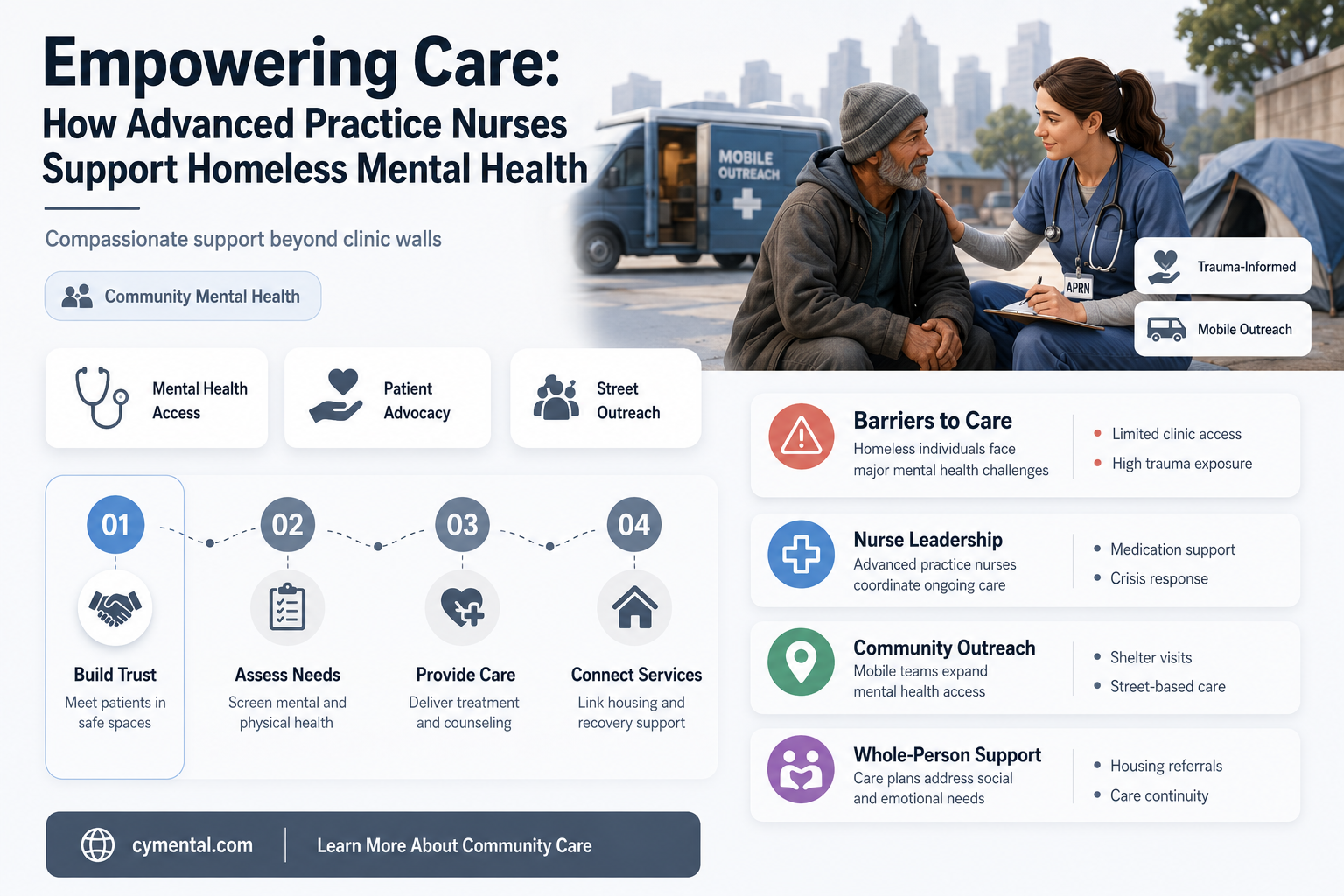
Advance Practice Nurses (APNs) play a critical role in addressing the complex needs of the homeless mentally ill population, a vulnerable group often underserved by traditional healthcare systems. With their advanced clinical skills, holistic approach, and ability to provide both physical and mental health care, APNs are uniquely positioned to deliver accessible, patient-centered services in non-traditional settings such as shelters, clinics, and outreach programs. By offering assessments, treatment, medication management, and psychoeducation, APNs can help stabilize mental health conditions, reduce hospitalizations, and improve overall well-being. Additionally, their focus on building trust, advocating for resources, and coordinating care across systems ensures that this marginalized population receives comprehensive support tailored to their unique challenges, ultimately fostering recovery and reintegration into society.
| Characteristics | Values |
|---|---|
| Comprehensive Mental Health Assessments | Conduct thorough assessments to identify mental health disorders, substance use, and trauma. |
| Integrated Care Models | Provide holistic care by integrating mental health, primary care, and social services. |
| Crisis Intervention | Offer immediate support during mental health crises, including de-escalation techniques. |
| Medication Management | Prescribe and monitor psychotropic medications to manage mental health symptoms. |
| Case Management | Coordinate care with social workers, shelters, and community resources for housing support. |
| Psychotherapy and Counseling | Deliver evidence-based therapies like CBT to address mental health and behavioral issues. |
| Health Education | Educate on mental health, self-care, and coping strategies tailored to homeless populations. |
| Substance Use Treatment | Provide harm reduction strategies and referrals to addiction treatment programs. |
| Advocacy and Policy Influence | Advocate for policies addressing homelessness, mental health, and healthcare access. |
| Community Outreach | Engage in street outreach to connect homeless individuals with mental health services. |
| Collaborative Partnerships | Work with shelters, NGOs, and government agencies to create supportive care networks. |
| Trauma-Informed Care | Use trauma-informed approaches to build trust and provide non-judgmental care. |
| Prevention and Early Intervention | Identify and address mental health issues early to prevent worsening conditions. |
| Telehealth Services | Utilize telehealth to provide accessible mental health care to hard-to-reach populations. |
| Cultural Competence | Tailor care to the diverse cultural and social backgrounds of homeless individuals. |
| Data-Driven Practice | Use data to track outcomes and improve interventions for homeless mentally ill populations. |
Explore related products


What You'll Learn

Housing-first initiatives: APNs as advocates
The housing-first model prioritizes providing permanent, stable housing to the homeless without preconditions like sobriety or treatment compliance. This approach, rooted in harm reduction principles, recognizes that addressing basic needs like shelter is essential before tackling complex mental health and substance use issues. Advanced Practice Nurses (APNs) are uniquely positioned to act as advocates within this framework, leveraging their clinical expertise and community connections to facilitate housing access and support long-term stability for the homeless mentally ill.
Consider the case of a 42-year-old man with schizophrenia and a history of chronic homelessness. Under a traditional treatment-first model, he might cycle in and out of shelters, hospitals, and jails, his symptoms worsening due to the stress of instability. A housing-first approach, supported by an APN advocate, would secure him permanent housing first. The APN could then focus on building trust, administering long-acting injectable antipsychotics (e.g., 40 mg aripiprazole lauroxil monthly) to manage symptoms, and connecting him with community resources like vocational training or peer support groups. This sequential approach—housing first, treatment second—aligns with evidence showing improved mental health outcomes and reduced healthcare costs for this population.
Advocacy in this context requires APNs to navigate complex systems on behalf of their clients. For instance, APNs can collaborate with housing authorities to expedite applications, educate landlords about mental health conditions, and negotiate lease agreements that accommodate clients’ needs. They can also serve as liaisons between clients and social service agencies, ensuring access to benefits like Supplemental Security Income (SSI) or Medicaid. Practical tips for APNs include maintaining a list of local housing resources, attending community coalition meetings, and partnering with legal aid organizations to address barriers like evictions or criminal records.
A critical aspect of APN advocacy is challenging stigma and systemic barriers. For example, APNs can educate policymakers about the cost-effectiveness of housing-first models, citing studies showing a 60% reduction in emergency department visits among housed individuals. They can also advocate for policy changes, such as increasing funding for supportive housing or expanding eligibility criteria for housing vouchers. By amplifying the voices of their clients and presenting data-driven arguments, APNs can drive systemic change that benefits not just individuals but entire communities.
In conclusion, APNs play a vital role in housing-first initiatives by combining clinical care with advocacy. Their ability to address both health and social determinants of well-being makes them indispensable allies for the homeless mentally ill. Through strategic partnerships, policy engagement, and individualized care, APNs can help transform the lives of those most in need, proving that housing is not just a right but a foundation for recovery.
Mental Exercise and Dementia: Unlocking Brain Health Benefits
You may want to see also
Explore related products



Integrated care models for dual diagnosis
Homeless individuals with mental illness often face a dual diagnosis, where substance abuse co-occurs with psychiatric disorders. This complex interplay exacerbates their vulnerability, making integrated care models essential. These models address both conditions simultaneously, breaking the cycle of relapse and hospitalization. For advanced practice nurses (APNs), implementing such frameworks can significantly improve outcomes for this marginalized population.
Consider the Collaborative Assessment and Management of Suicidality (CAMS) framework, which APNs can adapt for dual diagnosis. This approach involves a structured interview to identify suicide risk factors, including substance use triggers. By integrating motivational interviewing techniques, APNs can engage clients in harm reduction strategies, such as methadone maintenance (typically 40–120 mg daily for opioid dependence) or naltrexone (50 mg daily for alcohol dependence). Pairing these interventions with cognitive-behavioral therapy sessions tailored to homeless populations fosters a holistic recovery process.
A cautionary note: fragmented care systems often fail this demographic. APNs must advocate for Assertive Community Treatment (ACT) teams, which provide wraparound services, including medication management, housing support, and crisis intervention. For instance, a 2020 study in *Psychiatric Services* found that ACT reduced hospitalization rates by 40% among homeless individuals with dual diagnosis. However, APNs should ensure cultural competency training for team members to address biases that may alienate clients.
To operationalize integrated care, APNs can follow these steps: 1) Conduct comprehensive assessments using tools like the Maudsley Addiction Profile (MAP) to identify dual diagnosis severity. 2) Collaborate with local shelters and clinics to establish referral pathways for immediate access to services like Suboxone (buprenorphine/naloxone, 8/2 mg sublingually daily). 3) Implement trauma-informed care principles, recognizing that 70% of homeless individuals with mental illness have trauma histories. 4) Monitor progress using validated scales, such as the Behavior and Symptom Identification Scale (BASIS-32), to adjust treatment plans dynamically.
The takeaway is clear: integrated care models are not just beneficial—they are transformative. By addressing dual diagnosis through coordinated, evidence-based interventions, APNs can stabilize lives, reduce systemic costs, and restore dignity to a population often overlooked. Success hinges on adaptability, collaboration, and a relentless focus on meeting clients where they are.
Removing Mental Health Records: Can You Clear Your History?
You may want to see also
Explore related products




Community outreach: Building trust and access
Homeless individuals with mental illness often face barriers to care that extend beyond clinical settings. Stigma, past trauma, and systemic distrust of institutions create a chasm between this vulnerable population and the healthcare system. Community outreach, led by advanced practice nurses (APNs), bridges this gap by meeting individuals where they are—literally and figuratively. This approach prioritizes building trust through consistent presence, nonjudgmental care, and culturally sensitive communication.
APNs can establish trust by partnering with existing homeless shelters, soup kitchens, and street outreach teams. Regularly visiting these locations allows nurses to become familiar faces, breaking down initial barriers. Offering basic health screenings, wound care, and mental health assessments in these familiar environments reduces the intimidation factor of traditional clinics. For example, a weekly drop-in clinic at a shelter, staffed by APNs trained in trauma-informed care, can provide a safe space for individuals to discuss their mental health concerns without fear of judgment or forced treatment.
Building trust requires more than just physical presence. APNs must adopt a harm reduction approach, acknowledging the realities of homelessness and mental illness without imposing unrealistic expectations. This means providing care regardless of substance use, housing status, or treatment adherence. For instance, offering long-acting injectable antipsychotics (e.g., monthly doses of aripiprazole lauroxil 441 mg or 882 mg) can improve medication compliance for individuals struggling with daily routines. Similarly, distributing hygiene kits, warm clothing, and bus passes demonstrates a commitment to holistic well-being, fostering goodwill and openness to further engagement.
Effective community outreach also involves training APNs in motivational interviewing techniques to encourage behavior change without coercion. By asking open-ended questions and reflecting on the individual’s own goals, nurses can help clients identify their motivations for seeking care. For example, a homeless individual might prioritize finding stable housing over managing schizophrenia symptoms. APNs can then link these goals to mental health treatment, such as connecting them to housing first programs that provide immediate shelter without requiring sobriety or treatment compliance.
Finally, APNs must advocate for policy changes that address the root causes of homelessness and mental illness. This includes supporting initiatives like the Housing First model, which provides permanent housing without preconditions, and lobbying for increased funding for community mental health services. By combining direct care with systemic advocacy, APNs can create sustainable pathways to recovery for homeless individuals with mental illness. Their role in community outreach is not just about delivering services but about empowering individuals to reclaim their health and dignity.
Drawing for Mental Health: Creative Therapy Benefits and Techniques
You may want to see also
Explore related products

$19.99



Crisis intervention and de-escalation training
Homeless individuals with mental illness often face crises that require immediate, skilled intervention. Advanced practice nurses (APNs) equipped with crisis intervention and de-escalation training can provide life-saving support in these moments. This training goes beyond basic clinical skills, focusing on communication strategies, behavioral assessment, and environment management to defuse volatile situations and prevent harm.
APNs trained in crisis intervention follow a structured approach: assess the situation for safety risks, establish rapport through empathetic listening, identify the individual’s immediate needs, and develop a plan to stabilize the crisis. For instance, a homeless person experiencing psychotic symptoms might become agitated in a crowded shelter. An APN trained in de-escalation would first create physical distance to reduce perceived threats, use calm, non-judgmental language to acknowledge the person’s distress, and offer simple, concrete choices to regain control (e.g., “Would you like to sit here or move to a quieter area?”).
Effective de-escalation relies on specific techniques. APNs learn to avoid power struggles, instead validating emotions and redirecting focus. For example, instead of saying, “You’re overreacting,” they might say, “I see you’re feeling very upset. Let’s figure this out together.” Training also emphasizes cultural sensitivity, as trauma and systemic barriers often underlie crises in this population. APNs must recognize how factors like race, gender, and past institutional experiences shape responses to authority and intervention.
Implementing crisis intervention requires careful consideration. APNs must balance empathy with boundary-setting, ensuring their own safety while providing care. Regular supervision and self-care are essential to prevent burnout, as this work can be emotionally demanding. Additionally, collaboration with community resources—such as mobile crisis units or drop-in centers—amplifies the impact of APN interventions. By integrating crisis intervention and de-escalation training into their practice, APNs become vital agents of stability for homeless individuals with mental illness, offering not just medical care but also a pathway to safety and recovery.
ACA's Impact: Mental Health Care Access and Outcomes Explored
You may want to see also
Explore related products


Mental health screening in shelters and clinics
Homeless individuals face a disproportionate burden of mental illness, with rates of schizophrenia, bipolar disorder, and major depression far exceeding those of the general population. Shelters and clinics, often their primary points of contact with the healthcare system, present a critical opportunity for early intervention. Mental health screening within these settings can act as a vital safety net, identifying those in need and connecting them to potentially life-changing care.
Advanced practice nurses (APNs) are uniquely positioned to lead these efforts. Their expertise in assessment, diagnosis, and treatment, coupled with their ability to build rapport with vulnerable populations, makes them invaluable assets in this challenging yet crucial work.
Implementing effective mental health screening requires a multi-pronged approach. Firstly, standardized tools like the PHQ-9 for depression or the GAD-7 for anxiety should be integrated into routine intake assessments. These brief, validated questionnaires provide a quick snapshot of an individual's mental state, allowing APNs to identify potential red flags. Secondly, training shelter staff to recognize signs of mental distress is essential. This includes understanding the subtle manifestations of psychosis, the behavioral changes associated with mood disorders, and the impact of trauma on presentation. By empowering staff to identify at-risk individuals, APNs can ensure timely referrals for further evaluation.
Caution must be exercised to avoid stigmatization. Screening should be conducted in a private, respectful manner, with sensitivity to the individual's experiences of homelessness and potential trauma. Clear communication about the purpose of screening, confidentiality, and the availability of support is paramount.
The benefits of mental health screening in shelters and clinics are undeniable. Early identification allows for prompt intervention, preventing the worsening of symptoms and potential crises. APNs can initiate treatment plans, which may include medication management, psychotherapy, or referrals to specialized mental health services. By addressing mental health needs alongside physical health concerns, APNs contribute to a more holistic approach to care, ultimately improving the overall well-being and stability of homeless individuals.
Furthermore, data collected through screening can be used to advocate for systemic change. Identifying trends in mental health needs within the homeless population can inform policy decisions, resource allocation, and the development of targeted interventions. APNs, with their clinical expertise and firsthand experience, are well-positioned to champion these changes, ensuring that the unique needs of this vulnerable population are not overlooked.
Effective Strategies to Help Others: A Comprehensive Guide to Support
You may want to see also
Frequently asked questions
APNs can provide mobile or outreach services, bringing care directly to homeless individuals in shelters, streets, or community centers, reducing barriers like transportation and stigma.
APNs offer integrated care, managing mental health, substance use disorders, and physical health issues simultaneously, while also coordinating with social services for housing and resources.
APNs can develop personalized treatment plans, provide consistent follow-up, and educate clients on self-management strategies to prevent relapse and promote recovery.
APNs employ trauma-informed care, culturally sensitive communication, and consistent presence to establish trust and engage individuals who may be hesitant to seek help.