Noah Parker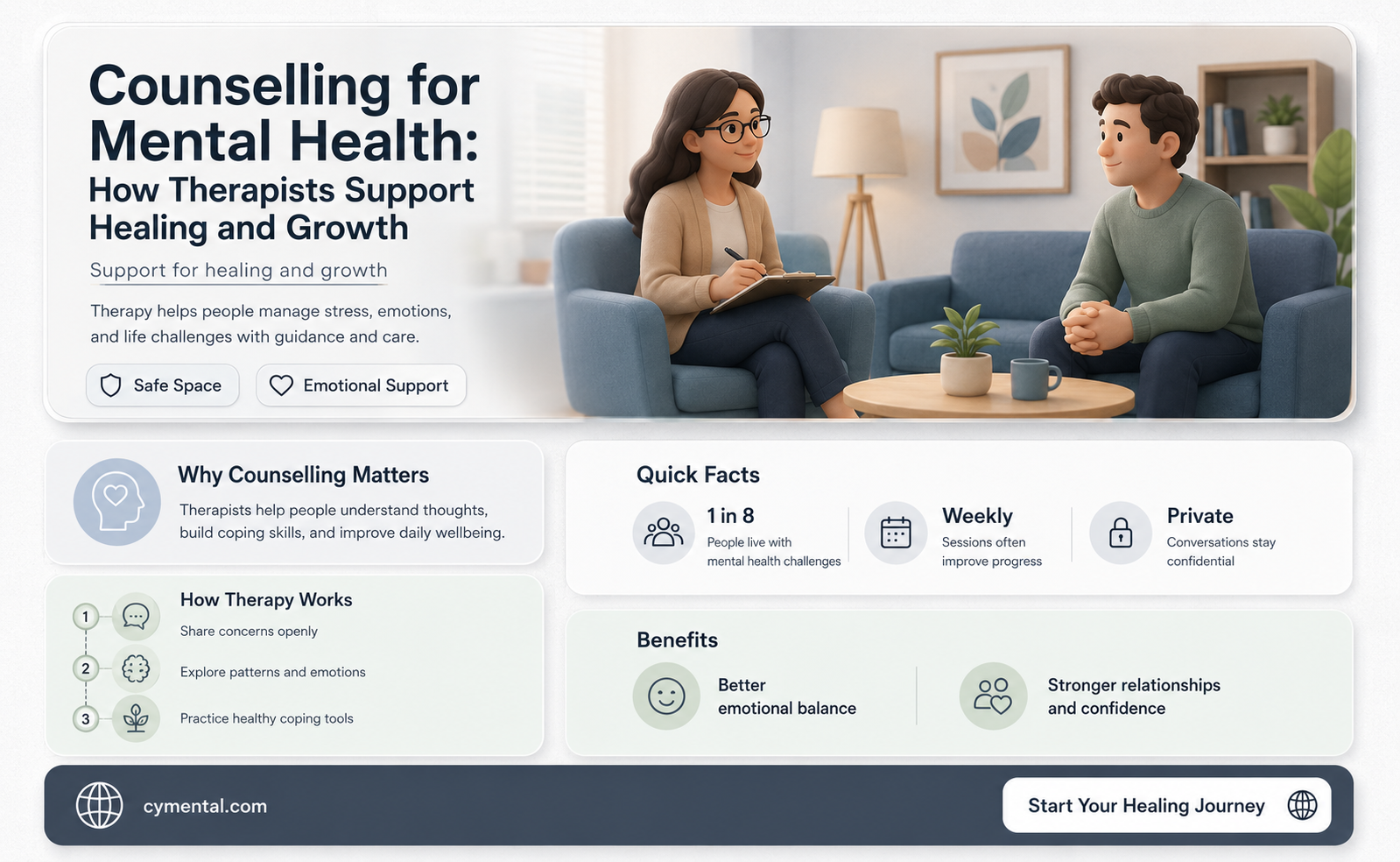
A counsellor plays a vital role in supporting individuals struggling with mental health challenges by providing a safe, non-judgmental space to explore thoughts, emotions, and behaviors. Through evidence-based techniques such as cognitive-behavioral therapy, mindfulness, or talk therapy, counsellors help clients identify underlying issues, develop coping strategies, and build resilience. They assist in managing symptoms of anxiety, depression, trauma, and other conditions, while fostering self-awareness and personal growth. By offering guidance, empathy, and practical tools, counsellors empower individuals to navigate life’s complexities, improve relationships, and achieve emotional well-being, ultimately promoting long-term mental health and recovery.
| Characteristics | Values |
|---|---|
| Provides a Safe Space | Counsellors offer a non-judgmental, confidential environment where individuals can express their thoughts and feelings freely. |
| Active Listening | They practice empathetic and active listening, helping clients feel heard and understood. |
| Identifies Underlying Issues | Counsellors help uncover and address the root causes of mental health challenges, such as trauma, stress, or unresolved emotions. |
| Develops Coping Strategies | They teach practical tools and techniques to manage symptoms of anxiety, depression, and other mental health conditions. |
| Improves Self-Awareness | Counselling fosters greater self-understanding, helping individuals recognize patterns and triggers in their behavior and thoughts. |
| Enhances Communication Skills | Clients learn effective communication strategies to improve relationships and reduce conflicts. |
| Sets Realistic Goals | Counsellors collaborate with clients to set achievable goals for personal growth and mental well-being. |
| Provides Emotional Support | They offer consistent emotional support during difficult times, reducing feelings of isolation. |
| Encourages Behavioral Change | Counsellors help individuals adopt healthier habits and behaviors to improve mental health. |
| Offers Evidence-Based Therapies | They use proven therapeutic approaches like CBT, DBT, or mindfulness to address specific mental health issues. |
| Promotes Resilience | Counselling helps build emotional resilience, enabling individuals to better cope with life’s challenges. |
| Facilitates Crisis Intervention | Counsellors provide immediate support and strategies during acute mental health crises. |
| Improves Relationships | They help individuals navigate interpersonal issues, improving connections with family, friends, and partners. |
| Encourages Self-Compassion | Counselling fosters self-kindness and reduces self-criticism, improving overall mental well-being. |
| Monitors Progress | Counsellors regularly assess progress and adjust treatment plans to ensure effectiveness. |
| Educates on Mental Health | They provide insights into mental health conditions, reducing stigma and increasing awareness. |
| Supports Long-Term Growth | Counselling focuses on sustainable change, helping individuals achieve long-term mental health stability. |
Explore related products


![NCMHCE Exam Study Cards: NCMHCE Test Prep 2025 and 2026 for the National Clinical Mental Health Counseling Examination [Full Color Cards]](https://m.media-amazon.com/images/I/61Vg-0Wk9RL._AC_UL320_.jpg)

What You'll Learn
- Active Listening: Counsellors provide a safe space to express emotions without judgment, fostering understanding and empathy
- Coping Strategies: Teach practical tools to manage stress, anxiety, and other mental health challenges effectively
- Goal Setting: Help clients identify and work toward personal goals, improving motivation and mental well-being
- Emotional Regulation: Guide individuals in recognizing and managing emotions to reduce distress and improve stability
- Trauma Processing: Assist in addressing past traumas using evidence-based techniques to promote healing and recovery

Active Listening: Counsellors provide a safe space to express emotions without judgment, fostering understanding and empathy
One of the most powerful tools a counsellor possesses is the ability to listen actively, creating an environment where clients feel heard and understood. This seemingly simple act of attentiveness is a cornerstone of effective therapy, allowing individuals to explore their thoughts and feelings without fear of criticism or rejection. In a world where many struggle to find a non-judgmental ear, counsellors offer a rare and invaluable service.
The Art of Active Listening
Active listening is a skill that involves full concentration, not just on the words being spoken, but also on the emotions and body language that accompany them. Counsellors are trained to pick up on subtle cues, such as changes in tone, pace, or volume of speech, which can reveal underlying feelings. For instance, a client's voice cracking while discussing a past trauma might indicate unresolved pain, even if their words suggest otherwise. By noticing these nuances, counsellors can gently guide the conversation, encouraging clients to elaborate on their experiences and emotions. This process is particularly beneficial for those who find it challenging to articulate their feelings, as it provides a structured yet supportive framework for self-expression.
Creating a Safe Haven
The therapeutic relationship is built on trust, and active listening is the foundation upon which this trust is established. When a counsellor listens without judgment, they create a safe haven for clients to share their deepest concerns, fears, and vulnerabilities. This is especially crucial for individuals dealing with mental health issues, as the stigma surrounding these topics often leads to self-censorship and isolation. For example, a person struggling with depression might feel ashamed of their negative thoughts and hesitate to share them with friends or family. In a counselling session, however, they are assured that their thoughts and feelings are valid and worthy of attention, regardless of their nature. This acceptance can be a powerful catalyst for healing.
Fostering Empathy and Self-Awareness
Through active listening, counsellors not only provide support but also help clients develop self-awareness and empathy. As clients feel understood, they begin to understand themselves better. This process can lead to profound insights, such as recognizing recurring patterns in their behavior or identifying triggers for certain emotions. For instance, a client might realize that their anxiety spikes in social situations due to a fear of rejection, a realization that could be the first step towards managing and overcoming this fear. Moreover, the empathy demonstrated by the counsellor can serve as a model for clients to adopt in their interactions with others, improving their relationships and overall well-being.
Practical Tips for Effective Communication
To enhance the benefits of active listening, counsellors often employ specific techniques. These include paraphrasing, where the counsellor restates the client's words to ensure understanding, and open-ended questions, which encourage clients to elaborate on their thoughts. For instance, instead of asking, "Are you feeling sad?" a counsellor might say, "Tell me more about the emotions you're experiencing." This approach invites a more detailed response, allowing the client to explore their feelings further. Additionally, counsellors may use reflective statements to mirror the client's emotions, such as, "It sounds like you're feeling overwhelmed by these changes." Such techniques not only demonstrate active listening but also help clients feel validated and understood.
In the context of mental health, active listening is a therapeutic intervention in itself. It empowers individuals to confront and process their emotions, fostering a sense of agency and self-acceptance. By providing a safe and non-judgmental space, counsellors facilitate healing and personal growth, one conversation at a time. This approach is particularly effective for those who have struggled to find support elsewhere, offering a unique and transformative experience.
Alcohol and Mental Health: Unraveling the Myth of Relief
You may want to see also
Explore related products


Coping Strategies: Teach practical tools to manage stress, anxiety, and other mental health challenges effectively
Stress and anxiety are universal experiences, but their impact on mental health can be mitigated with the right tools. Counsellors play a pivotal role in teaching coping strategies that empower individuals to navigate these challenges effectively. By introducing practical techniques tailored to personal needs, counsellors help clients regain control over their emotional well-being. These strategies are not one-size-fits-all; they are customized to address specific triggers and responses, ensuring long-term resilience.
One widely adopted technique is mindfulness-based stress reduction (MBSR), which involves focusing on the present moment to reduce anxiety. Counsellors guide clients through mindfulness exercises, such as deep breathing or body scans, often recommending 10–20 minutes of practice daily. Research shows that consistent mindfulness practice can lower cortisol levels by up to 14%, reducing the physiological effects of stress. For younger clients, aged 13–18, counsellors might incorporate gamified mindfulness apps to make the practice more engaging and accessible.
Another effective tool is cognitive-behavioral coping strategies, which help reframe negative thought patterns. Counsellors teach clients to identify and challenge irrational beliefs, replacing them with constructive alternatives. For instance, instead of thinking, "I can’t handle this," clients learn to reframe the thought as, "This is challenging, but I have the tools to manage it." This approach is particularly beneficial for individuals with generalized anxiety disorder, as it directly targets the root of their distress. Counsellors often assign homework, such as thought journals, to reinforce these skills outside of sessions.
Progressive muscle relaxation (PMR) is a physical coping strategy that counsellors frequently introduce. This technique involves tensing and relaxing different muscle groups in sequence, promoting physical calmness and mental clarity. Clients are instructed to practice PMR for 15–20 minutes daily, especially during moments of heightened stress. It’s particularly useful for those who experience somatic symptoms of anxiety, such as muscle tension or headaches. For older adults, counsellors may modify the technique to accommodate mobility limitations, ensuring accessibility.
Finally, counsellors emphasize the importance of building a coping toolkit, a personalized set of strategies that clients can draw upon in various situations. This toolkit might include a mix of mindfulness, cognitive reframing, physical activity, or creative outlets like journaling. The key is to experiment with different techniques and identify which ones work best for the individual. Counsellors often encourage clients to revisit and update their toolkit regularly, adapting it to evolving needs and circumstances.
By teaching these practical tools, counsellors not only alleviate immediate symptoms but also equip clients with lifelong skills to manage mental health challenges. The goal is not to eliminate stress or anxiety entirely but to transform the way individuals respond to them, fostering resilience and emotional balance.
Zinc's Role in Mental Health: Benefits, Research, and Potential Impact
You may want to see also
Explore related products


Goal Setting: Help clients identify and work toward personal goals, improving motivation and mental well-being
Goal setting is a powerful tool in the counsellor's toolkit, offering a structured path to improved mental well-being. By helping clients identify and work toward personal goals, counsellors can foster a sense of purpose, direction, and accomplishment. This process not only enhances motivation but also empowers individuals to take control of their lives, reducing feelings of helplessness and anxiety. For instance, a client struggling with depression might set a goal to engage in physical activity three times a week. Achieving this not only boosts mood through endorphin release but also builds confidence, demonstrating that progress is possible.
The process begins with collaborative goal identification, where the counsellor and client work together to define realistic, measurable, and meaningful objectives. This step is crucial, as vague or unattainable goals can lead to frustration and setbacks. For example, instead of a broad goal like "improve my mental health," a counsellor might help refine it to "practice mindfulness meditation for 10 minutes daily for the next month." Specificity ensures clarity and provides a clear roadmap for action. It’s also essential to align goals with the client’s values and interests, as this increases intrinsic motivation and commitment.
Once goals are set, the counsellor assists in breaking them down into smaller, manageable steps. This approach prevents overwhelm and allows for consistent progress. For a client aiming to rebuild social connections, steps might include attending one social event per week, initiating one conversation daily, or joining a local hobby group. Each small victory builds momentum, reinforcing the belief in one’s ability to achieve larger objectives. Counsellors also teach strategies for overcoming obstacles, such as reframing setbacks as learning opportunities rather than failures.
Regular check-ins are vital to monitor progress and adjust goals as needed. These sessions provide accountability and an opportunity to celebrate achievements, no matter how small. For example, a client who successfully completes a week of daily journaling might reflect on how this practice has improved self-awareness and emotional regulation. Over time, this iterative process of setting, pursuing, and reflecting on goals becomes a habit, fostering resilience and a growth mindset.
While goal setting is transformative, it’s not without challenges. Clients may face self-doubt, external pressures, or unexpected life events that derail progress. Counsellors must remain empathetic and flexible, offering support without judgment. For instance, if a client misses a goal due to a family crisis, the counsellor might help reframe the situation as a temporary pause rather than a failure. Ultimately, the goal-setting process is as much about building self-compassion and adaptability as it is about achieving specific outcomes. By integrating these principles, counsellors can help clients not only reach their goals but also cultivate a stronger, more resilient sense of self.
Creatine's Cognitive Boost: Enhancing Mental Performance and Brain Function
You may want to see also
Explore related products

$33.49 $70.95
$105.84 $156
$18.02 $20.95


Emotional Regulation: Guide individuals in recognizing and managing emotions to reduce distress and improve stability
Emotional dysregulation often manifests as overwhelming anxiety, explosive anger, or deep sadness that feels unmanageable. These intense reactions can strain relationships, disrupt daily functioning, and exacerbate mental health conditions like depression or borderline personality disorder. Counsellors employ evidence-based techniques to help individuals identify emotional triggers, understand underlying causes, and develop healthier coping mechanisms. For instance, dialectical behavior therapy (DBT) teaches skills such as mindfulness, distress tolerance, and emotion regulation, which have been shown to reduce self-harm behaviors by up to 50% in some studies. By fostering emotional awareness and control, counsellors empower clients to respond to stressors with resilience rather than reactivity.
Consider a 28-year-old professional who experiences panic attacks during work presentations. A counsellor might begin by helping them track physical sensations (e.g., rapid heartbeat, sweating) and emotional cues (e.g., fear of failure) preceding the attacks. Through cognitive reframing, the client learns to challenge catastrophic thoughts like, "I’ll embarrass myself," replacing them with more balanced perspectives, such as, "Nervousness is normal, and I’ve prepared well." Practical strategies, like deep breathing exercises (inhale for 4 seconds, hold for 4, exhale for 6) or grounding techniques (naming 5 things they can see or touch), are introduced to calm the nervous system in real-time. Over time, the client gains confidence in managing anxiety, reducing both the frequency and intensity of panic attacks.
While emotional regulation is transformative, it’s not without challenges. Clients may resist confronting painful emotions or feel discouraged by slow progress. Counsellors must balance empathy with accountability, encouraging consistent practice of new skills. For example, a teenager struggling with anger might be asked to keep a journal tracking anger episodes, noting triggers and responses. Initially, they may find it difficult to pause before reacting, but with repetition, the habit of reflection becomes ingrained. Counsellors also emphasize self-compassion, reminding clients that setbacks are part of the learning process, not failures.
The benefits of emotional regulation extend beyond symptom reduction. Improved emotional control enhances decision-making, strengthens interpersonal relationships, and fosters a sense of agency over one’s life. For a parent learning to manage frustration with their child, regulation skills can transform conflicts into teachable moments, deepening the parent-child bond. Similarly, a college student mastering anxiety regulation may find it easier to focus on exams and pursue academic goals. By addressing emotional dysregulation at its core, counsellors help clients build a foundation for long-term mental health and well-being.
Hypnosis and Mental Health: Exploring Its Potential as a Therapeutic Tool
You may want to see also
Explore related products


Trauma Processing: Assist in addressing past traumas using evidence-based techniques to promote healing and recovery
Unprocessed trauma can silently shape behavior, emotions, and relationships long after the event has passed. Counsellors employ evidence-based techniques to help individuals confront and reframe these experiences, fostering resilience and recovery.
Step 1: Establish Safety and Stabilization
Before delving into traumatic memories, counsellors prioritize creating a secure therapeutic environment. Techniques like grounding exercises (e.g., 5-4-3-2-1 sensory awareness) and psychoeducation about trauma responses help clients manage distress. For instance, a client with PTSD might practice deep breathing for 5 minutes daily to reduce hyperarousal. This phase ensures the individual can tolerate revisiting painful memories without becoming overwhelmed.
Step 2: Apply Evidence-Based Modalities
Counsellors use structured approaches like Eye Movement Desensitization and Reprocessing (EMDR) or Trauma-Focused Cognitive Behavioral Therapy (TF-CBT). EMDR involves bilateral stimulation (e.g., eye movements or taps) while recalling the trauma, reducing its emotional intensity. TF-CBT combines cognitive restructuring with gradual exposure to trauma narratives. For adolescents, TF-CBT sessions typically span 8–16 weeks, with weekly 60-minute meetings. These methods are proven to rewire maladaptive neural pathways associated with trauma.
Caution: Avoid Premature Exposure
Rushing into trauma processing without adequate preparation can retraumatize the individual. Counsellors must assess readiness by evaluating emotional regulation skills and support systems. For example, a client lacking coping mechanisms may benefit from dialectical behavior therapy (DBT) skills training before trauma work begins.
Takeaway: Healing Is a Collaborative Process
Trauma processing is not about erasing the past but redefining its hold on the present. Through consistent, compassionate guidance, counsellors empower clients to reclaim agency over their narratives. Practical tools, such as journaling trauma responses or creating a "safe place" visualization, reinforce progress between sessions. The result? A transformative journey from survival to thriving.
Gender and Mental Health: Who Seeks More Support, Men or Women?
You may want to see also
Frequently asked questions
A counsellor can help you identify the root causes of your anxiety, teach coping strategies, and provide a safe space to explore and process your feelings. They may use techniques like cognitive-behavioral therapy (CBT) to challenge negative thought patterns and help you develop healthier ways of responding to stress.
A counsellor can be very effective in helping with depression by providing emotional support, teaching coping skills, and helping you address underlying issues. While a psychiatrist can prescribe medication, a counsellor focuses on talk therapy, which is often a crucial part of treatment. Many people benefit from a combination of both.
Counselling provides a structured and supportive environment to process traumatic experiences. Therapists use evidence-based approaches like Eye Movement Desensitization and Reprocessing (EMDR) or trauma-focused CBT to help you safely revisit and reframe traumatic memories, reducing their emotional impact and improving your overall well-being.
Yes, counsellors often specialize in relationship issues. They can help you identify unhealthy patterns, improve communication skills, and address conflicts. Whether you’re struggling with a romantic partner, family member, or friend, counselling can provide tools and insights to foster healthier connections.
Absolutely. Counsellors are trained to help you explore and understand your feelings, even if you’re unsure of the problem. They can guide you in identifying underlying issues, setting goals, and developing strategies to improve your mental health and overall quality of life.

![NCMHCE Secrets Study Guide - Exam Review and NCMHCE Practice Test for the National Clinical Mental Health Counseling Examination: [2nd Edition]](https://m.media-amazon.com/images/I/61st2jwaFIL._AC_UL320_.jpg)