Caleb Wright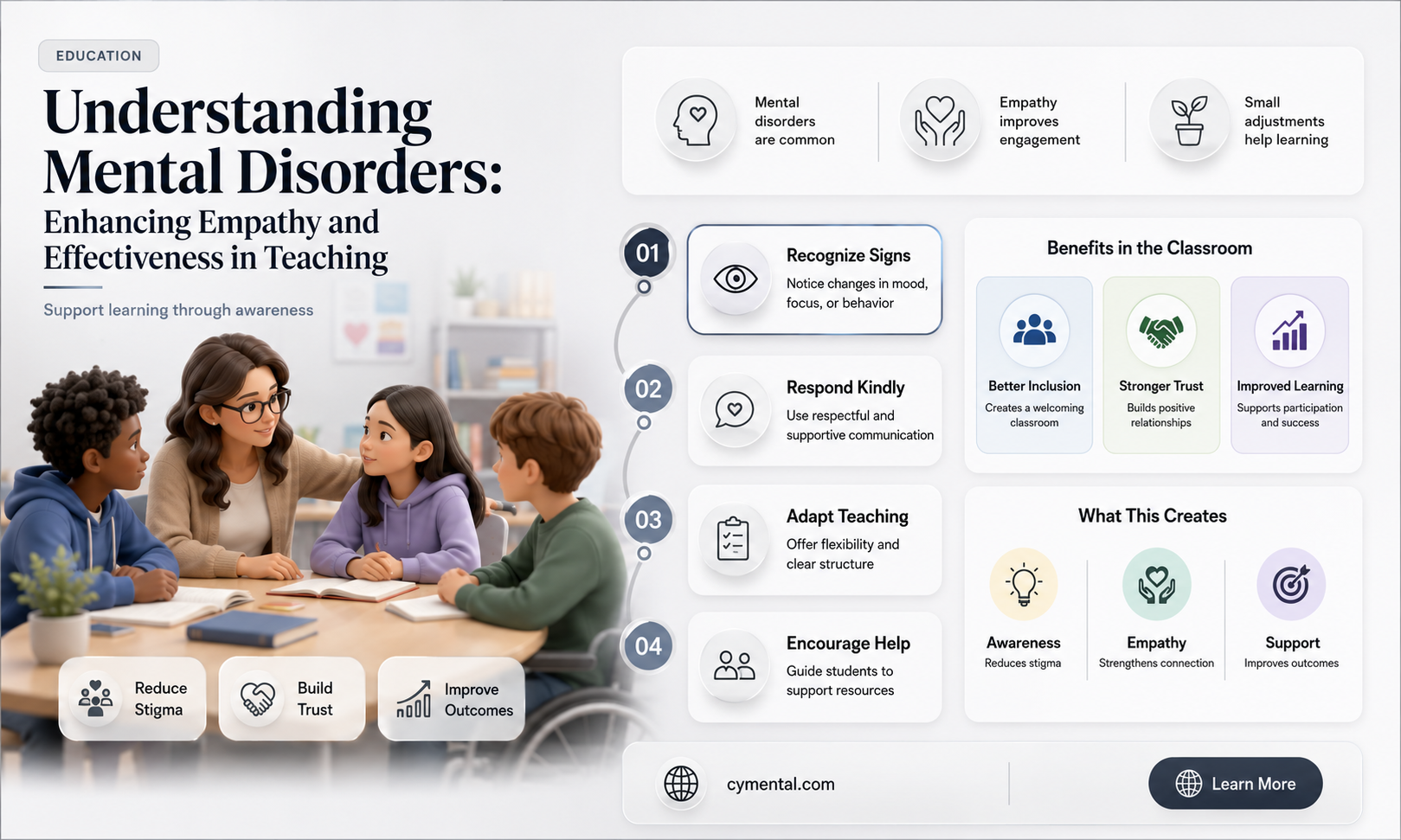
Understanding mental disorders is crucial for educators as it equips them with the knowledge and empathy needed to support students who may be struggling with these challenges. By learning about conditions such as anxiety, depression, ADHD, and others, teachers can recognize early signs, adapt their teaching methods, and create an inclusive classroom environment. This awareness fosters better communication with students, parents, and mental health professionals, ensuring that students receive the necessary accommodations and support. Moreover, it helps reduce stigma, promotes mental health literacy among peers, and ultimately enhances the overall learning experience for all students.
Explore related products


What You'll Learn
- Understanding Student Behavior: Recognize signs of mental disorders to respond appropriately and supportively in the classroom
- Tailoring Teaching Methods: Adapt strategies to accommodate students with mental health challenges for inclusive learning
- Reducing Stigma: Promote awareness to create a safe, empathetic environment for open mental health discussions
- Early Intervention: Identify at-risk students early to connect them with necessary resources and support
- Self-Care for Teachers: Learn to manage personal mental health to maintain effectiveness and resilience in teaching

Understanding Student Behavior: Recognize signs of mental disorders to respond appropriately and supportively in the classroom
Students with undiagnosed or unmanaged mental health disorders often exhibit behaviors that can be misinterpreted as defiance, laziness, or lack of motivation. For instance, a child with ADHD may fidget constantly, while a student with anxiety might avoid participation due to fear of judgment. Recognizing these behaviors as potential signs of underlying mental health issues allows educators to shift from punitive responses to empathetic interventions. Instead of assuming intentional misbehavior, teachers can approach these situations with curiosity and concern, fostering a more supportive classroom environment.
To effectively recognize signs of mental disorders, educators should familiarize themselves with common indicators for specific age groups. For example, in elementary-aged children, frequent outbursts, difficulty concentrating, or regression in skills (e.g., bedwetting) may signal anxiety or ADHD. In adolescents, sudden changes in academic performance, social withdrawal, or persistent irritability could indicate depression or trauma. Practical tips include maintaining a behavior log to track patterns and consulting with school counselors or psychologists for guidance. This proactive approach ensures teachers are better equipped to identify when a student may need additional support.
Once signs of a potential mental disorder are recognized, responding appropriately requires a balance of sensitivity and structure. For instance, if a student with anxiety is struggling to participate in class discussions, a teacher might offer alternative ways to contribute, such as written responses or small group work. It’s crucial to avoid labeling or stigmatizing the student while providing accommodations that meet their needs. Cautions include refraining from diagnosing students—leave that to professionals—and being mindful of confidentiality when discussing concerns with colleagues or parents. The goal is to create a safe, inclusive space where students feel understood and supported.
The ultimate takeaway is that understanding mental health disorders transforms the classroom into a more compassionate and effective learning environment. By recognizing signs and responding appropriately, teachers can reduce student distress, improve engagement, and foster academic success. For example, a teacher who identifies a student’s frequent absences as linked to depression might collaborate with the school counselor to develop a re-engagement plan. This not only supports the student’s mental health but also reinforces the teacher’s role as a caring ally. Investing time in learning about mental health is an investment in the well-being and potential of every student.
Viagra and Mental ED: Exploring Its Role in Psychological Erectile Dysfunction
You may want to see also
Explore related products


Tailoring Teaching Methods: Adapt strategies to accommodate students with mental health challenges for inclusive learning
Understanding the diverse needs of students with mental health challenges is crucial for creating an inclusive classroom. By recognizing conditions like anxiety, depression, ADHD, or PTSD, educators can tailor their teaching methods to foster a supportive learning environment. For instance, a student with anxiety might benefit from structured routines and clear expectations, while a student with ADHD may thrive with frequent breaks and hands-on activities. This proactive approach not only accommodates individual needs but also promotes equity in education.
Consider the following adaptive strategies: incorporate flexible seating arrangements to accommodate sensory sensitivities, provide extended deadlines for assignments to reduce stress, and use visual aids or simplified instructions for students with cognitive challenges. For example, a teacher might allow a student with PTSD to sit near the exit for comfort or offer a quiet space for a student experiencing anxiety. These adjustments require minimal effort but yield significant benefits in student engagement and well-being.
However, tailoring teaching methods is not without challenges. Educators must balance individualized accommodations with the needs of the broader class, ensuring no student feels singled out. It’s essential to communicate discreetly with students about their needs and involve parents or counselors when necessary. For instance, a teacher might privately discuss a student’s anxiety triggers and collaboratively develop a signal for when they need a break. This approach maintains dignity while fostering trust.
A comparative analysis reveals that inclusive teaching practices benefit all students, not just those with mental health challenges. For example, incorporating mindfulness exercises or movement breaks can improve focus and reduce stress for the entire class. Similarly, using differentiated instruction—such as offering written, oral, or creative project options—allows students to demonstrate understanding in ways that align with their strengths. This universal design approach turns accommodation into opportunity.
In conclusion, adapting teaching strategies for students with mental health challenges is both a responsibility and an opportunity. By embracing flexibility, empathy, and creativity, educators can create a classroom where every student feels valued and capable of succeeding. Start small—perhaps by implementing one new strategy per semester—and gradually build a toolkit of inclusive practices. The result? A more equitable, engaging, and compassionate learning environment for all.
Church and Mental Health: Exploring the Impact of Faith Communities
You may want to see also
Explore related products


Reducing Stigma: Promote awareness to create a safe, empathetic environment for open mental health discussions
Stigma silences. It transforms mental health struggles into shameful secrets, isolating individuals and preventing them from seeking help. As educators, we hold the power to dismantle this silence. By fostering awareness and understanding of mental disorders, we create a classroom environment where students feel safe to express their experiences without fear of judgment.
Imagine a student grappling with anxiety, their chest tightening before every presentation. In a stigma-free classroom, they might confide in a teacher, seeking support and strategies. This openness allows for early intervention, preventing the anxiety from escalating and impacting their academic performance.
The first step in reducing stigma is knowledge. Integrate age-appropriate lessons on mental health into your curriculum. For younger students, this could involve stories and discussions about emotions and coping mechanisms. Older students can benefit from exploring the biological and social factors contributing to mental disorders, dispelling myths and promoting empathy.
Utilize reliable resources like the National Alliance on Mental Illness (NAMI) or the American Psychological Association (APA) for accurate information and lesson plans. Encourage open dialogue by creating safe spaces for students to share their experiences or ask questions anonymously.
Language matters. Avoid using stigmatizing terms like "crazy" or "psycho." Instead, opt for neutral and accurate language that focuses on the condition, not the person. For example, say "a person with schizophrenia" instead of "a schizophrenic." Model this language in your own speech and gently correct students when necessary.
Finally, be a role model. Share your own experiences with mental health struggles, if comfortable, to normalize the conversation. Show vulnerability and demonstrate healthy coping mechanisms. By doing so, you create a culture of acceptance and understanding, where students feel empowered to prioritize their mental well-being. Remember, reducing stigma is an ongoing process, requiring consistent effort and a commitment to creating a truly inclusive learning environment.
Art's Healing Power: Boosting Mental Health Through Creativity
You may want to see also
Explore related products


Early Intervention: Identify at-risk students early to connect them with necessary resources and support
Students exhibiting subtle signs of mental distress often slip through the cracks in crowded classrooms. A withdrawn 10-year-old avoiding group activities, a teenager suddenly struggling with previously mastered math concepts, or a kindergartener with frequent explosive outbursts — these could be early indicators of anxiety, depression, or ADHD. Early intervention hinges on teachers recognizing such red flags and understanding their potential significance. Familiarity with common childhood mental health disorders equips educators to differentiate between typical developmental challenges and emerging pathology.
Identifying at-risk students requires a multi-pronged approach. Teachers should track academic performance fluctuations, social interactions, emotional regulation, and physical cues like changes in sleep or appetite. For instance, a student with undiagnosed ADHD might fidget constantly, interrupt frequently, and struggle to follow multi-step instructions. A child experiencing anxiety may exhibit stomachaches before school or refuse to participate in class discussions. Teachers trained to recognize these patterns can initiate conversations with school counselors or parents, potentially leading to timely referrals for psychological assessments.
Connecting students with resources demands a proactive, collaborative system. Schools should establish clear protocols for reporting concerns, ensuring confidentiality and timely action. This might involve:
- Regular check-ins: Brief weekly meetings with at-risk students to monitor progress and provide emotional support.
- Tiered interventions: Implementing evidence-based programs like social skills training for mild concerns, while referring severe cases for specialized therapy.
- Parent partnerships: Educating families about mental health, available resources, and the importance of early intervention.
Early intervention isn’t just about preventing academic decline; it’s about reshaping trajectories. Research shows that children receiving timely support for mental health issues are more likely to experience improved academic performance, stronger social relationships, and reduced risk of long-term psychological difficulties. By acting as vigilant observers and compassionate advocates, teachers can play a pivotal role in fostering resilience and unlocking the potential of every student.
Fitting In vs. Standing Out: Impact on Mental Health Explored
You may want to see also
Explore related products

$17.95 $14.95




Self-Care for Teachers: Learn to manage personal mental health to maintain effectiveness and resilience in teaching
Teachers often find themselves at the intersection of high expectations and limited resources, a reality that can strain even the most resilient among them. Managing personal mental health is not just a luxury but a necessity for sustaining effectiveness in the classroom. By understanding common mental health challenges—such as anxiety, burnout, or depression—teachers can identify early warning signs in themselves, such as persistent fatigue, irritability, or a sense of detachment from their work. This self-awareness is the first step in implementing targeted self-care strategies that prevent these issues from escalating.
Consider the practice of setting boundaries as a cornerstone of self-care. Teachers frequently blur the lines between professional and personal life, answering emails late into the evening or grading papers on weekends. A practical approach is to designate specific "work-free" hours, such as 7–9 PM, during which all school-related tasks are paused. Pair this with a digital detox by turning off work notifications during these hours. Research shows that such boundaries reduce stress and improve sleep quality, which is critical for cognitive function and emotional regulation in the classroom.
Another effective strategy is incorporating mindfulness practices into daily routines. For instance, a 5-minute breathing exercise before the first class can center teachers, reducing the impact of morning chaos. Apps like Headspace or Calm offer guided sessions tailored to stress reduction, with studies indicating that consistent use can lower cortisol levels by up to 14%. Pairing mindfulness with physical activity—even a 10-minute walk during lunch—amplifies its benefits, boosting mood and energy levels throughout the day.
Building a support network is equally vital. Teachers should cultivate relationships with colleagues who can provide emotional support and practical advice. Peer mentoring programs, where experienced teachers share coping strategies, have proven effective in fostering resilience. Additionally, seeking professional help when needed is not a sign of weakness but a proactive step toward long-term well-being. Schools can facilitate this by offering confidential counseling services or EAPs (Employee Assistance Programs) tailored to educators’ unique stressors.
Finally, reframing self-care as a professional responsibility rather than a personal indulgence is key. Teachers who prioritize their mental health model healthy behaviors for students, creating a culture of well-being within the school community. For example, openly discussing stress management techniques in class normalizes self-care and equips students with lifelong skills. By viewing self-care as an investment in their teaching practice, educators can maintain the resilience needed to inspire and support their students effectively.
Guinea Pigs as Emotional Support: Boosting Mental Health Naturally
You may want to see also
Frequently asked questions
Understanding mental disorders helps you tailor your teaching methods to accommodate diverse learning needs, fostering an inclusive classroom environment and ensuring all students have equal opportunities to succeed.
Recognizing mental health issues allows you to provide early support, refer students to appropriate resources, and create a safe space where students feel understood and valued, ultimately improving their academic and emotional well-being.
Knowledge of mental disorders equips you with empathy and sensitivity, enabling you to communicate more effectively, avoid stigmatizing language, and build trust with students who may be struggling.
Yes, understanding mental health helps you differentiate between behavioral issues and symptoms of a disorder, allowing you to respond with patience, compassion, and strategies that address the root cause rather than just the behavior.
Mental health awareness promotes a culture of empathy, understanding, and support, reducing stigma and encouraging open conversations about mental well-being, which benefits both students and staff.