Noah Parker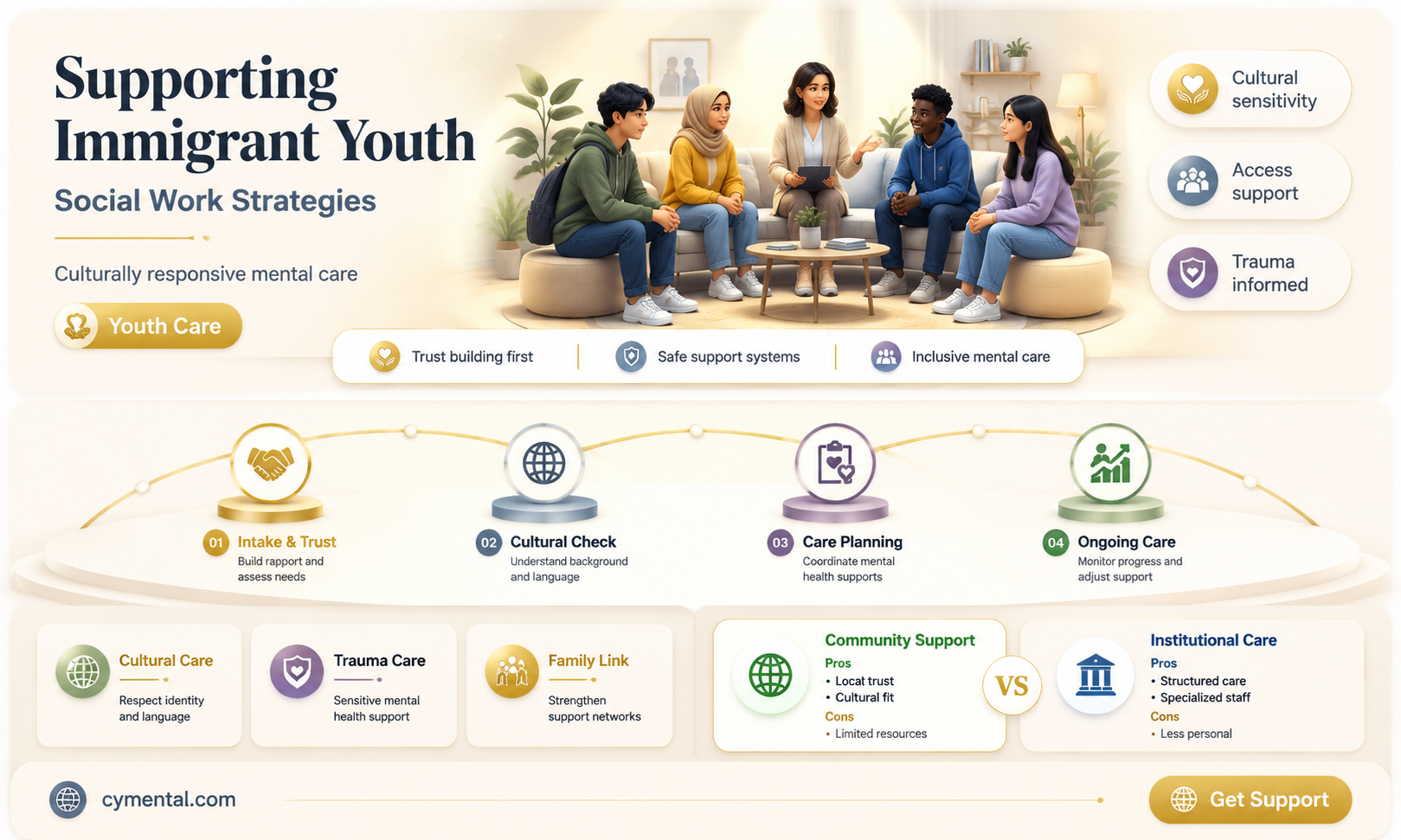
Social workers play a crucial role in supporting immigrant adolescents with mental disabilities by addressing their unique challenges, which often stem from cultural displacement, language barriers, and systemic inequities. These professionals provide culturally sensitive interventions, such as trauma-informed care and psychoeducation, to help youth navigate their new environments while preserving their cultural identities. They also advocate for access to inclusive mental health services, collaborate with families to build trust and understanding, and connect adolescents to community resources like schools, legal aid, and support groups. By fostering resilience and empowerment, social workers ensure these vulnerable youth receive the holistic support needed to thrive in their adopted societies.
Explore related products


$9.59 $16.99


What You'll Learn
- Cultural sensitivity training for social workers to better understand immigrant adolescents' unique needs
- Access to multilingual mental health resources and services for accurate diagnosis and treatment
- Community-based support systems to foster social connections and reduce isolation among immigrant adolescents
- Trauma-informed care approaches to address past experiences and promote healing in vulnerable populations
- Advocacy for policy changes to improve access to education, healthcare, and legal support for immigrants

Cultural sensitivity training for social workers to better understand immigrant adolescents' unique needs
Social workers often encounter immigrant adolescents with mental disabilities who carry the weight of cultural dislocation, language barriers, and trauma. Without specialized training, even well-intentioned professionals risk perpetuating harm through misunderstandings or inadequate support. Cultural sensitivity training is not a luxury but a necessity to bridge this gap, ensuring interventions are effective, empathetic, and culturally congruent.
Consider a 16-year-old Syrian refugee diagnosed with PTSD who avoids eye contact during therapy sessions. A social worker untrained in cultural nuances might misinterpret this as disengagement or disrespect, potentially derailing the therapeutic relationship. However, in many Middle Eastern cultures, avoiding eye contact signifies respect, especially among youth interacting with authority figures. Training that highlights such cultural norms equips social workers to reframe behaviors, fostering trust rather than miscommunication. Programs like the *Cultural Competence in Social Work* curriculum offer modules on non-verbal communication, religious practices, and family structures across cultures, providing actionable insights for real-world scenarios.
Effective cultural sensitivity training must go beyond surface-level awareness, incorporating historical context and systemic barriers. For instance, a workshop on the legacy of colonialism in Latin America could help social workers understand why some immigrant families distrust Western mental health systems. Such training should also include role-playing exercises where participants navigate scenarios like explaining medication regimens to a Somali family who prioritizes traditional healing practices. Practical tools, such as bilingual assessment scales or culturally adapted CBT techniques, should be integrated into the curriculum. A study in the *Journal of Ethnic & Cultural Diversity in Social Work* found that social workers who completed 20+ hours of culturally tailored training reported higher confidence in addressing immigrant adolescents’ needs.
However, training alone is insufficient without ongoing self-reflection and community engagement. Social workers must confront their own biases and assumptions, perhaps through journaling or peer supervision groups. Collaborating with cultural brokers—community members who act as liaisons—can provide real-time guidance on culturally appropriate interventions. For example, a Mexican-American adolescent with autism might benefit from a social worker partnering with a local *promotora* (community health worker) to design a family-centered support plan that aligns with cultural values of *familismo* (family unity).
In conclusion, cultural sensitivity training is a dynamic, multifaceted process that demands commitment and humility. By addressing knowledge gaps, fostering cultural humility, and leveraging community partnerships, social workers can create safe, inclusive spaces for immigrant adolescents with mental disabilities. The goal is not to become experts in every culture but to develop the skills to ask the right questions, listen deeply, and adapt practices to honor each client’s unique identity.
Nature's Healing Power: Can Outdoor Therapy Ease Mental Illness?
You may want to see also
Explore related products


Access to multilingual mental health resources and services for accurate diagnosis and treatment
Language barriers can exacerbate mental health challenges for immigrant adolescents, often leading to misdiagnosis or inadequate treatment. Without access to services in their native tongue, these young people may struggle to articulate symptoms, understand therapeutic interventions, or trust the professionals providing care. For instance, a Spanish-speaking teenager with anxiety might describe their symptoms as "nervios," a culturally specific term that encompasses physical and emotional distress. A monolingual English-speaking clinician might misinterpret this as a somatic complaint rather than recognizing the underlying anxiety disorder.
To address this, social workers must advocate for and facilitate access to multilingual mental health resources. This includes connecting adolescents with bilingual therapists, interpreters trained in mental health terminology, and translated diagnostic tools. For example, the *DSM-5* (Diagnostic and Statistical Manual of Mental Disorders, Fifth Edition) offers culturally adapted versions in multiple languages, ensuring assessments are accurate and culturally sensitive. Additionally, digital platforms like teletherapy services with language options can bridge gaps for families in remote areas.
However, simply providing translation is not enough. Social workers must also ensure that services are culturally competent. This involves understanding the adolescent’s cultural beliefs about mental health, which may differ significantly from Western frameworks. For instance, in some cultures, depression may be expressed as physical pain rather than emotional distress. Training clinicians to recognize these nuances is critical. Social workers can collaborate with community leaders or cultural brokers to educate providers and tailor interventions to the adolescent’s cultural context.
Practical steps include mapping local resources to identify bilingual providers, creating partnerships with schools to offer on-site counseling in multiple languages, and advocating for policy changes that mandate multilingual mental health services. For adolescents aged 12–18, group therapy sessions in their native language can foster peer support and reduce stigma. Caregivers should also be included in the process, as they play a pivotal role in the adolescent’s treatment adherence and recovery.
Ultimately, multilingual mental health resources are not a luxury but a necessity for immigrant adolescents with mental disabilities. By dismantling language barriers, social workers enable accurate diagnoses, culturally relevant treatment, and a sense of belonging for these vulnerable youth. This approach not only improves clinical outcomes but also empowers adolescents to navigate their new environment with greater confidence and resilience.
Shower Therapy: How Daily Showers Boost Mental Health and Well-being
You may want to see also
Explore related products




Community-based support systems to foster social connections and reduce isolation among immigrant adolescents
Immigrant adolescents with mental disabilities often face compounded challenges, including language barriers, cultural disorientation, and limited access to resources, which can exacerbate feelings of isolation. Community-based support systems play a pivotal role in bridging these gaps by creating safe, inclusive spaces where these youth can connect with peers, mentors, and cultural touchstones. Such systems not only foster social integration but also provide emotional and psychological support tailored to their unique needs.
One effective strategy is the establishment of culturally sensitive after-school programs that combine academic support with social activities. For instance, a program in a diverse urban neighborhood might offer homework help alongside art therapy sessions or sports teams, allowing participants to bond over shared interests while addressing educational gaps. Incorporating bilingual staff or translators ensures that language barriers do not hinder participation. For adolescents aged 12–18, such programs can run 2–3 times per week for 2–3 hours, balancing structure with flexibility to accommodate varying schedules.
Another critical component is peer mentoring programs, where immigrant adolescents are paired with slightly older youth who have navigated similar challenges. These mentors can provide practical advice on adapting to a new culture, academic systems, and social norms, while also offering emotional support. For example, a 16-year-old with autism might be paired with an 18-year-old who has successfully integrated into the local high school. Training mentors to recognize signs of mental distress and connect mentees to professional services ensures a holistic approach.
Community events that celebrate cultural diversity can also reduce isolation by fostering pride in one’s heritage while promoting cross-cultural understanding. Organizing festivals, cooking classes, or storytelling nights where immigrant adolescents can share traditions with the broader community creates a sense of belonging. For instance, a monthly cultural exchange event could rotate themes, such as Latin American music or Middle Eastern cuisine, encouraging participation from all age groups.
Finally, partnerships with local mental health organizations can embed therapeutic services within community settings, reducing stigma and increasing accessibility. Group therapy sessions held in familiar locations, such as community centers or schools, can address common issues like anxiety or depression in a culturally responsive manner. For adolescents aged 14–19, weekly 90-minute sessions led by bilingual therapists have shown promise in improving mental health outcomes while building social connections.
By weaving these community-based initiatives into the fabric of immigrant adolescents’ lives, social workers can create a supportive ecosystem that combats isolation, nurtures resilience, and empowers these youth to thrive in their new environments.
Supporting Your Boyfriend’s Mental Health: Practical Ways to Help Him Thrive
You may want to see also
Explore related products


Trauma-informed care approaches to address past experiences and promote healing in vulnerable populations
Immigrant adolescents with mental disabilities often carry the invisible weight of past traumas, from displacement and family separation to systemic discrimination and violence. Trauma-informed care (TIC) offers a framework to acknowledge these experiences without retraumatizing, fostering safety and trust in a system that may have historically failed them.
Step 1: Create a Safe, Predictable Environment
Begin by structuring interactions to minimize unpredictability, a common trigger for trauma survivors. Use clear, consistent routines in sessions—for example, starting with a grounding exercise like deep breathing or a brief check-in. For adolescents aged 12–18, visual schedules or written agendas can reduce anxiety. Avoid sudden changes in topic or setting; if a transition is necessary, provide a verbal cue 5–10 minutes in advance.
Step 2: Prioritize Choice and Control
Trauma often strips individuals of agency. Restore this by offering choices whenever possible. For instance, allow adolescents to decide whether to sit, stand, or move during sessions, or let them choose the order of discussion topics. For those with limited verbal communication, use tools like picture cards or yes/no questions. A study in *Social Work Today* highlights that perceived control in therapeutic settings reduces hypervigilance by 30% in trauma-affected youth.
Caution: Avoid Overwhelming with Options
While choice is empowering, too many options can paralyze. Limit selections to 2–3 clear, manageable alternatives. For example, instead of asking, “What do you want to talk about today?” offer, “Would you like to start with your school experience or your family situation?”
Step 3: Integrate Somatic and Creative Modalities
Verbal processing alone may not suffice for adolescents with mental disabilities, especially if language barriers or cognitive differences exist. Incorporate body-based practices like yoga, drumming, or sensory kits (e.g., fidget tools, textured objects) to help regulate the nervous system. Art, music, or drama therapy can bypass linguistic limitations, allowing expression of emotions that words cannot capture. A 2021 pilot program in California reported a 40% increase in engagement among immigrant youth when creative therapies were introduced.
Analysis: The Role of Cultural Humility
TIC must be culturally responsive to avoid retraumatization. For example, a social worker might misinterpret a culturally normative behavior (e.g., avoiding eye contact) as a trauma response. Continuously assess your own biases and educate yourself on the adolescent’s cultural background. Collaborate with community leaders or translators to ensure interventions align with cultural values.
Trauma-informed care is not a linear checklist but a dynamic, relational practice. By centering safety, choice, and creativity, social workers can co-create spaces where immigrant adolescents feel seen, heard, and valued. Healing may not erase the past, but it can rewrite the narrative of the present—one grounded in resilience, not brokenness.
Naturopathic Approaches to Mental Health: Effective Support or Alternative?
You may want to see also
Explore related products


Advocacy for policy changes to improve access to education, healthcare, and legal support for immigrants
Immigrant adolescents with mental disabilities face systemic barriers that limit their access to essential services, perpetuating cycles of marginalization. Social workers are uniquely positioned to advocate for policy changes that dismantle these barriers, ensuring equitable access to education, healthcare, and legal support. By leveraging their expertise in both individual casework and systemic analysis, social workers can identify gaps in existing policies and propose targeted reforms that address the intersectional needs of this vulnerable population.
One critical area for advocacy is education. Many immigrant adolescents with mental disabilities struggle to access appropriate schooling due to language barriers, lack of specialized resources, or discriminatory policies. Social workers can push for the implementation of inclusive education policies that mandate culturally responsive curricula, provide training for educators on disability and immigration issues, and ensure the availability of bilingual mental health professionals in schools. For instance, advocating for the expansion of Individualized Education Programs (IEPs) to include culturally and linguistically appropriate accommodations can significantly improve educational outcomes for these students.
Healthcare access is another pressing issue. Immigrant families often face financial, legal, and cultural barriers to obtaining mental health services for their children. Social workers can advocate for policy changes that expand Medicaid eligibility to include all immigrants, regardless of legal status, and fund community-based mental health programs that offer sliding-scale fees. Additionally, promoting policies that require healthcare providers to offer interpretation services in multiple languages can improve communication and trust between providers and immigrant families. A practical example is the advocacy for the inclusion of mental health screenings as part of routine healthcare for immigrant adolescents, ensuring early intervention and prevention of more severe conditions.
Legal support is equally vital, as immigrant adolescents with mental disabilities are often at risk of exploitation, detention, or deportation. Social workers can champion policies that provide free legal representation for immigrant youth in immigration proceedings and ensure that mental health evaluations are considered in legal decisions. They can also advocate for the abolition of policies that criminalize immigration status, which disproportionately harm adolescents with disabilities. For instance, pushing for the passage of state-level laws that prohibit the detention of minors with mental disabilities could protect this population from further trauma and ensure their access to necessary services.
In conclusion, advocacy for policy changes is a powerful tool for social workers to address the systemic challenges faced by immigrant adolescents with mental disabilities. By focusing on education, healthcare, and legal support, social workers can create pathways to inclusion and equity. Practical steps include drafting policy briefs, collaborating with lawmakers, and mobilizing communities to support legislative reforms. Through persistent and informed advocacy, social workers can transform policies into instruments of justice, ensuring that immigrant adolescents with mental disabilities receive the support they need to thrive.
Nurturing Mental Well-Being: Essential Strategies for a Healthier Mind
You may want to see also
Frequently asked questions
Social workers can identify mental health issues by conducting culturally sensitive assessments, building trust through consistent communication, and collaborating with families and schools to understand the adolescent’s behavior, history, and environmental stressors.
Social workers can provide or facilitate access to bilingual services, use interpreters, and advocate for culturally appropriate resources to ensure effective communication and understanding of mental health needs.
Social workers can educate adolescents and their families about available services, assist with insurance and paperwork, and coordinate care between healthcare providers, schools, and community organizations.
Social workers can build trust by demonstrating cultural humility, maintaining confidentiality, involving families in the process, and showing consistent support and empathy to create a safe and nonjudgmental environment.
Social workers can provide trauma-informed care, connect adolescents to support groups, advocate against discrimination, and help them develop coping skills to navigate systemic barriers and promote resilience.