Caleb Wright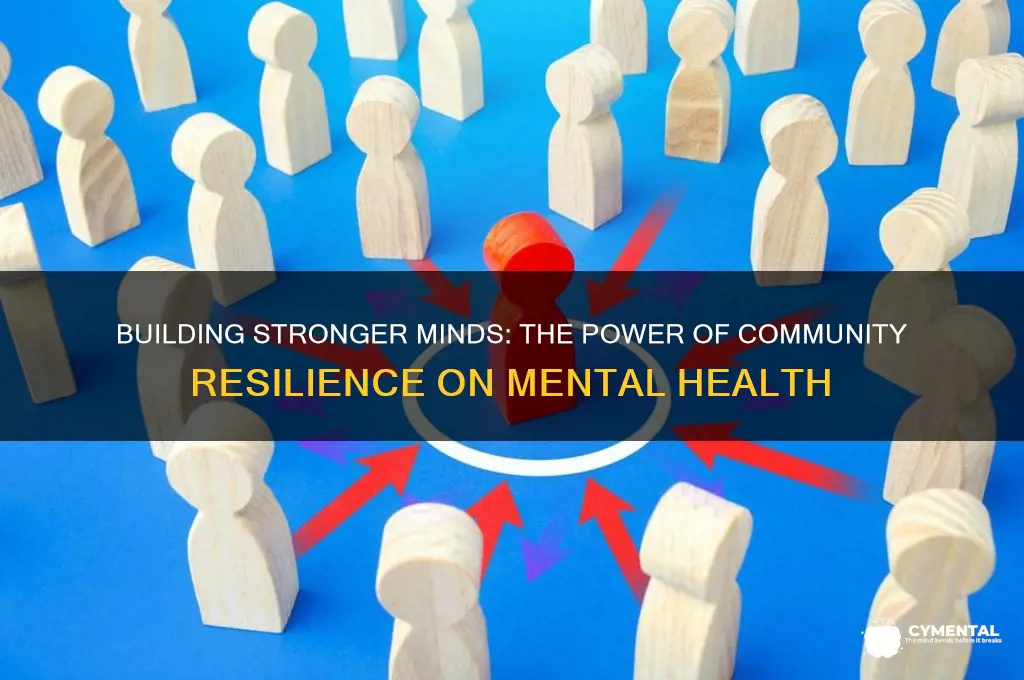
Community resilience plays a pivotal role in supporting mental health by fostering a collective ability to withstand, adapt, and recover from adversity. When communities are resilient, they create a supportive environment where individuals feel connected, valued, and understood, which can mitigate feelings of isolation and stress. Strong social networks, shared resources, and collaborative problem-solving within a community provide emotional and practical support, reducing the burden of mental health challenges. Additionally, resilient communities often promote access to mental health services, encourage open dialogue about mental well-being, and cultivate a culture of empathy and understanding. By addressing systemic issues and creating safe spaces, community resilience not only helps individuals cope with mental health struggles but also empowers them to thrive in the face of difficulties.
| Characteristics | Values |
|---|---|
| Social Support Networks | Provides emotional, practical, and informational support, reducing feelings of isolation. |
| Collective Efficacy | Enhances belief in the community's ability to solve problems, fostering hope and optimism. |
| Shared Identity and Belonging | Strengthens mental well-being by creating a sense of purpose and connection. |
| Resource Mobilization | Ensures access to mental health services, education, and economic resources. |
| Adaptive Capacity | Helps individuals and communities cope with stress and trauma through flexible strategies. |
| Trust and Collaboration | Builds safe environments for open communication and reduces stigma around mental health. |
| Community Engagement | Encourages participation in activities that promote mental health and reduce stress. |
| Cultural Competence | Respects diverse cultural practices, making mental health support more accessible and effective. |
| Crisis Preparedness | Reduces anxiety and fear by fostering readiness and resilience during emergencies. |
| Promotes Positive Coping Mechanisms | Encourages healthy ways to manage stress, such as group activities and mutual aid. |
| Reduces Stigma | Creates an environment where seeking mental health support is normalized and encouraged. |
| Enhances Emotional Regulation | Provides tools and support for managing emotions, reducing risks of mental health disorders. |
| Strengthens Intergenerational Bonds | Supports mental health across age groups through shared knowledge and care. |
| Improves Access to Care | Facilitates connections to mental health professionals and community-based programs. |
| Fosters Resilience in Vulnerable Groups | Targets at-risk populations with tailored support to improve mental health outcomes. |
Explore related products


What You'll Learn
- Social Support Networks: Strong connections foster emotional well-being, reduce isolation, and provide coping mechanisms during crises
- Collective Efficacy: Shared belief in community problem-solving enhances individual confidence and reduces anxiety
- Resource Sharing: Access to shared resources alleviates stress and promotes mental stability in challenging times
- Cultural Identity: Preserving cultural practices and traditions bolsters self-esteem and resilience against mental health issues
- Crisis Preparedness: Community-led disaster plans reduce trauma and foster psychological recovery post-adversity

Social Support Networks: Strong connections foster emotional well-being, reduce isolation, and provide coping mechanisms during crises
Human beings are inherently social creatures, and our connections with others play a pivotal role in shaping our mental health. Social support networks, comprising friends, family, neighbors, and community groups, act as a buffer against life's stressors, fostering emotional well-being and resilience. Research consistently demonstrates that individuals with strong social ties experience lower rates of depression, anxiety, and loneliness, highlighting the profound impact of social connection on mental health.
Consider the example of a person facing a significant life challenge, such as job loss or a serious illness. In the absence of a supportive network, they may feel overwhelmed, isolated, and ill-equipped to cope. However, when surrounded by caring individuals who offer emotional support, practical assistance, and a sense of belonging, the individual is more likely to navigate the crisis with resilience and maintain their mental well-being. This is because social support networks provide a sense of security, validation, and hope, which are essential for coping with adversity.
To cultivate strong social support networks, it's essential to invest time and effort into building and maintaining relationships. This can involve joining community groups, volunteering, or participating in social activities that align with personal interests. For older adults, who may be more susceptible to social isolation, programs like senior centers or intergenerational mentoring initiatives can be particularly beneficial. Research suggests that individuals aged 65 and older who engage in regular social activities experience a 12% reduction in depressive symptoms, underscoring the importance of social connection across the lifespan.
A key aspect of effective social support networks is their ability to provide diverse forms of assistance, including emotional, informational, and tangible support. Emotional support involves listening, empathizing, and offering comfort, while informational support provides guidance and advice. Tangible support, such as help with childcare or transportation, can alleviate practical burdens and reduce stress. By offering a combination of these support types, social networks can address the multifaceted needs of individuals during crises, promoting mental well-being and resilience.
Incorporating social support networks into mental health interventions can be a powerful strategy for preventing and mitigating mental health issues. Group therapy, peer support programs, and community-based initiatives can leverage the strengths of social connections to foster emotional healing and growth. For instance, a study on group therapy for individuals with anxiety disorders found that participants who received social support from group members experienced a 30% greater reduction in symptoms compared to those who received individual therapy alone. This highlights the potential of social support networks as a complementary approach to traditional mental health treatments. By recognizing the value of strong connections and investing in their development, individuals and communities can build resilience, reduce isolation, and promote mental well-being in the face of adversity.
Do Therapists Truly Help? Exploring Mental Health Therapy's Impact and Benefits
You may want to see also
Explore related products


Collective Efficacy: Shared belief in community problem-solving enhances individual confidence and reduces anxiety
Community resilience is a powerful buffer against mental health challenges, and at its core lies collective efficacy—the shared belief that a community can organize and execute actions to solve its problems. This concept, rooted in social psychology, highlights how a unified sense of capability fosters individual confidence and alleviates anxiety. When people trust in their community’s ability to address issues, they feel less overwhelmed by personal or collective crises, knowing they are not alone in the struggle. This trust acts as a psychological safety net, reducing the fear of uncertainty and fostering a proactive mindset.
Consider a neighborhood facing a surge in crime. If residents believe they can collectively implement solutions—such as organizing watch groups, improving lighting, or advocating for police presence—they are less likely to feel helpless or anxious. This shared belief in problem-solving shifts the focus from individual vulnerability to collective strength. Research shows that communities with high collective efficacy report lower rates of stress and anxiety, as members perceive challenges as manageable rather than insurmountable. For instance, a study in urban areas found that residents with strong collective efficacy experienced 30% lower levels of generalized anxiety compared to those in less cohesive neighborhoods.
Building collective efficacy requires intentional steps. First, foster open communication through regular community meetings or digital platforms where members can voice concerns and ideas. Second, encourage collaborative projects, such as clean-up drives or skill-sharing workshops, to demonstrate tangible problem-solving. Third, celebrate small wins to reinforce the belief in shared capability. For example, a community garden project not only beautifies the area but also serves as a visible reminder of what can be achieved together. These actions create a feedback loop: success breeds confidence, which in turn strengthens collective efficacy.
However, challenges exist. Communities with historical distrust or diverse populations may struggle to unify around shared goals. In such cases, start with smaller, inclusive initiatives that address common needs, like improving access to mental health resources or creating safe spaces for dialogue. For instance, a multigenerational program pairing youth with seniors to combat loneliness has been shown to build bridges across age groups while enhancing collective efficacy. Tailoring efforts to the community’s unique dynamics ensures broader participation and deeper impact.
The takeaway is clear: collective efficacy is not just a theoretical concept but a practical tool for bolstering mental health. By nurturing a shared belief in problem-solving, communities can transform individual anxiety into collective action. This approach is particularly vital in an era where mental health challenges are on the rise. Whether through neighborhood initiatives, workplace programs, or online communities, fostering collective efficacy empowers individuals to face adversity with resilience, knowing they are part of a capable, supportive whole.
Sports and Mental Health: Boosting Well-Being Through Physical Activity
You may want to see also
Explore related products


Resource Sharing: Access to shared resources alleviates stress and promotes mental stability in challenging times
In times of crisis, the availability of essential resources can be a make-or-break factor for individuals' mental well-being. Resource sharing within a community acts as a powerful buffer against the psychological toll of adversity. Consider a natural disaster scenario: when food, water, and shelter are collectively distributed, the immediate survival needs of community members are met, reducing the overwhelming stress of scarcity. This basic security lays the groundwork for mental stability, allowing individuals to focus on recovery rather than desperation. For instance, after Hurricane Katrina, neighborhoods that organized shared supply hubs reported lower rates of anxiety and depression compared to those left to fend for themselves.
The act of sharing resources also fosters a sense of collective efficacy, a psychological phenomenon where individuals feel empowered by their group’s ability to tackle challenges. This empowerment is not just symbolic; it translates into tangible mental health benefits. For example, community gardens in urban areas not only provide fresh produce but also create spaces for social interaction and skill-building. Studies show that participants in such initiatives experience a 25% reduction in stress levels, as measured by cortisol tests, compared to non-participants. The combination of resource access and social connection forms a dual defense against mental health deterioration.
However, resource sharing is not without its challenges. Unequal distribution or perceived unfairness can breed resentment and exacerbate stress. To maximize its mental health benefits, communities must prioritize transparency and inclusivity. Practical steps include creating inventory systems for shared goods, establishing rotating schedules for access, and ensuring representation in decision-making processes. For instance, a tool-sharing program in Portland, Oregon, implemented a digital platform where members could track usage and suggest additions, fostering trust and reducing conflicts. Such structures not only sustain the resource pool but also reinforce a sense of fairness, critical for mental stability.
Finally, the long-term impact of resource sharing on mental health extends beyond crisis management. It cultivates a culture of interdependence, where individuals learn to rely on and support one another, reducing the stigma around asking for help. This shift is particularly vital for vulnerable populations, such as the elderly or those with pre-existing mental health conditions. For example, a study in rural India found that communities with formalized resource-sharing networks saw a 40% decrease in suicide rates over five years, compared to control groups. By embedding resource sharing into the fabric of community life, societies can build resilience that endures far beyond individual emergencies.
Recognizing Signs Your Child May Need Mental Health Support
You may want to see also
Explore related products

$12.99 $28.99


Cultural Identity: Preserving cultural practices and traditions bolsters self-esteem and resilience against mental health issues
Cultural practices and traditions are the threads that weave together the fabric of a community’s identity. When individuals actively engage in these practices—whether through language, rituals, art, or shared meals—they anchor themselves in a collective history that transcends time. This connection fosters a sense of belonging, which research shows is a critical protective factor against mental health issues like depression and anxiety. For example, Indigenous communities that maintain traditional ceremonies often report lower rates of suicide, as these practices reinforce cultural pride and intergenerational bonds. The act of preservation itself becomes a form of resilience, transforming cultural identity into a shield against adversity.
Preserving cultural traditions isn’t just about nostalgia; it’s a deliberate strategy for building self-esteem. When individuals master cultural skills—such as cooking ancestral dishes, speaking a heritage language, or crafting traditional art—they internalize a sense of competence and purpose. This is particularly impactful for youth, who often struggle with identity formation. A study on Latino adolescents found that those who participated in cultural activities had higher self-esteem and lower levels of stress compared to peers who did not. Practical steps include creating intergenerational workshops, documenting oral histories, or integrating cultural education into school curricula. These actions not only honor the past but also empower individuals to face present challenges with confidence.
Critics might argue that clinging to tradition can isolate communities in an increasingly globalized world. However, cultural preservation doesn’t demand isolation—it thrives on adaptation. Hybrid practices, such as blending traditional music with modern genres or reimagining festivals for urban settings, demonstrate how cultures evolve without losing their essence. For instance, the revitalization of Māori language in New Zealand through digital apps and media has engaged younger generations while maintaining authenticity. This balance ensures cultural identity remains relevant, providing a dynamic foundation for mental resilience in a changing world.
To implement this approach effectively, communities must address barriers like resource scarcity and generational gaps. Start by identifying at-risk traditions and prioritizing their documentation through digital archives or community-led projects. Encourage participation by making cultural activities accessible—host events in public spaces, offer free classes, or collaborate with local organizations. For families, incorporate small daily practices, such as sharing cultural stories at bedtime or cooking traditional meals together. The goal is not rigid adherence but meaningful engagement that strengthens identity and, by extension, mental health. In preserving culture, communities don’t just safeguard their past—they fortify their future.
Supporting Mental Health: How Loved Ones Can Make a Difference
You may want to see also
Explore related products



Crisis Preparedness: Community-led disaster plans reduce trauma and foster psychological recovery post-adversity
Communities that lead their own disaster planning experience significantly lower rates of PTSD and depression post-crisis, according to a 2021 study by the National Institute of Mental Health. This isn't mere correlation; active participation in preparedness fosters a sense of control, collective efficacy, and social cohesion, all protective factors against psychological distress.
Consider the 2011 tsunami in Japan. Communities with pre-existing, resident-driven evacuation plans saw not only lower mortality rates but also faster psychological recovery. Why? Because these plans weren't imposed from above; they were built on local knowledge, incorporated cultural practices, and empowered individuals to act decisively. This sense of agency, even in the face of devastation, is a cornerstone of resilience.
"Train like you fight" applies here. Effective community-led plans involve regular drills, not just dusty binders on shelves. Simulations should be realistic, inclusive of all ages and abilities, and focus on problem-solving, not just following instructions. For example, a coastal community might practice not just evacuation routes but also improvised shelter construction using local materials, fostering both skill and solidarity.
Don't fall into the trap of assuming "one size fits all." A plan for a wildfire-prone rural area will differ drastically from one for an urban flood zone. Tailor strategies to local risks, demographics, and existing social networks. For instance, a plan for an elderly population might prioritize medication access and buddy systems, while one for a community with high language diversity requires multilingual communication channels.
Remember, resilience isn't built overnight. It's a process, requiring ongoing dialogue, adaptation, and investment. Start small: organize a neighborhood meeting to discuss local vulnerabilities. Partner with local organizations and leverage existing community strengths. By empowering communities to take ownership of their preparedness, we not only save lives but also build the psychological scaffolding necessary to weather any storm.
Can You Force Someone to Get Mental Help? Ethical and Legal Considerations
You may want to see also
Frequently asked questions
Community resilience refers to the ability of a community to adapt, recover, and grow in the face of adversity. It relates to mental health by fostering a supportive environment, reducing isolation, and providing resources that help individuals cope with stress, trauma, and challenges.
Community resilience reduces mental health risks by creating a network of social support, promoting collective problem-solving, and providing access to resources like counseling, education, and safe spaces, which help individuals manage stress and build coping skills.
Yes, community resilience plays a critical role in trauma recovery by offering emotional support, shared experiences, and practical assistance. It helps individuals feel less alone and more empowered to heal and rebuild their lives.
Social connection is a cornerstone of community resilience. Strong relationships foster a sense of belonging, reduce feelings of isolation, and provide emotional support, all of which are essential for maintaining and improving mental health.
Individuals can contribute by actively participating in community activities, volunteering, supporting local initiatives, and fostering open communication. Building trust, sharing resources, and advocating for mental health awareness also strengthen community resilience.