Caleb Wright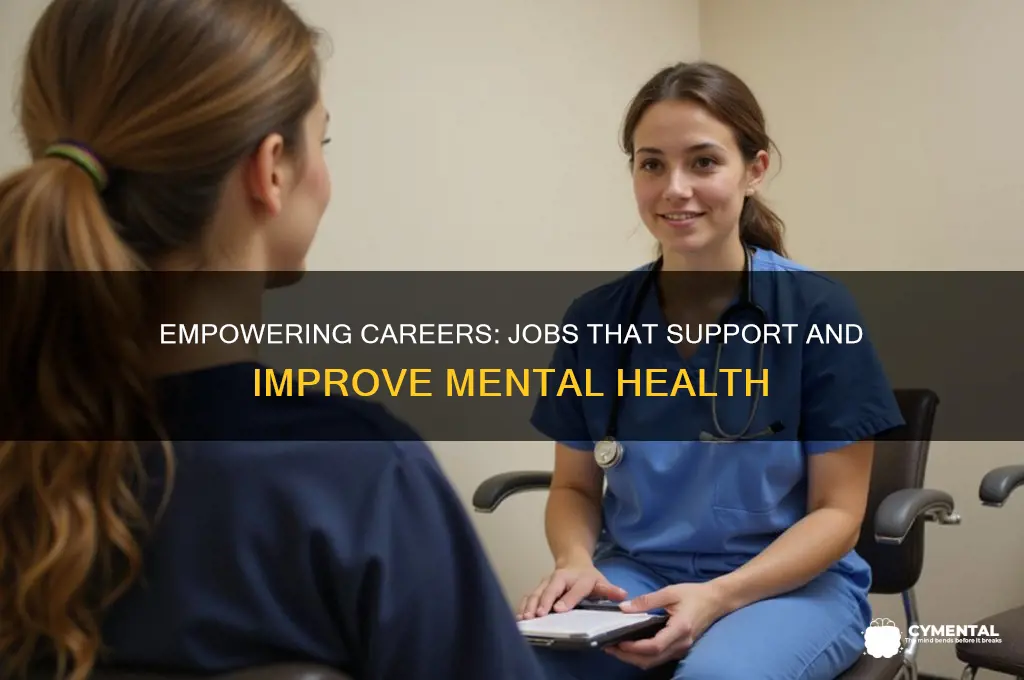
Helping others with their mental health can be a deeply rewarding career path, offering opportunities to make a meaningful impact on individuals’ lives. There are numerous roles across various fields that focus on supporting mental well-being, ranging from clinical positions like therapists, psychologists, and psychiatrists, to community-based roles such as mental health counselors, social workers, and peer support specialists. Additionally, non-clinical roles like mental health educators, wellness coaches, and crisis hotline operators play a vital part in promoting awareness and providing immediate assistance. Whether through direct care, advocacy, or prevention, these professions allow individuals to contribute to a healthier, more compassionate society while addressing the growing need for mental health support.
| Characteristics | Values |
|---|---|
| Job Titles | Mental Health Counselor, Psychologist, Psychiatrist, Social Worker, Therapist, School Counselor, Peer Support Specialist, Crisis Intervention Specialist, Substance Abuse Counselor, Art/Music/Drama Therapist |
| Education Requirements | Varies: Bachelor's degree (e.g., Social Work, Psychology) to Doctoral degree (e.g., PhD, PsyD, MD) |
| Licensing/Certification | Required for most roles (e.g., LPC, LCSW, LMFT, PsyD, MD) |
| Work Environment | Hospitals, clinics, schools, private practices, community centers, NGOs, telehealth platforms |
| Key Skills | Active listening, empathy, communication, problem-solving, crisis management, cultural competency |
| Average Salary (US) | $40,000 - $200,000+ (varies by role, experience, and location) |
| Job Outlook (US) | 22% growth (2021-2031) for mental health counselors, faster than average |
| Impact on Others | Direct support for individuals, families, and communities; improves mental well-being, reduces stigma, and promotes resilience |
| Work Hours | Flexible; may include evenings/weekends for client availability |
| Emotional Demands | High; requires self-care and resilience to manage vicarious trauma |
| Additional Roles | Mental Health Advocate, Wellness Coach, Chaplain, Occupational Therapist, Nurse Practitioner (Psychiatric) |
| Volunteer Opportunities | Crisis hotlines, peer support groups, community outreach programs |
| Remote Work Options | Increasingly available, especially in telehealth and online counseling |
| Continuing Education | Required for license renewal and staying updated with best practices |
| Diverse Populations Served | Children, adolescents, adults, seniors, veterans, LGBTQ+ individuals, culturally diverse communities |
Explore related products


What You'll Learn
- Counseling and Therapy: Provide emotional support, guidance, and coping strategies to individuals struggling with mental health issues
- Social Work: Assist vulnerable populations by connecting them to resources and advocating for their mental well-being
- Peer Support Specialist: Use personal recovery experience to inspire and mentor others facing similar mental health challenges
- Mental Health Educator: Teach communities about mental health awareness, stigma reduction, and early intervention strategies
- Crisis Intervention: Offer immediate support and de-escalation techniques during mental health emergencies or crises

Counseling and Therapy: Provide emotional support, guidance, and coping strategies to individuals struggling with mental health issues
Mental health counseling and therapy are professions that demand empathy, active listening, and a structured approach to helping individuals navigate emotional turmoil. Unlike general support roles, counselors and therapists undergo rigorous training to diagnose conditions, develop treatment plans, and employ evidence-based techniques like cognitive-behavioral therapy (CBT) or dialectical behavior therapy (DBT). For instance, a therapist might use CBT to help a client reframe negative thought patterns over 12–16 sessions, each lasting 45–60 minutes, tailored to the client’s needs. This role requires a master’s degree in counseling or psychology, licensure, and often specialization in areas like trauma, addiction, or child psychology.
Consider the practical steps to enter this field: earn a bachelor’s degree in psychology or a related field, pursue a master’s in counseling or social work, complete 2,000–4,000 hours of supervised clinical experience, and pass licensing exams like the National Counselor Examination (NCE). Specializations, such as becoming a Certified Trauma Professional (CTP), can enhance your expertise. Caution: this career involves emotional labor, requiring self-care practices like regular supervision, mindfulness, and setting boundaries to avoid burnout.
Persuasively, counseling and therapy offer a unique opportunity to foster profound change in others’ lives. Imagine helping a teenager develop resilience through mindfulness exercises or guiding a couple through communication strategies to rebuild trust. The impact is measurable: studies show that 75% of individuals who engage in therapy experience symptom relief. However, this role isn’t for everyone—it demands patience, resilience, and a commitment to lifelong learning. If you thrive on helping others uncover their strengths, this path could be deeply rewarding.
Comparatively, counseling and therapy differ from peer support roles in their scope and depth. While peer supporters offer lived-experience empathy, therapists provide clinical expertise, blending art and science to address complex issues. For example, a therapist might integrate art therapy for a nonverbal child or use exposure therapy for someone with PTSD. This distinction highlights the need for formal training and ethical guidelines, ensuring clients receive safe, effective care.
Descriptively, a day in the life of a therapist might involve morning sessions with clients, afternoon case notes, and evening supervision meetings. The office is a sanctuary—soft lighting, comfortable seating, and perhaps a fidget toy or tissue box within reach. Each session is a delicate dance, balancing empathy with structured interventions. Over time, you’ll witness clients transform from overwhelmed to empowered, making this career both challenging and profoundly fulfilling.
Media's Role in Amplifying Mental Health Awareness and Advocacy
You may want to see also
Explore related products


Social Work: Assist vulnerable populations by connecting them to resources and advocating for their mental well-being
Social work stands as a cornerstone in the effort to support mental health, particularly for vulnerable populations who often face systemic barriers to care. Unlike therapists or counselors, social workers focus on the broader context of an individual’s life—housing, employment, education, and access to healthcare—recognizing that mental well-being is deeply intertwined with these factors. For instance, a homeless youth struggling with anxiety may need stable housing and a supportive school environment before therapeutic interventions can be effective. Social workers act as navigators, connecting clients to resources like food assistance, legal aid, or substance abuse programs, while also advocating for policy changes that address root causes of distress.
To enter this field, a bachelor’s degree in social work (BSW) is the minimum requirement, though a master’s degree (MSW) is often necessary for clinical roles or advanced positions. Licensing requirements vary by state but typically involve supervised fieldwork and passing an exam. Practical skills such as active listening, crisis intervention, and cultural competency are essential. For example, a social worker assisting an elderly immigrant with depression must understand language barriers, cultural stigma around mental health, and the client’s unique needs to provide effective support.
One of the most impactful aspects of social work is its emphasis on advocacy. Social workers often collaborate with community organizations, schools, and government agencies to create systemic change. For instance, a social worker might organize a campaign to increase funding for mental health services in underserved neighborhoods or testify in legislative hearings about the need for affordable housing. This dual focus on individual support and systemic reform sets social work apart from other mental health professions.
However, the role is not without challenges. Social workers frequently encounter high caseloads, bureaucratic hurdles, and emotionally demanding situations. Burnout is a significant risk, making self-care practices—such as regular supervision, peer support, and setting boundaries—critical. For those drawn to this work, the rewards are profound: the opportunity to empower marginalized individuals, foster resilience, and contribute to a more equitable society.
In summary, social work offers a unique pathway to support mental health by addressing both individual needs and systemic barriers. It requires a blend of practical skills, advocacy, and emotional resilience. For those passionate about creating meaningful change, this profession provides a platform to make a lasting impact on the lives of vulnerable populations.
Hockey's Mental Edge: Boosting Resilience, Focus, and Well-Being
You may want to see also
Explore related products


Peer Support Specialist: Use personal recovery experience to inspire and mentor others facing similar mental health challenges
Peer Support Specialists are living proof that recovery from mental health challenges is not only possible but also transformative. By leveraging their own experiences, they offer a unique blend of empathy, understanding, and practical guidance that clinical professionals often cannot replicate. This role is grounded in the belief that shared experience fosters connection and hope, making it a powerful tool in mental health support systems. Unlike traditional therapy, peer support is a partnership where both individuals grow, creating a dynamic that feels less hierarchical and more collaborative.
To become a Peer Support Specialist, one must first navigate their own recovery journey, gaining insights and skills that can be shared with others. Certification programs, available in many regions, provide structured training in active listening, boundary-setting, and crisis intervention. These programs typically require a combination of lived experience, formal education, and supervised practice hours. For instance, in the U.S., the National Certified Peer Specialist (NCPS) credential mandates at least 18 years of age, a high school diploma, and completion of a 40-hour training course. Practical tips for aspiring specialists include joining local mental health advocacy groups, documenting personal recovery milestones, and seeking mentorship from established peers.
The effectiveness of Peer Support Specialists lies in their ability to bridge the gap between clinical care and everyday life. They assist individuals in setting realistic goals, such as managing medication schedules, building social connections, or finding employment. For example, a specialist might help a peer create a daily routine that includes self-care practices like mindfulness exercises or journaling. Studies show that peer-led interventions can reduce hospital readmissions by up to 50% and improve overall quality of life. This role is particularly impactful in underserved communities, where stigma and lack of access to care often exacerbate mental health issues.
However, the role is not without challenges. Peer Support Specialists must continually manage their own mental health while supporting others, requiring robust self-awareness and self-care strategies. Burnout is a real risk, especially when working with individuals in acute distress. To mitigate this, specialists should establish clear boundaries, seek regular supervision, and engage in activities that recharge them, such as hobbies or therapy. Additionally, organizations employing Peer Support Specialists must provide adequate support, including access to clinical backup and opportunities for professional development.
In conclusion, Peer Support Specialists embody the transformative power of shared experience in mental health recovery. Their role is both deeply personal and highly structured, requiring a blend of lived insight and professional training. By fostering hope, teaching practical skills, and building community, they play a vital role in mental health systems worldwide. For those with a passion for helping others and a commitment to their own recovery, this career path offers a meaningful way to turn personal struggles into a source of strength for others.
Neurologists and Mental Health: Unlocking Treatment Options for Illness
You may want to see also
Explore related products


Mental Health Educator: Teach communities about mental health awareness, stigma reduction, and early intervention strategies
Mental health educators play a pivotal role in transforming societal attitudes and behaviors toward mental well-being. By delivering evidence-based information, they dismantle myths and foster environments where individuals feel safe seeking help. For instance, a study by the World Health Organization found that community-based education programs can reduce stigma by up to 30%, highlighting the measurable impact of this role. Educators often work in schools, workplaces, or community centers, tailoring their content to diverse audiences—from teenagers to seniors. Their toolkit includes workshops, webinars, and interactive activities designed to normalize conversations about mental health and equip people with practical coping strategies.
To become a mental health educator, one must first build a strong foundation in psychology, social work, or a related field. Certifications in mental health first aid or specialized training in stigma reduction can enhance credibility. Effective educators also possess strong communication skills, empathy, and cultural sensitivity to address the unique needs of different communities. For example, when working with adolescents, incorporating peer-led discussions or gamified learning can increase engagement. Conversely, older adults may benefit from simplified materials and one-on-one sessions. The key is adaptability—understanding your audience and meeting them where they are.
One of the most powerful tools in a mental health educator’s arsenal is storytelling. Sharing personal or anonymized narratives can humanize mental health struggles and make abstract concepts relatable. For instance, a story about a young professional overcoming burnout through early intervention can inspire others to prioritize their well-being. However, educators must tread carefully, ensuring stories are shared ethically and with consent. Pairing narratives with actionable steps, such as recognizing warning signs or accessing local resources, bridges empathy with empowerment. This dual approach not only raises awareness but also encourages proactive behavior.
Despite its rewards, the role of a mental health educator comes with challenges. Addressing deeply ingrained stigma requires patience and persistence, as change often occurs incrementally. Educators must also navigate sensitive topics without triggering distress in their audience. To mitigate this, they can provide trigger warnings, offer follow-up support, and collaborate with mental health professionals. Additionally, staying updated on the latest research ensures their teachings remain relevant and accurate. For example, incorporating findings on the gut-brain connection or digital mental health tools can enrich their curriculum and appeal to tech-savvy audiences.
Ultimately, mental health educators are catalysts for systemic change. By equipping communities with knowledge and tools, they create a ripple effect that extends beyond individual workshops. Schools with robust mental health education programs report lower rates of bullying and higher help-seeking behaviors among students. Workplaces that prioritize mental health training see improved productivity and employee retention. The takeaway? Investing in mental health education is not just an act of compassion—it’s a strategic move toward healthier, more resilient societies. For those passionate about making a difference, this role offers a unique opportunity to shape minds, challenge norms, and save lives.
Boost Your Brain Power: Proven Strategies for Sharpening Mental Acuity
You may want to see also
Explore related products


Crisis Intervention: Offer immediate support and de-escalation techniques during mental health emergencies or crises
In moments of acute mental health crisis, every second counts. Crisis intervention specialists step into the eye of the storm, offering immediate support to individuals experiencing severe distress, suicidal ideation, or psychotic episodes. Their role is to de-escalate the situation, stabilize the individual, and connect them to ongoing care. This high-stakes work demands a unique blend of empathy, quick thinking, and technical skill.
Consider the scenario of a 28-year-old experiencing a panic attack in a public space. A crisis intervention specialist would first assess the environment for safety, then employ grounding techniques like the 5-4-3-2-1 method (naming five things they see, four they can touch, etc.) to anchor the individual in the present. Verbal de-escalation strategies, such as active listening and validating emotions, are paired with non-verbal cues like calm body language and a steady tone of voice. The goal is to reduce physiological arousal and restore a sense of control.
Training in crisis intervention often includes certification in programs like Applied Suicide Intervention Skills Training (ASIST) or Crisis Prevention Intervention (CPI). These programs teach evidence-based techniques, such as the "ALGEE" framework (Assess for risk of suicide, Listen nonjudgmentally, Give reassurance and information, Encourage appropriate professional assistance, Encourage self-help and other support strategies). Practitioners must also understand the limits of their role: they are not therapists but first responders, stabilizing the crisis until long-term resources can be engaged.
A critical aspect of this work is self-care. Crisis intervention specialists regularly witness intense emotional pain, which can lead to vicarious trauma or burnout. Peer support groups, regular supervision, and mindfulness practices are essential tools for maintaining resilience. For instance, a specialist might use the "3-3-3 rule" after a challenging call: focus on three things you see, three you hear, and three you feel to reorient to the present moment.
Ultimately, crisis intervention is a lifeline for those in their darkest hours. It requires a rare combination of compassion and composure, but the impact is immeasurable. By mastering de-escalation techniques and understanding the nuances of acute mental health crises, these professionals transform moments of despair into opportunities for healing and hope.
Supporting Teens: Mental Health Professionals' Role in Abusive Relationships
You may want to see also
Frequently asked questions
Entry-level roles include mental health support worker, peer support specialist, or crisis hotline operator. These positions often require minimal formal qualifications and focus on providing emotional support, resources, and guidance to individuals in need.
Yes, many roles in mental health don’t require a psychology degree. Jobs like community health worker, social services assistant, or mental health technician often prioritize empathy, communication skills, and relevant certifications or training over a specific degree.
Yes, remote options include online therapist, mental health coach, or digital crisis counselor. These roles often require relevant qualifications (e.g., counseling certification) and allow you to support individuals through virtual platforms like video calls, messaging, or apps.