Noah Parker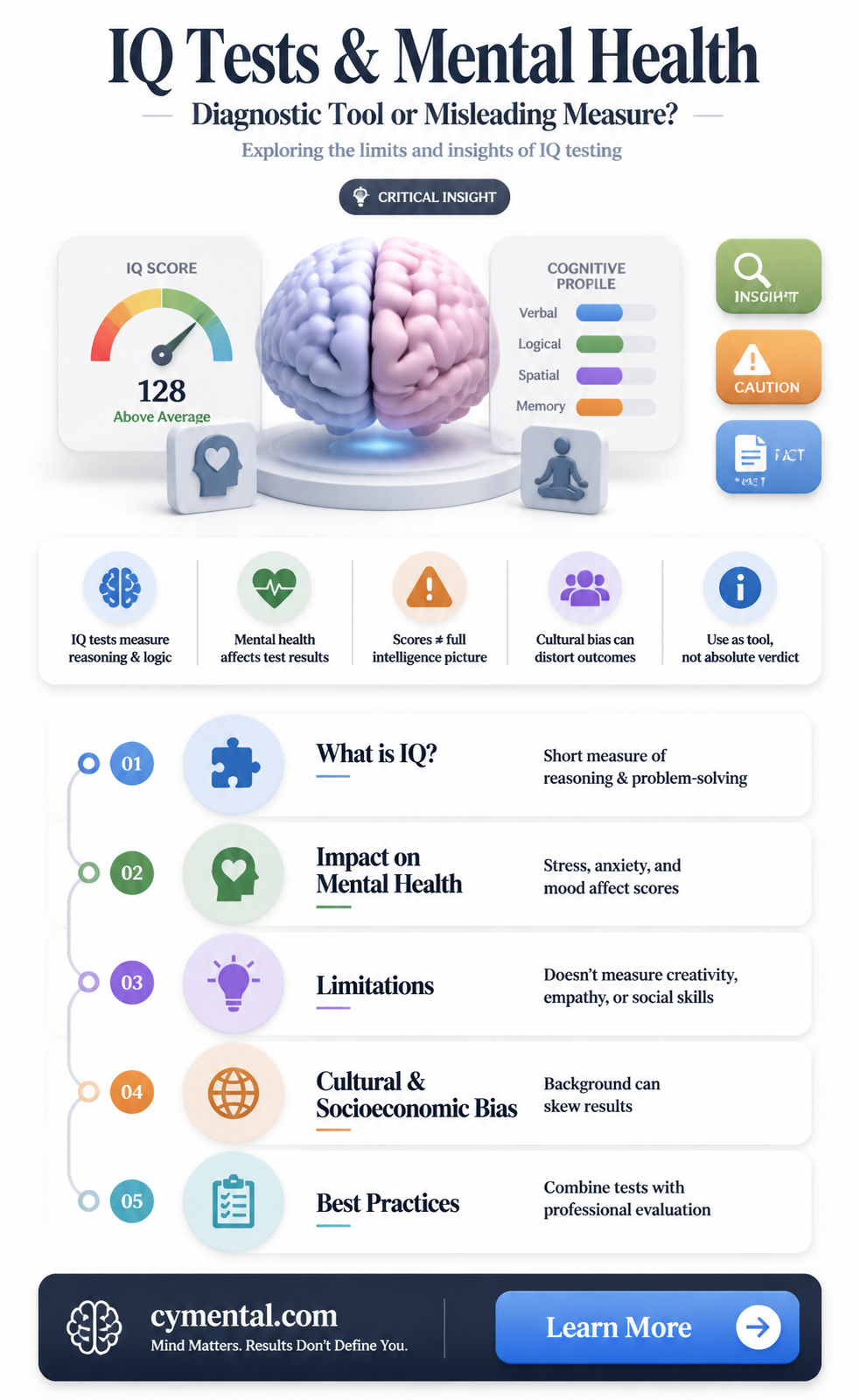
IQ tests, traditionally used to measure cognitive abilities and intelligence, are often questioned for their potential role in diagnosing mental illness. While these tests can provide insights into cognitive functioning, they are not designed to identify mental health disorders directly. Mental illnesses, such as depression, anxiety, or schizophrenia, involve complex emotional, behavioral, and psychological factors that extend beyond cognitive abilities. However, IQ test results may sometimes flag unusual patterns or deficits that could prompt further evaluation by mental health professionals. For instance, significant discrepancies between expected and actual performance might suggest underlying issues like attention disorders or neurodevelopmental conditions. Despite this, IQ tests should be used as supplementary tools rather than definitive diagnostic instruments, as they lack the specificity and sensitivity required to diagnose mental illness accurately. A comprehensive assessment, including clinical interviews, behavioral observations, and specialized psychological tests, remains essential for proper diagnosis and treatment planning.
| Characteristics | Values |
|---|---|
| Diagnostic Tool | IQ tests are not diagnostic tools for mental illness. They measure cognitive abilities, not mental health conditions. |
| Correlation with Mental Illness | Some studies show correlations between low IQ scores and certain mental illnesses (e.g., schizophrenia, intellectual disabilities), but these are not causal relationships. |
| Limitations | IQ tests do not assess symptoms of mental illness, emotional functioning, or behavioral patterns. |
| Complementary Role | IQ test results may provide context for understanding a person's cognitive strengths and weaknesses, which can be useful in conjunction with other assessments for mental health diagnosis. |
| Professional Judgment | Mental health professionals rely on comprehensive evaluations, including clinical interviews, behavioral observations, and standardized assessments, to diagnose mental illness, not solely on IQ test results. |
| Ethical Considerations | Using IQ tests as a sole indicator of mental illness can lead to misdiagnosis, stigmatization, and inappropriate treatment. |
| Current Guidelines | Diagnostic manuals like the DSM-5 and ICD-11 do not include IQ test results as criteria for diagnosing mental illnesses. |
| Research Gaps | Ongoing research explores the relationship between cognitive abilities and mental health, but conclusive evidence for using IQ tests in diagnosis is lacking. |
| Alternative Assessments | Mental health assessments typically use tools like symptom checklists, structured interviews, and behavioral rating scales. |
| Conclusion | IQ tests can provide supplementary information but are not a substitute for comprehensive mental health evaluations. |
Explore related products


$13.23 $19.99


What You'll Learn
- IQ Test Limitations: IQ tests measure cognitive ability, not mental health conditions directly
- Correlation vs. Causation: Low IQ scores may correlate with mental illness but don’t prove causation
- Diagnostic Tools: IQ tests are supplementary, not primary tools for diagnosing mental illness
- Specific Disorders: Some disorders (e.g., intellectual disability) may show IQ test relevance
- Professional Interpretation: Results must be analyzed by experts to avoid misdiagnosis or stigma

IQ Test Limitations: IQ tests measure cognitive ability, not mental health conditions directly
IQ tests, designed to assess cognitive abilities like reasoning, problem-solving, and memory, are often misunderstood as tools for diagnosing mental health conditions. However, this misconception can lead to misdiagnosis or delayed treatment. For instance, a low IQ score might be misinterpreted as a symptom of depression or schizophrenia, when in reality, these conditions affect cognitive function differently and require specific clinical assessments. IQ tests measure innate intellectual potential, not the fluctuations in cognitive performance caused by mental illness.
Consider the case of attention-deficit/hyperactivity disorder (ADHD). While individuals with ADHD may struggle with tasks requiring sustained attention, their IQ scores typically fall within the average to above-average range. An IQ test alone cannot differentiate between ADHD-related inattention and other conditions like anxiety or learning disabilities. Clinicians must rely on behavioral observations, symptom checklists, and comprehensive evaluations to make an accurate diagnosis. IQ tests, in this context, serve as supplementary data, not diagnostic criteria.
Another limitation arises from the static nature of IQ tests. Mental health conditions are dynamic, with symptoms varying in intensity and presentation over time. For example, a person experiencing a manic episode in bipolar disorder may exhibit heightened cognitive performance, potentially inflating their IQ score. Conversely, during a depressive episode, cognitive slowing could artificially lower their score. These fluctuations highlight the inadequacy of IQ tests as standalone tools for mental health diagnosis, as they fail to capture the temporal nuances of psychiatric conditions.
To effectively address mental health concerns, professionals must integrate IQ test results with other diagnostic methods. Neuropsychological assessments, which evaluate specific cognitive domains, can provide more targeted insights into how mental illness impacts brain function. Additionally, clinical interviews, self-report questionnaires, and observational data are essential for a holistic understanding of an individual’s mental health. Relying solely on IQ tests risks oversimplifying complex conditions and overlooking the need for personalized treatment plans.
In practical terms, if you or someone you know is concerned about mental health, seek a comprehensive evaluation from a qualified mental health professional. While IQ tests can offer valuable information about cognitive strengths and weaknesses, they are not diagnostic tools for mental illness. Instead, they should be part of a broader assessment strategy that prioritizes accuracy, context, and individualized care. Understanding this distinction ensures that mental health conditions are identified and treated appropriately, without the pitfalls of misinterpretation.
Mental Health Attitudes: Impact on Help-Seeking Behavior and Service Utilization
You may want to see also
Explore related products


Correlation vs. Causation: Low IQ scores may correlate with mental illness but don’t prove causation
Low IQ scores and mental illness often appear together in research studies, but this correlation doesn’t mean one causes the other. For instance, a 2015 study in *Psychological Medicine* found that individuals with schizophrenia had significantly lower IQ scores compared to the general population. However, the study couldn’t determine whether the low IQ scores were a result of the illness, a pre-existing factor, or a shared underlying cause. This distinction between correlation and causation is critical, as mistaking one for the other can lead to flawed diagnoses and ineffective interventions.
To illustrate, consider a child with attention deficit hyperactivity disorder (ADHD) who scores below average on an IQ test. The low score might reflect the child’s difficulty sustaining attention during the test, a symptom of ADHD, rather than an inherent cognitive deficit. Similarly, depression can impair concentration and memory, potentially lowering IQ test performance. In such cases, the IQ score is a marker of the mental illness’s impact on cognitive function, not a diagnostic tool for the illness itself.
Clinicians must approach IQ test results with caution, especially when assessing individuals with suspected mental illness. For example, a 30-year-old with bipolar disorder might score lower on an IQ test during a depressive episode due to slowed processing speed and reduced motivation. However, this doesn’t imply that bipolar disorder causes low IQ; rather, the illness temporarily affects cognitive performance. To avoid misinterpretation, practitioners should pair IQ tests with comprehensive psychological assessments, including symptom checklists and functional evaluations.
A practical tip for professionals: When interpreting IQ scores, ask whether the result reflects a stable trait or a temporary state influenced by the individual’s mental health. For instance, if a patient’s IQ score drops 15 points compared to a previous assessment, investigate whether this change coincides with a recent onset or exacerbation of symptoms. This contextual analysis helps differentiate between correlation and causation, ensuring more accurate diagnoses and tailored treatment plans.
In summary, while low IQ scores may correlate with mental illness, they don’t prove causation. IQ tests can provide valuable insights into cognitive functioning but should never be used in isolation to diagnose mental health conditions. By understanding the limitations of these tests and considering the broader context of an individual’s symptoms and history, clinicians can avoid misattributing causality and focus on addressing the root causes of both cognitive and mental health challenges.
Supporting Through Crisis: Texting Tips for Mental Breakdown Assistance
You may want to see also
Explore related products


Diagnostic Tools: IQ tests are supplementary, not primary tools for diagnosing mental illness
IQ tests, while valuable in assessing cognitive abilities, are not designed to diagnose mental illness. Their primary function lies in measuring intelligence across various domains like logical reasoning, spatial awareness, and verbal comprehension. Standardized IQ tests like the Wechsler Adult Intelligence Scale (WAIS) or the Stanford-Binet Intelligence Scales provide a numerical score, often with subtest scores, offering insights into an individual's cognitive strengths and weaknesses. However, mental illnesses are complex conditions characterized by disturbances in thinking, feeling, and behavior, requiring a multifaceted diagnostic approach.
IQ tests, by themselves, cannot capture the emotional, behavioral, and social aspects crucial for identifying mental health disorders.
Consider a scenario where a child struggles academically and exhibits signs of inattention. An IQ test might reveal average intelligence, but it wouldn't differentiate between ADHD, a learning disability, or anxiety, all of which can manifest in similar ways. A comprehensive evaluation would involve observations, behavioral assessments, interviews with parents and teachers, and potentially neurological examinations. IQ test results, in this context, could be a piece of the puzzle, helping rule out intellectual disability as a contributing factor, but not providing a definitive diagnosis.
Relating IQ scores to mental health requires a nuanced understanding. While some studies suggest correlations between lower IQ and increased risk for certain mental illnesses, these are statistical trends, not causal relationships. For instance, individuals with schizophrenia often show lower average IQ scores, but this doesn't mean everyone with a lower IQ will develop schizophrenia.
It's crucial to avoid misinterpretation. A high IQ doesn't immunize against mental illness, and a low IQ doesn't automatically indicate one. Mental health professionals rely on diagnostic criteria outlined in manuals like the DSM-5, which emphasize symptoms, duration, and functional impairment. IQ tests, when used appropriately, can contribute to a more comprehensive understanding of an individual's cognitive profile, potentially highlighting areas where additional support or interventions might be beneficial. However, they should never be the sole basis for diagnosing or ruling out mental illness.
Are Mental Health Diagnoses Helpful? Exploring Benefits and Limitations
You may want to see also
Explore related products


Specific Disorders: Some disorders (e.g., intellectual disability) may show IQ test relevance
IQ tests, while not diagnostic tools for most mental illnesses, hold specific relevance in identifying intellectual disability (ID), a neurodevelopmental disorder characterized by significant limitations in intellectual functioning and adaptive behavior. Diagnostically, an IQ score below 70, coupled with deficits in areas like communication, self-care, and social skills before age 18, is a core criterion. This quantitative threshold, though not absolute, provides a standardized benchmark for clinicians. However, reliance on IQ alone is insufficient; it must be contextualized within a broader assessment of developmental history and functional abilities.
Consider the case of a 10-year-old struggling academically. An IQ test revealing a score of 65, paired with observed difficulties in problem-solving and social interactions, could flag ID. Yet, a score of 68 in an adult with a history of independent living and employment might not warrant an ID diagnosis, highlighting the importance of age-appropriate norms and functional assessment. This underscores that IQ tests are not standalone diagnostics but part of a multifaceted evaluation.
Critics argue IQ tests are culturally biased, potentially misclassifying individuals from diverse backgrounds. For instance, a child from a low-resource environment might score lower due to limited access to educational stimuli, not inherent cognitive limitations. To mitigate this, clinicians must supplement IQ data with cultural context, adaptive behavior scales, and observational assessments. Tools like the Vineland Adaptive Behavior Scales can provide a more holistic view, ensuring accuracy in diagnosis.
Practically, for parents or educators suspecting ID, early intervention is key. If a child shows developmental delays, consult a psychologist for a comprehensive evaluation, including IQ testing, before age 5. Early diagnosis enables access to tailored educational programs, speech therapy, and occupational therapy, which can significantly improve long-term outcomes. Remember, an IQ test is a starting point, not a definitive answer, in the journey toward understanding and supporting individuals with ID.
Yoga's Transformative Power: Enhancing Mental Health and Well-being Naturally
You may want to see also
Explore related products

$40.99


Professional Interpretation: Results must be analyzed by experts to avoid misdiagnosis or stigma
IQ tests, while valuable tools for assessing cognitive abilities, are not diagnostic instruments for mental illness. Their results, when misinterpreted, can lead to harmful misdiagnoses and perpetuate stigma. This is why professional interpretation is crucial.
A qualified psychologist or neuropsychologist possesses the expertise to contextualize IQ scores within a broader framework of an individual's history, behavior, and other assessment data. They understand that a low IQ score, for instance, could stem from factors like learning disabilities, neurological conditions, or even test anxiety, rather than indicating a mental illness.
Consider a hypothetical scenario: a child struggles academically and scores below average on an IQ test. An untrained individual might jump to conclusions about intellectual disability or even a developmental disorder. A professional, however, would delve deeper. They would consider the child's medical history, observe their behavior in different settings, and potentially administer additional tests to assess specific cognitive domains. This comprehensive approach ensures a more accurate understanding of the child's strengths and challenges, preventing a rushed and potentially damaging diagnosis.
The consequences of misdiagnosis based on IQ scores alone can be severe. Individuals may be placed in inappropriate educational settings, denied opportunities, or face social stigma. For example, a misdiagnosis of intellectual disability could limit access to higher education or certain careers, even if the individual possesses the necessary skills and abilities.
Therefore, it's imperative to treat IQ test results as just one piece of a complex puzzle. Relying solely on these scores without professional interpretation can lead to inaccurate conclusions and potentially harmful outcomes. Seeking the expertise of a qualified professional ensures a responsible and ethical approach to understanding cognitive abilities and addressing any underlying concerns.
Exercise Boosts Elderly Mental Health: Benefits and Strategies for Wellbeing
You may want to see also
Frequently asked questions
No, an IQ test cannot directly diagnose mental illness. It measures cognitive abilities and intelligence, not mental health conditions.
While IQ test results may sometimes flag unusual cognitive patterns, they are not designed to identify mental health issues and should not be used as a diagnostic tool.
IQ tests may be used as part of a broader psychological evaluation to understand cognitive functioning, but they are not a primary tool for diagnosing mental illness.
Low IQ scores do not indicate mental illness. They reflect cognitive abilities, which can be influenced by various factors unrelated to mental health.
If you suspect a mental illness, consult a mental health professional for a proper assessment. An IQ test is not a substitute for a comprehensive mental health evaluation.