Ava Ramirez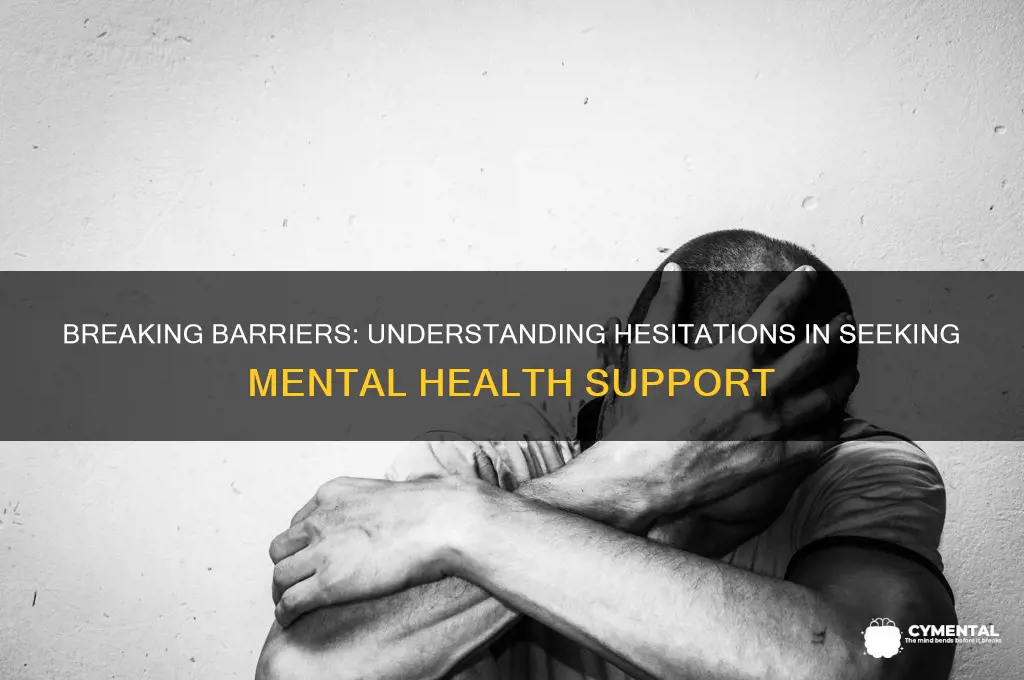
Seeking help for mental illness can be a daunting and complex decision for many individuals, often leading to hesitation and delay in accessing support. This reluctance may stem from various factors, including the pervasive stigma surrounding mental health, which can make people feel ashamed or weak for admitting they need assistance. Fear of judgment, discrimination, or being labeled as 'crazy' are common concerns that prevent individuals from reaching out. Additionally, a lack of understanding about mental health conditions and available treatment options might leave people unsure of where to turn or what to expect. Personal barriers such as denial, self-reliance, or previous negative experiences with healthcare systems can also contribute to this hesitation, making it crucial to address these obstacles to encourage timely and effective mental health care.
Explore related products


What You'll Learn
- Stigma and Shame: Fear of judgment or discrimination from others discourages seeking mental health support
- Lack of Awareness: Not recognizing symptoms or understanding available resources delays help-seeking behavior
- Financial Barriers: High costs of therapy or treatment make accessing mental health care unaffordable
- Fear of Diagnosis: Anxiety about being labeled with a mental illness prevents individuals from seeking help
- Cultural Beliefs: Societal or familial norms may view mental illness as a personal weakness or taboo

Stigma and Shame: Fear of judgment or discrimination from others discourages seeking mental health support
Stigma and shame cast long shadows over mental health, often silencing those who desperately need support. Consider this: a 2017 survey by the American Psychological Association revealed that 35% of adults with mental illness reported experiencing stigma, with 25% citing fear of discrimination as a barrier to seeking treatment. These numbers aren’t just statistics; they represent real people trapped in a cycle of suffering, their voices muffled by societal judgment.
Imagine being told your struggles are a sign of weakness, a character flaw, or something to "just get over." This isn’t a hypothetical scenario—it’s a lived reality for many. Stigma manifests in subtle ways: a coworker avoiding someone after learning about their depression, a family member dismissing anxiety as "overreacting," or a friend joking about therapy as a luxury for the "unstable." These microaggressions pile up, creating an invisible wall between the individual and the help they need. The fear of being labeled, ostracized, or misunderstood becomes a heavier burden than the illness itself.
To dismantle this barrier, start by normalizing conversations about mental health. Share personal experiences or amplify stories of resilience—not as sob stories, but as testaments to strength. For instance, public figures like Simone Biles and Prince Harry have openly discussed their mental health struggles, challenging stereotypes and encouraging others to seek help. At a community level, workplaces and schools can implement anti-stigma campaigns, such as workshops on mental health literacy or peer support programs. Even small actions, like using neutral language (e.g., "a person with depression" instead of "a depressed person"), can shift perceptions.
Here’s a practical tip: If you’re hesitant to seek help due to stigma, begin with anonymous resources. Apps like 7 Cups or BetterHelp offer confidential counseling, while online forums provide peer support without the risk of judgment. Alternatively, start with a trusted friend or family member who’s shown empathy in the past. Remember, seeking help isn’t a sign of failure—it’s an act of courage. By taking that first step, you’re not only reclaiming your own well-being but also contributing to a culture where stigma no longer holds power.
Happiness Boosts Mental Health: Doctors Reveal Surprising Benefits
You may want to see also
Explore related products


Lack of Awareness: Not recognizing symptoms or understanding available resources delays help-seeking behavior
Misinterpreting mental health symptoms as mere personality quirks or temporary setbacks is a common barrier to seeking help. For instance, a young adult might dismiss persistent sadness as "just a phase" or attribute social withdrawal to being an introvert, unaware these could signal depression. Similarly, an older individual might mistake anxiety symptoms for natural aging-related stress, not recognizing the need for intervention. This lack of awareness stems from a societal tendency to normalize emotional distress, making it difficult for individuals to differentiate between typical life challenges and clinical mental health issues. Without clear understanding, the urgency to seek help diminishes, allowing conditions to worsen over time.
Education plays a pivotal role in bridging this awareness gap. Schools, workplaces, and community centers can integrate mental health literacy programs that teach symptom recognition and dispel myths. For example, a workshop might highlight how prolonged insomnia, irritability, or changes in appetite often accompany anxiety or depression, rather than being standalone issues. Practical tools, such as self-assessment questionnaires or symptom checklists, can empower individuals to monitor their mental health proactively. Pairing this knowledge with information about local resources—crisis hotlines, therapy services, or support groups—ensures that awareness translates into actionable steps.
Contrastingly, in regions with limited access to mental health education, reliance on anecdotal advice or cultural beliefs often fills the void. In some communities, mental illness is attributed to spiritual causes or personal weakness, discouraging professional intervention. For instance, a study in rural areas found that 60% of participants believed mental health issues could be resolved through prayer or willpower alone. Such misconceptions not only delay treatment but also stigmatize those who do seek help. Addressing this requires culturally sensitive campaigns that respect traditions while promoting evidence-based practices, such as community leaders sharing their own experiences with therapy or medication.
A proactive approach involves leveraging technology to reach underserved populations. Mobile apps like *Moodpath* or *Sanvello* offer symptom tracking and educational resources, making mental health tools accessible to anyone with a smartphone. Telehealth platforms can connect individuals in remote areas to licensed therapists, bypassing geographical barriers. However, these solutions require digital literacy and reliable internet access, underscoring the need for multi-pronged strategies. Public health initiatives could, for example, distribute informational brochures in primary care clinics or pharmacies, ensuring even those without tech access receive guidance on recognizing symptoms and finding help.
Ultimately, closing the awareness gap demands collaboration across sectors. Policymakers can mandate mental health training in schools and workplaces, while media outlets can amplify stories that humanize mental illness and normalize seeking help. For individuals, staying informed and advocating for oneself or loved ones is crucial. Recognizing that symptoms like persistent fatigue, unexplained physical pain, or difficulty concentrating might indicate underlying mental health issues can be the first step toward recovery. By fostering a culture of awareness, society can reduce the delay in help-seeking and improve outcomes for those struggling silently.
Empowering Self-Care Strategies for Mental Health Recovery and Resilience
You may want to see also
Explore related products


Financial Barriers: High costs of therapy or treatment make accessing mental health care unaffordable
The financial burden of mental health care is a silent crisis, often forcing individuals to choose between their mental well-being and financial stability. Therapy sessions, medication, and specialized treatments can accumulate costs that quickly become unmanageable, especially for those without comprehensive insurance coverage. For instance, a single psychotherapy session in the U.S. can range from $65 to $250, and many treatment plans require weekly or bi-weekly visits. When compounded with the cost of psychiatric medications, which can exceed $100 per month even with insurance, the financial strain becomes overwhelming. This reality leaves many individuals, particularly those in lower-income brackets, hesitant to seek help, fearing they cannot sustain the expense long-term.
Consider the case of a 28-year-old freelance worker earning just above the threshold for government assistance. Despite experiencing severe anxiety and depression, she delays seeking treatment because her health insurance plan covers only 60% of mental health services. The out-of-pocket costs for therapy and medication would consume nearly a quarter of her monthly income. This scenario is not uncommon; according to a 2021 study by the Kaiser Family Foundation, 40% of Americans reported delaying or forgoing mental health care due to cost concerns. The financial inaccessibility of treatment perpetuates a cycle where individuals suffer in silence, often worsening their condition and increasing the likelihood of more costly interventions later.
To mitigate these barriers, practical steps can be taken. First, research affordable or sliding-scale therapy options, which adjust fees based on income. Nonprofit organizations and community health centers often offer low-cost services, though waitlists can be long. Second, explore online therapy platforms, which typically cost $40–$90 per session, providing a more budget-friendly alternative. Third, inquire about generic medications, which can reduce prescription costs by up to 80%. For example, switching from brand-name escitalopram (Lexapro) to its generic version can save over $50 monthly. Finally, advocate for policy changes that expand mental health coverage under insurance plans, ensuring that financial constraints do not dictate access to care.
While these strategies offer temporary relief, they do not address the systemic issue of mental health care affordability. The takeaway is clear: until mental health services are made universally accessible, financial barriers will remain a significant deterrent to seeking help. Individuals must navigate this complex landscape with creativity and persistence, but the onus should not rest solely on them. Policymakers, healthcare providers, and insurers must collaborate to dismantle these financial obstacles, ensuring that cost is never a reason to forgo essential mental health care.
Exploring Cannabis Benefits: Mental Health Conditions Weed May Alleviate
You may want to see also
Explore related products


Fear of Diagnosis: Anxiety about being labeled with a mental illness prevents individuals from seeking help
The fear of being labeled with a mental illness can paralyze individuals, trapping them in a cycle of silence and suffering. This anxiety often stems from the stigma surrounding mental health, where diagnoses are mistakenly seen as defining a person’s identity rather than describing a treatable condition. For example, someone might avoid seeking help for depression because they fear being reduced to the label "depressed" instead of being seen as a multifaceted individual. This misconception perpetuates the idea that a diagnosis is a life sentence, not a first step toward healing.
Consider the societal narratives that fuel this fear. Media portrayals often depict mental illness as a source of danger or weakness, reinforcing the notion that diagnosis equals brokenness. In reality, a diagnosis is a tool—a roadmap that helps professionals tailor treatment to an individual’s needs. For instance, a diagnosis of generalized anxiety disorder can lead to evidence-based interventions like cognitive-behavioral therapy (CBT) or medication, with dosages adjusted based on age, severity, and response. Yet, without this clarity, individuals may resort to self-medication or isolation, worsening their condition.
Practical steps can mitigate this fear. Start by reframing the purpose of diagnosis: it’s not a judgment but a guide to recovery. Educate yourself on the process—mental health assessments are collaborative, not punitive. For younger individuals (e.g., teens or young adults), involving a trusted friend or family member can provide emotional support during this step. Additionally, seek providers who emphasize person-centered care, focusing on strengths rather than deficits. Remember, a label is temporary; the goal is to manage symptoms and reclaim your life.
Finally, challenge the stigma head-on. Share stories of recovery to normalize seeking help. For example, public figures like Simone Biles and Prince Harry have openly discussed their mental health struggles, reducing the shame associated with diagnosis. By shifting the narrative, we can transform fear into empowerment, encouraging individuals to view diagnosis as a courageous act, not a mark of failure. After all, acknowledging a problem is the first step to solving it.
Supporting Veterans: Accessing Mental Health Services for Lasting Well-Being
You may want to see also
Explore related products

![Fear [Blu-ray]](https://m.media-amazon.com/images/I/71tGFLZLfEL._AC_UY218_.jpg)
![Fear [DVD]](https://m.media-amazon.com/images/I/61LzOQIFXmL._AC_UY218_.jpg)


Cultural Beliefs: Societal or familial norms may view mental illness as a personal weakness or taboo
In many cultures, mental illness is shrouded in stigma, often equated with personal failure or moral inadequacy. This perception is deeply ingrained in societal and familial norms, where strength is revered and vulnerability is seen as a flaw. For instance, in some Asian communities, mental health struggles are frequently dismissed as a lack of willpower or discipline, with phrases like “just toughen up” or “it’s all in your head” being common responses. Such attitudes create an invisible barrier, discouraging individuals from seeking help for fear of being labeled weak or bringing shame to their family.
Consider the case of Maria, a 28-year-old Latina woman who grew up in a household where mental health was never discussed. When she began experiencing symptoms of anxiety and depression, her mother advised her to pray harder and focus on her responsibilities. Maria internalized this advice, believing her struggles were a sign of spiritual or personal failure. She avoided therapy for years, fearing her family would see her as ungrateful or incapable. This example illustrates how cultural beliefs can silence individuals, trapping them in a cycle of suffering and isolation.
To address this issue, it’s essential to challenge these norms through education and open dialogue. Families and communities must be encouraged to reframe mental illness as a health condition, no different from diabetes or hypertension. Practical steps include hosting workshops in culturally sensitive settings, such as churches or community centers, where mental health professionals can debunk myths and provide actionable advice. For example, a 30-minute session on recognizing symptoms and available resources can empower individuals to take the first step toward seeking help.
However, caution must be exercised to avoid cultural insensitivity. Approaches should be tailored to specific communities, respecting their values while gently shifting perspectives. For instance, in collectivist cultures, emphasizing how seeking help benefits the family unit—rather than focusing solely on the individual—can be more effective. Additionally, leveraging trusted figures like religious leaders or elders to advocate for mental health can bridge the gap between tradition and progress.
Ultimately, dismantling the taboo around mental illness requires patience and persistence. By fostering understanding and compassion, we can create an environment where seeking help is seen not as a sign of weakness, but as an act of courage and self-care. For those hesitant to take that step, remember: acknowledging your struggles is the first step toward healing, and you are not alone in this journey.
Understanding the Benefits of a Formal Mental Health Diagnosis
You may want to see also
Frequently asked questions
Stigma surrounding mental illness often leads to fear of judgment, discrimination, or being labeled as "weak," causing individuals to avoid seeking help to protect their reputation or self-image.
Many people may not recognize their symptoms as signs of mental illness or may underestimate their severity, leading to delays in seeking treatment.
The cost of therapy, medication, or other mental health services can be a significant barrier, especially for those without insurance or with limited financial resources.
Some individuals fear that receiving a formal diagnosis will change how they perceive themselves or how others view them, leading to avoidance of professional help.
Previous unsuccessful or traumatic experiences with mental health professionals can create distrust or skepticism, discouraging individuals from seeking help again.