Noah Parker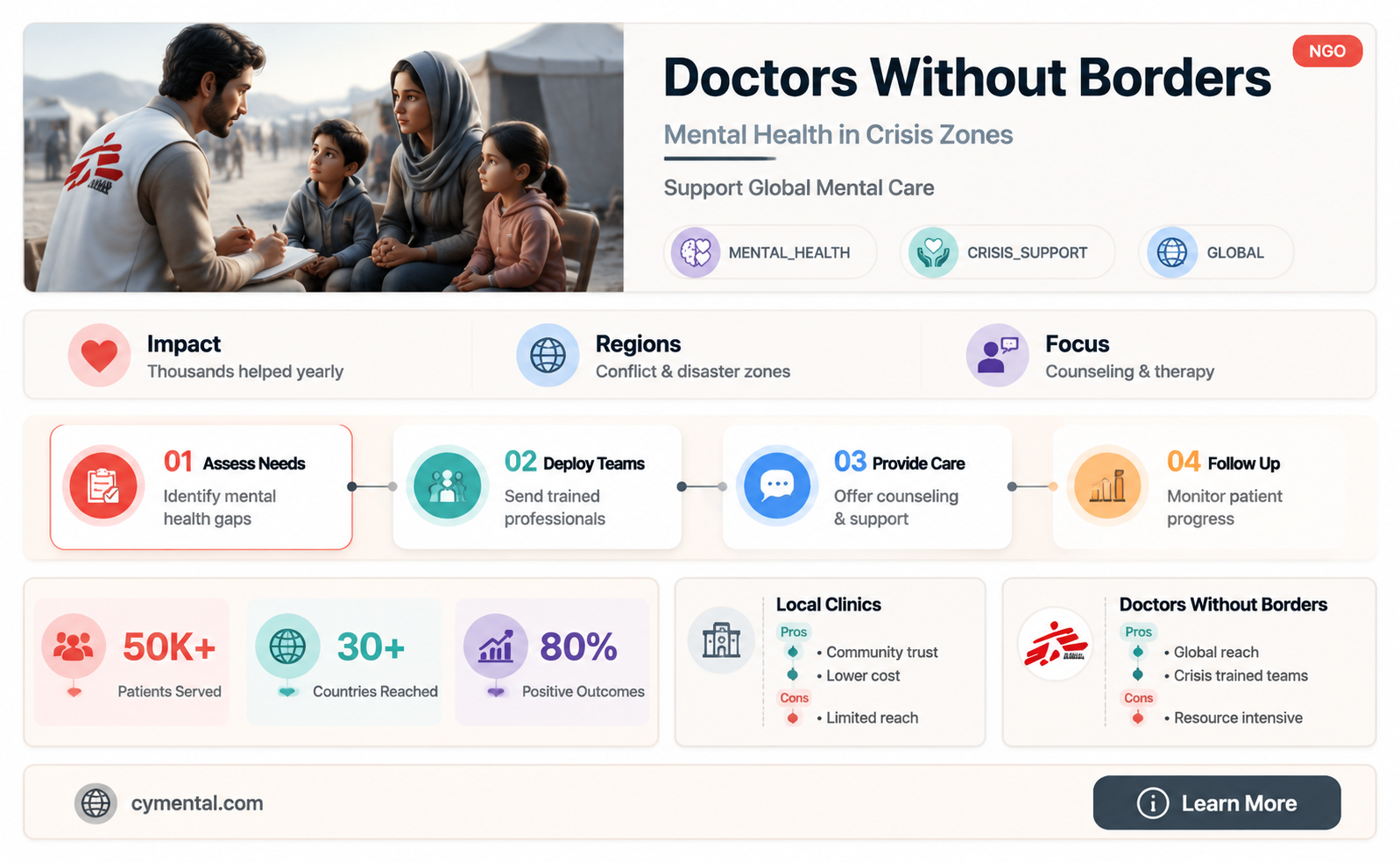
Doctors Without Borders (MSF) is widely recognized for its critical role in providing emergency medical aid in conflict zones, natural disasters, and epidemics, but its contributions to mental health are equally significant yet often less discussed. While primarily focused on physical health interventions, MSF increasingly integrates mental health services into its programs, recognizing that trauma, displacement, and violence have profound psychological impacts on affected populations. Through counseling, psychotherapy, and psychosocial support, MSF addresses conditions like depression, anxiety, and post-traumatic stress disorder (PTSD) in vulnerable communities. By training local staff and collaborating with mental health professionals, MSF ensures sustainable care in resource-limited settings, highlighting its commitment to holistic healing and resilience in the face of global crises.
| Characteristics | Values |
|---|---|
| Mental Health Services Provided | Yes, Doctors Without Borders (MSF) provides mental health care in many of their projects worldwide. |
| Scope of Services | Psychological first aid, individual and group counseling, psychotherapy, trauma-focused interventions, and support for survivors of violence and displacement. |
| Target Population | Conflict-affected populations, refugees, displaced persons, survivors of natural disasters, and communities in crisis zones. |
| Staff Involved | Psychologists, psychiatrists, counselors, social workers, and trained local staff. |
| Integration with Medical Care | Mental health services are often integrated into primary healthcare, emergency response, and other medical programs. |
| Cultural Sensitivity | Services are tailored to local cultural contexts and needs, with an emphasis on community involvement. |
| Emergency Response | Mental health support is a critical component of MSF's emergency response in humanitarian crises. |
| Long-Term Programs | MSF also runs long-term mental health programs in areas with ongoing needs, such as conflict zones or post-disaster regions. |
| Training and Capacity Building | MSF trains local healthcare workers and community members to provide mental health support, enhancing local capacity. |
| Advocacy | MSF advocates for greater attention to mental health in humanitarian settings and increased access to care. |
| Challenges | Limited resources, stigma surrounding mental health, and the complexity of providing care in unstable environments. |
| Recent Initiatives | Increased focus on mental health in COVID-19 response, addressing psychological impacts of the pandemic in affected communities. |
| Global Reach | MSF provides mental health services in over 70 countries, adapting to diverse needs and contexts. |
Explore related products


What You'll Learn
- Crisis Intervention: Providing immediate mental health support in conflict zones and disaster areas
- Trauma Counseling: Offering therapy for survivors of war, violence, and extreme stress
- Psychosocial Programs: Implementing community-based activities to reduce stigma and promote mental well-being
- Training Local Staff: Building capacity by training local healthcare workers in mental health care
- Access to Medication: Ensuring availability of essential psychiatric medications in underserved regions

Crisis Intervention: Providing immediate mental health support in conflict zones and disaster areas
In the chaotic aftermath of a natural disaster or amidst the relentless turmoil of conflict zones, the human psyche is often the first casualty. Survivors are thrust into a world of uncertainty, loss, and fear, where the very fabric of their mental well-being is threatened. Crisis intervention in these settings is not a luxury but a necessity, a lifeline that can prevent the immediate and long-term psychological scars of trauma. Organizations like Doctors Without Borders (MSF) recognize this urgent need, deploying specialized teams to provide immediate mental health support where it’s most critical.
Consider the steps involved in delivering such support. First, rapid assessment is key. Mental health professionals must quickly identify individuals at highest risk—those exhibiting acute stress reactions, suicidal ideation, or severe anxiety. This often involves mobile clinics or outreach teams moving directly into affected areas, using culturally sensitive tools to evaluate needs. For instance, in the wake of the 2015 Nepal earthquake, MSF teams employed local counselors who could communicate in native languages, ensuring trust and understanding. Second, immediate interventions focus on stabilization. Techniques like psychological first aid (PFA) are employed to restore a sense of safety and calm. PFA includes practical steps such as active listening, helping individuals reconnect with social supports, and providing concrete assistance like food or shelter. For children, play therapy or drawing activities can serve as non-verbal outlets for processing trauma.
However, challenges abound. In conflict zones, security risks often limit access to those in need. Mental health providers must navigate active warfare, political instability, or hostile environments while ensuring their own safety. Additionally, cultural barriers can hinder effective care. For example, in some societies, mental health issues are stigmatized, and survivors may resist seeking help. MSF addresses this by training local volunteers who understand cultural nuances, ensuring interventions are both respectful and effective. Another caution lies in the risk of re-traumatization. Well-intentioned but poorly executed interventions can exacerbate distress. Providers must balance urgency with sensitivity, avoiding intrusive questioning or overwhelming survivors with too much too soon.
Despite these challenges, the impact of crisis intervention is profound. Take the case of Syria, where MSF has operated since 2012. In areas like Idlib, mental health teams provide individual counseling, group therapy, and psychoeducation sessions. For children, structured activities in safe spaces help restore a sense of normalcy. Adults benefit from stress management techniques and support groups, fostering resilience in the face of ongoing violence. Such interventions not only alleviate immediate suffering but also lay the groundwork for long-term recovery, reducing the likelihood of chronic mental health disorders.
In conclusion, crisis intervention in conflict zones and disaster areas is a high-stakes endeavor requiring skill, adaptability, and compassion. By combining rapid assessment, culturally sensitive care, and evidence-based techniques, organizations like MSF offer a beacon of hope in humanity’s darkest hours. Their work underscores a critical truth: in the aftermath of catastrophe, healing the mind is as vital as healing the body.
Nutrition's Impact: How a Healthy Diet Boosts Mental Well-being
You may want to see also
Explore related products




Trauma Counseling: Offering therapy for survivors of war, violence, and extreme stress
In conflict zones and areas ravaged by violence, the scars left on survivors are not always visible. Trauma counseling emerges as a critical intervention, offering a lifeline to those grappling with the psychological aftermath of war, displacement, and extreme stress. Unlike general mental health services, trauma-focused therapy is tailored to address the unique challenges faced by survivors, such as flashbacks, hypervigilance, and emotional numbness. Organizations like Doctors Without Borders (MSF) recognize that untreated trauma can cripple communities, hindering recovery and perpetuating cycles of suffering. By integrating trauma counseling into their emergency response, MSF ensures that survivors receive not just physical care but also the emotional support needed to rebuild their lives.
One of the most effective approaches in trauma counseling is Cognitive Behavioral Therapy (CBT), adapted for use in humanitarian settings. This evidence-based method helps survivors identify and challenge negative thought patterns, replacing them with healthier coping strategies. For instance, a refugee who experiences recurring nightmares after witnessing violence might learn grounding techniques to manage anxiety. MSF teams often employ group therapy sessions, which foster a sense of community and reduce feelings of isolation. These sessions are particularly beneficial in resource-constrained environments, where individual therapy may not be feasible. Practical tools, such as deep breathing exercises and progressive muscle relaxation, are taught to survivors, empowering them to manage symptoms on their own.
However, delivering trauma counseling in crisis zones is not without challenges. Cultural barriers, language differences, and the constant threat of instability can complicate therapeutic efforts. MSF addresses these hurdles by training local counselors who understand the cultural context and can communicate in the survivors’ native languages. For example, in war-torn regions of Syria, MSF has partnered with local psychologists to provide culturally sensitive therapy, ensuring that interventions resonate with the community. Additionally, MSF employs creative methods like art therapy and storytelling, which bypass language barriers and allow survivors to express their pain non-verbally. These adaptations highlight the organization’s commitment to making mental health care accessible and effective, even in the most challenging circumstances.
The impact of trauma counseling extends beyond individual healing; it strengthens the fabric of communities. When survivors learn to manage their trauma, they become better equipped to support their families and contribute to societal rebuilding. For instance, a mother who receives counseling after losing her home in a conflict may regain the emotional stability needed to care for her children and engage in community activities. MSF’s holistic approach, which combines trauma counseling with medical and logistical support, amplifies this effect. By addressing both the physical and psychological wounds of war, MSF helps survivors not just survive but thrive in the face of adversity.
In conclusion, trauma counseling is a vital component of humanitarian aid, offering survivors of war and violence a path to recovery. Through tailored therapies, cultural sensitivity, and innovative methods, organizations like MSF ensure that mental health care reaches those who need it most. As the global community grapples with increasing conflicts and crises, the role of trauma counseling becomes ever more critical. It is not just about alleviating suffering but about restoring hope and resilience, one survivor at a time.
Can ERs Provide Mental Health Support in Crisis Situations?
You may want to see also
Explore related products


Psychosocial Programs: Implementing community-based activities to reduce stigma and promote mental well-being
In conflict zones and humanitarian crises, mental health often takes a backseat to immediate physical needs, yet the psychological toll can be just as devastating. Doctors Without Borders (MSF) recognizes this by integrating psychosocial programs into their emergency response, focusing on community-based activities to reduce stigma and promote mental well-being. These programs are designed to address the unique challenges of displaced populations, where trauma is widespread and traditional mental health services are scarce. By embedding mental health care within community structures, MSF fosters resilience and empowers individuals to support one another in healing.
One effective strategy MSF employs is the creation of safe spaces within communities, where individuals can share their experiences and emotions without fear of judgment. For example, in refugee camps, MSF sets up community centers where group activities, such as storytelling, art therapy, and peer support sessions, are facilitated. These activities not only provide an outlet for emotional expression but also help normalize conversations around mental health, gradually reducing stigma. In one program in South Sudan, participants reported feeling more connected to their community and better equipped to cope with stress after engaging in these activities regularly.
Implementing such programs requires careful consideration of cultural contexts and local resources. MSF often trains community members as psychosocial workers, ensuring that interventions are culturally sensitive and sustainable. For instance, in Afghanistan, MSF collaborated with local leaders to incorporate traditional practices, such as poetry and music, into therapeutic activities. This approach not only made the programs more relatable but also encouraged broader community participation. Training community members also builds local capacity, ensuring that mental health support continues even after MSF’s departure.
Despite their effectiveness, community-based psychosocial programs face challenges, including limited funding and the complexity of addressing deep-rooted stigma. MSF addresses these hurdles by advocating for increased investment in mental health and by integrating psychosocial care into broader healthcare services. For example, in Syria, MSF combined mental health support with primary healthcare, making it more accessible and reducing the stigma associated with seeking specialized care. This integrated approach has proven particularly effective in reaching vulnerable populations, including children and the elderly.
In conclusion, MSF’s psychosocial programs demonstrate that community-based activities can be powerful tools for reducing stigma and promoting mental well-being in crisis settings. By leveraging local resources, fostering safe spaces, and integrating mental health into broader healthcare, these initiatives create lasting impact. For organizations and communities looking to replicate such efforts, the key lies in adaptability, cultural sensitivity, and a commitment to long-term sustainability. Mental health is not a luxury—it is a fundamental aspect of humanitarian aid, and MSF’s work underscores its importance in rebuilding lives shattered by conflict and disaster.
Supporting Friends Through Mental Health Struggles: Compassionate Steps to Take
You may want to see also
Explore related products


Training Local Staff: Building capacity by training local healthcare workers in mental health care
In conflict zones and humanitarian crises, mental health often takes a backseat to immediate physical needs, yet the psychological toll on affected populations is profound. Doctors Without Borders (MSF) recognizes this gap and prioritizes training local healthcare workers in mental health care as a cornerstone of sustainable support. By equipping local staff with the skills to address trauma, anxiety, and depression, MSF ensures that communities have access to culturally sensitive and continuous care long after international teams depart.
Consider the case of South Sudan, where years of conflict have left millions displaced and traumatized. MSF implemented a training program for local nurses and community health workers, focusing on basic psychological first aid and trauma-informed care. These trainees learned to identify signs of distress, provide emotional support, and refer severe cases to specialized care. For instance, a 25-year-old nurse named Ajak, after completing the training, began leading group therapy sessions for women in her village, helping them process grief and rebuild resilience. This localized approach not only addresses immediate needs but also fosters community trust and reduces stigma around mental health.
Training local staff in mental health care is not without challenges. Limited resources, language barriers, and varying levels of prior education can complicate the process. MSF addresses these hurdles by using participatory training methods, such as role-playing and case studies, to make complex concepts accessible. For example, in Syria, MSF introduced a modular training program that allowed healthcare workers to learn at their own pace while continuing their clinical duties. Each module covered specific topics, from stress management techniques to pharmacological interventions for severe mental disorders, ensuring that trainees gained practical, actionable skills.
The impact of such training extends beyond individual care. Local healthcare workers become advocates for mental health within their communities, challenging misconceptions and promoting preventive measures. In Haiti, following the 2010 earthquake, MSF-trained counselors initiated school-based programs to teach children coping strategies, reducing the long-term psychological impact of the disaster. This ripple effect underscores the importance of investing in local capacity, as it creates a legacy of mental health awareness and care that outlasts emergencies.
To maximize the effectiveness of these training programs, MSF emphasizes ongoing supervision and mentorship. Regular follow-ups with trained staff ensure that skills are retained and applied correctly. For instance, in Yemen, MSF established a peer support network where trained healthcare workers could share experiences and troubleshoot challenges. This collaborative approach not only enhances competency but also builds a sense of solidarity among providers, reinforcing their commitment to mental health care in resource-constrained settings.
In conclusion, training local healthcare workers in mental health care is a strategic investment in the resilience of communities affected by crises. By combining practical skills, cultural sensitivity, and ongoing support, MSF empowers local staff to become agents of change. This approach not only addresses immediate mental health needs but also lays the foundation for long-term psychological well-being, proving that sustainable care begins with building local capacity.
Can Semen Improve Women's Mental Health? Exploring the Science and Myths
You may want to see also
Explore related products


Access to Medication: Ensuring availability of essential psychiatric medications in underserved regions
In underserved regions, the scarcity of essential psychiatric medications exacerbates mental health crises, turning treatable conditions into lifelong disabilities. Antidepressants like fluoxetine, antipsychotics such as risperidone, and mood stabilizers like lithium are often unavailable due to supply chain disruptions, cost barriers, and regulatory hurdles. For instance, in conflict zones, a 20-milligram daily dose of fluoxetine—a standard treatment for depression—may be inaccessible for months, leaving patients without relief. Addressing this gap requires targeted interventions to ensure consistent availability of these life-altering drugs.
One practical strategy involves decentralizing medication distribution to reach remote areas. Mobile clinics, often deployed by organizations like Doctors Without Borders, can serve as vital hubs for dispensing psychiatric medications. These clinics should be equipped with pre-packaged kits containing standard doses: 1–2 mg of risperidone for schizophrenia, 20–60 mg of fluoxetine for depression, and 300–900 mg of lithium for bipolar disorder. Training local health workers to administer and monitor these medications ensures continuity of care, even in regions with limited psychiatric expertise.
However, ensuring access isn’t just about physical availability—it’s also about affordability and cultural acceptance. Generic versions of psychiatric drugs, which cost up to 80% less than branded alternatives, should be prioritized. For example, switching from branded olanzapine to its generic counterpart can reduce costs from $10 to $2 per pill, making treatment feasible for low-income populations. Simultaneously, community education campaigns can dispel stigma surrounding mental health, encouraging individuals to seek help without fear of judgment.
A cautionary note: over-reliance on medication without concurrent psychosocial support can lead to incomplete recovery. Medications manage symptoms, but therapy and social reintegration address root causes. In regions where therapists are scarce, peer support groups or digital mental health platforms can fill the gap. For instance, a pilot program in rural Uganda paired medication distribution with weekly group therapy sessions, resulting in a 40% improvement in patient outcomes compared to medication-only approaches.
Ultimately, ensuring access to psychiatric medications in underserved regions demands a multi-faceted approach: decentralized distribution, affordable generics, cultural sensitivity, and integrated care. By addressing these elements, organizations like Doctors Without Borders can transform mental health care from a privilege into a universal right, one pill at a time.
Seeking Support: What to Do When You Need Help
You may want to see also
Frequently asked questions
Yes, MSF integrates mental health and psychosocial support into its medical humanitarian projects worldwide, addressing the psychological needs of individuals in crisis zones.
MSF provides counseling, psychological first aid, trauma therapy, and group support sessions, tailored to the needs of communities affected by conflict, disasters, or epidemics.
MSF offers mental health services to anyone in need, including survivors of violence, refugees, displaced persons, and communities impacted by emergencies, regardless of their background or status.