Noah Parker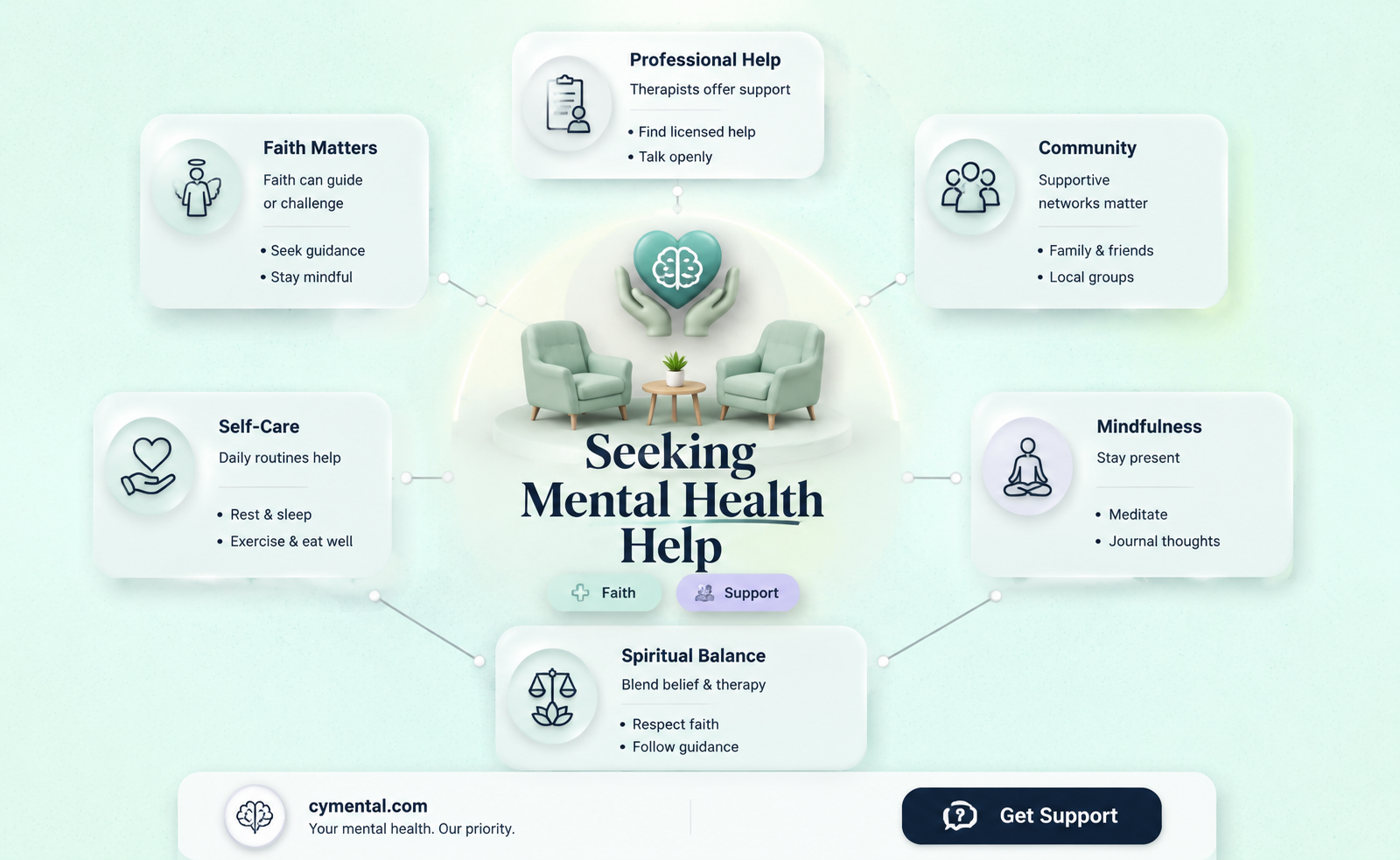
The question of whether seeking mental health help is frowned upon by God is a deeply personal and often contentious issue, rooted in the intersection of faith, spirituality, and modern psychology. Many religious individuals grapple with the belief that relying on therapy, medication, or counseling might signify a lack of faith or trust in divine intervention. However, others argue that God’s creation includes the tools and knowledge humanity has developed to heal and support one another, viewing mental health care as a legitimate means of addressing suffering. This debate often hinges on interpretations of scripture, cultural attitudes toward mental illness, and the evolving understanding of mental health within religious communities. Ultimately, the question invites reflection on how faith and science can coexist in the pursuit of holistic well-being.
Explore related products



What You'll Learn

Religious stigma around therapy
Religious communities often grapple with the question of whether seeking therapy aligns with spiritual principles. For some, the idea of relying on professional help instead of prayer or faith alone feels like a lack of trust in God’s plan. This perception can create a stigma that discourages individuals from pursuing mental health treatment, even when they desperately need it. For instance, in a 2020 study published in the *Journal of Religion and Health*, 30% of participants reported feeling judged by their religious peers for attending therapy, fearing it signaled weakness or insufficient faith.
Consider the paradox: many religions emphasize compassion and healing, yet their followers sometimes view therapy as a secular intrusion. This disconnect often stems from misinterpretations of religious teachings. For example, some Christians mistakenly believe that relying on therapy undermines the power of prayer, while others in Islamic communities may fear that Western therapeutic practices conflict with Sharia law. In reality, therapy and faith need not be mutually exclusive. Integrative approaches, such as Christian counseling or faith-based cognitive behavioral therapy, bridge this gap by incorporating spiritual principles into mental health care.
To address this stigma, religious leaders play a pivotal role. They can educate congregations about the compatibility of faith and therapy, emphasizing that seeking help is an act of self-care, not a betrayal of God. Practical steps include hosting workshops on mental health, inviting therapists to speak at services, and sharing testimonials from community members who have benefited from therapy. For instance, a pastor in Texas launched a mental health ministry, offering free counseling sessions and reducing stigma by framing therapy as a tool for spiritual growth.
However, caution is necessary when navigating this terrain. Not all therapists understand or respect religious beliefs, which can alienate clients. It’s essential for individuals to seek providers who are culturally and spiritually competent. Websites like Psychology Today allow users to filter therapists by specialties, including faith-based counseling. Additionally, faith-based organizations like the Association of Christian Counselors offer directories of professionals who integrate spirituality into their practice.
In conclusion, the stigma surrounding therapy in religious circles is not insurmountable. By fostering dialogue, educating communities, and promoting faith-sensitive mental health resources, it’s possible to reconcile spiritual beliefs with the need for professional support. After all, caring for one’s mental health is not a rejection of faith but a step toward holistic well-being—a principle most religions wholeheartedly endorse.
Exploring Medical Marijuana's Potential in Treating Mental Health Disorders
You may want to see also
Explore related products






Scriptural interpretations of mental health
The Bible does not explicitly address modern mental health terminology, but its teachings offer profound insights into emotional and psychological well-being. Scripture portrays God as a compassionate healer who cares for the whole person—body, mind, and spirit. In Isaiah 41:10, God reassures His people: *"Fear not, for I am with you; be not dismayed, for I am your God; I will strengthen you, I will help you, I will uphold you with my righteous right hand."* This verse underscores God’s active involvement in providing comfort and strength during times of distress, suggesting that seeking help aligns with His desire to support His children.
Scriptural narratives often depict individuals experiencing profound emotional struggles, from Elijah’s despair in 1 Kings 19 to Paul’s "thorn in the flesh" in 2 Corinthians 12. These stories normalize suffering and highlight God’s faithfulness in the midst of it. For instance, Psalm 34:18 declares, *"The Lord is near to the brokenhearted and saves the crushed in spirit."* This passage encourages believers to acknowledge their pain and turn to God for healing, rather than suppressing or ignoring it. Such examples imply that seeking mental health support, whether through prayer, community, or professional care, is consistent with biblical principles of care and restoration.
A practical takeaway from Scripture is the importance of community in addressing mental health. Galatians 6:2 instructs believers to *"bear one another’s burdens, and so fulfill the law of Christ."* This call to mutual support suggests that seeking help from others—whether friends, family, or counselors—is not only permissible but commanded. Churches and faith communities can play a vital role in fostering environments where individuals feel safe to share their struggles and receive encouragement, aligning with Jesus’ emphasis on compassion and love.
Critics might argue that relying on mental health professionals diminishes faith, but Scripture does not present faith and practical help as mutually exclusive. Just as God works through doctors to heal physical ailments, He can work through therapists and counselors to address emotional and psychological challenges. Proverbs 11:14 states, *"Where there is no guidance, a people falls, but in an abundance of counselors there is safety."* This wisdom applies to mental health, affirming that seeking professional guidance is a wise and scripturally supported decision.
In conclusion, scriptural interpretations of mental health emphasize God’s compassion, the normalization of suffering, the importance of community, and the value of seeking guidance. Far from frowning upon mental health help, the Bible encourages believers to embrace all available resources—spiritual, emotional, and professional—to achieve wholeness. As Psalm 147:3 reminds us, *"He heals the brokenhearted and binds up their wounds."* This promise invites individuals to trust in God’s healing power, whether it comes through prayer, community support, or professional care.
Multivitamins and Mental Health: Unlocking the Potential Benefits
You may want to see also
Explore related products

$21.49 $32.99

$13.24


Faith vs. professional treatment
The tension between faith and professional mental health treatment often stems from misconceptions about divine disapproval. Many religious individuals fear that seeking therapy or medication undermines their trust in God’s plan. However, this perspective overlooks the compatibility between spiritual reliance and evidence-based care. Faith can provide emotional resilience and hope, while professional treatment offers structured tools to address chemical imbalances or cognitive distortions. For instance, a person with depression might find solace in prayer but still benefit from a 10–20 mg daily dose of fluoxetine, prescribed by a psychiatrist, to stabilize serotonin levels. The two approaches need not be mutually exclusive.
Consider the parable of the man who refused help during a flood, declining rescue by boat and helicopter, insisting God would save him. When he drowned and asked God why, the reply was, “I sent you a boat and a helicopter.” This illustrates how divine intervention often manifests through human means, including mental health professionals. Faith communities can encourage members to view therapy as a resource, not a betrayal of spiritual strength. For example, cognitive-behavioral therapy (CBT) aligns with biblical principles of renewing the mind (Romans 12:2), offering practical steps to reframe negative thought patterns rooted in trauma or anxiety.
A common misconception is that medication diminishes one’s spiritual connection. Yet, untreated mental illness can distort perception, making it harder to engage in prayer or study sacred texts. A 2020 study in the *Journal of Religion and Health* found that 72% of participants reported improved spiritual practices after starting antidepressants. Dosage adjustments, such as starting with 5 mg of Lexapro and titrating up under supervision, can minimize side effects while restoring emotional clarity. Faith leaders can play a role by educating congregations about the science behind mental health treatments, dispelling myths that equate medication with weakness.
Practical integration of faith and treatment involves creating hybrid support systems. For instance, a faith-based support group could incorporate mindfulness techniques from dialectical behavior therapy (DBT), such as grounding exercises paired with scripture meditation. Parents of teens struggling with anxiety might combine family counseling sessions with prayer rituals, fostering both emotional and spiritual growth. The key is to avoid rigid either-or thinking. Just as insulin doesn’t diminish faith for a diabetic, mental health treatment can be a sacred act of self-care, honoring the body and mind God created.
Ultimately, the debate between faith and professional treatment dissolves when both are seen as complementary paths to healing. A pastor might remind a congregant that seeking therapy is akin to visiting a doctor for a broken bone—an act of stewardship over one’s health. Similarly, a therapist could encourage clients to explore spiritual practices like gratitude journaling or community service, which studies show reduce symptoms of depression by up to 30%. By bridging these worlds, individuals can access holistic recovery, embracing both divine guidance and human expertise. The question isn’t whether God frowns upon mental health help but how to align faith with the tools available for healing.
Finding Mental Health Support: A Guide to Accessible Resources and Services
You may want to see also
Explore related products


Church support for mental wellness
The perception that seeking mental health help might be at odds with faith is a misconception that some religious communities are actively working to dispel. Churches, as pillars of spiritual support, are increasingly recognizing the importance of addressing mental wellness alongside spiritual well-being. This shift is not just a trend but a necessary response to the growing awareness of mental health issues within congregations. By integrating mental health resources into their ministries, churches are affirming that caring for the mind is as vital as nurturing the soul.
One practical way churches are supporting mental wellness is by offering counseling services led by professionals who understand both theological and psychological principles. For instance, some churches partner with licensed Christian counselors who provide therapy sessions at reduced rates or on a sliding scale, making mental health care accessible to all members. Additionally, churches are hosting workshops and seminars on topics like stress management, anxiety, and depression, often incorporating biblical teachings to provide a holistic approach. These initiatives not only destigmatize mental health struggles but also equip individuals with tools to manage their well-being.
Another innovative approach is the formation of support groups within church communities. These groups, often led by trained facilitators or individuals with lived experience, create safe spaces for members to share their struggles and find encouragement. For example, a church might offer a grief support group, a divorce recovery group, or a group for those dealing with chronic illness. By fostering a sense of belonging and understanding, these groups reinforce the idea that seeking help is a sign of strength, not weakness, and aligns with God’s call to care for one another.
Churches are also leveraging technology to extend their mental health support. Many now offer online resources, such as guided prayer apps, mental health toolkits, and virtual counseling sessions, to reach members who may not be able to attend in-person services. Some even provide access to telehealth platforms that connect individuals with Christian mental health professionals nationwide. This digital outreach ensures that support is available anytime, anywhere, breaking down barriers to care.
Ultimately, the church’s role in mental wellness is not to replace professional treatment but to complement it with spiritual guidance and community support. By embracing mental health as an integral part of their mission, churches are demonstrating that God does not frown upon seeking help—rather, He calls His followers to care for the whole person, body, mind, and spirit. This approach not only honors individual struggles but also strengthens the faith community as a whole.
Mind Over Pain: Mental Strategies to Ease Chronic Discomfort
You may want to see also
Explore related products


Reconciliation of spirituality and psychology
The integration of spirituality and psychology in mental health care is not a modern invention but a revival of ancient practices. Historically, spiritual leaders and healers often addressed mental and emotional distress through prayer, ritual, and community support. Today, this reconciliation is gaining traction as clinicians and theologians alike recognize the limitations of treating the mind in isolation from the soul. For instance, mindfulness-based therapies, rooted in Buddhist spirituality, are now mainstream treatments for anxiety and depression, endorsed by organizations like the American Psychological Association. This blending of disciplines challenges the notion that seeking mental health help is at odds with spiritual faith.
Consider the practical steps for reconciling spirituality and psychology in daily life. Start by identifying spiritual practices that align with your beliefs—whether meditation, prayer, or journaling—and incorporate them into your mental health routine. For example, a Christian might pair cognitive-behavioral therapy (CBT) techniques with the practice of lectio divina, a meditative reading of scripture, to address both cognitive distortions and spiritual yearning. Similarly, a Muslim could integrate mindfulness exercises with dhikr (remembrance of Allah) to cultivate both psychological calm and spiritual connection. The key is intentionality: combine evidence-based psychological tools with spiritual disciplines that resonate personally.
A cautionary note: not all spiritual practices are universally beneficial, and some may even exacerbate mental health issues if misapplied. For instance, excessive self-flagellation or rigid religious dogma can deepen feelings of guilt or inadequacy in individuals struggling with depression. It’s crucial to discern between healthy spiritual practices that foster growth and those that reinforce shame or fear. Consulting with both a mental health professional and a trusted spiritual advisor can provide a balanced perspective, ensuring that your approach is both psychologically sound and spiritually enriching.
The comparative analysis of spirituality and psychology reveals their complementary strengths. Psychology excels in diagnosing and treating specific mental health conditions through structured interventions, while spirituality offers a framework for meaning, purpose, and transcendence. For example, a person grappling with existential anxiety might find relief through psychotherapy’s focus on coping strategies, but they may also seek solace in spiritual teachings that address the nature of suffering and hope. By embracing both, individuals can address the symptoms of mental illness while nurturing their deeper spiritual needs, creating a holistic path to healing.
In conclusion, the reconciliation of spirituality and psychology is not about blurring boundaries but about recognizing their interconnected roles in human flourishing. It’s a call to embrace the fullness of what it means to be human—mind, body, and spirit. Whether you’re a therapist incorporating spiritual assessments into your practice or an individual seeking harmony between faith and mental health care, this integration offers a richer, more compassionate approach to healing. The question is not whether God frowns upon mental health help but how we can honor both our psychological and spiritual dimensions in the pursuit of wholeness.
ChatGPT and Mental Health: A Supportive Tool or Limited Aid?
You may want to see also
Frequently asked questions
No, seeking mental health help does not indicate a lack of faith. Just as you would seek medical care for a physical ailment, caring for your mental health is a responsible and God-honoring act. Faith and professional help can work together to support your overall well-being.
Relying on therapy or medication is not wrong; it is a practical way to address mental health challenges. Prayer and spiritual practices are valuable, but God often works through professionals and resources He has provided. Combining both can lead to holistic healing.
The Bible does not condemn seeking help for mental health issues. Scripture encourages seeking wisdom, support, and healing (Proverbs 11:14, James 5:14-16). Mental health care aligns with the biblical principle of caring for your body and mind as a temple of the Holy Spirit (1 Corinthians 6:19-20).
Yes, God can heal mental health struggles in any way He chooses, including through miracles or professional intervention. Professional help is often a tool God uses to bring healing, just as He uses doctors for physical ailments. Trusting in His plan includes being open to the resources He provides.