Madison Cole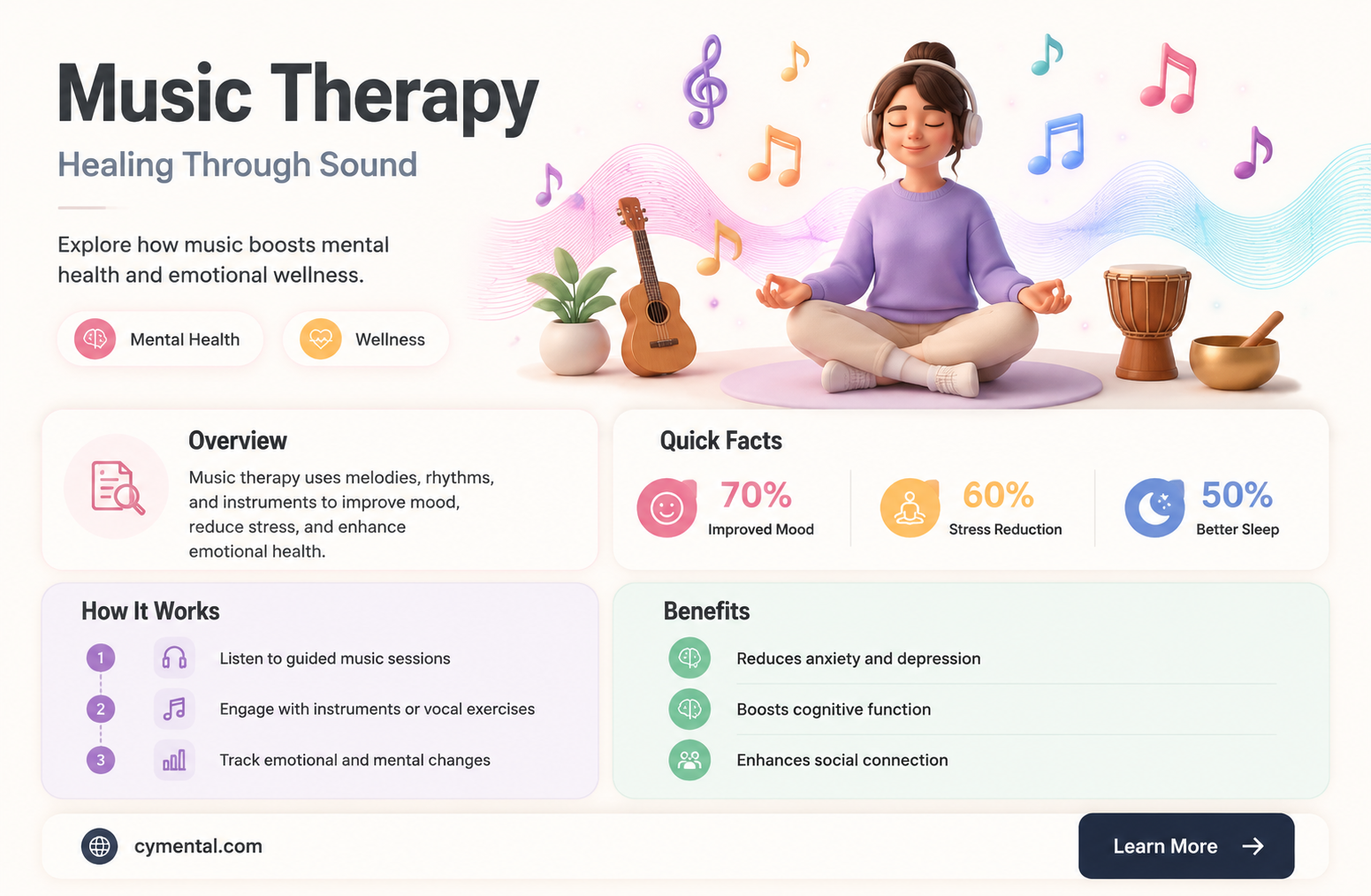
Music therapy has emerged as a promising and increasingly recognized approach to supporting mental health, offering a unique avenue for individuals to express emotions, reduce stress, and improve overall well-being. By leveraging the universal language of music, therapists guide patients through activities such as listening, playing instruments, or creating music to address a range of mental health challenges, including anxiety, depression, and trauma. Research suggests that music therapy can stimulate the brain’s reward centers, regulate mood, and foster emotional release, making it a valuable complement to traditional therapeutic methods. Its non-verbal nature also provides a safe and accessible outlet for those who struggle to articulate their feelings, highlighting its potential as a holistic tool in mental health care.
| Characteristics | Values |
|---|---|
| Effectiveness | Numerous studies show music therapy can significantly reduce symptoms of depression, anxiety, and stress. A 2023 meta-analysis found moderate to large effect sizes for depression and anxiety reduction. |
| Mechanisms | Music therapy works through various mechanisms: emotional expression, distraction from negative thoughts, relaxation, social connection, and neurochemical changes (e.g., increased dopamine and oxytocin). |
| Populations | Beneficial for various populations: children, adolescents, adults, elderly, individuals with autism, PTSD, schizophrenia, and those in palliative care. |
| Types of Therapy | Individual or group sessions, active music-making (playing instruments, singing), receptive listening, songwriting, improvisation, and guided imagery with music. |
| Accessibility | Increasingly accessible through healthcare settings, schools, community centers, and online platforms. |
| Limitations | Not a standalone cure, often used alongside other therapies. Effectiveness varies depending on individual needs and therapist expertise. |
| Research Gaps | More research needed on long-term effects, optimal dosage, and specific mechanisms for different mental health conditions. |
Explore related products


What You'll Learn
- Music therapy reduces anxiety and stress through rhythmic patterns and soothing melodies
- Improves mood by releasing dopamine and enhancing emotional expression in patients
- Enhances cognitive function, aiding memory and focus in mental health disorders
- Facilitates trauma recovery by providing a safe emotional outlet for processing
- Boosts social skills and communication in group music therapy sessions

Music therapy reduces anxiety and stress through rhythmic patterns and soothing melodies
Music therapy harnesses the power of rhythmic patterns and soothing melodies to directly counteract the physiological effects of anxiety and stress. When the body is under stress, the autonomic nervous system triggers the "fight or flight" response, increasing heart rate, blood pressure, and cortisol levels. Listening to music with a steady, predictable rhythm—such as 60–80 beats per minute—can synchronize the heartbeat and breathing, activating the parasympathetic nervous system, which promotes relaxation. For instance, classical pieces like Mozart’s *Piano Concerto No. 21* or ambient tracks designed for relaxation often fall within this tempo range, making them effective tools for immediate stress reduction.
To maximize the benefits of music therapy for anxiety, consider incorporating structured listening sessions into daily routines. Start with 15–30 minutes of uninterrupted exposure to calming music, ideally in a quiet, comfortable environment. For children or adolescents, rhythmic activities like drumming or humming along can enhance engagement and deepen the therapeutic effect. Research shows that consistent practice—such as listening to soothing melodies before bedtime or during transitions—can reduce cortisol levels by up to 25% over time. Pairing music with deep breathing exercises amplifies its impact, as the rhythmic cues guide the breath and reinforce a sense of calm.
While the science supports music therapy’s efficacy, not all melodies or rhythms yield the same results. Fast tempos or dissonant harmonies may inadvertently heighten anxiety, so select tracks carefully. Apps like Calm or Spotify’s "Peaceful Piano" playlists curate music specifically for stress relief, offering a convenient starting point. For personalized therapy, consult a certified music therapist who can tailor interventions to individual needs, such as using preferred genres or creating custom rhythmic exercises. This targeted approach ensures the therapy resonates emotionally, making it more effective than generic solutions.
Comparatively, music therapy stands out as a non-invasive, accessible complement to traditional mental health treatments. Unlike medication or talk therapy, it requires no specialized equipment beyond a device for playback and can be practiced anywhere. Its versatility makes it suitable for all age groups, from toddlers with separation anxiety to seniors managing chronic stress. For example, a study published in *The Arts in Psychotherapy* found that older adults who participated in group drumming sessions reported a 30% reduction in stress symptoms after just six weeks. This highlights music therapy’s potential as a low-cost, high-impact intervention for widespread use.
Incorporating rhythmic patterns and soothing melodies into daily life doesn’t replace professional treatment but serves as a powerful adjunct. For those hesitant to try formal therapy, music offers a gentle entry point to managing mental health. Start small—play a calming track during morning routines or use rhythmic breathing exercises during moments of tension. Over time, these practices can rewire the brain’s response to stress, fostering resilience and emotional balance. By understanding and leveraging music’s unique properties, individuals can transform it from mere entertainment into a proactive tool for mental well-being.
Exploring CBD Oil's Potential Benefits for Mental Health Disorders
You may want to see also
Explore related products

$29.95 $26.95


Improves mood by releasing dopamine and enhancing emotional expression in patients
Music therapy harnesses the power of sound to trigger dopamine release, a neurotransmitter linked to pleasure and reward. Studies show that listening to music for just 20 minutes can increase dopamine levels by up to 9%, rivaling the effects of certain medications. This biochemical response explains why music often lifts mood almost instantly. For mental health patients, this dopamine boost can counteract symptoms of depression and anxiety, providing a natural, non-invasive way to feel better. Incorporating music into daily routines—whether through curated playlists or live performances—can serve as a simple yet effective mood enhancer.
Beyond dopamine, music therapy fosters emotional expression, a critical component of mental health recovery. Patients often struggle to articulate complex emotions, but music provides a universal language. For instance, a study involving adolescents with depression found that improvisational music sessions allowed participants to express anger, sadness, and hope without words. Therapists can guide patients to select instruments or melodies that mirror their emotional states, helping them process feelings in a safe, structured environment. This method is particularly effective for younger patients or those who find traditional talk therapy intimidating.
To maximize the emotional expression benefits of music therapy, consider these practical steps: Start with a "mood playlist" tailored to the patient’s preferences, gradually introducing new genres to explore different emotional landscapes. Encourage active participation, such as drumming or singing, to deepen engagement. For children, rhythmic activities like clapping or dancing can make therapy feel playful while still addressing emotional needs. Adults might benefit from journaling about their emotional responses to specific songs or melodies. Consistency is key—aim for at least 30 minutes of music engagement daily for noticeable improvements.
While music therapy is generally safe, it’s important to monitor responses, especially in patients with trauma or sensory sensitivities. Some individuals may experience overwhelming emotions when certain songs or rhythms trigger memories. Therapists should collaborate with patients to create a "safe playlist" of calming tracks to use if needed. Additionally, combining music therapy with other modalities, such as cognitive-behavioral therapy, can enhance overall effectiveness. By addressing both the biochemical and emotional aspects of mental health, music therapy offers a holistic approach to mood improvement.
Supplements and Mental Health: Unlocking the Potential for Well-Being
You may want to see also
Explore related products





Enhances cognitive function, aiding memory and focus in mental health disorders
Music therapy has been shown to stimulate neural pathways, effectively enhancing cognitive function in individuals with mental health disorders. For instance, rhythmic auditory stimulation (RAS) has been utilized to improve gait and balance in Parkinson’s patients, but its benefits extend to memory and focus in conditions like depression and anxiety. Studies indicate that engaging with music—whether through listening, playing, or creating—activates multiple brain regions, including the prefrontal cortex, which governs attention and working memory. This multisensory engagement can help rebuild cognitive pathways disrupted by mental health challenges, offering a non-invasive and enjoyable intervention.
To harness these benefits, consider incorporating structured music therapy sessions into daily routines. For adults with depression, 30 minutes of guided music listening or improvisation exercises three times a week has been linked to improved concentration and recall. For children with ADHD, rhythmic activities like drumming or singing can enhance focus by synchronizing brainwaves with external rhythms. Practical tips include selecting music with a tempo of 60–80 beats per minute (BPM) for relaxation and focus, or 100–120 BPM for energy and engagement. Pairing music with tasks requiring sustained attention, such as studying or problem-solving, can amplify cognitive benefits.
Comparatively, traditional cognitive therapies often rely on verbal communication, which can be challenging for individuals with expressive difficulties. Music therapy bypasses this barrier by tapping into nonverbal emotional and cognitive processing. For example, improvisational music sessions allow patients to express complex emotions without words, while simultaneously engaging executive functions like planning and decision-making. This dual-action approach makes music therapy particularly effective for conditions like PTSD, where emotional regulation and cognitive clarity are often compromised.
However, it’s essential to tailor music therapy interventions to individual needs and preferences. Not all genres or activities yield the same results; classical music may enhance spatial reasoning, while lyrics in familiar songs can aid memory retrieval. Caution should be exercised with individuals experiencing music-induced distress, as certain melodies or rhythms can trigger negative emotions. Collaboration with a certified music therapist ensures personalized and safe implementation, maximizing cognitive benefits while minimizing risks.
In conclusion, music therapy offers a unique and accessible tool for enhancing cognitive function in mental health disorders. By integrating specific techniques, durations, and genres, individuals can improve memory, focus, and overall cognitive resilience. Whether as a standalone intervention or complement to traditional therapies, music’s universal appeal and neurological impact make it a valuable asset in mental health care.
Government Support for Mental Health: Effective Solutions or Missed Opportunities?
You may want to see also
Explore related products




Facilitates trauma recovery by providing a safe emotional outlet for processing
Trauma often silences its survivors, trapping emotions in a labyrinth of fear and avoidance. Music therapy offers a unique key to this lock, providing a safe, non-verbal outlet for processing experiences that words alone cannot express. Unlike traditional talk therapy, which relies on verbal communication, music therapy allows individuals to engage with their emotions through melody, rhythm, and harmony. This indirect approach can be particularly effective for trauma survivors, as it bypasses the cognitive defenses that often hinder emotional release. For instance, a study published in the *Journal of Music Therapy* found that trauma survivors who participated in music therapy sessions reported significant reductions in symptoms of anxiety and depression, highlighting the medium’s ability to facilitate emotional processing without overwhelming the individual.
Consider the process of creating music as a metaphor for rebuilding after trauma. Just as a composer arranges notes to form a coherent piece, trauma survivors can use music to structure their fragmented experiences. For example, a therapist might guide a client in improvising on a piano, encouraging them to translate their emotions into sound. Over time, this process can help individuals identify patterns in their emotional responses, fostering a sense of control and coherence. Practical tips for incorporating this into therapy include starting with simple instruments like drums or chimes, which require minimal technical skill but allow for expressive freedom. For children, especially those aged 6–12, rhythmic activities like drumming circles can be particularly effective, as they combine physical engagement with emotional expression.
While the benefits of music therapy for trauma recovery are clear, it’s essential to approach this modality with caution. Not all trauma survivors will respond to music therapy in the same way, and some may find certain sounds or rhythms triggering. Therapists must be attuned to their clients’ reactions, adjusting the session in real-time to ensure a safe and supportive environment. For instance, if a client becomes visibly distressed during a session, the therapist might shift to a calming instrumental piece or introduce a grounding technique, such as deep breathing synchronized with a steady beat. Additionally, music therapy should be viewed as a complementary approach rather than a standalone treatment, particularly for complex trauma cases that require comprehensive care.
One compelling example of music therapy’s impact on trauma recovery comes from its use with veterans suffering from PTSD. In a program developed by the Nordoff-Robbins Center for Music Therapy, veterans engaged in weekly sessions that combined songwriting, improvisation, and listening exercises. Participants reported not only a reduction in PTSD symptoms but also an increased ability to connect with others, a common challenge for trauma survivors. This underscores the dual role of music therapy: it not only provides a safe space for emotional processing but also fosters social reintegration, a critical aspect of long-term recovery. For those considering music therapy, starting with short, 30-minute sessions can help build comfort and trust, gradually increasing the duration as the individual becomes more engaged.
In conclusion, music therapy’s ability to facilitate trauma recovery lies in its capacity to provide a safe, non-threatening outlet for emotional processing. By leveraging the universal language of music, therapists can help survivors navigate the complexities of their experiences, fostering healing and resilience. Whether through improvisation, songwriting, or listening, music therapy offers a pathway to reclaiming one’s emotional narrative. For practitioners and survivors alike, the key is to approach this modality with patience, adaptability, and a deep respect for the transformative power of sound.
Ginseng's Potential Role in Supporting Mental Health and Wellness
You may want to see also
Explore related products

$25.64 $38.99


$15.77 $22.95



Boosts social skills and communication in group music therapy sessions
Group music therapy sessions serve as a dynamic platform for individuals to enhance their social skills and communication abilities, often in ways that traditional talk therapy cannot. Through shared musical activities such as drumming circles, choral singing, or improvisational play, participants engage in non-verbal interaction that fosters trust and connection. For instance, a study published in the *Journal of Music Therapy* found that adolescents with social anxiety disorder showed significant improvements in social interaction after 12 weeks of group music therapy, with sessions lasting 45–60 minutes twice weekly. The structured yet creative nature of these sessions allows individuals to practice cooperation, active listening, and emotional expression in a low-pressure environment.
Consider the mechanics of a group drumming session: each participant must synchronize their rhythm with others, requiring them to pay attention to cues and adjust their behavior accordingly. This mirrors real-life social interactions, where adaptability and responsiveness are key. For children with autism spectrum disorder (ASD), such activities have been shown to improve joint attention and turn-taking skills, according to research from *Music and Medicine*. Parents and caregivers can replicate this at home by incorporating simple rhythmic games, like clapping patterns or using household items as makeshift instruments, to encourage communication and collaboration.
Persuasively, group music therapy offers a unique advantage over individual sessions by creating a sense of community and shared purpose. For adults struggling with depression or isolation, the act of making music together can break down barriers and reduce feelings of loneliness. A meta-analysis in *Psychotherapy and Psychosomatics* highlighted that group music therapy participants reported higher levels of social connectedness compared to those in individual therapy. To maximize this benefit, therapists often incorporate role-switching activities, such as having participants take turns leading a musical piece, which builds confidence and empathy.
Comparatively, while traditional group therapy relies heavily on verbal communication, music therapy provides an alternative mode of expression that can be particularly beneficial for those who find words limiting. For example, a teenager struggling with emotional regulation might find it easier to convey frustration through the intensity of their drumming rather than articulating it verbally. This non-verbal outlet not only reduces the pressure to "say the right thing" but also allows others in the group to respond empathetically through their own musical contributions, fostering a deeper level of understanding.
In practice, structuring group music therapy sessions requires careful planning to ensure inclusivity and engagement. Therapists should start with icebreaker activities, like a "musical check-in" where each participant plays a short phrase representing their mood, to set a supportive tone. Sessions should include a mix of structured tasks (e.g., composing a group song) and free-form improvisation to cater to different comfort levels. For optimal results, groups should be kept small (4–8 participants) to ensure everyone has a chance to contribute, and sessions should be held consistently (e.g., weekly for 8–12 weeks) to build rapport and track progress. By combining creativity with intentional design, group music therapy becomes a powerful tool for enhancing social skills and communication in a way that feels both natural and transformative.
Brain Fingerprinting: Predicting Mental Health Risks Before Symptoms Appear?
You may want to see also
Frequently asked questions
Yes, music therapy is a proven and effective intervention for improving mental health. It helps reduce symptoms of anxiety, depression, and stress by promoting emotional expression, relaxation, and cognitive stimulation. Research shows it can enhance mood, increase self-awareness, and support overall well-being.
Music therapy works by engaging the brain in multiple ways—through listening, creating, or performing music. It stimulates emotional release, reduces cortisol (stress hormone) levels, and encourages mindfulness. Therapists tailor sessions to individual needs, using music to address specific mental health challenges and foster healing.
Music therapy is beneficial for people of all ages and backgrounds, including those with anxiety, depression, PTSD, autism, or chronic stress. It’s particularly useful for individuals who find traditional talk therapy challenging, as it provides a non-verbal outlet for expression and emotional processing.