Noah Parker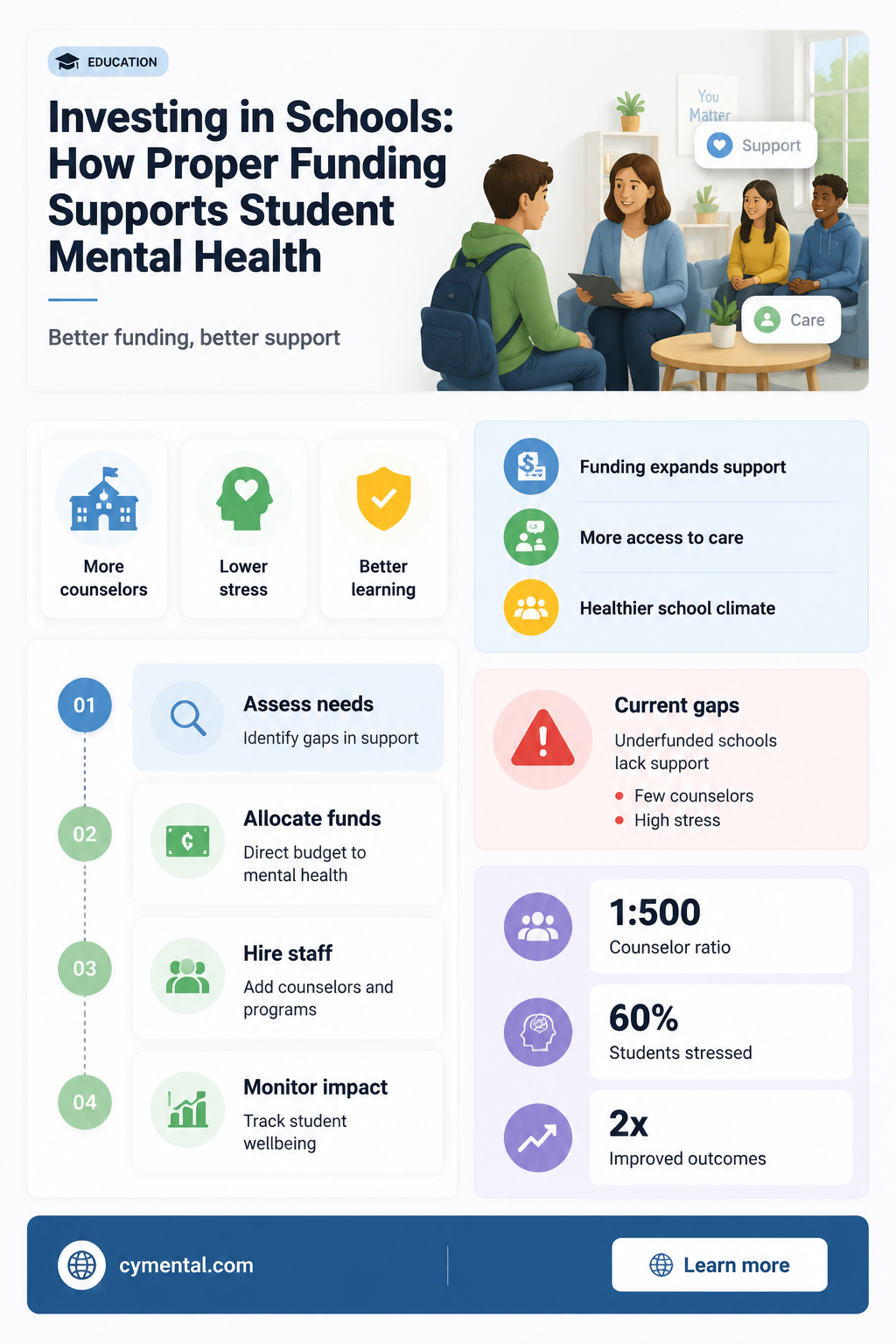
Proper funding for schools plays a pivotal role in supporting student mental health by providing essential resources, programs, and staff dedicated to addressing emotional and psychological well-being. Adequate financial support enables schools to hire trained counselors, psychologists, and social workers, ensuring students have access to professional help when needed. Additionally, funding allows for the implementation of evidence-based mental health programs, such as mindfulness initiatives, peer support groups, and stress management workshops, which foster resilience and coping skills. It also facilitates the creation of safe, inclusive environments through improved facilities, reduced class sizes, and training for teachers to recognize and respond to mental health issues. By investing in these areas, schools can proactively address mental health challenges, reduce stigma, and promote a culture of care, ultimately leading to better academic outcomes and overall well-being for students.
| Characteristics | Values |
|---|---|
| Access to Mental Health Professionals | Funding allows schools to hire counselors, psychologists, and social workers, reducing student-to-counselor ratios (e.g., recommended 1:250 by APA). |
| Early Intervention Programs | Proper funding supports screening tools and early intervention programs to identify and address mental health issues promptly. |
| Reduced Class Sizes | Smaller class sizes enable teachers to provide individualized attention, reducing stress and improving student well-being. |
| Training for Staff | Funds can be allocated for teacher training in mental health first aid, trauma-informed practices, and crisis management. |
| Curriculum Integration | Incorporating mental health education into the curriculum promotes awareness, reduces stigma, and equips students with coping skills. |
| Safe and Supportive Environments | Funding can improve school infrastructure, creating safe spaces for students to seek help and feel supported. |
| Access to Resources | Provides access to therapy, peer support groups, and digital mental health tools (e.g., apps, online counseling). |
| Community Partnerships | Schools can partner with local mental health organizations to offer additional services and resources. |
| Reduced Financial Stress | Adequate funding reduces the need for schools to cut programs, ensuring consistent support for students. |
| Equity in Mental Health Services | Ensures that all students, regardless of socioeconomic status, have access to mental health resources. |
| Data-Driven Approaches | Funding supports data collection and analysis to identify trends and tailor interventions effectively. |
| Parental and Family Involvement | Resources can be allocated to involve families in mental health initiatives, fostering a holistic support system. |
| Prevention of Bullying and Harassment | Funds can support anti-bullying programs and policies, creating a safer school environment. |
| Crisis Response and Management | Ensures schools are equipped to handle mental health crises with trained staff and emergency protocols. |
| Long-Term Mental Health Outcomes | Proper funding contributes to better academic performance, reduced dropout rates, and improved long-term mental health. |
Explore related products


What You'll Learn
- Improved Counseling Services: More funding allows hiring more counselors, reducing student-to-counselor ratios, and providing better mental health support
- Stress Reduction Programs: Funds can support mindfulness, yoga, and stress management programs to help students cope effectively
- Teacher Training: Training educators in mental health awareness ensures early identification and appropriate intervention for struggling students
- Safe Learning Environments: Upgrading facilities and security measures creates a safer, less stressful environment for students and staff
- Access to Resources: Funding provides access to mental health apps, books, and tools, promoting self-care and emotional well-being

Improved Counseling Services: More funding allows hiring more counselors, reducing student-to-counselor ratios, and providing better mental health support
One of the most direct ways proper funding can enhance mental health in schools is by bolstering counseling services. Consider this: the American School Counselor Association recommends a student-to-counselor ratio of 250:1, yet the national average hovers around 424:1. This disparity leaves counselors overburdened and students underserved. With adequate funding, schools can hire additional counselors, immediately reducing this ratio and ensuring more students receive timely, personalized support.
Imagine a high school with 1,000 students and only two counselors. Each counselor would be responsible for 500 students, making it nearly impossible to address individual needs beyond crisis intervention. Now, with increased funding, the school hires three more counselors, bringing the ratio to 200:1. This shift allows counselors to conduct regular check-ins, offer proactive mental health education, and provide consistent, long-term support for students struggling with anxiety, depression, or trauma.
However, hiring more counselors is only part of the equation. Funding must also support ongoing professional development to ensure counselors are equipped with evidence-based practices. For instance, training in cognitive-behavioral therapy (CBT) or mindfulness techniques can empower counselors to address common mental health challenges effectively. Additionally, funds can be allocated to create safe, confidential spaces for counseling sessions, fostering trust and openness between students and counselors.
Critics might argue that hiring more counselors is costly, but the long-term benefits far outweigh the investment. Studies show that students with access to adequate counseling services demonstrate improved academic performance, reduced behavioral issues, and better overall well-being. For example, a 2019 study found that schools with lower student-to-counselor ratios reported a 20% decrease in disciplinary incidents and a 15% increase in graduation rates. These outcomes not only benefit students but also create a more positive and productive school environment.
In practical terms, schools can start by assessing their current counseling needs and advocating for funding through grants, community partnerships, or district allocations. Administrators should prioritize transparency in budgeting, ensuring that mental health services receive a fair share of resources. Parents and educators can also play a role by voicing their support for increased counseling staff during school board meetings or community forums. By working together, stakeholders can transform counseling services from a reactive resource into a proactive pillar of student mental health.
Work's Impact: How Employment Influences Mental Health and Well-Being
You may want to see also
Explore related products

$29.98 $70.95


Stress Reduction Programs: Funds can support mindfulness, yoga, and stress management programs to help students cope effectively
Student stress is a silent epidemic, manifesting in anxiety, depression, and even physical ailments. Schools, as primary environments for youth development, must address this crisis proactively. Proper funding can transform this landscape by supporting stress reduction programs that teach students tangible coping mechanisms. Mindfulness, yoga, and stress management initiatives are not luxuries but essential tools for emotional resilience.
Consider the implementation of mindfulness programs, which have shown significant benefits in reducing stress and improving focus. A study by the American Psychological Association found that students who participated in mindfulness exercises for just 10 minutes daily over eight weeks reported a 15% decrease in stress levels. Funding can ensure these programs are integrated into the daily curriculum, providing students with structured time to practice breathing techniques, guided meditation, and mindful movement. For younger students (ages 6–12), mindfulness can be introduced through interactive games and storytelling, while older students (ages 13–18) may benefit from more formal practices like body scans or mindful journaling.
Yoga, another evidence-based practice, offers both physical and mental health benefits. Schools with dedicated yoga instructors can provide weekly 30-minute sessions tailored to different age groups. For instance, elementary students might engage in playful poses like "Tree" or "Warrior," while high schoolers could explore more complex sequences to release tension. Funding can cover instructor salaries, mats, and training materials, ensuring accessibility for all students. A cautionary note: while yoga is generally safe, instructors should be trained to modify poses for students with physical limitations or injuries.
Stress management programs take a broader approach, teaching students to identify stressors, reframe negative thoughts, and develop healthy habits. These programs often include workshops on time management, goal-setting, and emotional regulation. For example, a funded initiative could provide access to apps like Headspace or Calm, offering students personalized tools for stress relief. Additionally, peer-led support groups can foster a sense of community and shared understanding. Schools should allocate funds for training facilitators and creating safe spaces for these discussions.
The takeaway is clear: investing in stress reduction programs is not just beneficial—it’s imperative. By equipping students with mindfulness, yoga, and stress management skills, schools can empower them to navigate challenges with confidence. Proper funding ensures these programs are sustainable, inclusive, and tailored to the diverse needs of the student body. In doing so, schools become not just places of learning, but sanctuaries of mental well-being.
Mental Distractions: Unlocking Higher Pain Tolerance Through Cognitive Shifts
You may want to see also
Explore related products


Teacher Training: Training educators in mental health awareness ensures early identification and appropriate intervention for struggling students
Educators are often the first to notice when a student is struggling, yet many lack the training to recognize the subtle signs of mental health issues. A 2020 study by the National Association of School Psychologists found that only 30% of teachers feel adequately prepared to address student mental health concerns. This gap in knowledge delays intervention, allowing minor issues to escalate into crises. Proper funding can bridge this divide by providing comprehensive mental health training for teachers, equipping them with the tools to identify early warning signs—such as changes in behavior, academic performance, or social withdrawal—and respond effectively.
Consider a high school math teacher who notices a once-engaged student becoming increasingly withdrawn and submitting incomplete assignments. Without training, the teacher might attribute this to laziness or disinterest. However, with mental health awareness training, they might recognize these as potential indicators of depression or anxiety. Funding could support programs like Youth Mental Health First Aid, a six-hour course that teaches educators how to identify, understand, and respond to mental health issues in students aged 12–18. This training empowers teachers to initiate conversations, provide immediate support, and refer students to appropriate resources before problems worsen.
Investing in teacher training also fosters a school culture that prioritizes mental health. When educators are confident in their ability to address these issues, students feel safer and more supported. For instance, a pilot program in California’s Alameda County provided mental health training to over 500 teachers, resulting in a 25% increase in early referrals to school counselors. This proactive approach not only helps students but also reduces the burden on overstretched counseling staff. By allocating funds to sustainable training programs, schools can create a long-term strategy for mental health support rather than relying on reactive, crisis-driven measures.
Critics might argue that teacher training is just one piece of the puzzle and that funding should focus on hiring more counselors or therapists. While additional staff is crucial, training educators ensures that every adult in the building becomes a potential ally for students. It’s a force multiplier, maximizing the impact of limited resources. For example, a school with 50 teachers trained in mental health awareness effectively gains 50 additional eyes and ears dedicated to student well-being. This layered approach—combining trained educators with specialized staff—creates a robust safety net for students.
Ultimately, proper funding for teacher mental health training is an investment in prevention. It shifts the focus from managing crises to fostering resilience and early intervention. Schools that prioritize this training report improved student attendance, better academic outcomes, and a more positive school climate. By equipping educators with the skills to recognize and address mental health issues, funding ensures that no student slips through the cracks—a small but transformative step toward a healthier, more supportive learning environment.
Board Games: Boosting Mental Health Through Play and Connection
You may want to see also
Explore related products


Safe Learning Environments: Upgrading facilities and security measures creates a safer, less stressful environment for students and staff
Physical surroundings profoundly influence mental states, a principle well-documented in environmental psychology. Schools with crumbling infrastructure, inadequate lighting, or poorly maintained spaces often become sources of chronic stress for students and staff. Leaky roofs, overcrowded classrooms, and malfunctioning HVAC systems create distractions and discomfort, hindering focus and exacerbating anxiety. Upgrading facilities—such as installing energy-efficient windows, modernizing ventilation systems, and creating ergonomic learning spaces—directly addresses these stressors. For instance, natural light exposure in classrooms has been linked to improved mood and reduced fatigue, while temperature-controlled environments enhance cognitive performance. When students and teachers operate in a well-maintained setting, the baseline stress level decreases, freeing mental bandwidth for learning and social interaction.
Security measures, often overlooked in mental health discussions, play a pivotal role in fostering psychological safety. Schools with outdated or insufficient security systems—such as broken locks, non-functional cameras, or inadequate emergency protocols—create an undercurrent of fear. Students in such environments may experience heightened vigilance, a symptom of hyperarousal associated with trauma and anxiety disorders. Implementing robust security upgrades, like panic buttons in classrooms, perimeter fencing, and regular safety drills, reassures the school community. For example, a study in urban schools found that the installation of visible security measures reduced student reports of feeling unsafe by 25%. When students perceive their environment as secure, their brains shift from survival mode to learning mode, promoting better emotional regulation and academic engagement.
The intersection of facility upgrades and security measures also addresses socioemotional needs. Well-designed spaces, such as designated quiet rooms or outdoor learning areas, provide students with options to self-regulate during moments of stress. Security enhancements, when paired with thoughtful design, can avoid creating a prison-like atmosphere. For instance, a school in Chicago transformed its perimeter fencing into a community art project, involving students in the design process. This approach not only improved security but also fostered a sense of ownership and pride. Such initiatives demonstrate that safety measures need not be sterile or intimidating; they can be integrated into the fabric of the school in ways that enhance both physical and mental well-being.
Investing in safe learning environments requires a dual focus: addressing immediate physical needs while anticipating long-term psychological benefits. School administrators should conduct comprehensive audits to identify vulnerabilities, from structural weaknesses to blind spots in security coverage. Engaging students and staff in this process ensures that upgrades align with their needs and concerns. For example, a rural high school in Oregon involved its student council in selecting the design for new emergency exit signage, resulting in higher compliance during drills. By treating facility and security improvements as collaborative, ongoing projects, schools can create environments that not only protect but also nurture the mental health of their communities. The takeaway is clear: a safe school is not just about preventing harm—it’s about actively cultivating a space where students and staff can thrive.
Empowering Minds: Practical Ways to Support Mental Health Awareness
You may want to see also
Explore related products


$59.99


Access to Resources: Funding provides access to mental health apps, books, and tools, promoting self-care and emotional well-being
Schools with adequate funding can transform the way students engage with mental health resources, moving from passive awareness to active self-care. Imagine a library stocked not just with academic texts, but also with a curated collection of mental health books tailored to different age groups. For younger students, picture books like *The Color Monster* can help them identify and name emotions, while teenagers might benefit from YA novels like *Turtles All the Way Down*, which normalizes anxiety disorders. Funding ensures these materials are readily available, fostering a culture where emotional well-being is as prioritized as literacy.
Access to mental health apps is another game-changer. Schools with sufficient resources can subsidize or provide free subscriptions to evidence-based apps like Calm, Headspace, or Sanvello, which offer guided meditations, mood tracking, and cognitive-behavioral therapy exercises. For instance, a study found that students aged 13–18 who used Headspace for 10 minutes daily over 4 weeks reported a 20% reduction in stress levels. However, without funding, these tools remain out of reach for many, widening the gap between students who can afford self-care and those who cannot.
The impact of funding extends beyond individual tools to the creation of structured programs. For example, schools could implement a "Mental Health Resource Cart" stocked with fidget toys, journals, and mindfulness cards, which teachers can deploy during moments of classroom stress. Alternatively, funding could support the purchase of biofeedback devices like Muse headbands, which teach students to regulate their brain activity through real-time feedback. Such resources not only empower students to manage their emotions but also equip teachers with practical tools to support their mental health in the classroom.
Critics might argue that apps and tools are no substitute for professional therapy, but they serve as vital bridges to care. A student who learns to track their mood through an app may be more likely to seek help when patterns emerge. Similarly, a book that demystifies depression could encourage a teenager to open up to a counselor. Funding ensures these resources are not just available but integrated into the school’s ecosystem, making mental health care a seamless part of daily life rather than an afterthought.
Ultimately, the goal of funding mental health resources in schools is to democratize access to self-care. By providing apps, books, and tools, schools can empower students to take charge of their emotional well-being, regardless of their socioeconomic status. This investment not only addresses immediate needs but also builds lifelong habits of mindfulness and resilience. In a world where mental health challenges are on the rise, such resources are not luxuries—they are necessities.
Veganism and Mental Health: Exploring the Mind-Diet Connection
You may want to see also
Frequently asked questions
Proper funding allows schools to hire more mental health professionals, such as counselors, psychologists, and social workers, who can provide individualized support, early intervention, and crisis management for students struggling with mental health issues.
Yes, increased funding can support programs like mindfulness training, stress management workshops, and mental health awareness campaigns, fostering a supportive environment that reduces stigma and promotes emotional resilience for both students and educators.
Adequate funding enables schools to reduce class sizes, improve teacher training, and provide resources for extracurricular activities, addressing stressors like academic pressure, social isolation, and lack of opportunities that often contribute to mental health issues.