Madison Cole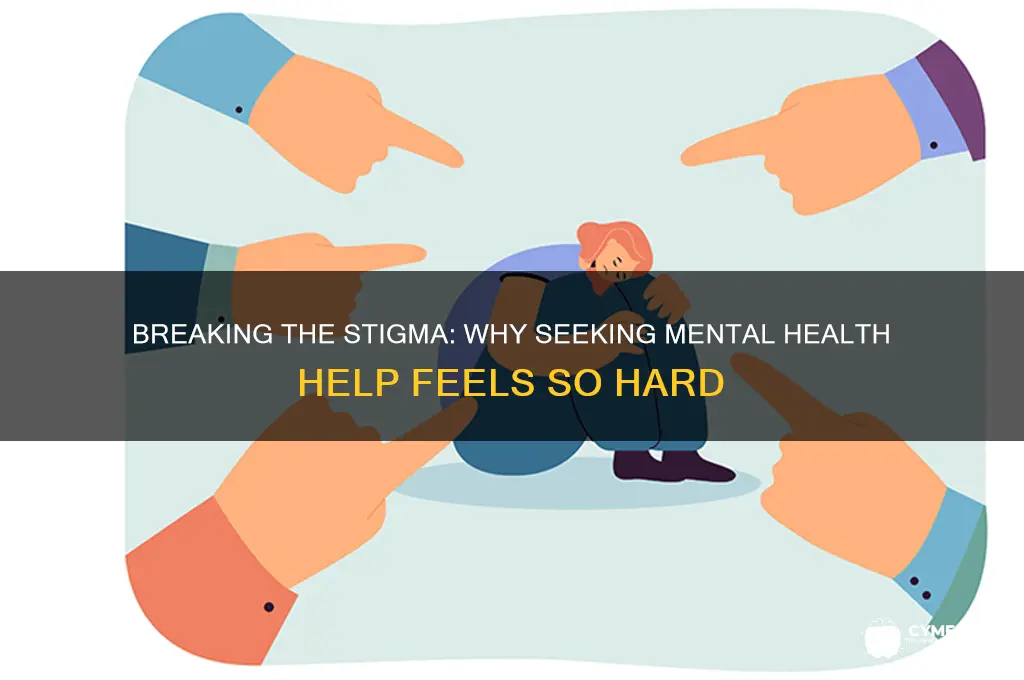
Seeking mental health support can be challenging for many individuals due to a complex interplay of societal stigma, personal barriers, and systemic issues. The pervasive stigma surrounding mental illness often leads to feelings of shame and fear of judgment, discouraging people from reaching out. Additionally, internalized beliefs that one should handle problems independently or that seeking help is a sign of weakness can create significant psychological hurdles. Practical obstacles, such as limited access to affordable care, long wait times, and a lack of awareness about available resources, further compound the difficulty. Cultural and socioeconomic factors also play a role, as some communities may view mental health struggles as taboo or lack the infrastructure to address them effectively. Together, these factors create a formidable barrier, making it hard for many to take the crucial step of seeking mental health assistance.
Explore related products


What You'll Learn

Stigma and shame surrounding mental health issues
Stigma and shame act as invisible barriers, deterring countless individuals from seeking mental health support. Consider this: a 2021 study revealed that 40% of people with diagnosable mental health conditions avoid treatment due to fear of judgment. This statistic isn't merely a number; it represents millions of lives impacted by a societal narrative that equates mental illness with weakness or failure. The stigma manifests in whispered conversations, discriminatory behaviors, and even self-imposed silence, creating an environment where vulnerability is punished rather than supported.
To dismantle this barrier, start by examining your own language and beliefs. Phrases like "just snap out of it" or "everyone feels that way sometimes" minimize the experiences of those struggling. Instead, adopt a vocabulary of empathy and validation. For instance, saying, "That sounds really hard. How can I support you?" creates a safe space for openness. Additionally, educate yourself and others about the biological and environmental factors contributing to mental health issues—this shifts the conversation from blame to understanding. Practical steps include sharing credible resources, such as NAMI (National Alliance on Mental Illness) materials, during community gatherings or online platforms.
Compare the treatment of physical ailments to mental ones to highlight the disparity. If someone breaks a leg, they’re encouraged to seek medical attention without hesitation. Yet, when someone experiences depression or anxiety, they’re often told to "toughen up." This double standard perpetuates shame, making individuals feel their struggles are less legitimate. To combat this, advocate for parity in how we address physical and mental health. For example, workplaces can implement policies offering equal sick days for both, while schools can integrate mental health education into curricula. These systemic changes send a powerful message: mental health matters equally.
Finally, consider the role of storytelling in breaking down stigma. Sharing personal experiences, whether through blogs, podcasts, or local events, humanizes mental health struggles and fosters connection. For instance, celebrities like Simone Biles and Prince Harry have openly discussed their mental health journeys, inspiring others to do the same. If sharing publicly feels daunting, start small—confide in a trusted friend or join a support group. Remember, every story shared chips away at the wall of shame, making it easier for the next person to reach out. By normalizing these conversations, we create a culture where seeking help is not an act of weakness, but a step toward healing.
Martial Arts: Boosting Mental Health, Focus, and Resilience Effectively
You may want to see also
Explore related products


Fear of judgment or being perceived as weak
One of the most paralyzing barriers to seeking mental health support is the fear of being judged or labeled as weak. This fear is deeply rooted in societal misconceptions that equate emotional vulnerability with personal failure. For instance, phrases like “suck it up” or “just stay positive” subtly reinforce the idea that struggling mentally is a character flaw rather than a legitimate health issue. Such attitudes create an invisible barrier, leaving individuals to battle their challenges in silence, often at the expense of their well-being.
Consider the workplace, where productivity and resilience are often glorified. Admitting to mental health struggles can feel like admitting defeat, especially in high-pressure environments. A 2021 study by Mind found that 56% of employees feared negative consequences if they disclosed mental health issues to their employer. This statistic highlights how professional settings can amplify the fear of judgment, turning a personal decision into a calculated risk. The irony is that untreated mental health issues often lead to decreased productivity, creating a cycle of suffering that could be mitigated with early intervention.
To combat this fear, it’s essential to reframe vulnerability as a strength rather than a weakness. Start by normalizing conversations about mental health in everyday settings. For example, sharing personal experiences or simply asking, “How are you feeling today?” can create a safe space for others to open up. Employers can lead by example by implementing policies that prioritize mental well-being, such as offering confidential counseling services or flexible work arrangements. Small, consistent actions can dismantle the stigma over time.
Another practical step is to educate oneself and others about the biological and environmental factors contributing to mental health issues. Understanding that conditions like depression or anxiety are not solely the result of personal failings can reduce self-blame and external judgment. For instance, explaining that serotonin imbalances or chronic stress play a role in mental health can shift the narrative from “weakness” to “health management.” Knowledge empowers individuals to seek help without feeling ashamed.
Ultimately, overcoming the fear of judgment requires a collective effort to redefine what it means to be strong. Strength is not the absence of struggle but the courage to face it. By fostering empathy, challenging stereotypes, and prioritizing mental health literacy, society can create an environment where seeking help is seen as a proactive and admirable choice. Remember, asking for help is not a sign of weakness—it’s a step toward healing.
Vitamin B's Role in Boosting Mental Health and Well-being
You may want to see also
Explore related products


Lack of awareness about available resources
One of the most significant barriers to accessing mental health support is the simple fact that many individuals are unaware of the resources available to them. This lack of awareness can stem from various factors, including societal stigma, limited public education, and the often invisible nature of mental health struggles. For instance, a person experiencing anxiety might not realize that their local community center offers free counseling sessions or that their employer provides an Employee Assistance Program (EAP) with confidential mental health services. Without this knowledge, they may suffer in silence, believing they have nowhere to turn.
Consider the following scenario: A college student battling depression spends hours researching online, unaware that their university’s health center offers free therapy sessions. This gap in awareness is not just a personal oversight but a systemic issue. Mental health resources are often siloed within specific institutions or organizations, making it difficult for individuals to discover them without targeted outreach. For example, veterans may not know about the Veterans Crisis Line (988, then press 1), while teenagers might overlook apps like TeenCounseling, which provide age-appropriate support. Bridging this awareness gap requires proactive dissemination of information through schools, workplaces, and public campaigns.
To address this issue, a multi-pronged approach is necessary. First, public education campaigns should be designed to highlight the diversity of available resources, from crisis hotlines to support groups and online platforms. Second, institutions like schools and workplaces must actively communicate their mental health offerings. For instance, employers can include EAP details in onboarding materials, while schools can post information about counseling services in high-traffic areas. Third, digital platforms can play a crucial role by aggregating resources in one place. Websites like MentalHealth.gov or apps like Calm and Headspace can serve as centralized hubs, guiding users to appropriate services based on their needs.
However, awareness alone is not enough. Practical barriers often accompany this lack of knowledge. For example, someone might learn about a free therapy program but hesitate to attend due to transportation issues or fear of judgment. To combat this, resource providers should offer solutions like virtual sessions, flexible scheduling, and anonymous participation options. Additionally, peer testimonials can demystify the process, showing that seeking help is a normal and courageous step. For instance, a video series featuring individuals sharing their positive experiences with therapy could encourage others to take the first step.
In conclusion, the lack of awareness about mental health resources is a solvable problem, but it requires intentional effort. By combining targeted education, institutional transparency, and accessible solutions, we can ensure that those in need know where to turn. Remember, awareness is the first step—but it’s the follow-through that makes the difference. If you’re unsure where to start, begin by checking local community boards, employer benefits, or national helplines like 988. Knowing your options is the key to unlocking the support you deserve.
Supporting Loved Ones: A Guide to Accessing Mental Health Assistance
You may want to see also
Explore related products


$14.15 $20

$12.14 $19.99

$10.21 $18.95


Financial barriers to accessing mental health care
Consider the hidden costs that compound the financial burden. Transportation to appointments, childcare during sessions, and lost wages from taking time off work are often overlooked but significant barriers. For example, a single parent working hourly shifts may lose $50–$100 in wages for a 90-minute therapy session, not including travel expenses. Additionally, the cost of medication, which can range from $20 to $500 monthly depending on the prescription, adds another layer of financial stress. These indirect costs disproportionately affect marginalized communities, where systemic inequalities already limit financial flexibility. Without addressing these hidden expenses, even subsidized mental health services remain out of reach for many.
A comparative analysis reveals that financial barriers are not just about the price tag but also the inequitable distribution of resources. In countries like Germany or Canada, mental health care is integrated into public health systems, reducing out-of-pocket costs significantly. In contrast, the U.S. relies heavily on employer-based insurance, leaving 8.6% of adults (over 22 million people) uninsured in 2022. Even in nations with universal healthcare, long wait times for public services drive individuals toward private options, which are often prohibitively expensive. This disparity highlights the need for systemic reforms that prioritize mental health as a fundamental right, not a luxury.
To navigate these financial barriers, practical strategies can make a difference. First, research sliding-scale clinics or non-profit organizations that offer reduced fees based on income. For example, Open Path Collective in the U.S. provides therapy sessions for $30–$60. Second, explore telehealth platforms like BetterHelp or Talkspace, which often cost less than in-person therapy, though they may lack insurance coverage. Third, inquire about medication assistance programs; pharmaceutical companies like Pfizer and GSK offer discounts or free prescriptions for eligible individuals. Finally, advocate for policy changes at local and national levels, such as expanding Medicaid coverage for mental health or capping out-of-pocket costs. While these steps won’t eliminate financial barriers, they can make mental health care more accessible in the interim.
Finding Support: Where to Get Mental Health Help and Resources
You may want to see also
Explore related products


Difficulty recognizing symptoms or acknowledging the need for help
Mental health symptoms often masquerade as everyday struggles, making them difficult to identify. Fatigue, irritability, or difficulty concentrating can be chalked up to stress, a busy schedule, or simply "not being yourself lately." This normalization of potential warning signs creates a dangerous blind spot. For example, a young adult experiencing persistent sadness might attribute it to academic pressure or relationship woes, delaying recognition of depression.
Consider this: Would you ignore a persistent cough or unexplained weight loss? Probably not. Yet, when it comes to mental health, we often downplay symptoms, hoping they'll resolve on their own. This tendency is exacerbated by the intangible nature of mental illness. Unlike a broken bone, there's no visible proof, making it easier to dismiss as "all in your head."
Recognizing this cognitive bias is the first step. Keep a journal to track mood changes, sleep patterns, and energy levels. Notice if these fluctuations persist beyond what's typical for you. Online screening tools, while not diagnostic, can provide valuable insights and encourage further exploration.
Fear of stigma and self-stigma further complicates acknowledgment. Admitting to mental health struggles can feel like admitting weakness, especially in cultures that prioritize stoicism. This internalized shame creates a barrier to seeking help, leading to a cycle of suffering in silence.
Challenge these internalized beliefs. Mental illness is not a character flaw; it's a medical condition, just like diabetes or asthma. Reframe seeking help as an act of courage and self-care, not a sign of failure. Surround yourself with supportive individuals who normalize open conversations about mental health. Remember, acknowledging a problem is not the same as being defined by it. It's the first step towards reclaiming your well-being.
Physical Activity Benefits for Mental Disabilities: Enhancing Well-Being and Quality of Life
You may want to see also
Frequently asked questions
Many people fear being judged or labeled as "weak" for seeking help, due to societal stigma surrounding mental health issues. This shame can prevent them from reaching out, even when they desperately need support.
Some people normalize their struggles or believe their feelings are "not bad enough" to warrant help. Additionally, lack of mental health literacy can make it difficult to identify symptoms or understand the benefits of treatment.
Mental health services can be expensive, and not everyone has insurance coverage or access to affordable resources. This financial strain often deters individuals from seeking the help they need.
Opening up about personal struggles requires vulnerability, which can feel intimidating or risky. Some people worry about being misunderstood, dismissed, or exposed, leading them to avoid seeking help altogether.
In many areas, there is a shortage of mental health providers, resulting in long wait times for appointments. This delay can discourage individuals from pursuing treatment, especially if they are in crisis or need immediate support.